What was the purpose of the Spirit and Opportunity?
The two Mars Exploration Rovers, Spirit and Opportunity, were fundamentally designed to serve as highly mobile, robotic geologists on the Martian surface, embarking on a quest to determine if water ever existed in environments capable of supporting life. [1][2] Launched in 2003, these twin vehicles were not just passive landers; they were engineered to roam across vast stretches of the red planet, equipped with cameras and sophisticated instruments to analyze rocks and soil. [5] Their primary objective was geological reconnaissance, specifically searching for mineralogical and textural evidence that the planet once hosted liquid water for an extended period. [1][6]
# Mission Expectations
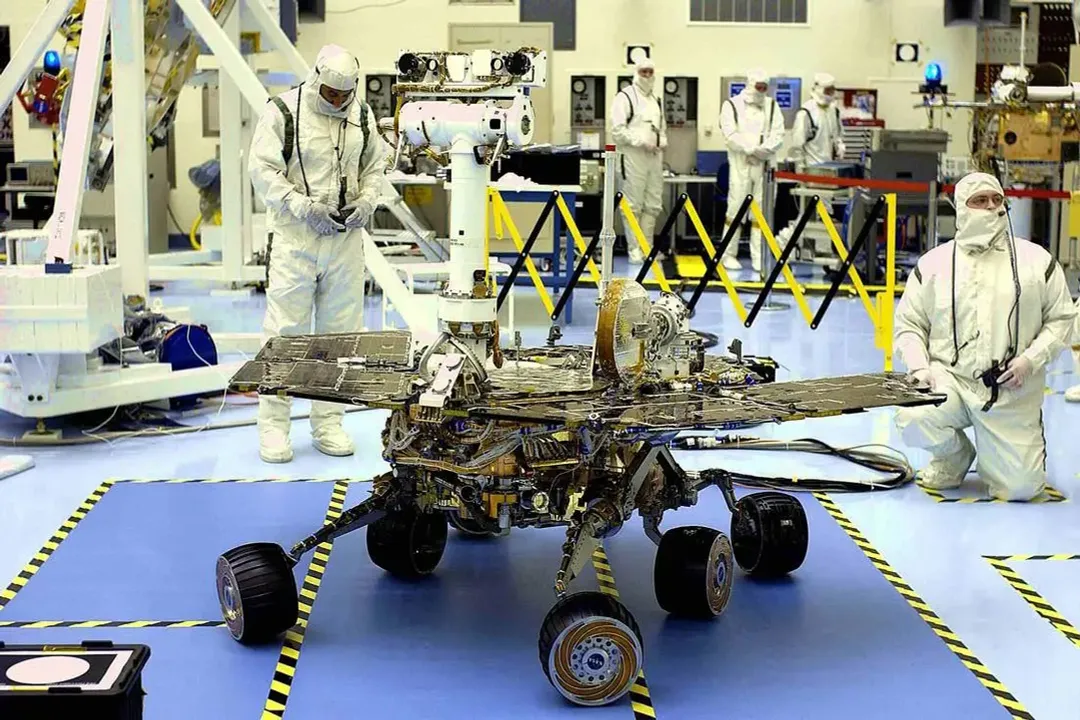
The original plan for both Spirit and Opportunity was remarkably modest by the standards they ultimately achieved. [6] Each rover was designed with a nominal mission lifespan of just 90 Martian sols (about three Earth months). [1][3] This short timeframe was based on expectations regarding battery degradation, mechanical wear, and the accumulation of dust on their solar panels, which power the entire system. [7] They were intended to drive only short distances, perhaps a few hundred meters, over the course of their initial three-month campaign. [6]
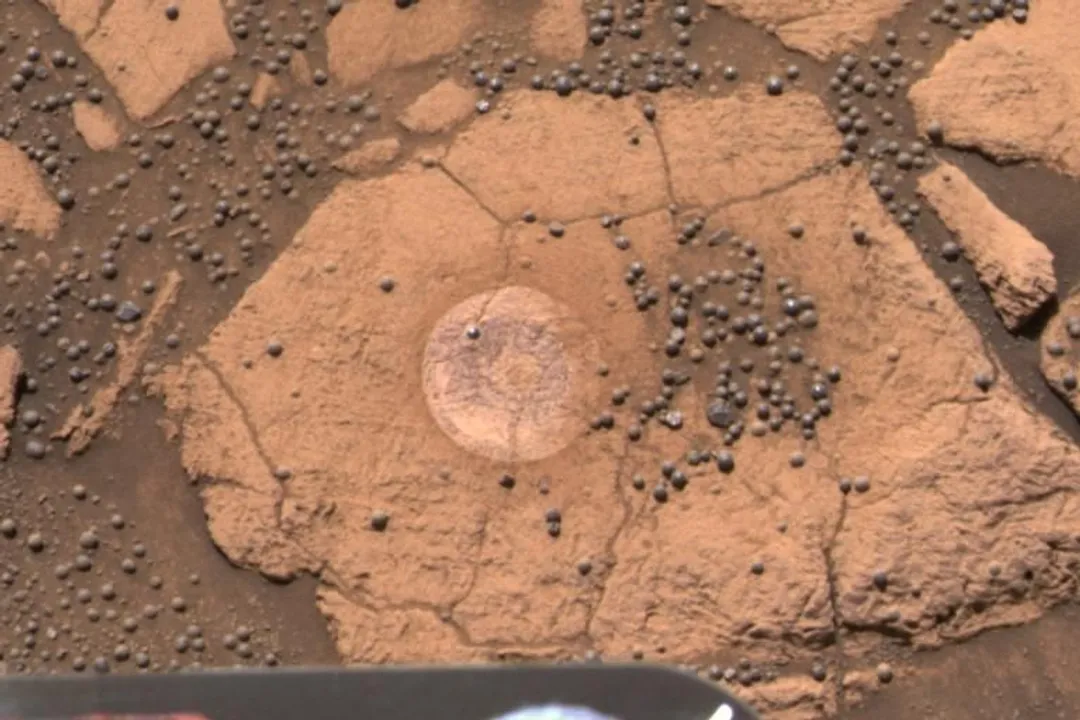
Spirit landed in Gusev Crater, a site selected because orbital images suggested it might have once been an ancient lakebed. [1] Opportunity touched down far away in Meridiani Planum, an area showing spectral signatures suggestive of hematite concretions, often called "blueberries," which on Earth form in the presence of water. [1][2] The mission's success hinged on proving whether these distinct landing sites held a watery past. [5]
# Rover Engineering
The Mars Exploration Rover (MER) architecture was built for durability and scientific capability. [3] Each rover stood about 1.5 meters tall, stretched 2.3 meters long, and weighed approximately 185 kilograms (408 pounds). [3] Propulsion was managed by a sophisticated six-wheel-drive system, which allowed the rovers to navigate surprisingly rough terrain and recover from potential wheel slippage, a capability proven essential later on. [3]
Power came from solar arrays, which charged lithium-ion batteries that kept the instruments running through the frigid Martian nights. [3] The scientific payload was impressive for the time, centered around the Pancam for panoramic color imaging, and two key instruments for material analysis: the Alpha Particle X-ray Spectrometer (APXS), used to determine the elemental composition of rocks and soil, and the Mössbauer Spectrometer, used by Spirit to study iron-bearing minerals. [1][3] Opportunity also carried the Mini-RAT (Rock Abrasion Tool), designed to grind away the weathered surface layer of rocks to expose fresh material for analysis. [1][3] This ability to physically abrade rocks was a major step forward in on-site chemistry compared to previous, less mobile landers. [7]
If you look at the initial specifications, the twin nature of the mission was key to validating findings; if one rover found evidence of past water, and the other found similar evidence miles away in a different geological setting, the conclusion that Mars was once wet becomes far more convincing. This approach hedges against the possibility that any single observation might be a highly localized anomaly. [1]
# Water’s Traces
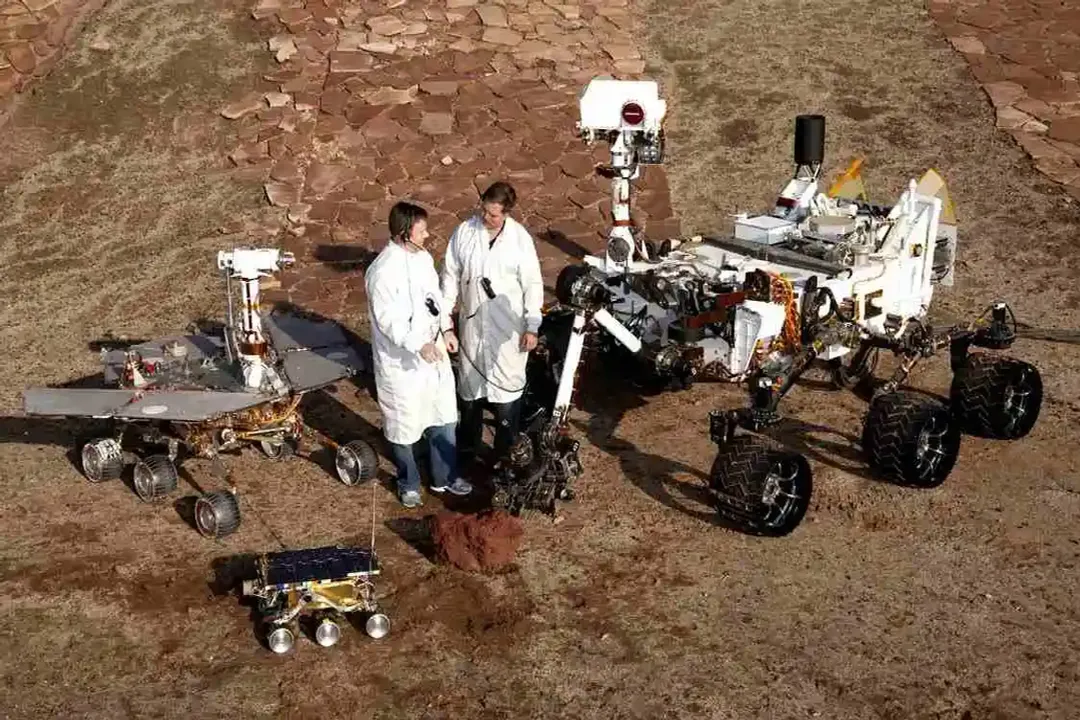
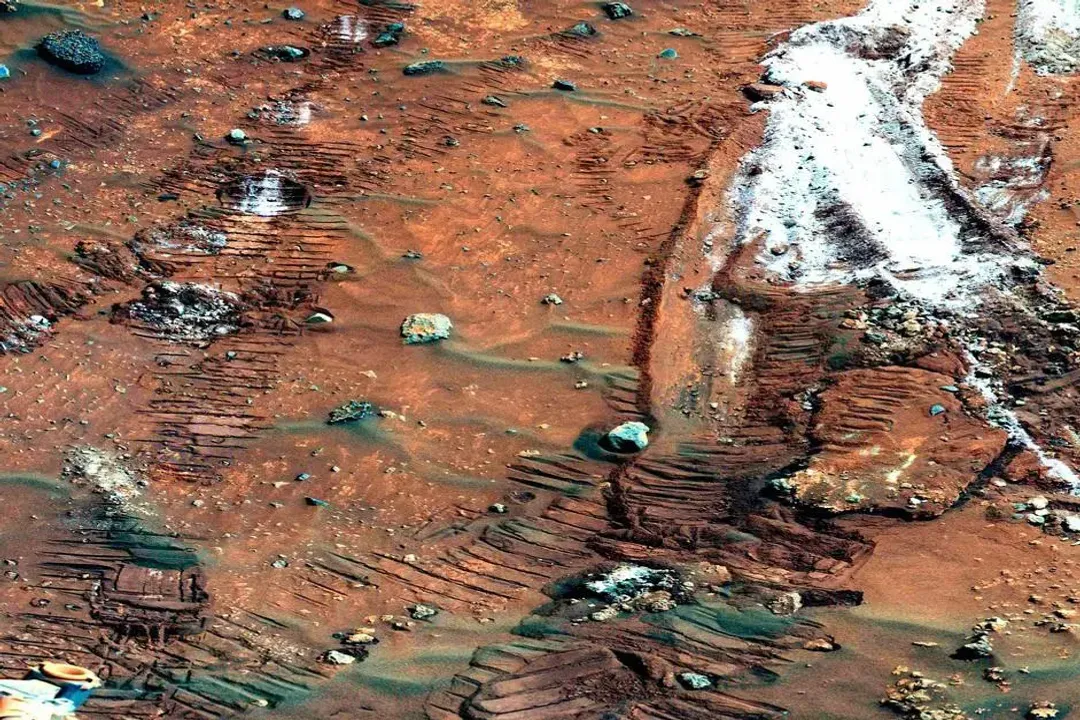
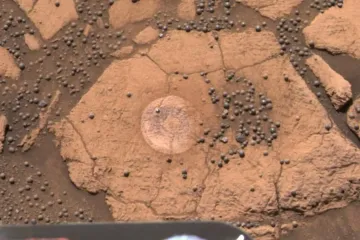
The primary purpose—finding evidence of past water—was met and exceeded almost immediately. [6] Within the first few weeks, Opportunity found unmistakable proof that Meridiani Planum was once soaked. [2] The discovery of the small, spherical hematite concretions, nicknamed "blueberries," provided strong evidence that these minerals formed in the presence of liquid water. [1][2] The rover even found veins of sulfate minerals cutting through rocks, structures that on Earth are created when water flows through cracks in rock and deposits dissolved minerals. [1]
Spirit also delivered significant results in Gusev Crater, though its geological story differed slightly from Opportunity's landing site. [1] Spirit found mineral evidence suggesting that the soil and rocks in its area were altered by hot water, possibly from ancient hot springs or volcanic activity, rather than just standing water like a lake. [1] The finding of opaline silica in Gusev, which typically forms in the presence of hot water, provided this key distinction. [6] The rovers together painted a picture of a Mars that was far more active, warmer, and wetter in its ancient past than previously understood. [5]
# Longevity Record
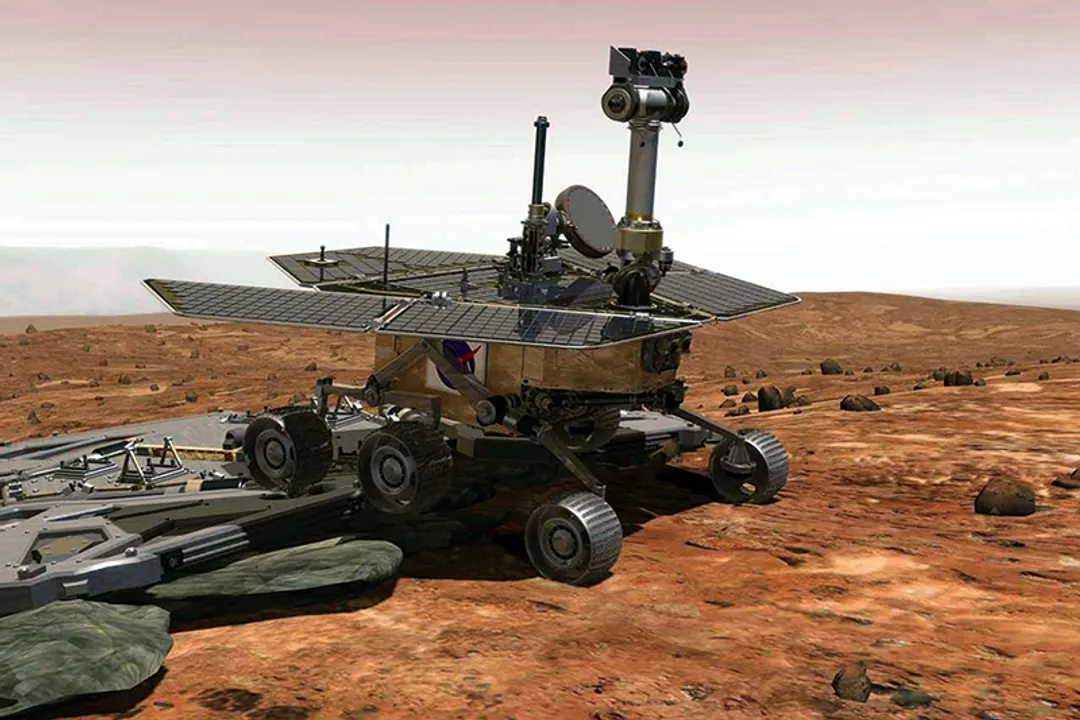
The operational lives of Spirit and Opportunity dwarf the three-month goal set by mission planners. [6] Spirit survived for over six years, driving more than 4.8 miles (7.73 kilometers) before getting stuck in soft soil in 2009 and losing contact in 2010. [1][8] Opportunity’s longevity was even more staggering, operating for nearly 15 years until a massive dust storm engulfed Mars in 2018, blocking the sun from recharging its batteries. [8][1]
Opportunity’s final operational drive covered a distance of approximately 28.06 miles (45.16 kilometers). [3] To put that incredible distance into terrestrial perspective, if a human being walked that far on the best-maintained, flat trail, it would take nearly two full days of non-stop walking. For a six-wheeled robot navigating unknown, sandy, rocky terrain over a decade, this represents an unprecedented feat of mechanical endurance and continuous data collection. [6] This extreme lifespan taught mission control specialists volumes about managing power systems under fluctuating dust loads—a key takeaway for future solar-powered missions navigating Mars's cyclical weather patterns. [7]
# Individual Missions
Spirit’s mission, while shorter than its twin’s, was incredibly productive. Its discovery of ancient water activity in Gusev Crater provided the first hard geological evidence confirming the hypothesis that the crater was once a lake. [1] Its end came when it drove into a patch of soft soil near a ridge nicknamed "Troy," sinking its wheels deep into the sand. [1] Despite months of diligent efforts by the ground team to free the rover, the low sunlight penetration caused by the dust covering its solar panels eventually led to its silence. [1][4]
Opportunity’s final chapters read like an action movie. After years of successful navigation, the global dust storm of 2018 began to threaten its power supply. [8] The last transmission from Opportunity was received on June 10, 2018. [8] Although NASA made extensive efforts to re-establish contact, the final planned attempt in February 2019 concluded the mission after the rover had far outlived all expectations. [1][3] The team working on the MER program shared their experiences publicly, demonstrating the deep connection built over years of remote operation. [4]
# Lasting Discoveries
The purpose of Spirit and Opportunity extended far beyond the initial 90-sol mandate; they served to thoroughly characterize Mars’s past habitability potential. [6] They confirmed that liquid water was present for long enough—perhaps for millions of years—to potentially foster microbial life. [5] The rovers also provided detailed weather data and images that enriched our understanding of current Martian conditions, including the physics of dust devils and the nature of the fine Martian dust that covers everything. [3]
The success of the MER program fundamentally altered the approach to subsequent missions. Before Spirit and Opportunity, long-term surface mobility was a theoretical goal; after them, it became a requirement. [6] Their shared design also meant that any software patch or operational trick learned from a near-failure on one rover could often be applied immediately to the other, creating an efficient operational learning curve that sped up problem-solving across the entire program. [7] The data they sent back—hundreds of thousands of images and extensive chemical analyses—formed the bedrock upon which the more advanced Curiosity and Perseverance rovers were planned, ensuring that future missions could be sent to even more promising, and perhaps more dangerous, locations, because the viability of long-term solar power in dust was now better understood. [1][9]
#Videos
Spirit and Opportunity - YouTube
Related Questions
#Citations
Mars Exploration Rovers: Spirit and Opportunity - NASA Science
The Mars Rovers: Spirit and Opportunity | NASA Space Place
Mars Exploration Rover - Wikipedia
20 years ago this month, NASA's Spirit and Opportunity rovers ...
20 years ago: Spirit and Opportunity rovers launched for Mars
Mars Rovers Spirit, Opportunity Exceeded Expectations
Mars Exploration Rovers Update: Spirit… - The Planetary Society
Happy 20th, Spirit and Opportunity! How the Mars rovers expanded ...
Spirit and Opportunity - YouTube