What did the Spirit Rover accomplish?
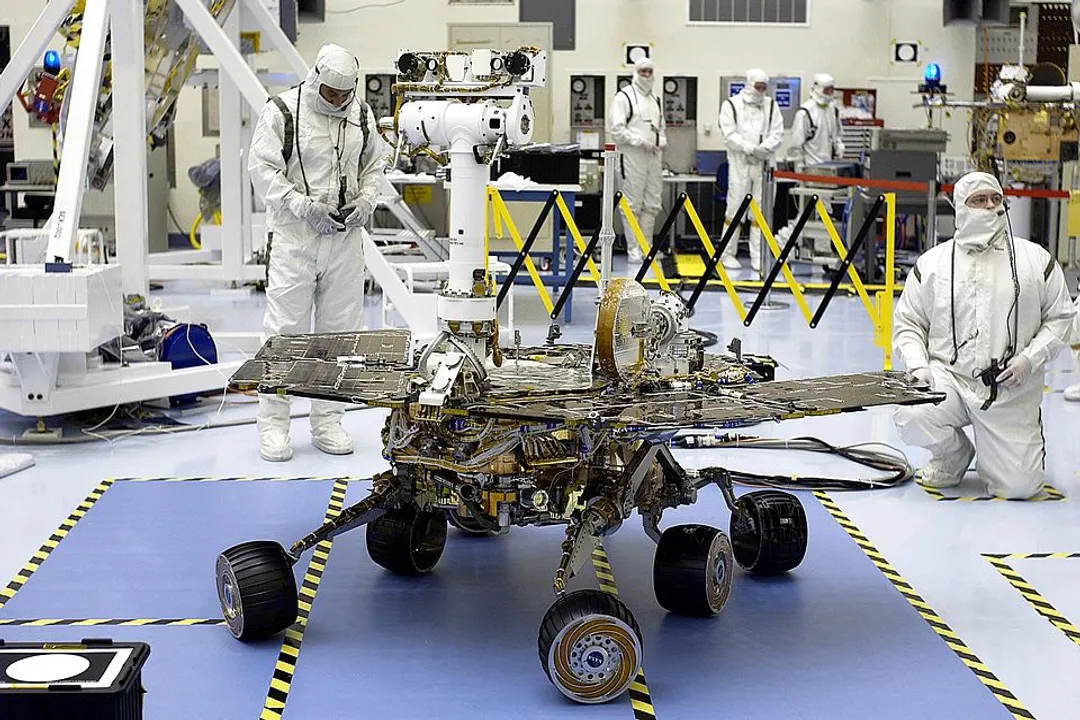
The Mars Exploration Rover named Spirit achieved a scientific record and redefined expectations for robotic planetary exploration, far outliving its initial operational mandate. Launched as one half of NASA’s twin Mars Exploration Rover (MER) mission, alongside its counterpart Opportunity, Spirit touched down on the Martian surface in January 2004. [2][9] Its primary mission was designed to last just 90 Martian sols, which equates to approximately 92 Earth days. [1][2] Yet, Spirit kept communicating with Earth for over six years, finally ceasing contact in May 2010. [6] This incredible longevity allowed it to gather a trove of data that fundamentally altered our understanding of the Red Planet's watery past.
# Design and Landing
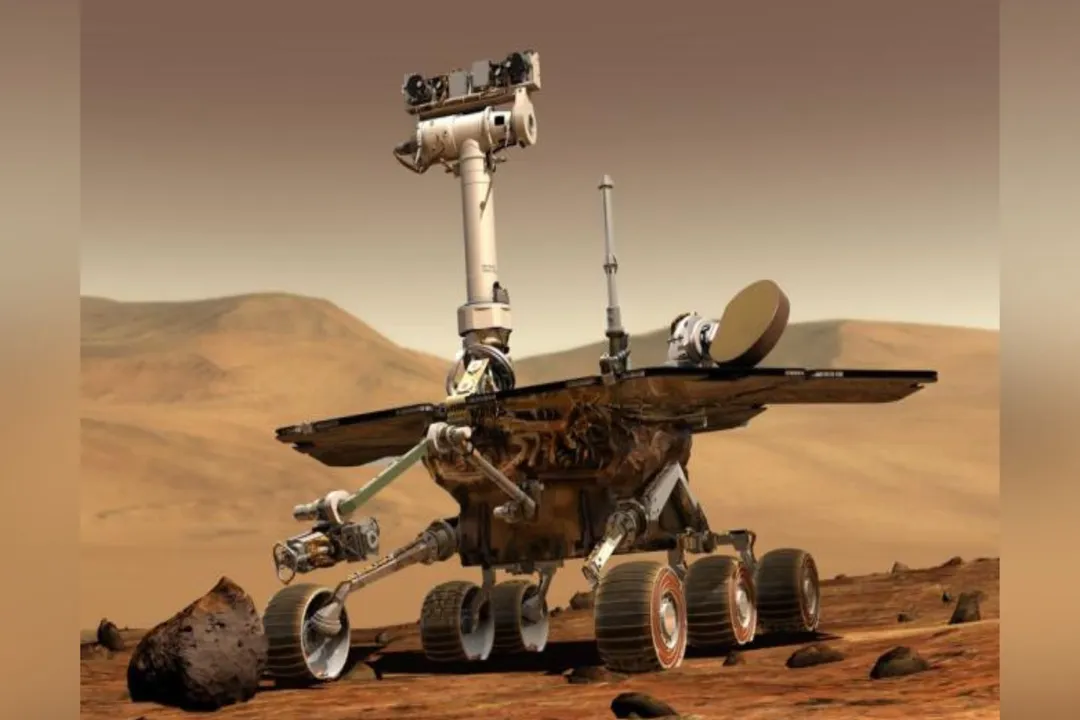
Spirit, along with Opportunity, was an impressive piece of engineering designed to operate remotely in a harsh environment. [3] Each rover was packed with scientific instruments, including a panoramic digital camera (Pancam) for high-resolution color imaging, microscopic imagers, and tools to analyze the chemical composition of rocks and soil. [2] They were built to survive the journey and the first few weeks on Mars, where extreme temperature swings present a major technical hurdle. [3]
The landing site selection was critical, focusing on areas where past liquid water might have left chemical fingerprints. [1] Spirit touched down safely inside Gusev Crater. [2] This basin was chosen because orbital data suggested it might have once held a substantial lake. [2] The rover’s expected lifetime of 90 sols was predicated on surviving the initial landing stresses and the unforgiving Martian climate, especially the freezing night cycles. [1]
The success of the landing itself was a triumph. The MER system employed an airbag technology, where the spacecraft descended shielded within protective airbags that bounced across the surface after entry, finally coming to rest before the airbags deflated and the rovers deployed their solar panels and wheels. [3] This complex sequence worked perfectly for Spirit, allowing it to begin its geological survey almost immediately.
# Water's Mark
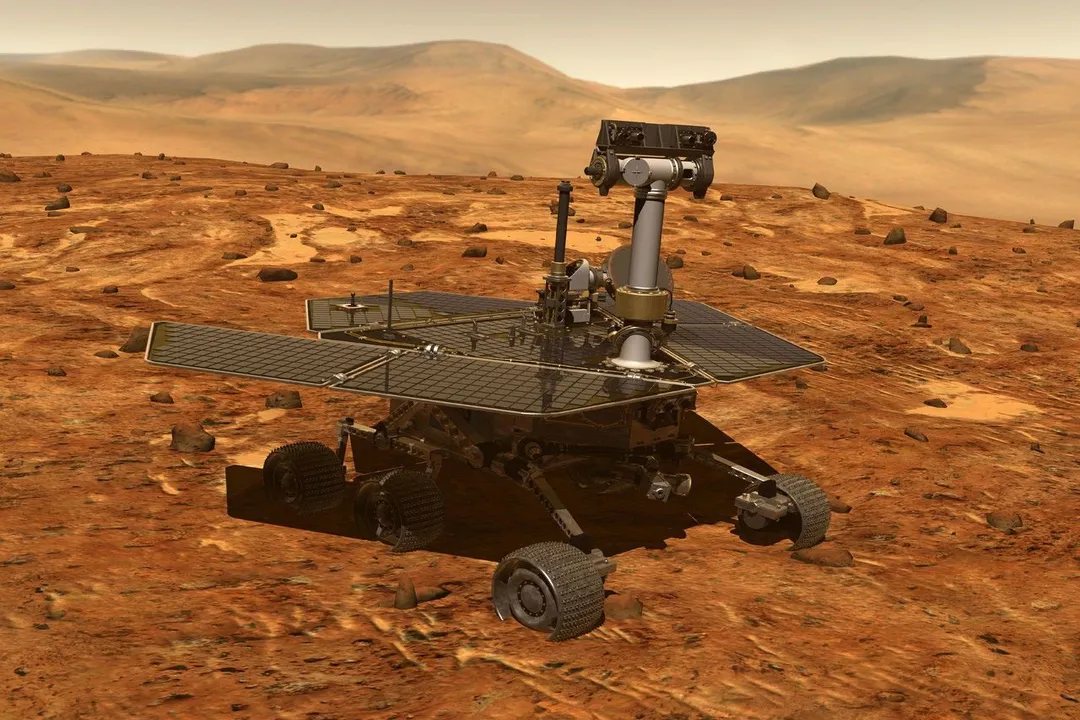
The overarching goal of the MER mission was to determine if water ever existed on Mars for a long enough period and in sufficient quantities to have potentially supported microbial life. [1][8] Spirit’s accomplishments in this area were profound, providing direct geological evidence that water once flowed or pooled extensively in Gusev Crater. [1][2]
Spirit accomplished this by acting as a mobile field geologist, carefully driving to intriguing rock outcrops and using its instruments to look inside them. [2] The rover’s sophisticated instruments, particularly the Mössbauer spectrometer and the Alpha Particle X-ray Spectrometer (APXS), were key to identifying mineralogy that requires water to form. [1]
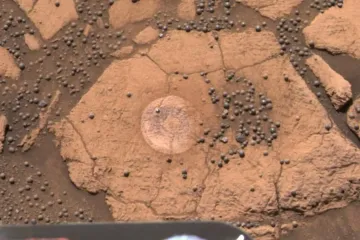
A major early find came from the analysis of rocks named "Humidity Ridge" and "Longhorn Point". [2] Spirit found minerals like hematite spherules, often called "blueberries," which on Earth are typically formed by the action of water percolating through rock. [1][2] More significant was the discovery of hydrated silica. [1] This mineral requires persistent liquid water to form, suggesting a long-lived, possibly warm, aqueous environment rather than just transient dampness. [1]
While the initial hypothesis suggested Gusev was a placid lakebed, Spirit’s detailed examinations started painting a more dynamic picture. The layering and alteration observed in some rock formations suggested environments involving either significant hydrothermal activity—hot water circulating beneath the surface—or perhaps volcanic interactions with groundwater, rather than just a simple pond. [1] This suggested that the conditions for habitability might have been chemically richer and more sustained than previously thought, pointing toward environments similar to terrestrial hot springs. [1]
# A Distant Surveyor
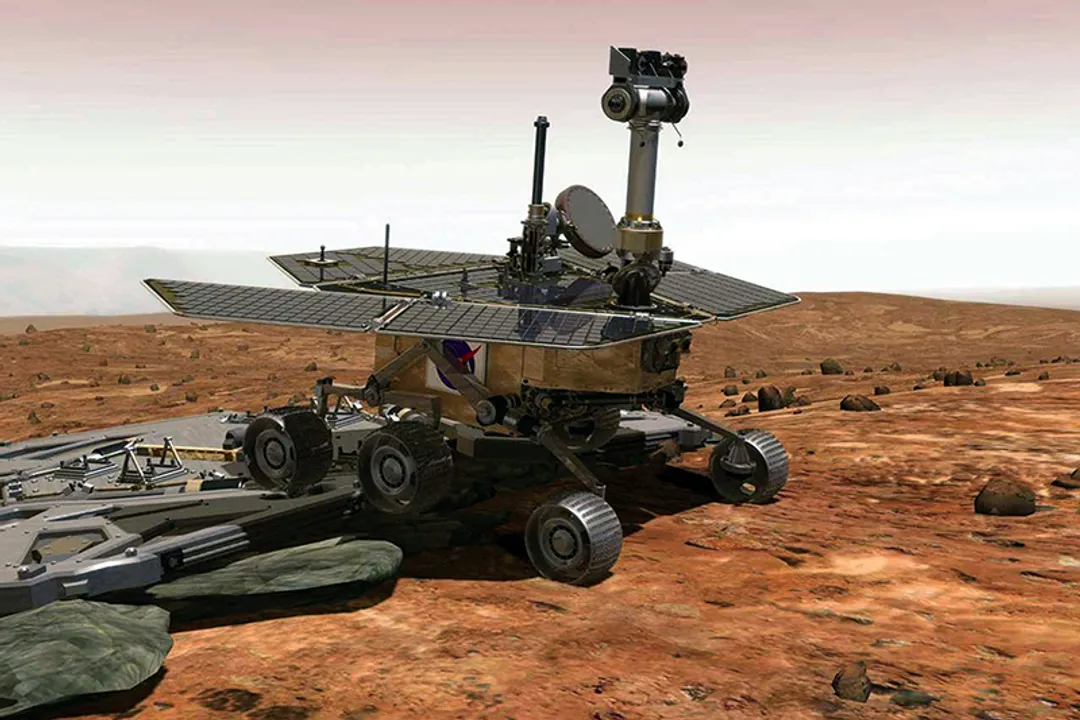
One of the most astonishing accomplishments of Spirit was its sheer endurance and distance traveled. The planned traverse was relatively short, only a few hundred meters, sufficient to confirm the presence of water-formed minerals. [2] However, Spirit kept moving, overcoming dust accumulation, mechanical wear, and software glitches to cover ground that far exceeded the design specification. [3]
The total distance covered by Spirit by the time communication was lost was approximately 7.73 kilometers (4.8 miles). [1][2] To put that distance into perspective relative to its intended scope, if we consider the planned 90-sol mission as the baseline expectation, Spirit delivered over 24 times its required operational time and traversed vastly more ground than anticipated. This longevity alone turned a short-term investigation into a long-term geological survey, allowing scientists to examine diverse terrains far from the landing site. [3]
The sheer volume of imagery returned is another testament to its success. Spirit sent back over 120,000 images to Earth, documenting the terrain, the atmosphere, and the specific features of the rocks it analyzed. [1]
Rover Traverse Milestones (Approximate)
| Milestone | Distance Traveled (km) | Mission Timeframe (Approximate) | Primary Discoveries Confirmed |
|---|---|---|---|
| Primary Mission End | 90 Sols (Jan-Apr 2004) | Evidence of past water/hydrated minerals [2] | |
| Extended Mission 1 | End of 2005 | Reaching the Columbia Hills/Bonneville Crater | |
| Extended Mission 2 | End of 2007 | Deeper geological context in higher terrain | |
| Final Contact | $7.73$ | May 2010 | Vast traverse proving mobility and endurance [1] |
| [1][2] |
# Mobility Challenges and Resilience
Spirit’s extended life was not without significant technical drama. The rover demonstrated remarkable resilience in overcoming several major mechanical failures, teaching mission controllers invaluable lessons about long-term operation on another planet. [3]
The most critical incident occurred in Martian year 1942 (Earth date: May 2009), when Spirit drove into soft sand, causing its right front wheel to become completely stuck. [6][4] This immobilization presented an existential threat to the mission, as the rover relied heavily on solar power, which is hampered by dust accumulation and poor sun angles. [3]
In a remarkable display of problem-solving, NASA engineers developed new driving commands to force the rover to drag its stuck wheel. [6] This modification effectively created a "five-wheeled drive" system. The team devised strategies to angle the rover to maximize the solar panels' exposure, even as Martian winter approached, trying to keep the internal batteries warm enough to survive the deep cold. [3] This successful workaround provided the team with several more months of science returns, allowing Spirit to reach a scientifically interesting location called Troy before its final communication loss. [6]
This period of driving with a disabled wheel offers an interesting case study in extraterrestrial robotics: the necessary trade-off between scientific gain and hardware preservation. Every meter gained meant risking further wheel damage or losing the ability to properly orient for solar charging. The decision to continue driving in the face of this risk paid off with additional data, illustrating a calculated acceptance of high-stakes operational decisions based on engineering models that proved surprisingly accurate. [4]
# The Final Sols
After the successful, albeit challenging, maneuver with the stuck wheel, Spirit continued to operate, making its way toward a small rise that the team hoped would offer better winter sun angles. [6] Unfortunately, the situation deteriorated as the Martian winter deepened, and dust accumulating on the solar arrays further reduced the power available. [3]
The final planned communication attempt occurred on April 22, 2010 (Earth time), which coincided with Earth Day. [6] When Spirit failed to respond to subsequent attempts in the following weeks, NASA declared the mission complete on May 25, 2010. [6] The rover was effectively hibernating, buried in sand, and unable to gather enough solar energy to power its systems and recharge its batteries sufficiently to wake up and transmit data. [3]
Spirit’s final resting place, an area the team named Holloway, [6] is on a slope where engineers hoped it might catch the spring sunlight to revive it. Although it never sent another signal, its legacy is secured by the data already sent. The mission vastly exceeded its planned lifespan of 90 sols, operating for a total of 2,208 sols (about 6 years and 2 months). [1][2]
Spirit’s mission was terminated, but the rover itself remains on Mars. It is a silent monument to its own achievements, a highly visible piece of human engineering resting on a ridge that scientists named Merritt Valley. [6]
# Enduring Legacy
The accomplishments of Spirit are measured not just in distance or duration but in the fundamental shift in geological understanding it provided for the Gusev Crater region. It demonstrated that Mars was not always the cold, arid world we see today, but once hosted environments capable of fostering the chemical reactions necessary for life as we know it. [1]
If we consider the engineering investment against the scientific return, Spirit represents an extraordinary return on investment. A mission planned for three months generated over six years of data, effectively providing more than twenty times the expected scientific mileage. [1] This success directly influenced the design philosophy for subsequent, even more ambitious missions, confirming the capability of solar-powered, long-duration robotic surface exploration. [8] The lessons learned from managing its complex hardware failures paved the way for the design and operational strategies used by later rovers, teaching mission planners how to anticipate and command repairs for systems under extreme environmental duress. [3] Spirit’s ability to limp along, dragging a dead wheel, provided a crucial, hard-won data set on long-term hardware degradation in the Martian environment that no simulator could fully replicate. [4]
#Videos
Spirit Rover Completes Mission on Mars - YouTube
Related Questions
#Citations
Spirit - NASA Science
Spirit (rover) - Wikipedia
NASA's Spirit Rover: Everything you need to know - Space
Spirit & Opportunity - ROBOTS: Your Guide to the World of Robotics
Mars Exploration Rovers Update: Spirit and… - The Planetary Society
NASA's Spirit Rover Completes Mission on Mars
Spirit Rover Completes Mission on Mars - YouTube
20 years ago: Spirit and Opportunity rovers launched for Mars