Has any human landed on the dark side of the moon?
The Moon’s geography often leads to a fundamental misunderstanding regarding human exploration: the concept of the so-called "dark side." It is crucial to establish upfront that no human being has ever set foot on the far side of the Moon. This side, which perpetually faces away from Earth, is perhaps the most mysterious lunar territory visited only by robotic probes so far, though humans have certainly flown over it. The primary reason for this absence of boots on the ground relates directly to the physics of radio communication and orbital mechanics, a challenge the Apollo program never overcame for a landing site.
# Far Side Reality
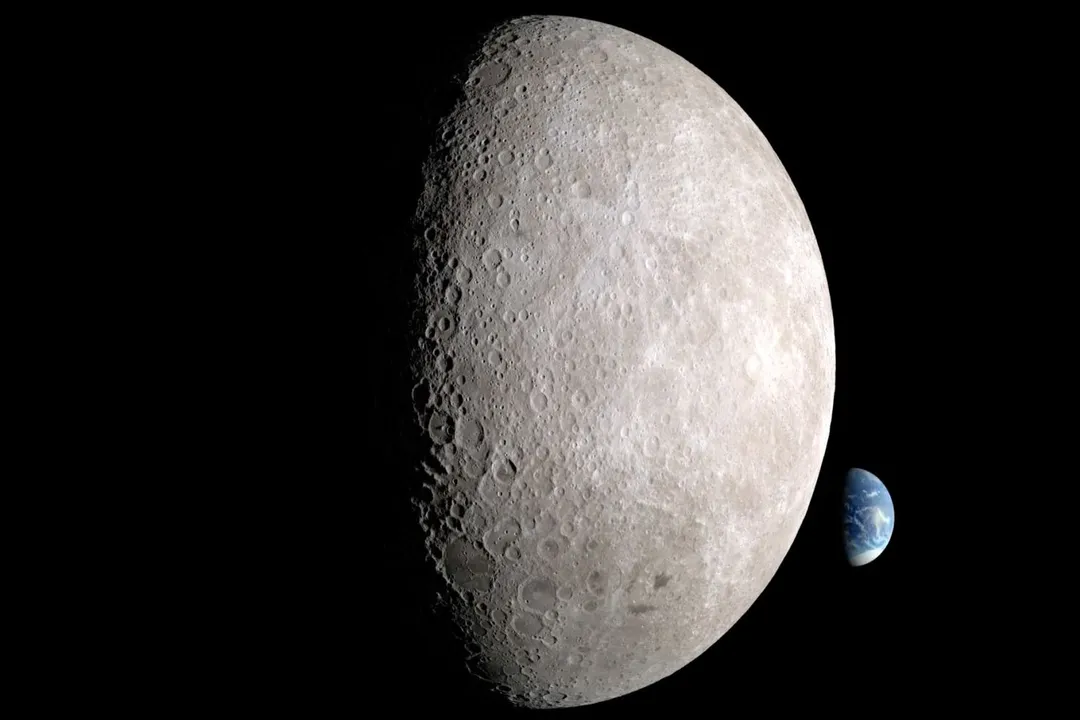
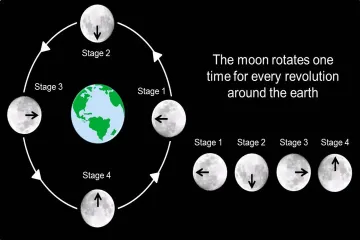
The term "dark side of the Moon" is a popular, albeit scientifically inaccurate, label. Because the Moon is tidally locked with Earth, one hemisphere constantly faces our planet—this is the near side—while the other always faces deep space—this is the far side. However, the far side is not eternally dark; it receives just as much sunlight as the near side over the course of a lunar rotation. It only appears "dark" to us because we can never observe it directly from Earth. This distinction is important because any landing mission, human or robotic, requires sunlight for power generation and navigation aids, meaning missions are planned around the lunar day, regardless of which face they target.
# Apollo Overflights
While the American Apollo program successfully landed astronauts on the near side between 1969 and 1972, their missions did involve brief glimpses of the far side. The command modules, carrying astronauts like Michael Collins during Apollo 11, continually orbited the Moon. As the spacecraft circled, the astronauts passed over the far side, seeing the heavily cratered, starkly different terrain with their own eyes. Michael Collins, who remained in orbit while Neil Armstrong and Buzz Aldrin walked on the near side, became famous for being the loneliest man because, during his orbits, he was completely out of radio contact with Earth. This period of isolation, lasting about an hour on each revolution, underscored the central problem facing any landing attempt on that side: communications blackout.
# Signal Blockage Reason
The difficulty of landing humans on the far side centers entirely on the intervening mass of the Moon itself. For any two-way communication—voice, telemetry, or command signals—the signal path must be clear between the spacecraft and Earth. When a spacecraft is situated on the far side, the body of the Moon blocks the direct line of sight to the terrestrial tracking stations. During the Apollo era, the technology to establish reliable communications over such a massive physical obstruction did not exist.
To facilitate a landing, continuous, real-time communication is non-negotiable for safety and mission control oversight, particularly during critical descent and ascent phases. Without it, mission control would have no immediate feedback on the lander's status or the commander's instructions, turning the landing into an unacceptably high-risk maneuver. The astronauts could see the far side, but mission control could not see them or talk to them. The solution employed by subsequent robotic missions involves sophisticated relay technology, which was not available to the Apollo planners.
It is worth noting that the far side lacks the large, dark basaltic plains, known as maria, that dominate the near side landscape. This geological difference—the far side has a much thicker crust and fewer maria—meant that even if communication were possible, the landing areas would be rougher and potentially more hazardous for the fragile Apollo Lunar Module. This contrast in surface composition presents an interesting operational challenge for future exploration: while the far side might hold older, more pristine geological samples, the smoother, flatter plains of the near side offered inherently safer initial landing targets for the pioneering Apollo crews.
# First Landing Made
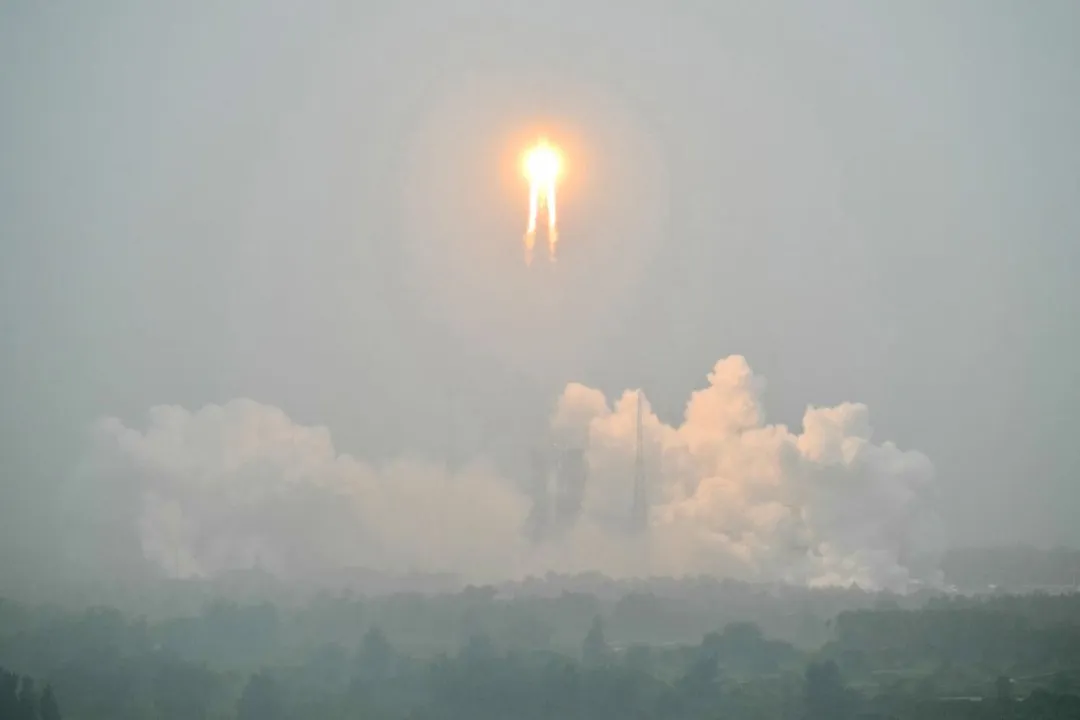
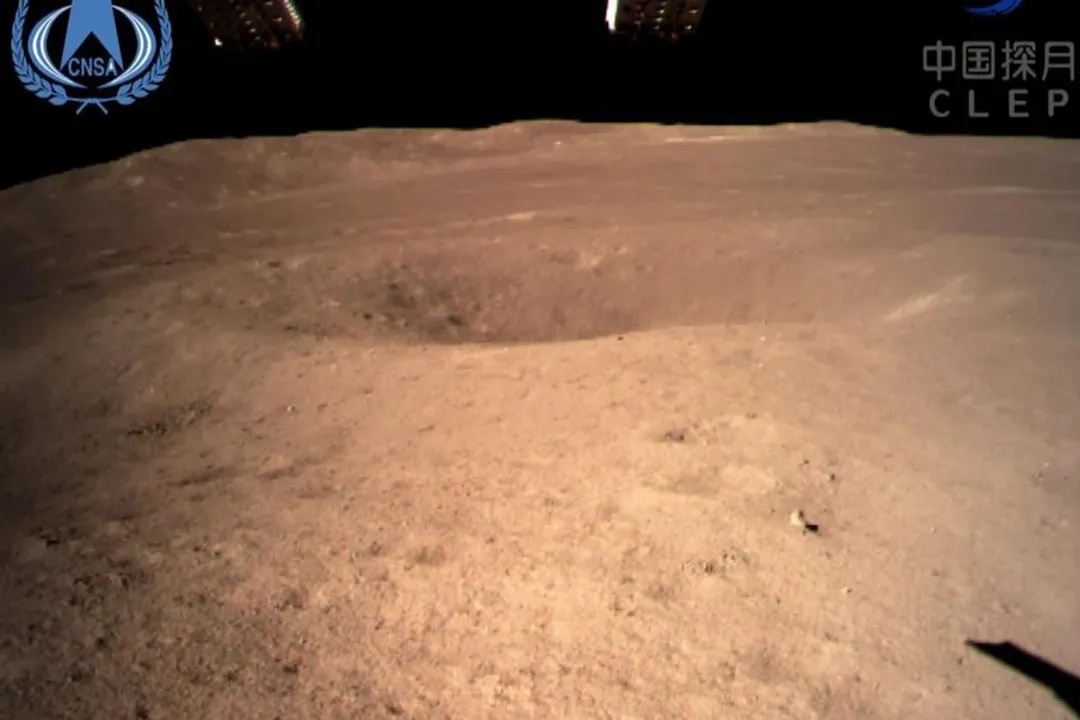
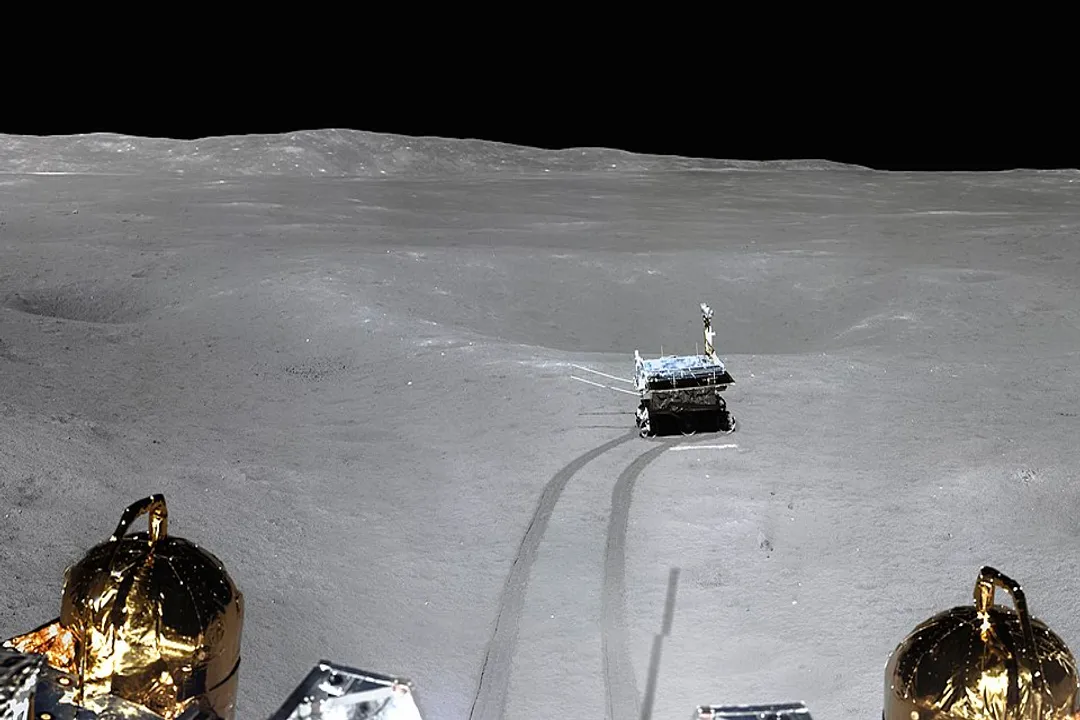
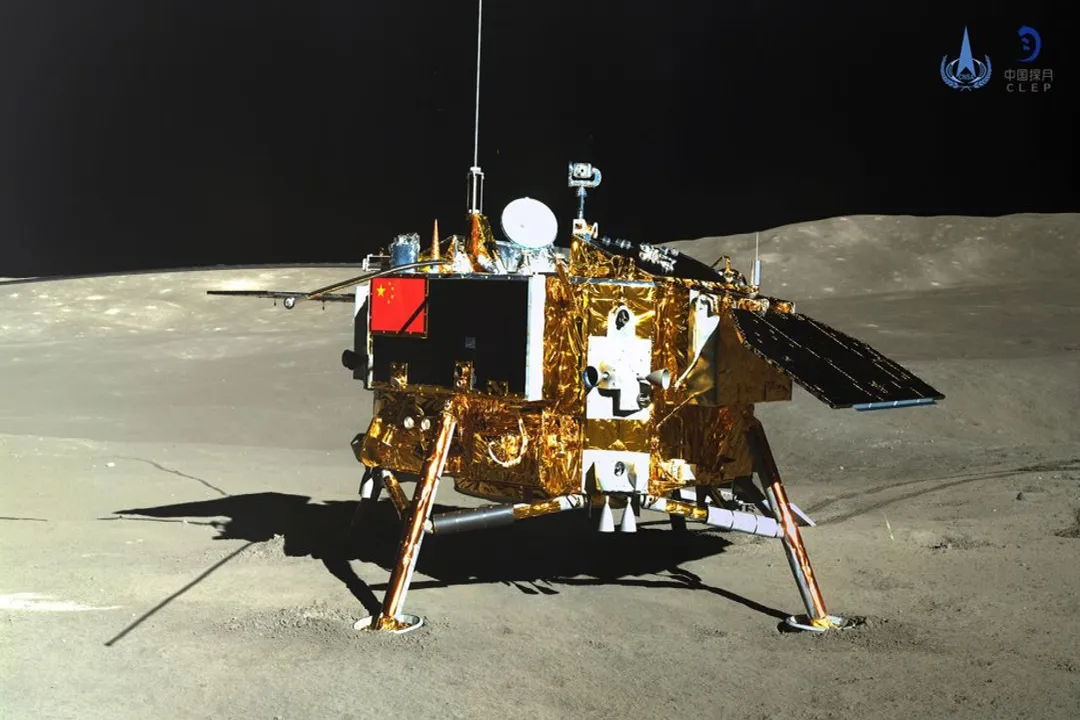
While human explorers have been restricted to the near side, robotic technology has successfully overcome the communication hurdle, marking a significant milestone in lunar exploration. The China National Space Administration (CNSA) achieved the historic first landing on the Moon's far side with the Chang'e 4 mission in January 2019.
To bypass the line-of-sight problem, China employed an ingenious work-around: they placed a relay satellite, named Queqiao, into a halo orbit around the Earth-Moon Lagrange point 2 (L2). This specific orbital position allows the satellite to maintain a constant view of both the far side of the Moon and the Earth simultaneously. The Chang'e 4 lander then transmits its data to Queqiao, which relays the information back to mission control on Earth. This technological step validates the feasibility of complex operations on the far side, which is otherwise shielded from direct radio transmission. China followed this up with Chang'e 6, which successfully performed the first-ever sample return mission from the far side in June 2024.
# Future Exploration
The success of robotic missions is now paving the way for renewed human interest in the far side, although the focus remains primarily on the near side for immediate return missions. NASA’s Artemis program, which aims to return humans to the Moon, is centered on the lunar South Pole region, which is located on the near side, though some Artemis concepts do involve operations that could extend to the far side in the distant future.
The challenge for any future human mission to the far side remains logistical rather than technological theory, as the relay infrastructure must be established before a crew departs. Any nation or agency intending to send astronauts to the far side must first launch a dedicated communications satellite, or several of them, to maintain continuous contact, adding significant cost and complexity to the mission profile compared to a near-side landing where line-of-sight is naturally maintained. Given the extensive planning required for even near-side landings in the current era, setting up the necessary relay network for the far side represents a substantial preliminary investment, likely reserving that territory for subsequent, more advanced human exploration efforts once a sustained presence on the near side is secured. The current drive, represented by Artemis, prioritizes establishing infrastructure near the resource-rich South Pole, which offers the benefit of near-side communication capability during initial construction phases.
| Mission | Side Landed On | Primary Achievement | Communication Method |
|---|---|---|---|
| Apollo Missions | Near Side | First crewed landing | Direct Line-of-Sight |
| Chang'e 4 | Far Side | First soft landing | Dedicated Relay Satellite (Queqiao) |
| Chang'e 6 | Far Side | First sample return | Dedicated Relay Satellite (Queqiao) |
The scientific rationale for eventually sending humans to the far side is strong. Because this region has been shielded from direct radio transmissions from Earth, it offers a unique environment for sensitive scientific instruments, such as radio telescopes that require an extremely radio-quiet zone to detect faint, early universe signals. While robotic rovers can perform surface science, human geologists can perform targeted sampling and in-situ analysis with a speed and flexibility that current rovers cannot match, making the effort to overcome the communication barrier a scientific imperative for the next decades of lunar exploration.
#Videos
The Truth About The Moon Landings - YouTube
World first: Chinese spacecraft lands on 'dark' side of moon - YouTube
Related Questions
#Citations
Far side of the Moon - Wikipedia
Why did NASA not land on the dark side of the Moon during ... - Quora
Astronauts explain why no human has visited the moon in 50 years ...
The Truth About The Moon Landings - YouTube
China lands spacecraft on 'dark' side of moon in world first
What's on the far side of the moon? Here's why scientists want to find ...
Who landed on the dark side of the moon? - Homework.Study.com