How to view the black moon?
The arrival of a "Black Moon" often generates excitement in astronomical circles and the wider public, prompting questions about what exactly can be seen when this phenomenon occurs. It is important to understand that viewing a Black Moon isn't like spotting a meteor shower or a visible planet; the very nature of this event means you are preparing to see nothing where the Moon should be. [8] The term itself is slightly fluid, leading to some confusion about its precise definition, but generally, it refers to a night when the Moon is new and entirely obscured from our view by its own darkness. [2]
# Lunar Definitions
The designation "Black Moon" is not an official term used by organizations like NASA, but rather a colloquial label that has gained traction, often signifying one of two rare occurrences related to the New Moon phase. [1][7] To grasp why this specific August 2025 event is noteworthy, one must understand these competing definitions.
The most common understanding, particularly in popular media, defines a Black Moon as the second New Moon to occur within the same calendar month. [1][2][7] The lunar cycle is approximately $29.5$ days long, meaning that occasionally, if a New Moon falls very early in a month (say, on the first or second day), there is enough time left in that $30$- or $31$-day period for a second New Moon to squeeze in before the month ends. [2][7] Because New Moons happen roughly every month, having two in one month is an infrequent occurrence, which grants the title its air of rarity. [1]
A second, less common definition—and one that applies to an August event like the one in 2025—identifies a Black Moon as the third New Moon in a season that hosts four New Moons. [1][6] Normally, a season (the time between a solstice and an equinox, or vice versa) contains three lunar cycles, meaning three New Moons. When an extra New Moon is included, it throws off the usual naming pattern for the season's moons, and the third one gets the special moniker. [1][6] For general sky-watchers, however, the implication remains the same: the New Moon phase is happening at a time when we would expect fewer, or perhaps not this particular one, leading to the sense that it is an "extra" or "missing" Moon. [7]
# The August Night
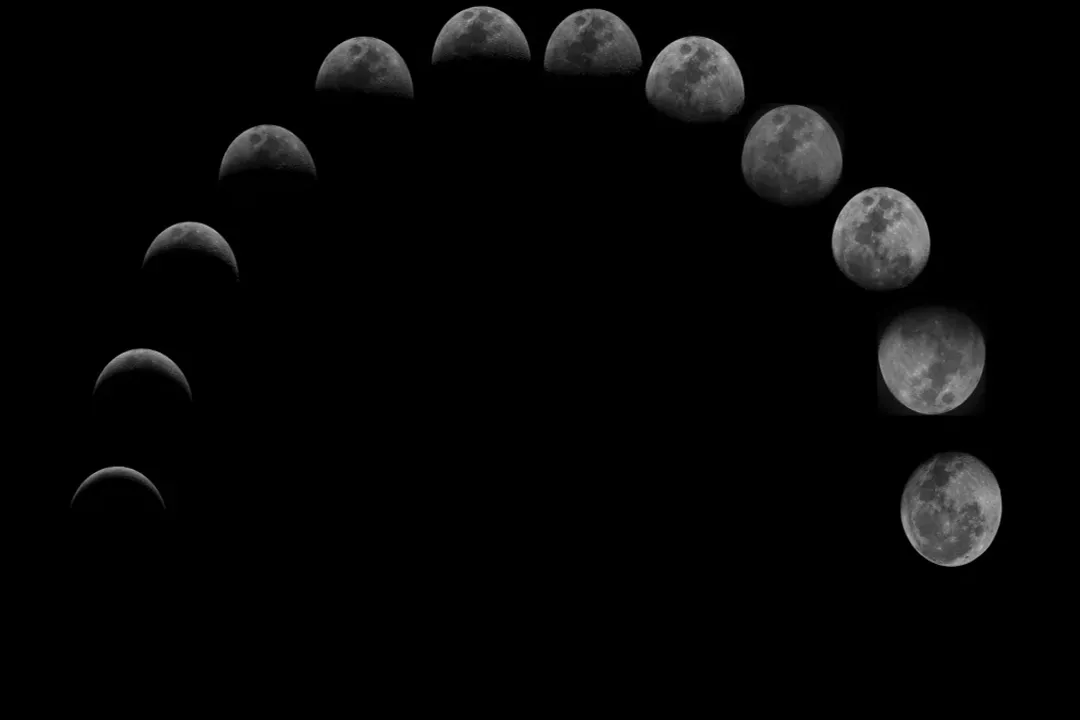
For the specific event taking place in August 2025, the primary definition being highlighted is the straightforward one: it is simply the night of the New Moon itself. [8] In the case of August 2025, the Moon enters its New phase precisely when it is between the Earth and the Sun, meaning the side illuminated by the Sun is facing away from us. [6][8] This phase is defined by the Moon being completely unlit from our perspective here on the ground. [8] While this happens about once every month, it is often bundled into the "Black Moon" narrative when other rare occurrences are absent, or perhaps because it coincides with a time when other celestial events make the sky particularly favorable for dark-sky viewing. [5]
Pinpointing the exact moment is crucial for those interested in tracking the precise astronomical event. The New Moon phase for August 2025 is generally marked to occur around the $23$rd of the month. [3][5] Knowing the time zone is critical, as the exact moment the lunar disk is $0%$ illuminated is instantaneous, though the night surrounding that time will offer the best viewing conditions for associated phenomena. [9]
# Seeing Nothing
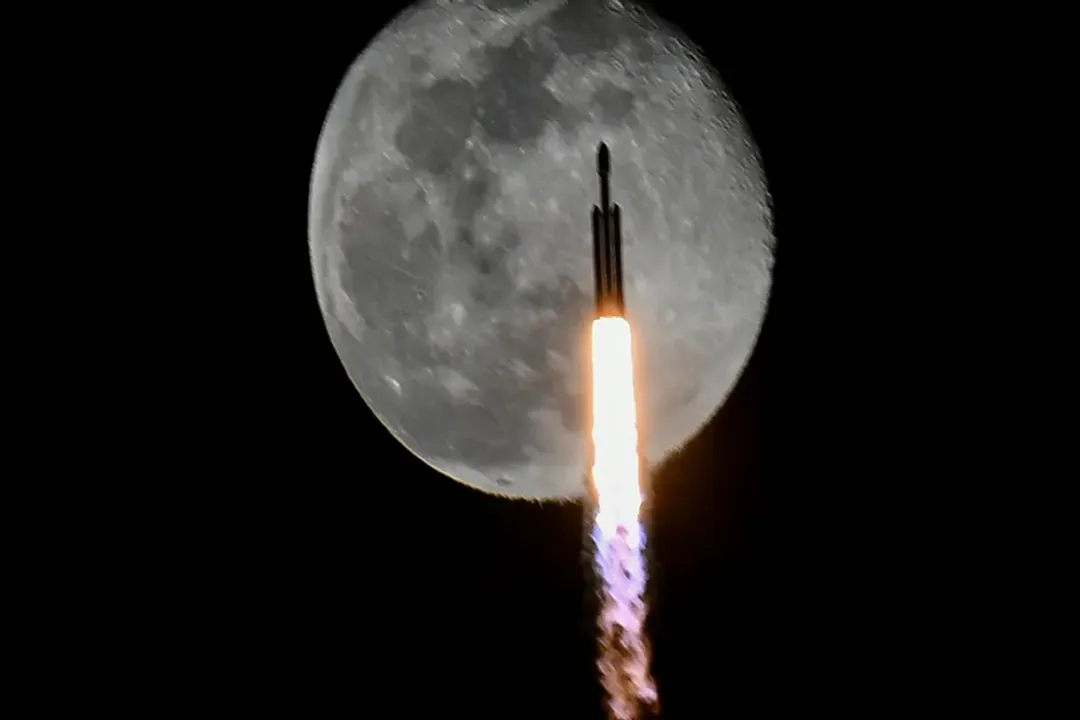
Addressing the central query—how to view the Black Moon—requires an honest assessment of lunar visibility. You will not see the Moon itself. [8] During the New Moon phase, the Moon is physically present in the sky, positioned near the Sun, but its unlit hemisphere faces Earth. [6] Therefore, the act of "viewing the Black Moon" is synonymous with experiencing a night when the Moon's reflected light is absent from the sky. [8] This is the core experience the event offers.
Contrast this absence with the Full Moon, which brightly dominates the night sky, often washing out fainter stars and nebulae. The Black Moon presents the inverse scenario: a perfect, dark canvas provided by the lack of the Moon's glare. [5]
If you happen to be looking directly toward the Sun during the New Moon, you might theoretically observe the Moon's silhouette crossing the solar disk, an event known as a solar eclipse. [1] However, this requires specialized protective eyewear or being in the path of totality for a solar eclipse, and it is a separate, much rarer event than the standard New Moon phase. [1] For the typical Black Moon viewing experience, the goal is not to see the Moon, but to appreciate the darkness it creates.
# The Viewing Strategy
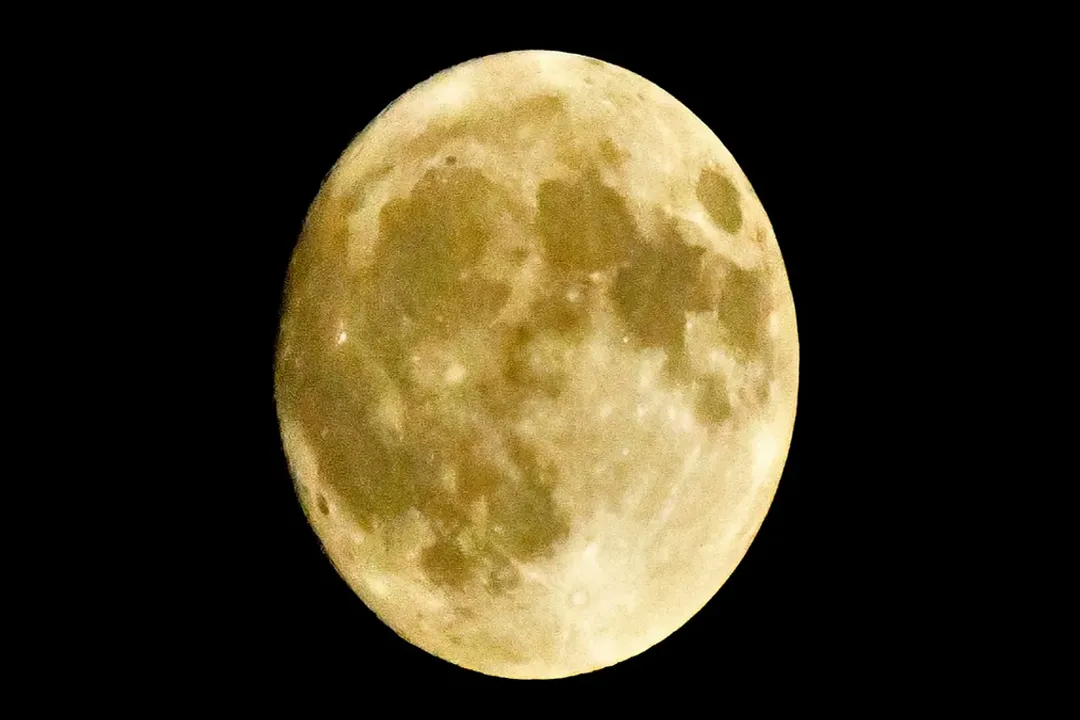
Since the object of interest is defined by its absence, preparation shifts entirely from locating a celestial body to optimizing the darkness of your viewing environment. The primary action item for appreciating a Black Moon night is aggressive light pollution mitigation. [5]
To truly take advantage of the enhanced dark skies, consider the following preparation checklist:
- Location Scouting: Identify a spot away from city lights. Even a short drive out of urban centers can drastically reduce light pollution, allowing fainter objects to emerge. [5]
- Timing: Since the Moon sets shortly after the Sun during the New Moon phase, the darkest period will be well after twilight ends, stretching into the late hours of the evening and predawn hours. Check the exact time of sunset and the end of astronomical twilight for your location. [9]
- Allowing Adaptation: The human eye takes significant time to adjust to true darkness. Plan to spend at least $20$ to $30$ minutes without looking at any bright light sources before attempting deep-sky observation. [5]
- Red Light Use: If you need illumination for maps, equipment, or moving around, use a headlamp or flashlight equipped with a red filter. [5] Red light does not significantly disrupt night vision in the way white or blue light does. [5]
A practical consideration often overlooked is local humidity and atmospheric clarity. Even without the Moon, a humid, hazy night will scatter what little ambient light exists, dulling the view of fainter stars. Clear, dry conditions, common in high-desert or mountainous regions, will yield the best results when the lunar glow is removed from the equation. [5] You might consider this the 'unseen factor' influencing your viewing success: the Moon's absence creates the potential for darkness, but local weather determines the realized clarity.
# Maximizing Darkness
The true value of a Black Moon night lies in what can be seen because the sky is darker than usual. This is where amateur astronomers find the event most rewarding. [5] Instead of searching for the New Moon, you should focus on objects that are typically washed out by lunar light.
The night sky during a Black Moon offers the best opportunity to observe the Milky Way Galaxy itself. [5] Our home galaxy appears as a vast, hazy band of light stretching across the sky, composed of billions of distant stars, dust, and gas clouds. On nights close to the Full Moon, this structure is often faint and indistinct, even from rural areas. [5] Under the deep darkness afforded by a New Moon, the core structure of the Milky Way becomes vividly apparent, showcasing texture and dark dust lanes that are usually invisible.
# Deep Sky Targets
Beyond the Milky Way band, this darkness allows fainter "deep-sky objects" (DSOs) to reveal themselves with greater contrast. Astronomers often target these objects on New Moon weeks.
| Object Category | Example (Visible in Dark Sky) | Why it Benefits from Black Moon |
|---|---|---|
| Star Clusters | M13 (Hercules Globular Cluster) | Faint outer stars blend into the background less frequently. |
| Nebulae | Dumbbell Nebula (M27) | Its faint gaseous structure stands out against the black backdrop. [5] |
| Galaxies | Andromeda Galaxy (M31) | The outer halo and faint dust lanes become more discernible. |
For example, the Dumbbell Nebula (M27) in the constellation Vulpecula is a popular target that benefits immensely from this darkness. [5] Its structure, which resembles an hourglass or a glowing dumbbell, becomes clearer when the ambient sky brightness is minimal.
A subtle but rewarding exercise on a Black Moon night is trying to spot extremely faint, diffuse objects that are almost always invisible under normal conditions. Consider searching for zodiacal light if you are in a location far from light pollution. [5] This is a faint, pyramid-shaped glow seen in the east before sunrise or in the west after sunset, caused by sunlight reflecting off cosmic dust particles orbiting the Sun in the plane of the ecliptic. Seeing this phenomenon is a direct measure of how truly dark the sky is, making the Black Moon period an excellent benchmark night for assessing your local sky quality.
# Astronomical Timing
While the Moon is absent, other celestial bodies retain their predictable paths. For instance, on a night close to the New Moon, observers might note the positions of the planets if they are above the horizon during the dark hours. If planets like Jupiter or Saturn are visible—even though the main event is the lack of the Moon—their light will be sharp and unobscured by any lunar glow. [3] Sky-watching guides for the date of the Black Moon often detail which planets are visible or setting during the evening hours following sunset. [3][9]
It is also worth noting that the Earthshine phenomenon will be completely absent. Earthshine is the faint illumination of the dark part of the Moon caused by sunlight reflecting off the Earth and back onto the Moon. While this is only noticeable when the Moon is a crescent, its total absence contributes to the overall impression of deep blackness in that part of the sky where the Sun resides during the day. [6]
Ultimately, viewing the Black Moon is an exercise in celestial appreciation through subtraction. It is not about adding a visible spectacle to the sky but removing the largest light source so that the rest of the cosmos can shine forth unimpeded. [8] By treating the night as a rare opportunity for deep-sky observation rather than a search for an invisible orb, sky-watchers can truly experience what makes this specific phase noteworthy. [5]
Related Questions
#Citations
Black Moon in August: What it is, what it isn't, and how to 'see' it
A rare 'black moon' is coming. Here's what you'll be able to see
The Sky Today on Saturday, August 23: The Black Moon
Best time to view the black moon tonight? - Facebook
What is a black moon and when can you see one? - YouTube
August black moon: Florida view, Milky Way, dumbbell nebula
Astrophysicist Talks Rare 'Black Moon' Event in August
A 'black moon' will appear in the sky this weekend, but you won't see ...
What time is black moon? When to see tonight's rare August new ...