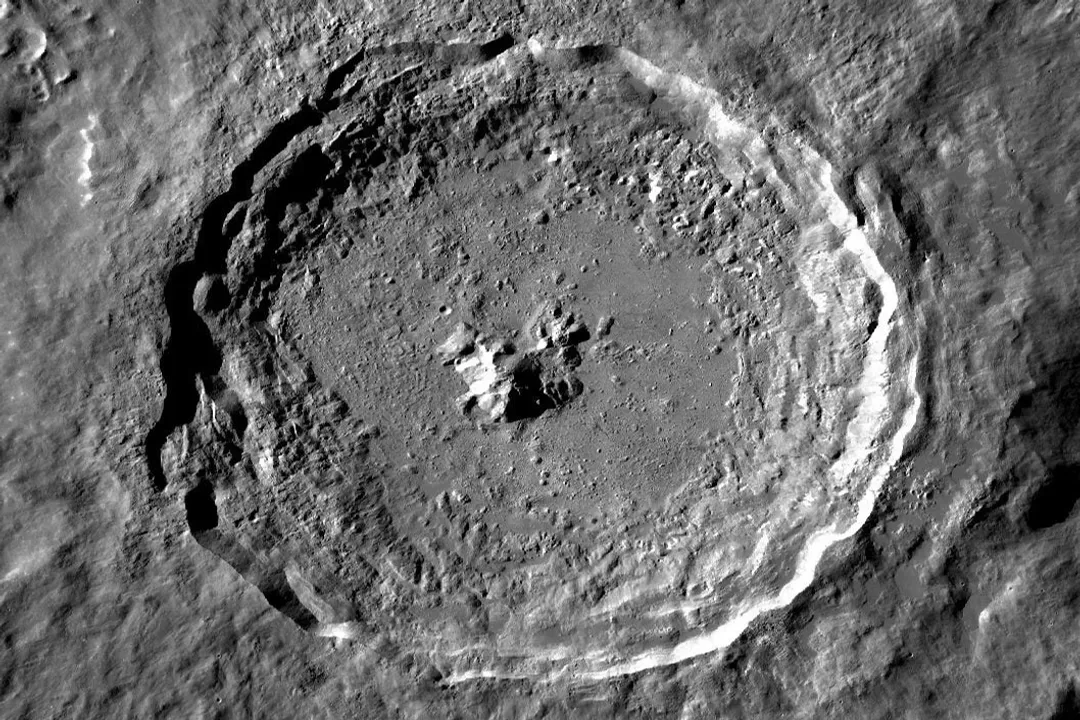
What geological mechanism explains why Tycho’s depth is shallow relative to its width?
Answer
The rebound effect following the massive impact forcing material back upward.
The relatively shallow depth-to-diameter ratio observed in Tycho, typical for large, complex craters, is primarily attributed to the rebound effect that occurs after a colossal impact. When the impactor struck with immense energy, it compressed the subsurface deeply, causing the ground material to behave almost like a fluid. After the initial compression, this material sprang back upward, rebounding toward the original surface level. This springing back action effectively filled in a significant portion of the initial cavity created by the strike, resulting in a final retained depth that is proportionally smaller relative to the crater's overall width.
Related Questions
What is the consistent scientific measurement for the depth of the Tycho crater from rim to floor?Approximately how long ago did the impact that formed the Tycho crater occur in geological terms?What depth-to-diameter ratio range characterizes Tycho and other large, complex impact structures?How high does Tycho’s central mountain rise above the surrounding crater floor according to measurements?Tycho is classified as what type of impact crater due to its intricate structure?If Denali were placed on the floor of Tycho, what would happen relative to the crater’s rim?What geological mechanism explains why Tycho’s depth is shallow relative to its width?Which crater serves as a contrast, demonstrating what Tycho might look like after eons of space weathering?What does spectral analysis of Tycho’s central peak material reveal about its origin?How does the Moon's curvature affect the apparent imposition of Tycho's rim for an observer standing on the crater floor?