What is Goldilocks in space?
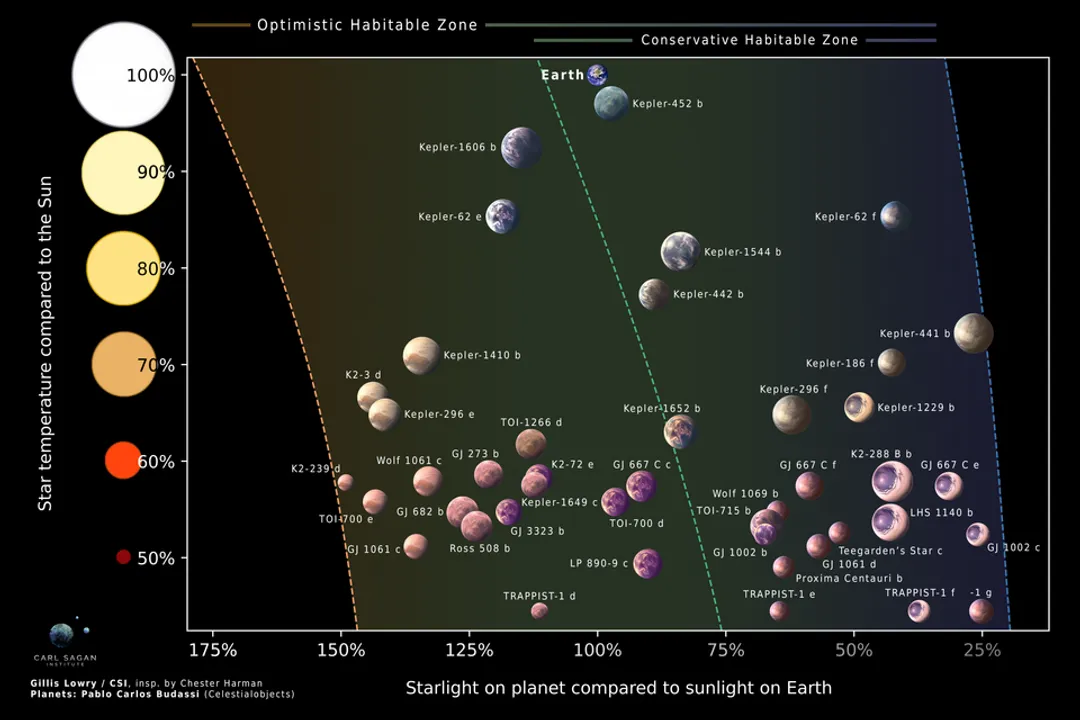
The concept of a "Goldilocks" region in space draws its name from the famous fairy tale, where the protagonist seeks conditions that are just right—not too hot, not too cold, but exactly to her liking. [3] When applied to astronomy and the search for life, this translates directly to the Circumstellar Habitable Zone (CHZ), often shortened to the Habitable Zone (HZ). [1][2][4][5] This zone represents the orbital region around a star where the energy it emits is sufficient to allow a planet with adequate atmospheric pressure to maintain liquid water on its surface. [1][4][5] Liquid water is considered the fundamental prerequisite for life as we understand it, making the HZ a primary target for exoplanet discovery programs. [2]
# Defining the Zone
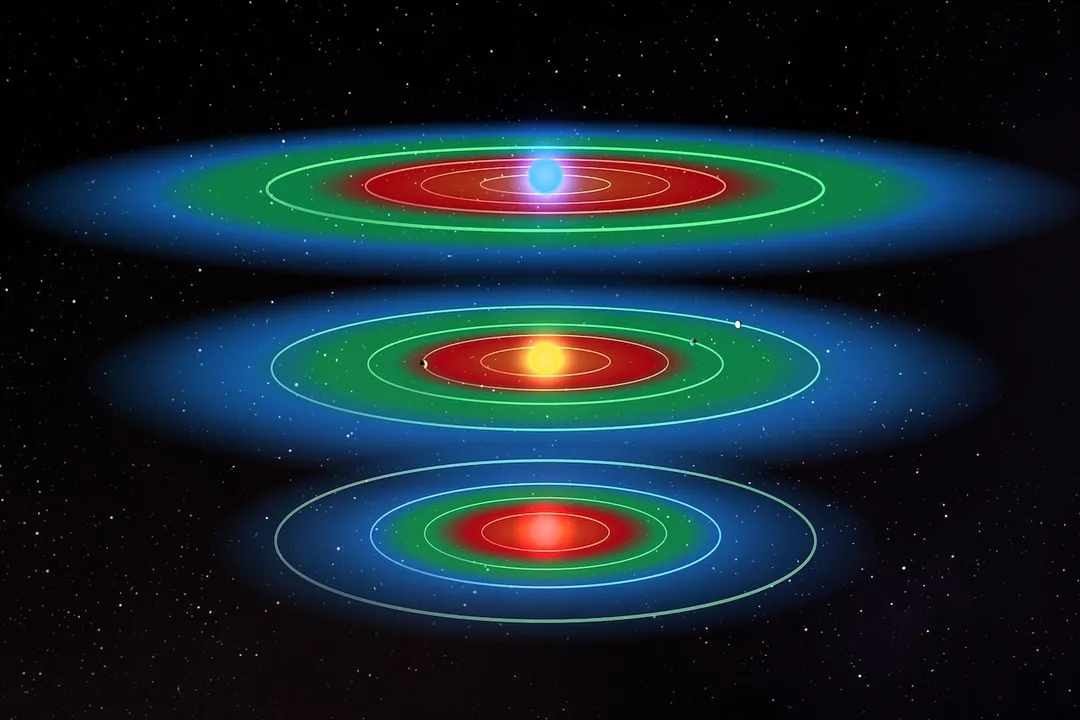
The Habitable Zone is fundamentally a thermal concept, defined by boundaries where water transitions between its three states: solid, liquid, and gas. [1] It is not a fixed distance from a star; instead, it is dictated by the star’s characteristics, primarily its luminosity or brightness. [4]
For our own Sun, which is a relatively stable G-type star, the HZ is located roughly between the orbits of Venus and Mars. [5] Venus receives too much heat, resulting in water boiling away, while Mars orbits further out where conditions are too cold, causing water to freeze solid. [5] Earth, luckily, sits squarely within this ideal band. [6]
The boundaries of the HZ are defined by two critical points: [1]
- The Inner Edge: This marks the distance where a planet’s surface temperature, due to stellar irradiation, would cause surface water to boil away, leading to a runaway greenhouse effect. [1] For stars similar to the Sun, this edge is quite close in.
- The Outer Edge: This is often referred to as the snow line or the point where solar radiation is so weak that atmospheric carbon dioxide freezes out, causing temperatures to drop significantly enough for water to freeze permanently on the surface. [1]
The principle applies to more than just planetary orbits. The "Goldilocks Principle" is a broader scientific concept suggesting that a stable system often requires conditions to be neither too extreme nor too weak, a theme seen across physics, biology, and ecology. [3]
# Stellar Influence
The most significant variable determining the location and characteristics of the HZ is the type of star a planet orbits. [1][4] Stars vary dramatically in mass, age, and temperature, which directly impacts how much energy they radiate and at what wavelengths. [4]
Hot, massive stars (like O or B-type stars) are intensely luminous. Consequently, their HZs are located very far out, potentially millions of kilometers away from the star, and they are quite wide. [1] However, these massive stars burn through their fuel rapidly, meaning they may not survive long enough for complex life to evolve, which introduces a time constraint not captured by the thermal definition alone. [4]
Conversely, smaller, cooler stars, such as red dwarfs (M-type stars), present a different scenario. They are dim and have a much lower energy output. Their HZs are consequently very narrow and located extremely close to the star—often closer than Mercury is to our Sun. [4]
Consider a system around a typical red dwarf, which emits far less energy than the Sun. To maintain liquid water, a planet needs to orbit much closer. This proximity has a major implication for planetary physics. When a planet orbits this close to a dim star, the gravitational pull can cause tidal locking, where one side of the planet permanently faces the star (eternal day) and the other side faces eternal darkness. [1] While the day-side might be warm enough for liquid water, the night-side would be an ice block, necessitating incredibly efficient heat distribution via a thick atmosphere to maintain a stable, life-supporting band along the terminator line. This illustrates how simply residing in the thermal HZ does not automatically guarantee true habitability; the resulting planetary dynamics are just as crucial. [4]
# Factors Beyond Heat
While the presence of liquid water sets the primary thermal constraint, astronomers recognize that the Habitable Zone is not a simple "yes/no" guarantee for life. [1] A planet residing in the HZ is merely potentially habitable. [4] Several other planetary characteristics must align for sustained habitability.
For instance, a planet orbiting too close to the inner edge of the HZ, even if technically below the boiling point, might lack the necessary atmosphere. If the star is too active, it can erode the planet’s atmosphere over time, causing water vapor to escape into space. [1]
Atmospheric composition plays a major role in modifying the thermal conditions. Greenhouse gases, like carbon dioxide and methane, trap heat, effectively pushing the HZ outwards because the planet can remain warm even at greater distances. Earth's atmosphere keeps our surface temperature about 33 degrees Celsius warmer than it would be otherwise. [6] A planet with a very thin atmosphere, even if it is located exactly where Earth is, might be too cold.
To account for these atmospheric variables, scientists sometimes delineate between two zones: [1]
- The Conservative HZ: The region where liquid water can exist on the surface under a wide range of plausible atmospheric conditions.
- The Optimistic HZ: A wider region that includes areas where life might be sustained through significant greenhouse effects, or where subsurface oceans (like those hypothesized for icy moons) could exist.
This distinction highlights that the simple distance calculation is only the starting point; the actual surface conditions depend on a planet's geological activity, magnetic field strength, and atmospheric density. [4]
# Earth’s Orbit
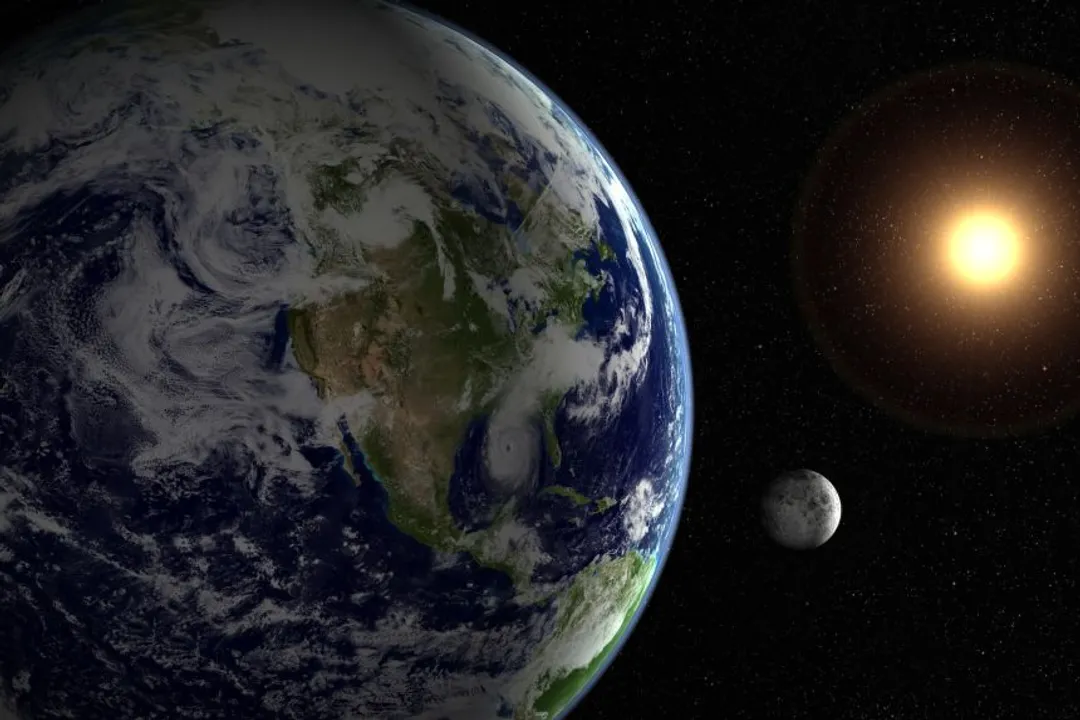
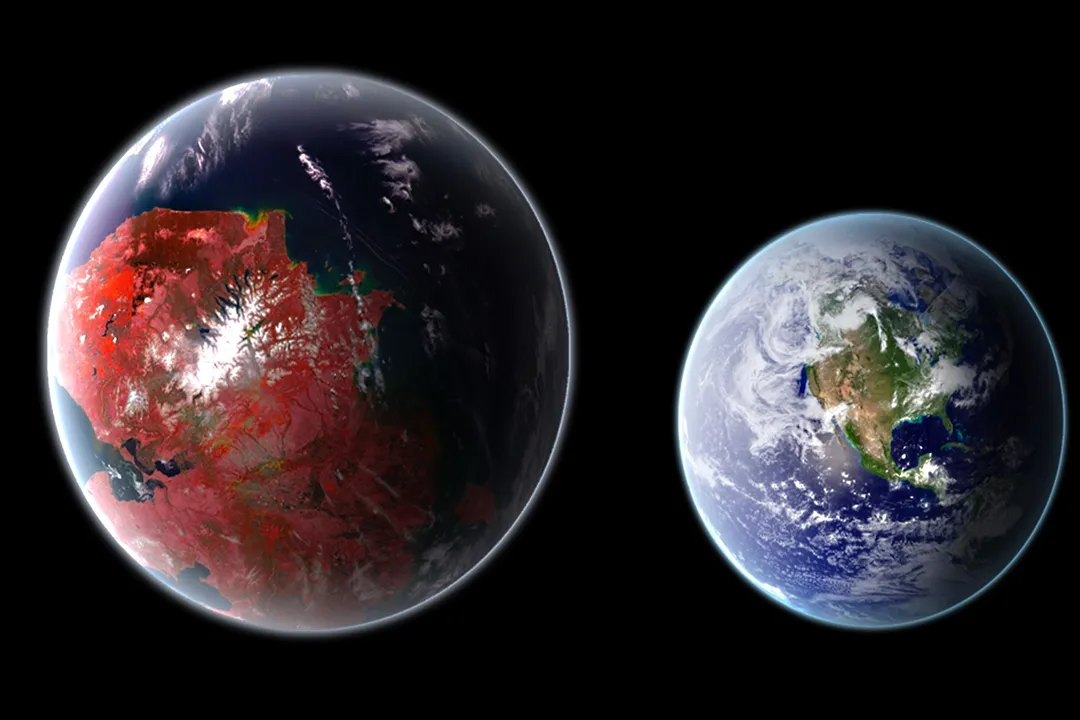
Earth serves as the perfect baseline, the example against which all other potentially habitable worlds are measured. It resides comfortably within the Sun's Habitable Zone, a fact often summarized by calling our planet the "Goldilocks Planet". [6]
Earth benefits from a stable energy source—the Sun—and its orbital distance results in an average surface temperature that allows water to remain liquid across much of the globe. [5] However, the "Goldilocks" moniker for Earth extends beyond just orbital distance. Earth possesses several other critical features that stabilize its environment:
- Plate Tectonics: This process helps regulate the long-term carbon cycle, moving carbon dioxide between the atmosphere and the interior over geological timescales, preventing runaway ice ages or overheating. [6]
- A Strong Magnetic Field: Generated by the planet’s molten core, this field deflects harmful charged particles streaming from the Sun (the solar wind), protecting the atmosphere from being stripped away. [6]
- A Large Moon: While often overlooked, the Moon stabilizes Earth's axial tilt, preventing extreme shifts in climate over millions of years. [6]
Therefore, when we search for other Goldilocks worlds, we are not just looking for a planet at distance from its star; we are searching for a world that has successfully recreated Earth’s complex system of atmospheric regulation and geological stability within that thermal sweet spot. [4]

# Exoplanet Targets
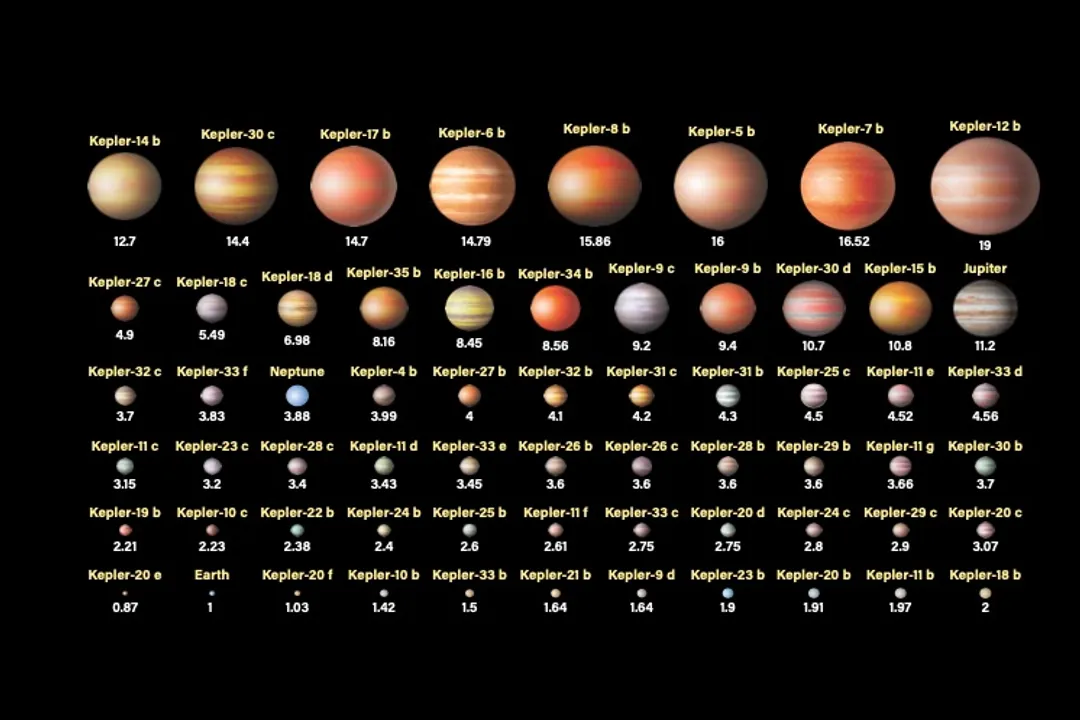
The development of instruments like the Kepler Space Telescope and the Transiting Exoplanet Survey Satellite (TESS) has revolutionized our ability to find worlds outside our solar system, leading to the discovery of thousands of exoplanets. [2] A primary goal in this field is identifying those exoplanets that orbit within their respective HZs.
When astronomers confirm an exoplanet candidate, they first calculate its orbital period and the properties of its host star (luminosity and temperature). Using these values, they can model where the HZ lies. If the planet’s orbit falls within that calculated band, it becomes a high-priority target for follow-up atmospheric study. [2][4]
For instance, a planet orbiting a star significantly cooler than the Sun might orbit its star once every few Earth weeks, yet still be considered "Goldilocks." If the star is an M-dwarf, the HZ might be so close that the planet receives enough light to sustain liquid water, but the very short orbital period means the planet is likely tidally locked, as noted earlier. This juxtaposition—being thermally "just right" but dynamically hostile—is a common tension in HZ classification. Statistically, because M-dwarfs are the most common stars in the galaxy, the vast majority of HZ candidates found so far orbit these dimmer stars, forcing scientists to grapple with the complexities of tidally locked worlds. [1]
# Zone Boundaries
Understanding the precise limits of the HZ is essential for prioritizing observation time. While the general concept is straightforward—liquid water—the exact inner and outer boundaries are subject to intense scientific modeling and debate, reflecting the complexity of planetary climates. [1]
Early models focused purely on stellar flux (the amount of energy hitting the planet). Newer models incorporate sophisticated three-dimensional climate simulations that factor in atmospheric composition, cloud cover feedback loops, and the planet's reflectivity (albedo). [1]
For example, the presence of clouds can be a double-edged sword. They can reflect incoming sunlight back to space, cooling the planet (like a blanket pulled back), or they can trap outgoing infrared radiation, warming the planet (like a greenhouse). The net effect depends on the cloud altitude and type, adding uncertainty to where the true inner edge lies. [1] The study of Earth's own climate dynamics, including its own historical greenhouse shifts, provides the necessary data to refine these planetary models used to gauge the HZ of distant exoplanets. [6]
The search for a Goldilocks world is ultimately a search for conditions that balance stellar energy output with planetary characteristics to permit stable, long-term liquid water. It moves beyond simple distance, requiring a deep dive into atmospheric chemistry, tidal dynamics, and geological history to determine if a world truly is just right for life.
Related Questions
#Citations
Habitable zone - Wikipedia
Goldilocks zone: A guide to the habitable sweet spot - Space
Goldilocks Principle - National Geographic Education
The Habitable Zone - NASA Science
What is a Goldilocks Planet? | Ready Jet Go! | PBS LearningMedia
Goldilocks Zone - BBC Sky at Night Magazine
What is the Goldilocks Zone? #space #sciencefacts - YouTube
Earth, our Goldilocks Planet - Science On a Sphere
Is Earth the only Goldilocks planet? | Astronomy.com