Is there a moon named after Galileo?
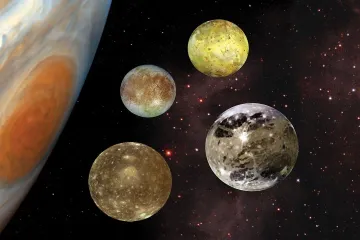
The most direct answer to whether a moon is named after Galileo Galilei is nuanced: no single celestial body orbiting any planet carries the simple designation "Galileo," but four of Jupiter’s largest satellites—worlds larger than our own Moon—are eternally associated with him through their collective title: the Galilean moons. This naming honors the brilliant Italian astronomer who, armed with one of the earliest telescopes, first turned his lens toward the heavens and fundamentally altered humanity’s view of the cosmos in the early 17th century.
# First Glimpses
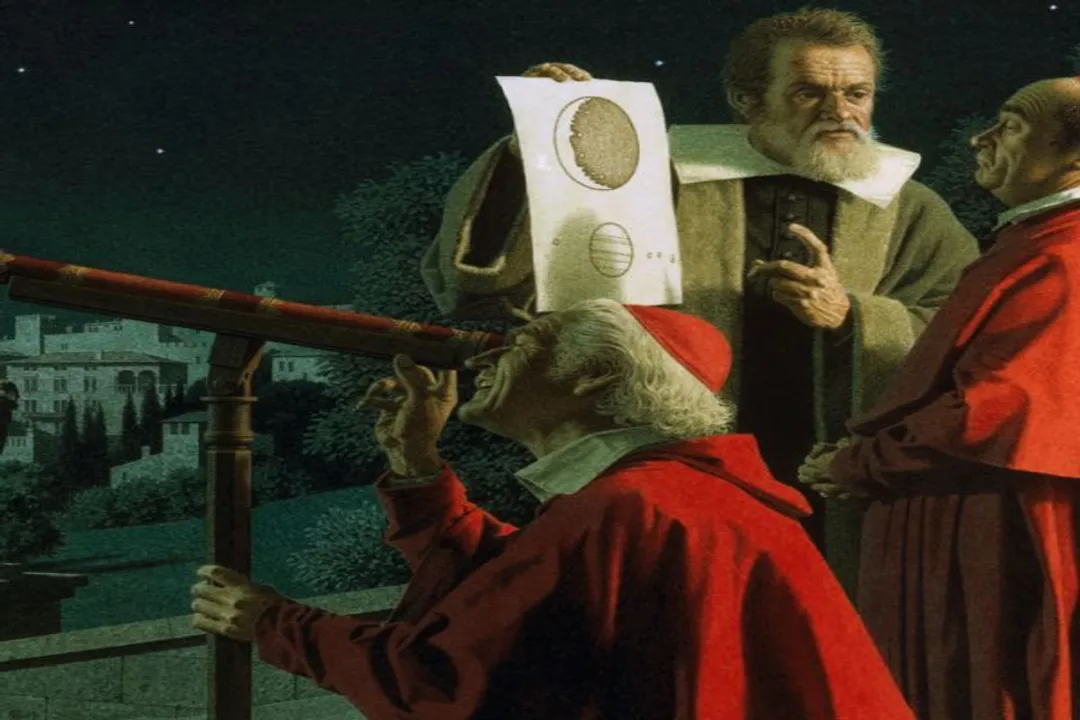
The actual moment of discovery, an event of immense scientific and philosophical consequence, occurred in early January . Galileo, using his rudimentary but powerful spyglass, noticed three tiny "stars" hugging the planet Jupiter. Within a few nights, he spotted a fourth. Crucially, he observed that these companions were not fixed stars but were orbiting Jupiter, moving in paths that defied the established Ptolemaic model, which insisted everything orbited the Earth. This observation provided direct, visible proof that the heavens were not entirely organized around our world. For a time, Galileo referred to them as the Medicean Stars, dedicating them to his patron, Cosimo II de' Medici, Grand Duke of Tuscany. However, the astronomical community quickly adopted the more descriptive term that recognized the discoverer: the Galilean moons.
# Naming Mythology
While Galileo’s initial identification of these four worlds cemented his legacy on them, the official names they bear today come from classical mythology, specifically tales revolving around Jupiter, the Roman equivalent of the Greek god Zeus. The decision to name them this way was made decades after Galileo’s observation, following the general practice of naming newly discovered satellites after mythological figures associated with the planet they orbit.
Jupiter, in myth, was a powerful, philandering king, and the moons are named after some of his most famous lovers or companions.
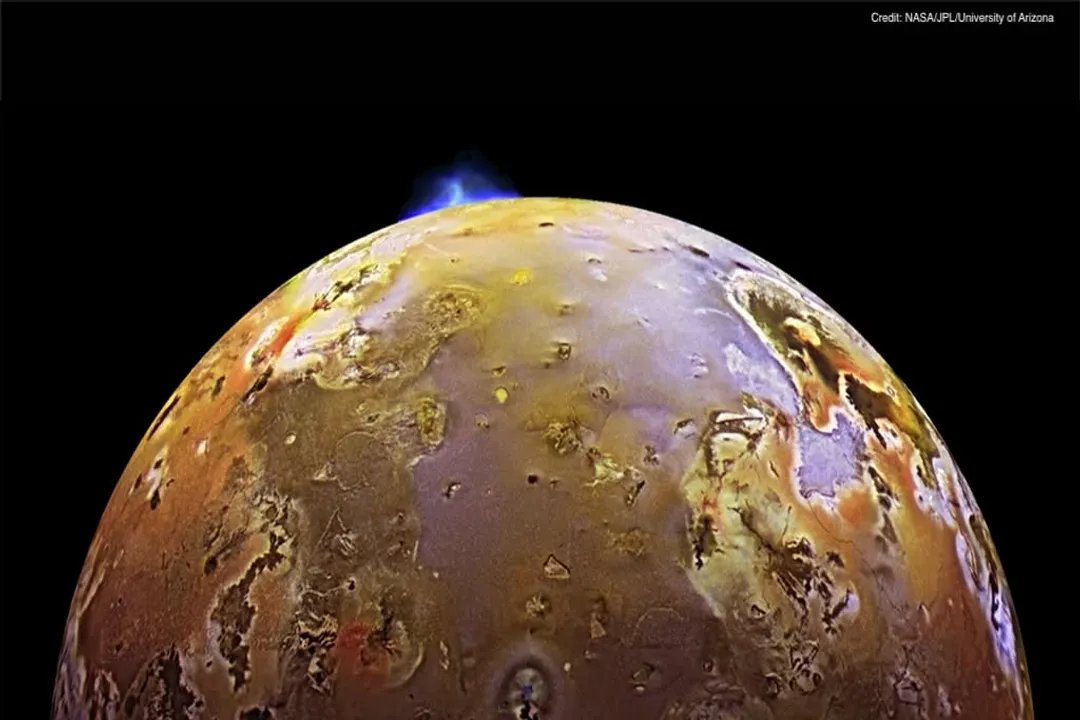
- Io: Named for a priestess of Hera (Juno in Roman myth) who became one of Jupiter’s lovers.
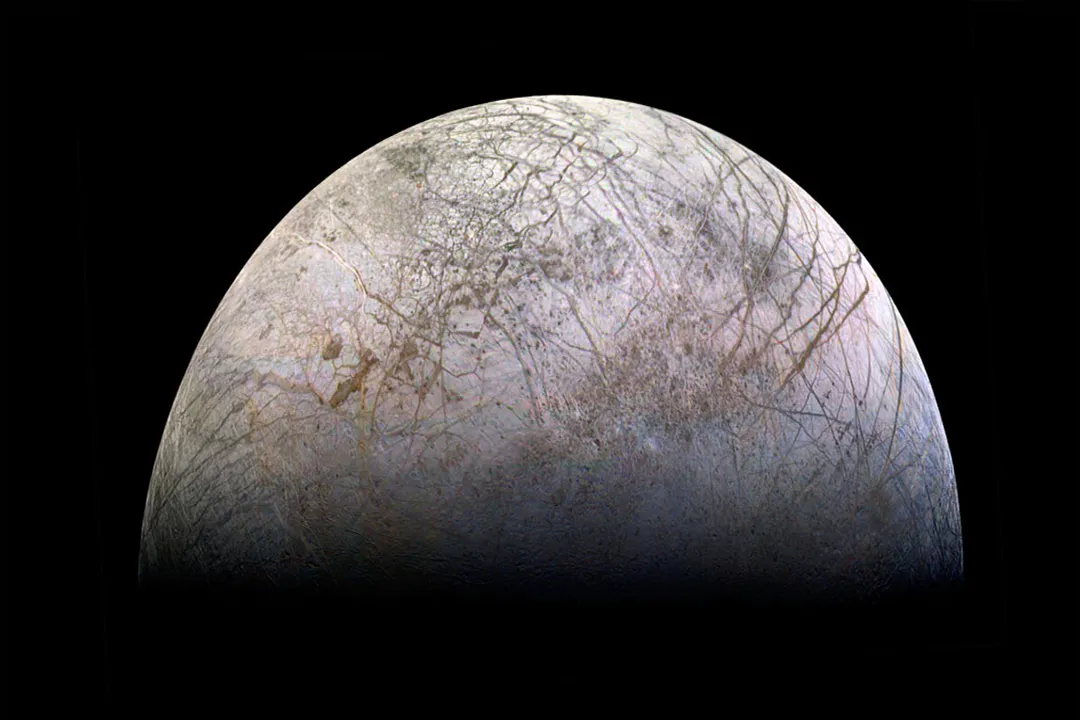
- Europa: Named for a Phoenician princess abducted by Jupiter and carried away to Crete.
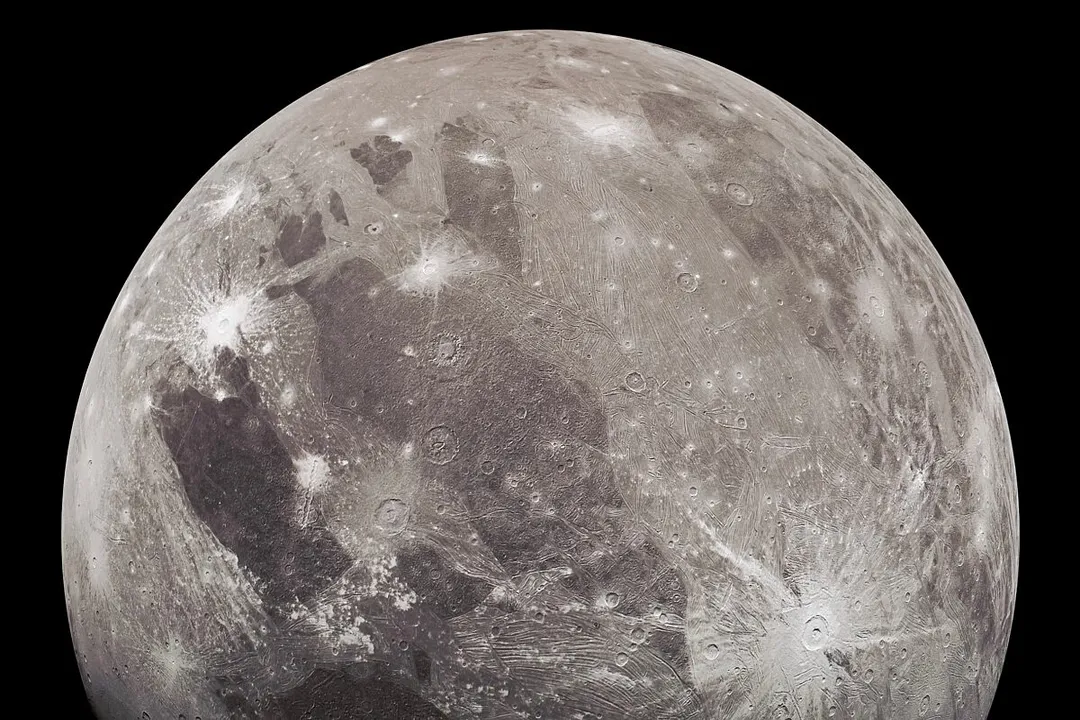
- Ganymede: Named for a beautiful Trojan prince whom Jupiter abducted to serve as his cupbearer.
- Callisto: Named for a nymph who was a companion of the goddess Artemis (Diana) and was seduced by Jupiter.
It is a fascinating aspect of celestial nomenclature that the first four planetary satellites ever discovered by telescope are named not for the discoverer, but for the mythological conquests of the planet’s namesake. This contrasts sharply with more modern discoveries, such as the moons of Uranus, which are named after characters from the works of Shakespeare and Alexander Pope. The collective honor remains with Galileo, distinguishing them as a unique and historically significant group. The discovery was so impactful that it is still commemorated on university calendars, marking milestones in astronomical history.
# Comparative Worlds
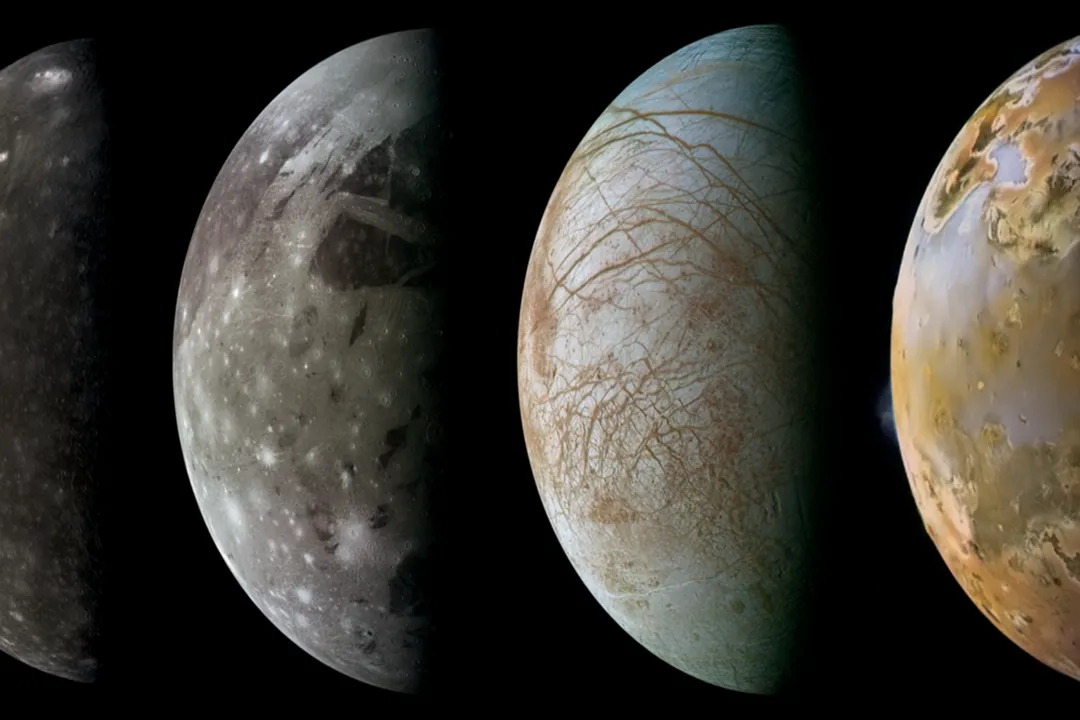
The sheer scale and diversity of the four Galilean worlds are staggering, especially when considering that they were first spotted as mere pinpricks of light. These moons are significant worlds in their own right; in fact, Ganymede is the largest moon in the entire Solar System, even bigger than the planet Mercury.
To appreciate their differences, one can look at a few key physical characteristics, which highlight the variety of environments present even in a tight orbital grouping around a single gas giant:
| Moon | Diameter (km) | Density () | Key Feature |
|---|---|---|---|
| Io | Most volcanically active world | ||
| Europa | Icy shell covering a subsurface ocean | ||
| Ganymede | Possesses its own magnetic field | ||
| Callisto | Heavily cratered, ancient surface |
This table reveals a clear trend in their formation proximity to Jupiter. Io, the innermost, is denser, suggesting it retained more rock and metal during formation, heated by immense tidal forces from Jupiter and the other moons. Callisto, the outermost, is less dense and appears largely unchanged, bearing the scars of billions of years of impacts, suggesting it may have formed farther out and migrated inward slowly, thus retaining less internal heat.
The gravitational interplay between these four massive bodies creates dynamic systems. For instance, the orbital resonance between Io, Europa, and Ganymede—where their orbital periods are related by simple whole numbers—is what keeps Io’s interior molten through constant tidal flexing. This constant gravitational tug-of-war is a testament to the system’s powerful mechanics, mechanics that Galileo could only infer from their movement across the night sky. It’s remarkable to think that the slight variations in the timings of their eclipses, which Galileo recorded meticulously, are the very clues that later scientists used to map out these complex orbital mechanics.
# The Search for Life's Ingredients
One of the most significant reasons these worlds continue to captivate scientists is the potential for past or even present extraterrestrial life, specifically on Europa. Europa's icy surface, which reflects sunlight brightly, is believed to hide a vast saltwater ocean beneath it, warmed by tidal heating from Jupiter. This combination—liquid water, energy (from tidal forces/radiolysis), and chemical components—matches the basic requirements for life as we understand it. While Io offers spectacular geology, being too volcanically hot for stable surface water, and Ganymede's internal ocean is likely sandwiched between layers of ice, Europa remains the premier target for astrobiology within our Solar System outside of Earth.
Ganymede presents another unique case. It is the only moon known to generate its own magnetic field, a feature usually reserved for full-fledged planets like Earth. This magnetosphere suggests a layer of liquid, electrically conductive material—likely liquid iron or sulfur—exists deep within its core, further complicating its internal structure.
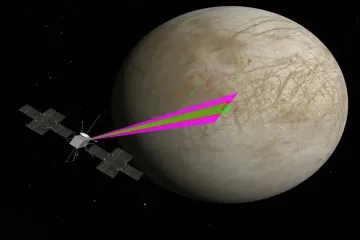
Thinking about the raw data gathered since , it’s clear that the observational scale has exploded. If Galileo’s early telescope offered perhaps a few hundred times magnification, modern space probes like Voyager, Galileo (the namesake probe), and upcoming missions like the ESA’s JUICE (JUpiter ICy moons Explorer) can resolve surface features down to meters. This transition from faint dots to detailed, three-dimensional geological maps, as suggested by visualizations that treat these worlds as interactive terrains, shows an incredible trajectory in human capability spurred by that initial sighting.
# Navigating the Hostile Environment
While the moons themselves are worlds of interest, their environment—orbiting Jupiter—presents significant challenges for exploration. Jupiter’s immense magnetosphere is filled with intense, high-energy radiation that bombards the inner moons most heavily. Io and Europa are constantly bathed in this deadly shower.
For example, when planning a mission like JUICE, which intends to spend years studying the system, trajectory planning becomes critical to minimize exposure to radiation while maximizing observational time. A simple calculation demonstrates the intensity: the radiation environment near Europa is hundreds of times more intense than what astronauts endure in low Earth orbit, requiring spacecraft electronics to be heavily shielded or designed with radiation-hardened components. This is a hazard Galileo could never have conceived of when he first saw the shadows crossing Jupiter’s face.
Furthermore, the system is not static; it's a dynamic celestial theater. Events involving the Galilean moons are frequently observable by amateur astronomers even today using good quality, modern backyard telescopes, proving that Galileo’s original discovery remains accessible. An observer today can often track the transit of one of the moons across Jupiter’s disc, an experience that connects the modern stargazer directly to the -century breakthrough. This direct line of sight to historical astronomy offers a powerful grounding experience for anyone interested in space science.
# Legacy Beyond a Single Name
The legacy of the four large moons isn't just about their physical attributes or their role in proving heliocentrism; it is also reflected in culture, extending even into science fiction. The sheer grandeur of these worlds has made them popular settings or subjects in literature and film, demonstrating their deep penetration into the public imagination—a testament to their significance, which began with a single man looking up.
Galileo’s initial breakthrough wasn't just identifying four moving lights; it was the beginning of a scientific revolution, forcing a change in perspective from geocentric arrogance to heliocentric reality, even if the Earth remained stationary in the eyes of most contemporaries for a while longer. The discovery, published in his Sidereus Nuncius (Starry Messenger), sent shockwaves through the established order.
When we consider the concept of a "moon named after Galileo," we see a grander tribute than a single plaque. His name is affixed to a system of four major worlds, each a distinct planetary body with its own unique chemistry, geology, and potential for hosting complexity. It is a designation that speaks to the magnitude of his contribution—he didn't just find another satellite; he revealed a miniature solar system that mirrored our own structure, a concept that would have been radical in .
The fact that these four worlds continue to be the focus of intensive study, with multiple international agencies planning follow-up missions dedicated to their oceans and interiors, ensures that the name "Galilean" will remain central to planetary science for the foreseeable future. Whether a future probe manages to drill through Europa's ice or map Ganymede’s magnetic field lines, the credit for pointing the way belongs to the astronomer who first saw them orbiting their giant host planet. The names Io, Europa, Ganymede, and Callisto are the individual identities, but the shared heritage, the system of discovery, belongs to Galileo Galilei. He didn't get a moon named after him; he got a quartet of worlds that redefined our understanding of where we fit in the universe.

Related Questions
#Citations
Galilean moons - Wikipedia
What are Jupiter's Galilean moons? | The Planetary Society
On this day in history way back in 1610, Galileo Galilei first observed ...
Galilean moons | Memory Alpha - Fandom
Galilean Moons: Past, Present, Future - University of Colorado Boulder
Galileo Discovers Jupiter's Moons - National Geographic Education
The Galilean Moons - A Closer Look - Stellarium Labs
409 years ago today, Galileo Galilei discovered the first three moons ...
The Galilean moons