What elements are present in a stellar nebula?
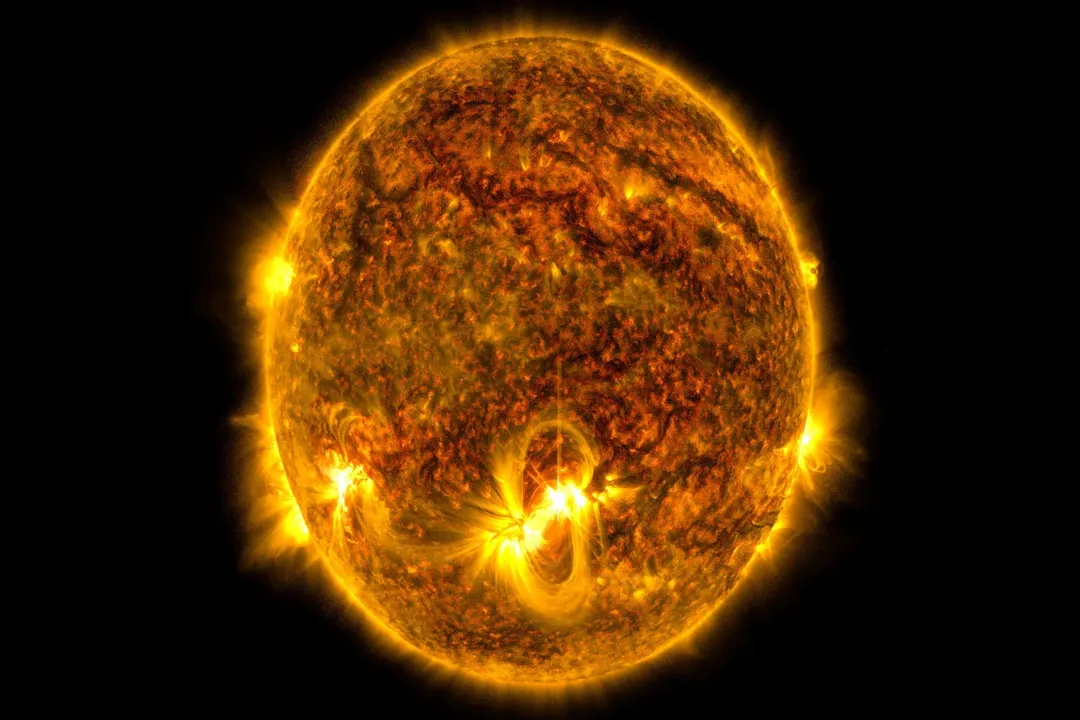
Vast clouds of gas and dust permeate the cosmos, serving as the starting blocks for everything that follows. These cosmic collections, known generally as nebulae, are the raw material from which stars and planetary systems are constructed. When we consider the elemental makeup of these regions, the answer is both simple and profoundly complex, involving nearly every element on the periodic table, though dominated by the lightest two.
# Gas and Dust
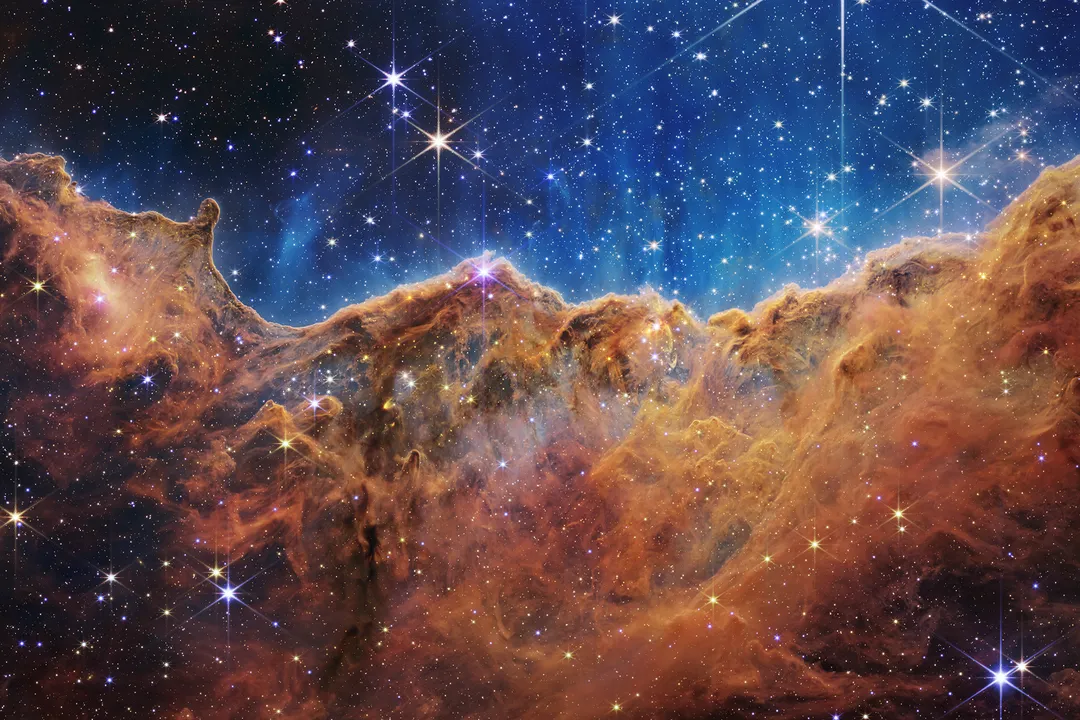
Fundamentally, nebulae are immense reservoirs of interstellar gas, particulate matter, and plasma scattered across space. The overwhelming majority of this bulk material consists of hydrogen and helium gas. These are the universe's primordial elements, forged in the intense conditions of the Big Bang itself. In the cold, dense pockets within these molecular clouds—often called stellar nurseries—gravity begins to pull this hydrogen and helium together, causing clumps to collapse and eventually form protostars. Even in star-forming regions like the Orion Nebula, an emission nebula primarily made of ionized hydrogen, this basic composition holds true.
However, nebulae are far from being just pure H and He. They contain trace amounts of heavier elements and interstellar dust, which become increasingly important as we trace the life cycle of stars. The relative proportions of these lighter elements versus the heavier "metals" (in astronomy, any element heavier than helium is termed a metal) dictate the character of the gas cloud and the stars it will eventually create.
# Stellar Enrichment
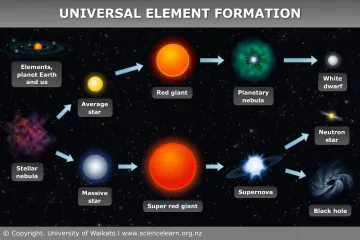
The process that transforms a simple cloud of hydrogen and helium into a chemically diverse environment is stellar evolution itself. Stars spend the longest phase of their existence fusing hydrogen into helium in their cores, a process called nuclear fusion. As stars age, particularly the more massive ones, this fusion continues, building up heavier nuclei like carbon, oxygen, and iron in their interiors.
When stars exhaust their nuclear fuel, their deaths enrich the surrounding interstellar medium. Low-mass stars shed their outer layers, creating glowing shells of ionized gas known as planetary nebulae. High-mass stars end their lives in cataclysmic supernova explosions, which violently eject all the elements they have forged, including the heaviest ones like gold, silver, and uranium, out into space. These enriched stellar remnants—the planetary nebulae, supernova remnants, and stellar winds—blend with the existing gas and dust, providing the ingredients for the next generation of stars and planets.
# Chemical Diversity Observed
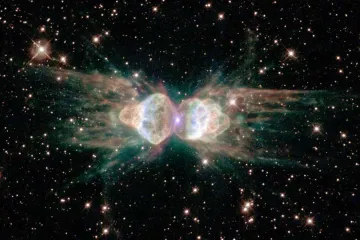
The chemical composition of the material being recycled is not uniform; it depends heavily on the type of star that expired and the nuclear processing that occurred within it. Planetary nebulae, being the direct product of stellar mass loss, offer a clear look at this processed material.
For instance, some planetary nebulae are notably carbon-rich, sometimes containing twice the amount of carbon relative to oxygen, a composition quite different from our Sun, which features more oxygen than carbon. Other nebulae exhibit an overabundance of nitrogen, often those that are the most luminous and visible in distant galaxies. While helium is generally found to be modestly enhanced in many of these shells, the composition can vary wildly.
Consider the chemical inventory that is being returned to the interstellar medium:
| Element Group | Primary Source/Context | Enrichment Level Notes |
|---|---|---|
| Hydrogen (H) | Primordial/Baseline Cloud Material | Can be deficient or almost entirely absent in some stellar ejecta. |
| Helium (He) | Primordial/Big Bang Origin | Generally enhanced, though some very old nebulae show normal abundance. |
| Carbon (C), Nitrogen (N) | Stellar Fusion (H/He burning products) | Highly variable; some nebulae are strongly carbon-rich or nitrogen-rich. |
| Oxygen (O), Iron (Fe) | Stellar Fusion (He/C burning products) | Abundances show severe discrepancies when measured via different spectral lines, indicating highly enriched, hydrogen-poor pockets. |
| Gold (Au), Silver (Ag), Uranium (U) | Supernova Explosions | Dispersed during the most energetic stellar deaths. |
A fascinating detail emerging from the study of these remnants is the existence of regions within nebulae that are strongly enriched in heavy elements while simultaneously being deficient in hydrogen. This stark difference from the overall nebular composition suggests these pockets originated from deep within the star where the final, hydrogen-poor, heavy-element-rich core material was expelled, resulting in lower temperatures due to heavy-element cooling effects. This variation in elemental ratios, sometimes showing discrepancies of a factor of 30 or more for elements like oxygen, reflects the messy, varied nature of stellar interiors being exposed.
It is also worth noting that some planetary nebulae contain internal dust, which is often detected via its emitted infrared radiation after being heated. The presence of this solid material further confirms that these shells are even richer in heavy elements than gas-phase studies alone might suggest.
# Recycling the Cosmos
The key takeaway here is that the initial stellar nebula is chemically "primitive," defined by its massive proportions of hydrogen and helium. The heavier elements that make up rocky planets, water, and life itself—elements like carbon, oxygen, and iron—are largely not native to the initial cloud but are inherited.
When observing extremely old nebulae, such as those found in the galactic halo or globular clusters, astronomers find a very low heavy-element content, sometimes lower by a factor of about 50 compared to newer nebulae, yet they maintain a relatively normal abundance of helium. This finding strongly supports the idea that the earliest material in the Galaxy was metal-poor, and that the ongoing process of stellar death and enrichment is what continuously updates the chemical inventory available for future star formation.
The very existence of complexity in any nebula, whether it is a bright emission region like the Pillars of Creation or a dark, cold cloud, is a direct testament to the history of the stars that died before it. The gas and dust we see collapsing today are not the same material that formed the first stars; they are the remnants, chemically processed and thoroughly mixed, ensuring that the building blocks for future celestial structures are more diverse than the universe's initial conditions allowed. The cycle is constant: star burns, star dies, star material enriches the cloud, new star forms from the enriched cloud.
# Abundance Signatures
The way these abundances are measured provides a powerful diagnostic tool. Astronomers analyze the spectrum of light emitted or reflected by the gas to determine elemental ratios, temperature, and density. When studying the central stars of planetary nebulae, the appearance of very broad emission lines of carbon or nitrogen, superimposed on a blue continuum, immediately classifies the star as a hot object, possibly a Wolf-Rayet star nucleus. This spectroscopic signature is a chemical fingerprint indicating that the star has already ejected much of its outer, hydrogen-rich atmosphere.
Observing how the temperature of the central star relates to the ionization of gas elements like hydrogen and helium allows for temperature estimations. For instance, the ratio of photons needed to ionize helium (more energetic) versus hydrogen (less energetic) shifts dramatically with stellar temperature, making these elements excellent thermometers for the stellar remnants that illuminate their ejected shells. The ability to accurately measure these differences in elemental composition between one nebula and the next allows astronomers to map out the chemical evolution across the entire galaxy, tracking where the oldest, least enriched material resides versus where newer, heavily processed material has been recently added.
Related Questions
#Citations
Planetary nebula - Elements, Gas, Stars | Britannica
Star Basics - NASA Science
What is a Nebula? - National Space Centre