Which element is found in the nebula?
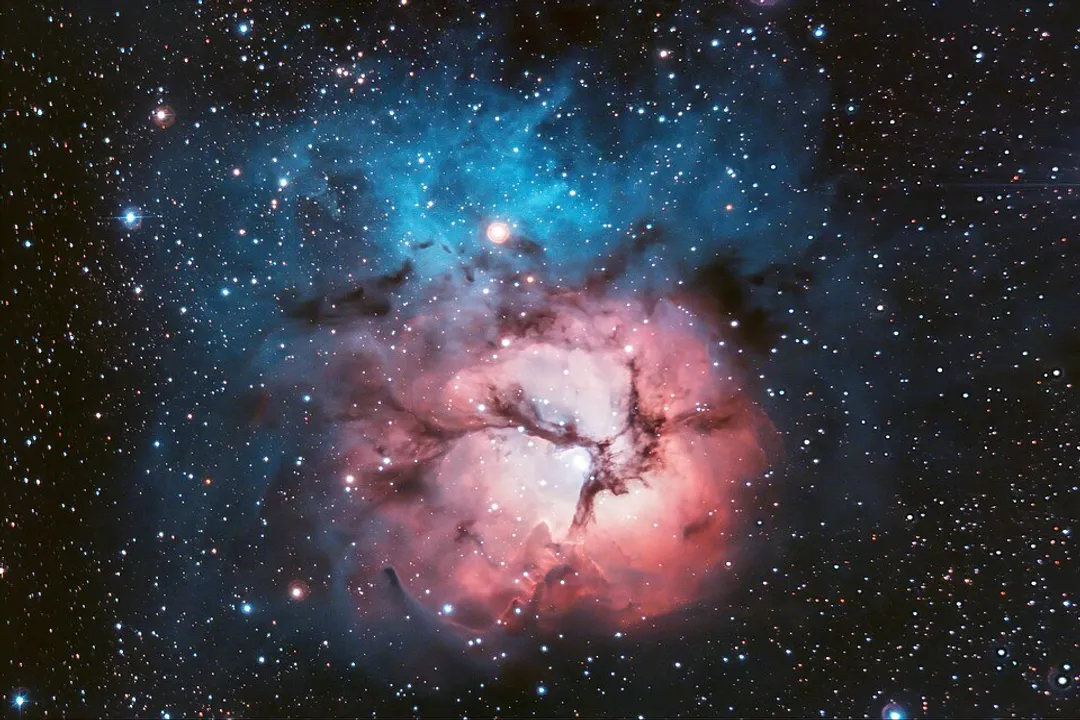
Vast, ethereal clouds suspended in the blackness of space, nebulae represent some of the most breathtaking sights in our cosmos. [2] These interstellar bodies, often described as stellar nurseries, are fundamentally immense accumulations of gas and dust scattered across the vast gulfs between stars. [1][3][6] To understand what truly constitutes a nebula, one must look past the glowing visual spectacle and delve into the fundamental building blocks that make up these celestial components.
# Primary Ingredients
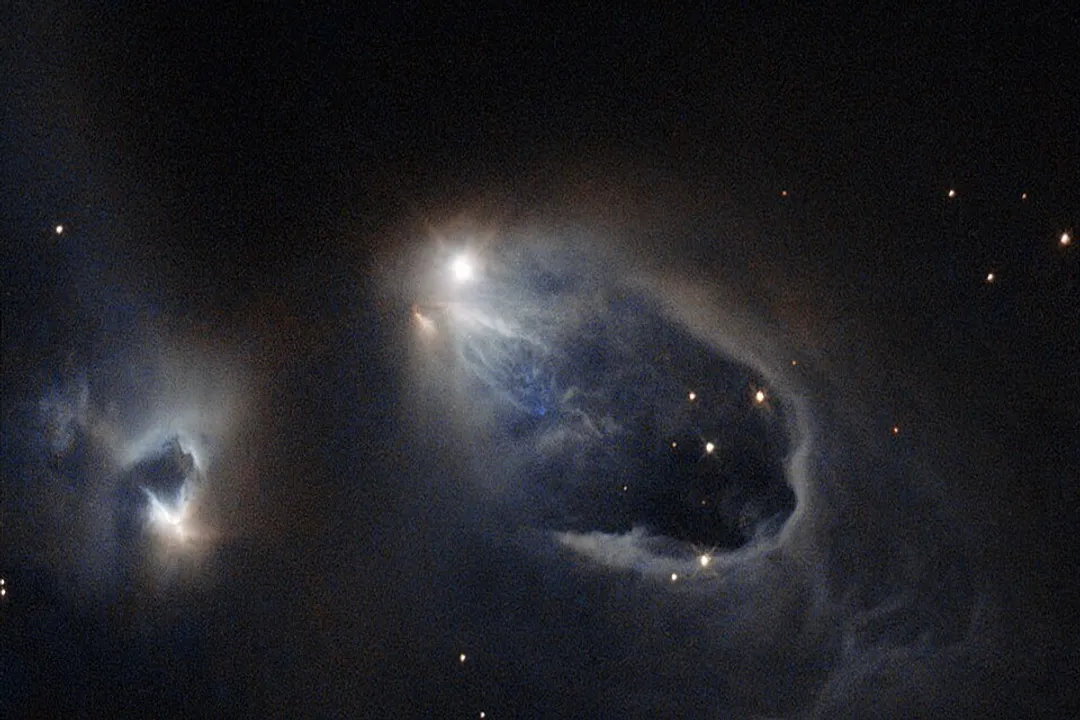
The overwhelming majority of any given nebula is composed of the two lightest and most abundant elements in the universe: hydrogen and helium. [3][4][5][6] This composition mirrors the starting material of the cosmos itself, laid down in the immediate aftermath of the Big Bang. [5] Astronomers classify nebulae as being composed of gas and dust, with the gaseous component being overwhelmingly dominated by these two elements. [1][3]
Hydrogen, the simplest element, typically forms the bulk of the mass in these clouds. [5] In many nebulae, particularly emission nebulae, this hydrogen gas is energized or ionized by nearby hot, young stars. [8] When the electrons in hydrogen atoms recombine with the protons, they often release energy primarily in the red part of the light spectrum, known as H-alpha emission, which gives many nebulae their characteristic ruddy glow. [8] Helium, the second lightest element, is also present in significant quantities, usually following hydrogen in abundance. [4][5] The presence of these two gases in such high proportions is what makes nebulae the primary sites for star formation, as gravity slowly pulls these massive, diffuse reservoirs together to initiate fusion. [2]
For a typical, relatively young nebula, such as a star-forming region, the composition ratios closely resemble those observed in our own Sun’s general makeup, where hydrogen and helium account for about 98% of the elemental mass. [4] This provides a useful baseline for understanding these clouds—they are essentially cosmic reservoirs of the universe’s primordial materials. [5]
# Heavier Traces
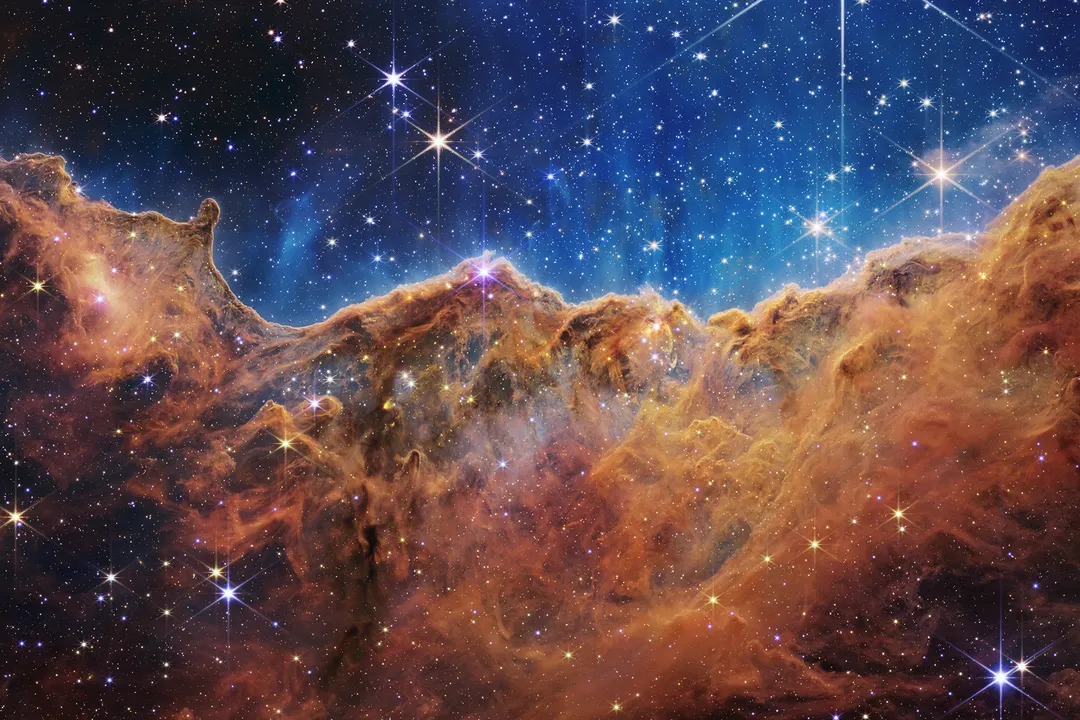
While hydrogen and helium form the foundation, they are not the only materials present. Nebulae contain a smaller, yet scientifically significant, fraction of heavier elements, which astronomers often refer to collectively as "metals". [5] These elements are those created later in the universe through nuclear fusion within stars and subsequent supernovae explosions. [5]
The trace elements found within the interstellar medium that forms nebulae include elements like oxygen, nitrogen, and carbon. [4] The exact ratio and presence of these heavier elements can vary dramatically depending on the nebula’s origin and environment. [5] For instance, a nebula that is the remnant of a recent supernova will be significantly enriched with elements heavier than helium compared to a primordial cloud that is just beginning to collapse. [1] These heavier dust grains and molecules, though sparse compared to the gas, are crucial because they provide the necessary opacity and structure within the cloud, eventually enabling the formation of planets. [1]
To put this elemental distribution into perspective, one can imagine a vast cosmic recipe where the main ingredients are supplied in overwhelming measure, and the remaining components are added in trace amounts, acting as flavorings or structural additives. If we were to assign relative abundances to a generic nebula, it might look something like this, keeping in mind that these are approximations based on general astronomical composition data:
| Element Group | Typical Abundance (by mass) | Role/Significance |
|---|---|---|
| Hydrogen () | Primary mass, fuel for initial star formation [5] | |
| Helium () | Second most abundant, remnant from Big Bang [4] | |
| "Metals" (, etc.) | Form dust grains, influence light emission profiles [5] |
It is important to realize that even the "metals" present are often fully ionized or exist as complex molecules suspended as dust particles, depending on the nebula's energy input. [5]
# Classification Impacts Composition
The specific environment within a nebula dictates which elements are visible and in what state they exist, leading to different classifications based on appearance and how they interact with light. [1] The elements present don't just sit statically; they are actively participating in physical processes that shape how we observe the nebula. [5]
For example, an emission nebula glows because its gas—mainly ionized hydrogen—is energized by ultraviolet radiation from nearby hot, young stars, causing it to emit light at specific wavelengths. [8] The color of the emission often directly reveals the presence of certain elements: red for hydrogen, blue-green for doubly ionized oxygen, and so on. [5]
A reflection nebula, in contrast, does not emit its own light but instead scatters the light from nearby stars. [1] Here, the dust component—composed of those heavier elements condensed into microscopic solid particles—is what we primarily see, often appearing blue because the scattering process favors shorter wavelengths, similar to why our own sky is blue. [1]
Then there are dark nebulae, which appear as silhouettes against a brighter background. [1] These regions are dense enough to block visible light, but they are still composed of the same elemental mix—mostly cold molecular hydrogen and dust—just in concentrations where self-extinction occurs. [1][6] The existence of these dark patches emphasizes that the elements are present everywhere in the interstellar medium, even where they are not brightly illuminated.
# Elemental Evolution Insight
The elemental makeup of a nebula offers a unique window into the chemical history of its local galactic neighborhood. When we observe the pure dominance of hydrogen and helium in a collapsing cloud, we are essentially looking at a chemical fingerprint of the early universe. [5] However, the presence of even small percentages of heavier elements like silicon, iron, or neon tells a profound story: that stellar death has already occurred in that vicinity. [5] A nebula currently gathering to form a new generation of stars must have been enriched by the outgassing or explosions of previous stellar generations. [1] This contrast—the mix of Big Bang remnants (H, He) and supernova products (heavier elements)—highlights that star formation is an iterative, ongoing chemical recycling process within galaxies, where each new star is born from material already processed by its ancestors. [5]
# Observing the Invisible Ingredients
Determining the precise elemental makeup of something millions of light-years away relies entirely on spectroscopic analysis, a process dependent on the physical state of the elements present. [5] When light from or through a nebula is spread out into its constituent colors—its spectrum—it reveals specific absorption or emission lines corresponding to the electronic transitions occurring in atoms and ions of particular elements. [5] This technique allows astronomers to measure not only what elements are there but also their relative proportions and physical conditions, such as temperature and density. [5] This method confirms that the composition is chemically diverse, even if dominated by just two elements. [4]
# Compositional Context Tip
For anyone trying to visualize the scarcity of the heavier elements, consider this conceptual comparison: if you took a standard cubic meter of nebula gas, containing roughly hydrogen atoms (the dominant species), the number of oxygen atoms—a key "metal"—might only be in the single digits or low tens, depending on the nebula type. [4][5] This extreme dilution means that while oxygen is vital for processes like cooling the gas or creating specific colors, it requires an immense volume of material to gather a detectable amount of it. This scarcity reinforces the fundamental role of hydrogen and helium as the cosmic substrate upon which all other chemistry is built. [6]
# Physical States and Formation
The physical processes occurring within the cloud directly influence how the elements manifest. [5] Temperature and proximity to ionizing radiation are key factors. [5] In colder, denser regions, elements combine to form molecular gas and solid dust particles. [1] These dust grains are typically silicate-based or carbonaceous, comprised of the heavier elements present. [1] In contrast, in regions closer to hot, massive stars, the energy is so intense that atoms are stripped of their electrons, creating plasma where highly energetic ions exist. [5] Understanding which elements are present in atomic, molecular, or ionic states is essential for accurately modeling the entire nebula structure, from the cold, dark cores to the bright, energized edges. [1][5] The structure described by the Hubble Space Telescope, like the famous Pillars of Creation, is a direct visual manifestation of this elemental interaction with intense stellar radiation. [2]
Related Questions
#Citations
Nebula - Wikipedia
Hubble's Nebulae - NASA Science
What is a Nebula? - National Space Centre
What gas does a nebula contain of? : r/askastronomy - Reddit
Nebula - Gas, Dust, Radiation | Britannica
Nebula
Nebula interstellar cloud composition and formation - Facebook
Emission Nebula Facts For Kids | AstroSafe Search - DIY.org
What are the nebulae? - NASA ADS