What is the stellar period?
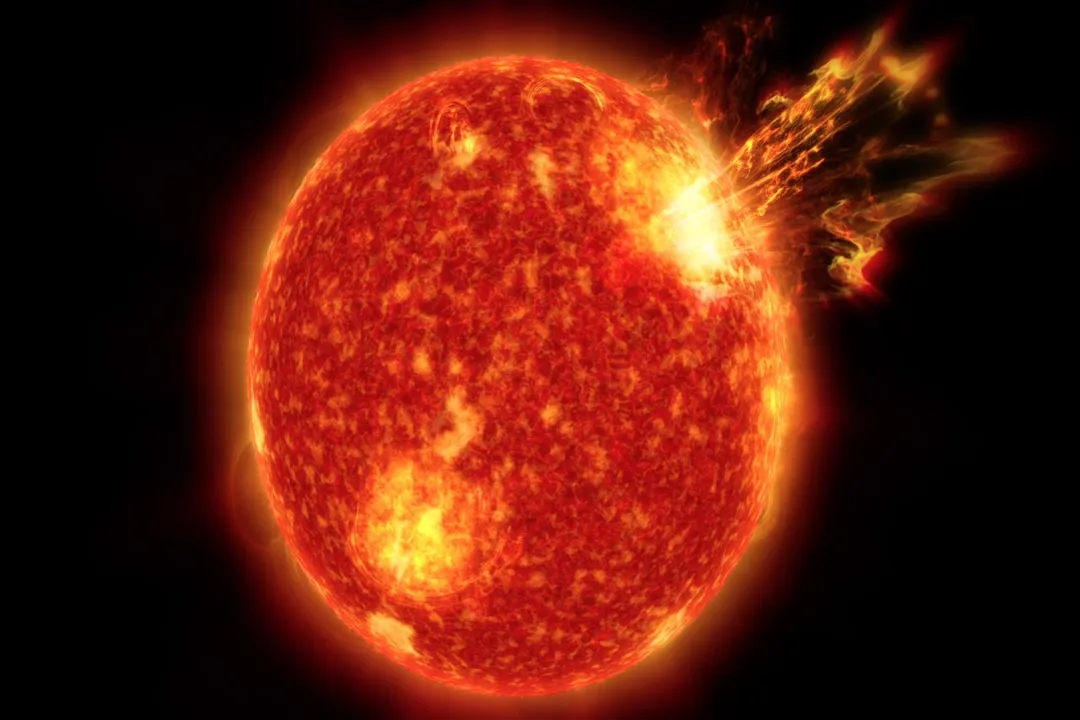
The duration of a star’s life, often referred to as its stellar period, is one of the most fascinating timescales in the universe, spanning from mere millions of years to trillions. [4] This period encompasses the star's entire existence, charting its dramatic evolution from a diffuse cloud of gas and dust to its final, often explosive, demise. [2][7] What dictates this timeline is fundamentally the star’s initial mass; bigger stars burn through their fuel reserves at a ferocious rate, leading to spectacularly short lives, whereas smaller, more frugal stars can shine steadily for vast stretches of cosmic time. [4] Understanding this cycle is central to stellar astronomy, revealing how elements are forged and how galaxies change over eons. [3][5]
# Cosmic Birth
Every star begins its life within a giant molecular cloud, a sprawling, cold reservoir composed primarily of hydrogen, helium, and trace amounts of heavier elements—the cosmic detritus of previous stellar generations. [2][7][8] These interstellar clouds, often called nebulae, are vast, cold, and dense enough for gravity to begin its relentless work. [2]
The process starts when a disturbance, perhaps a shockwave from a nearby supernova or a collision with another cloud fragment, causes a region within the nebula to contract under its own gravity. [7][8] As this pocket of gas collapses, it fragments into smaller, denser clumps. [7] These clumps continue to shrink, and as the material spirals inward, the central core heats up significantly due to the increasing pressure and conversion of gravitational energy into thermal energy. [2][8] This glowing, contracting mass is known as a protostar. [7][8] A protostar continues to gather mass from the surrounding envelope, and its internal temperature steadily rises. [7]
The true "birth" of the star—the moment it officially begins its stellar period—occurs when the core temperature becomes hot enough, around 15 million degrees Celsius, to ignite sustained nuclear fusion. [2][8] At this threshold, hydrogen atoms begin fusing into helium, releasing enormous amounts of energy that create an outward pressure perfectly balancing the inward crush of gravity. [2][4] This state of equilibrium defines the star’s entry onto the Main Sequence. [2][4]
# Main Sequence Stability
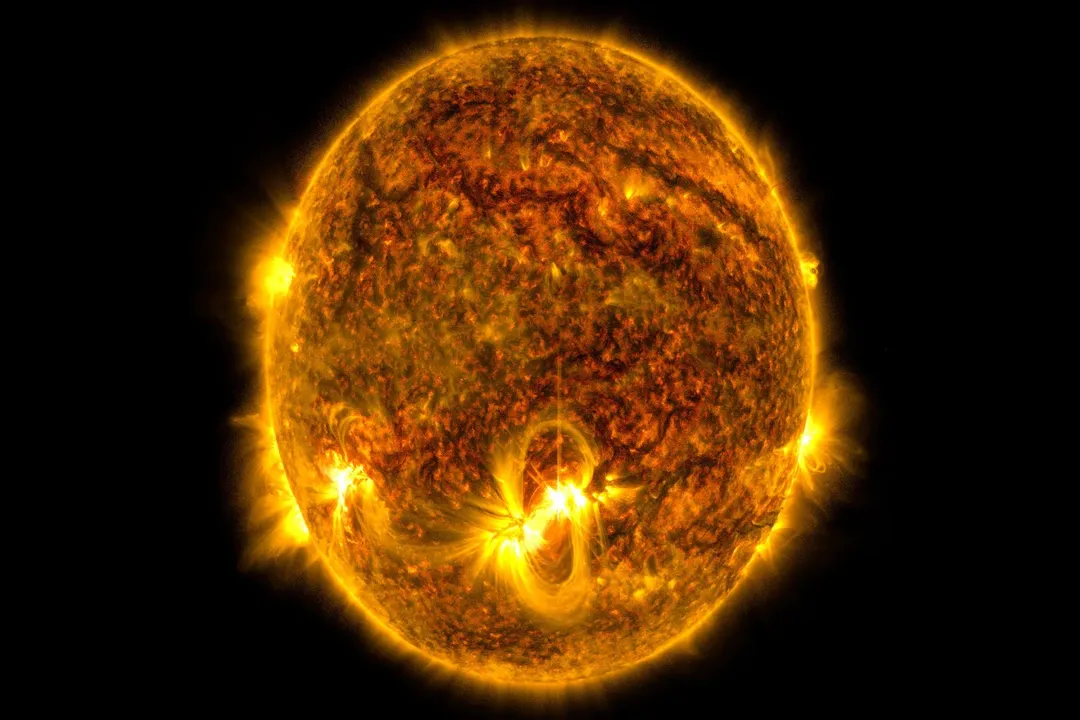
The Main Sequence phase represents the longest and most stable part of a star’s entire stellar period, accounting for about 90% of its total lifespan. [4][7] During this extended era, the star functions as a giant, continuous thermonuclear reactor, steadily converting hydrogen into helium in its core. [2] Our own Sun is currently situated in this phase. [7]
The rate at which a star consumes its core hydrogen fuel is entirely dependent on its initial mass. For stars significantly less massive than the Sun, like red dwarfs, fusion proceeds at an incredibly slow pace. [4] These low-mass stars are exceptionally efficient; because they burn their fuel so sparingly, their Main Sequence periods can last for trillions of years—far longer than the current age of the universe. [4][7] In contrast, stars born with masses several times that of the Sun experience a much more dramatic, rapid existence. [4] These massive stars require much higher core temperatures and pressures to counteract their stronger gravity, leading to a furious rate of fusion that might exhaust their hydrogen fuel in only a few million years. [2][7]
If you were to track a collection of stars born at the same time, the most massive ones would be the first to leave the Main Sequence, their lives blazing out while their much smaller siblings have barely begun to age. This difference in consumption rate is the single most important factor determining the overall length of a star's stellar period. [4]
# Divergent Paths
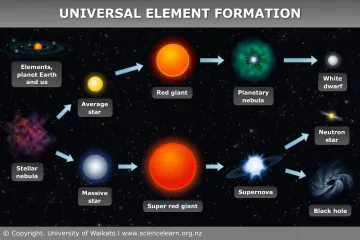
Once the hydrogen fuel in the core is largely converted to inert helium, the delicate balance that defined the Main Sequence is broken, and the star must evolve into its next stage. [2][4] At this juncture, the evolutionary path separates dramatically based on the star’s mass, leading to vastly different outcomes.
# Low Mass Fate
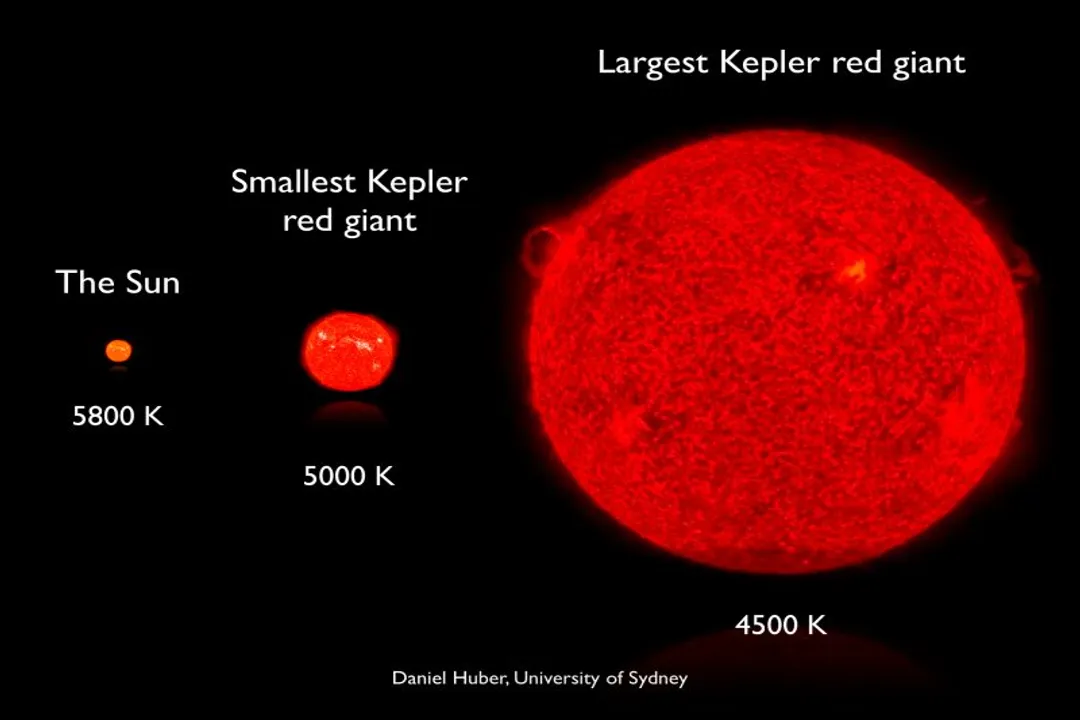
Stars comparable to or less massive than the Sun undergo a relatively gentle transition. [2][7] When core hydrogen fusion ceases, gravity causes the core to contract and heat up again. [2] This heating ignites a shell of hydrogen surrounding the core, causing the star's outer layers to swell immensely and cool down, transforming the star into a Red Giant. [2][7]
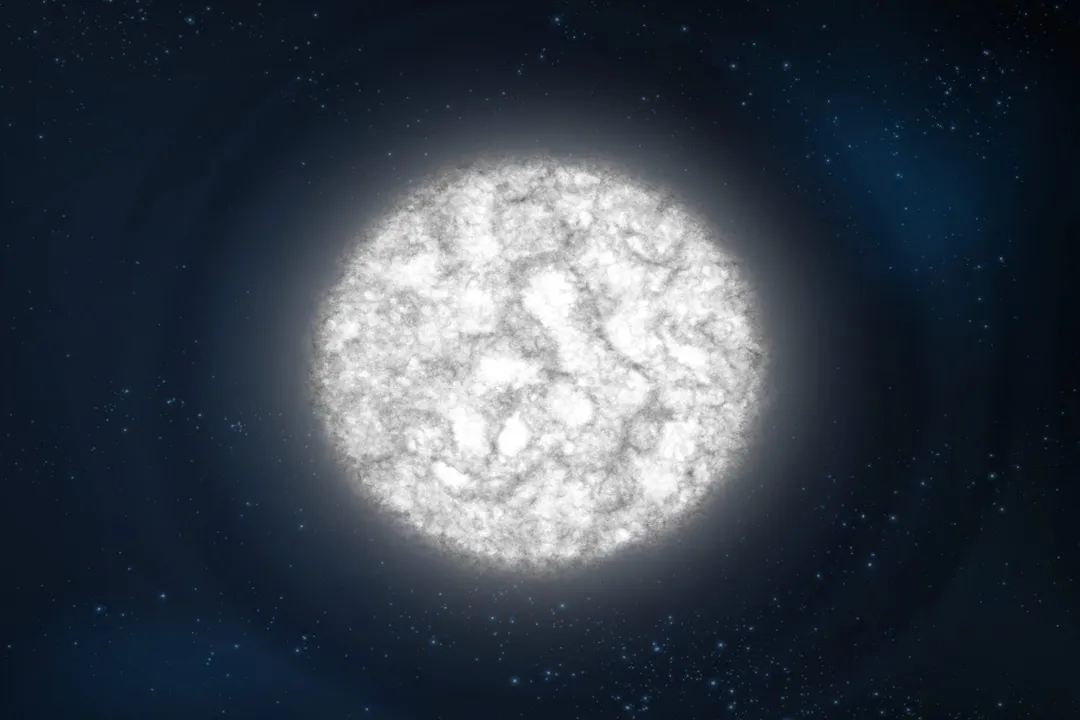
As the Red Giant phase progresses, the helium core can eventually become hot and dense enough (around 100 million Kelvin) to ignite helium fusion, converting helium into carbon and oxygen. [4] After the helium fuel is also spent, the star lacks the mass to achieve the temperatures necessary to fuse carbon. [4] The outer layers are gently expelled into space, forming an expanding, glowing shell of gas known as a Planetary Nebula—a misleading name, as it has nothing to do with planets. [2][7] What remains at the center is the incredibly dense, hot, Earth-sized core known as a White Dwarf. [2][7] This remnant slowly cools over billions of years, its light fading until it becomes a cold, dark Black Dwarf. [4]
An interesting way to contextualize this long cooling process is to consider the stellar period of a sun-like star. While its Main Sequence life is about 10 billion years, the subsequent journey to becoming a faint white dwarf and eventually a theoretical black dwarf can extend this post-main sequence period by factors of one hundred or more, pushing its total observable time far beyond the current age of the universe. The star spends far more time cooling down than it spent actively fusing hydrogen. [4]
# High Mass Destiny
Stars born with initial masses greater than about eight times that of our Sun meet a far more violent end. [4][7] These giants also swell into Red Supergiants once core hydrogen is depleted, but their much greater mass allows them to bypass the gentle phases experienced by smaller stars. [2][4] Because of their intense gravity, the core continues to contract and heat until it can fuse progressively heavier elements—carbon to neon, neon to oxygen, and so on, building up layers like an onion, until an iron core is formed. [2][4]
Iron is the crucial turning point; fusing iron consumes energy rather than releasing it. [2] When the iron core forms, fusion stops abruptly, and the immense outward pressure vanishes instantly. [4] Gravity overwhelms all resistance, and the core collapses in a fraction of a second, rebounding off the super-dense center in a catastrophic explosion known as a Type II Supernova. [2][7] This brief event can briefly outshine entire galaxies, scattering the heavy elements synthesized during the star's life and death across the cosmos. [2][7]
# Stellar Remnants
The stellar period concludes with the creation of one of the universe's most exotic objects, depending entirely on the mass of the core remaining after the supernova explosion. [4][6]
If the remnant core mass is between about $1.4$ and $3$ times the mass of the Sun, the collapse halts when gravity is finally resisted by the pressure of tightly packed neutrons, resulting in a Neutron Star. [2][4] These objects are incredibly compact, packing more mass than the Sun into a sphere only about $10$ to $15$ kilometers across. [4] If the initial star was exceptionally massive, and the remaining core mass exceeds roughly three times the Sun's mass, no known force can resist the gravitational pull, and the core collapses infinitely, forming a Black Hole. [2][6]
We can summarize the diverse endpoints of a star’s massive stellar period in a comparative way:
| Initial Stellar Mass (Solar Masses, ) | Main Sequence Star Type | Final Remnant |
|---|---|---|
| Red Dwarf | Helium White Dwarf (Never fuses He) [4] | |
| to | Sun-like Star | Carbon/Oxygen White Dwarf [2][4] |
| to | Massive Star | Neutron Star [4][6] |
| Very Massive Star | Black Hole [2][6] |
# Tracing Cosmic History
The study of stellar evolution—the entire stellar period—is more than just cataloging stellar types; it is a form of cosmic archaeology. [3][5] Stars are the universe's primary element factories. [2] Virtually every element heavier than lithium, including the carbon in our bodies and the iron in our blood, was first forged inside stars or during their explosive deaths. [2][7]
By observing stellar remnants across the galaxy—white dwarfs, neutron stars, and black holes—astronomers gain crucial data about the chemical composition of the interstellar medium at various points in time. [3][5] A young star cluster, for instance, will show evidence of recently formed massive stars that lived and died quickly, seeding the region with heavy elements. Older regions of the galaxy contain stars formed from material already enriched by multiple prior stellar generations. [5] This material cycling confirms the authority of these evolutionary models, showing that the components of our own Solar System were inherited from stars that completed their own stellar periods long ago. [1]
Thinking about our own solar system, it's fascinating to consider that the "stellar period" of the Sun is only halfway complete. When we look at the remnants of massive stars, we are seeing the potential endpoints for stars that formed earlier than the Sun. Conversely, the low-mass stars currently shining faintly represent futures that will likely outlast the existence of our entire planetary system. This local context—our Sun's current stable phase—allows us to ground the abstract timescales of stellar evolution into something immediately relatable to our home, providing a baseline against which all other stellar lifetimes can be measured. [7]
# Stellar Periods and Observation
The observable evidence of a star’s life cycle is often found in how their brightness changes over time, a characteristic frequently monitored by astronomers. [5] Variable stars, for example, exhibit changes in luminosity linked to physical processes within their structure, often tied to the instability that occurs immediately before or after the main sequence. [5] The American Association of Variable Star Observers (AAVSO) catalogs and studies these changes, which provide direct experimental evidence supporting the theoretical models of a star's entire evolutionary path. [5] These observational programs confirm the physics governing how a star moves off the Main Sequence and through its post-fusion stages, validating the predicted durations of those later, more dramatic periods of a star's life. [5]
Ultimately, the stellar period is a testament to the incredible power of gravity and nuclear physics working in opposition across timescales that dwarf human comprehension. [2][4] From the slow, trillion-year burn of a dwarf to the rapid, violent obliteration of a supergiant, every star follows a path dictated by the single factor of its birth mass. [7]
Related Questions
#Citations
Stellar Evolution - | The Schools' Observatory
Star Basics - NASA Science
Stellar evolution | Research Starters - EBSCO
Stellar Evolution | COSMOS
Stellar Evolution - aavso
Stellar Evolution - Chandra X-ray Observatory
How Stars Form: A Star's Life Cycle in Six Stages - KiwiCo
Stars and their life-cycle (article) | Khan Academy
Glossary term: Stellar Evolution - IAU Office of Astronomy for Education