Why is finding life on other planets important?

The presence of life beyond Earth is a question that has captivated human thought for centuries, moving from the realm of pure speculation into one of rigorous scientific inquiry. [10] The desire to know if we are alone is deeply ingrained in our curiosity, serving as a powerful driver for astronomical research and space exploration initiatives. [8] Discovering extraterrestrial life, regardless of its complexity, would represent a monumental shift in our understanding of biology, chemistry, and our own standing in the cosmos. [2] This search is not merely about cataloging distant microbes; it fundamentally recontextualizes everything we know about existence itself. [1][8]
# Contextualizing Biology

One of the most immediate and profound consequences of finding life elsewhere would be gaining a true context for life on Earth. [8] Currently, all known biology is based on a single sample: life that arose right here. [1][5] This means scientists cannot discern which features of terrestrial life are universal necessities for biology and which are merely local accidents of our planet’s unique history. [1]
If we find life that uses the same fundamental chemistry—DNA, RNA, carbon-based structures—it would suggest that this pathway is the default outcome when conditions are right, strongly implying that biology is common throughout the universe. [4] Conversely, encountering life based on entirely different solvents, structures, or genetic mechanisms would shatter our current biological paradigms, forcing a complete rewrite of what "life" actually means. [5] The ability to compare and contrast two independent genesis events would be invaluable for establishing the universal laws governing biology, much like comparing two separate evolutionary trees. [1]
This comparative approach extends even to the search methodology itself. Astronomers currently focus their search for biosignatures on observing worlds that share characteristics with Earth, looking for things like water, methane, and oxygen in atmospheres. [7][9] If life is found elsewhere, it will immediately refine our search parameters for future missions. If it is found in a place we didn't expect—perhaps under the ice of Europa or in the thick atmosphere of a "Super-Earth"—it proves that our Earth-centric assumptions about habitability are too narrow, opening up vast new targets for investigation. [1]
# Understanding Origins
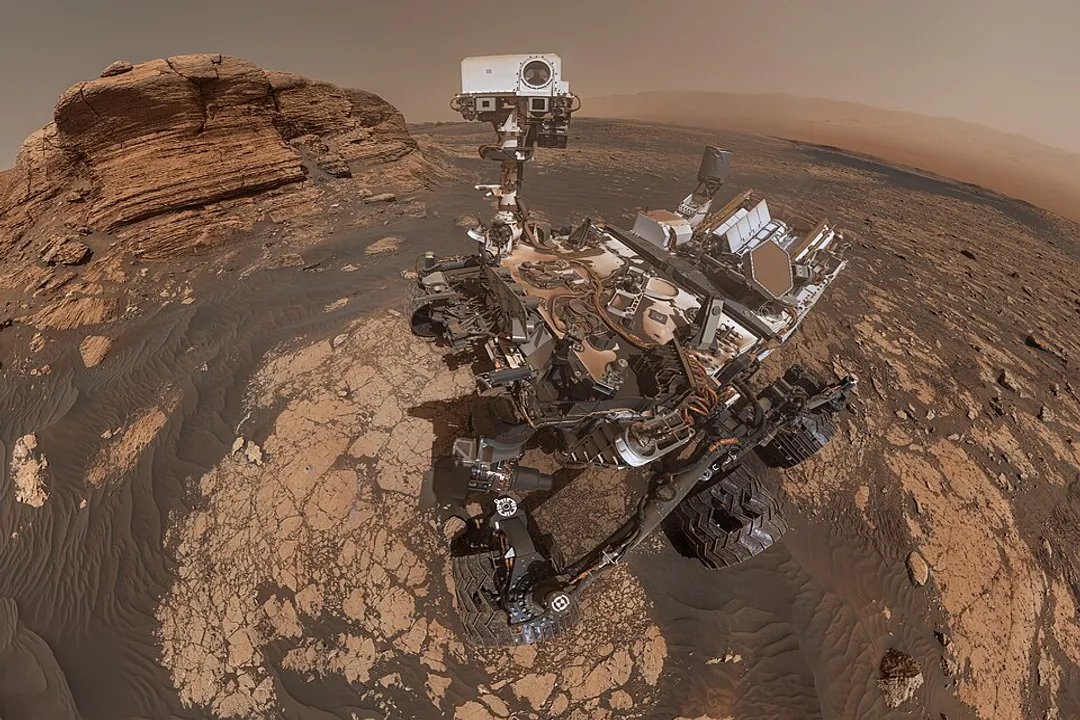
The discovery would provide essential clues about abiogenesis—the process by which life arises from non-living matter. [5] If life is found on Mars, for instance, and it shares a common ancestor with Earth life (perhaps transferred via meteorites), it would provide a dramatic example of panspermia, or the seeding of life between worlds. [5] However, if Martian life is found to be demonstrably separate in its core biochemistry, it would suggest that abiogenesis is not a one-in-a-trillion fluke confined to our world, but rather a natural, potentially frequent consequence of planetary evolution. [2]
It is tempting to view the search as a binary outcome: success means validation, failure means continuation of the status quo. In reality, the discovery of simple life—microbial or otherwise—carries a different weight than the discovery of complex life. Finding simple cells suggests that getting life started is relatively easy, yet it leaves open the question of complexity. Does evolution reliably produce intelligence, or is the jump from a single-celled organism to multicellularity, and eventually to tool-use, an exceedingly rare barrier? The nature of the life found dictates which part of the cosmic puzzle we’ve solved. [3] For example, if we find evidence of intelligent activity (technosignatures), the implications immediately shift from biology to sociology and philosophy, suggesting the 'Great Filter'—the theoretical hurdle preventing life from becoming interstellar—might lie behind us, not ahead. [4]
# Scientific Progress
The search for extraterrestrial life fuels significant technological advancement, even while the primary goal remains elusive. [6] Developing the necessary instruments to detect faint atmospheric gases or subsurface oceans on distant exoplanets pushes the boundaries of engineering, spectroscopy, and data analysis. [9] These technological spin-offs often find practical applications back on Earth. Designing sensors that can distinguish tiny quantities of methane on a planet light-years away forces innovations in sensor technology that can later be applied to environmental monitoring or medical diagnostics. [6]
Furthermore, the process compels scientists to better understand the limits of our own planet. To search for life elsewhere, we must first rigorously define what life is, how it interacts with its environment, and what chemical fingerprints it leaves behind, both in its presence and its absence. [7] This focused investigation into extremophiles—life thriving in conditions once thought impossible, like deep-sea vents or frozen deserts—directly informs our understanding of Earth’s own resilience and the potential diversity of habitable zones elsewhere. [1]
Consider the sheer scale of the challenge involved in detecting life on an exoplanet: we are trying to analyze the atmosphere of a world orbiting a star thousands of light-years away, separating the chemical trace of an alien ocean from the overwhelming glare of its sun. [9] This necessitates the creation of next-generation telescopes and observational techniques that advance astrophysics as a whole, regardless of the final biological outcome. [1]
# Philosophical Realignment
The most discussed, though least quantifiable, aspect of this search is its philosophical impact. For many, proving we are not unique would cause a profound existential realignment. [2][4] It would democratize biology, moving life from being an exceptional miracle of Earth to a common cosmic phenomenon. [4] This recognition would fundamentally alter human perspectives on culture, religion, and our perceived importance in the grand scheme of things. [2] If the universe is teeming with life, our terrestrial squabbles suddenly seem smaller, while our shared identity as "Earthlings" becomes far more significant. [8]
It is worth noting a subtle counterpoint often raised in skeptical circles: the paradox of the "silent cosmos." If life is common, why haven't we detected clear signals? The sheer difficulty in interpreting data means that not finding life currently tells us less about its rarity and more about the limitations of our current technology and search strategies. [4] A null result today is simply an indicator of current technological ceilings, not a final judgment on universal biology.
Here is an area where the philosophical weight differs greatly depending on the finding. Imagine the discovery of simple, thriving microbial mats on Enceladus. The immediate impact would be scientific validation for astrobiology programs and a massive surge in funding for solar system exploration. However, the general public’s day-to-day life might change little; it confirms biology is possible elsewhere. Now, contrast that with receiving a confirmed, unambiguous mathematical transmission from a star system 500 light-years away. The immediate, global societal reaction would be one of shock and forced introspection regarding our current state of development relative to the senders. One confirms life's prevalence; the other confirms the prevalence of technological advancement, which carries a far more immediate challenge to human self-conception. [2]

# Search Strategy Insights
The methods employed to find life have evolved significantly. Early efforts often focused on our own solar system, targeting planets or moons that might harbor liquid water, such as Mars, or the icy satellites Europa and Enceladus. [1] These are relatively accessible, near-term targets where life might exist in subsurface oceans protected from harsh radiation. [1]
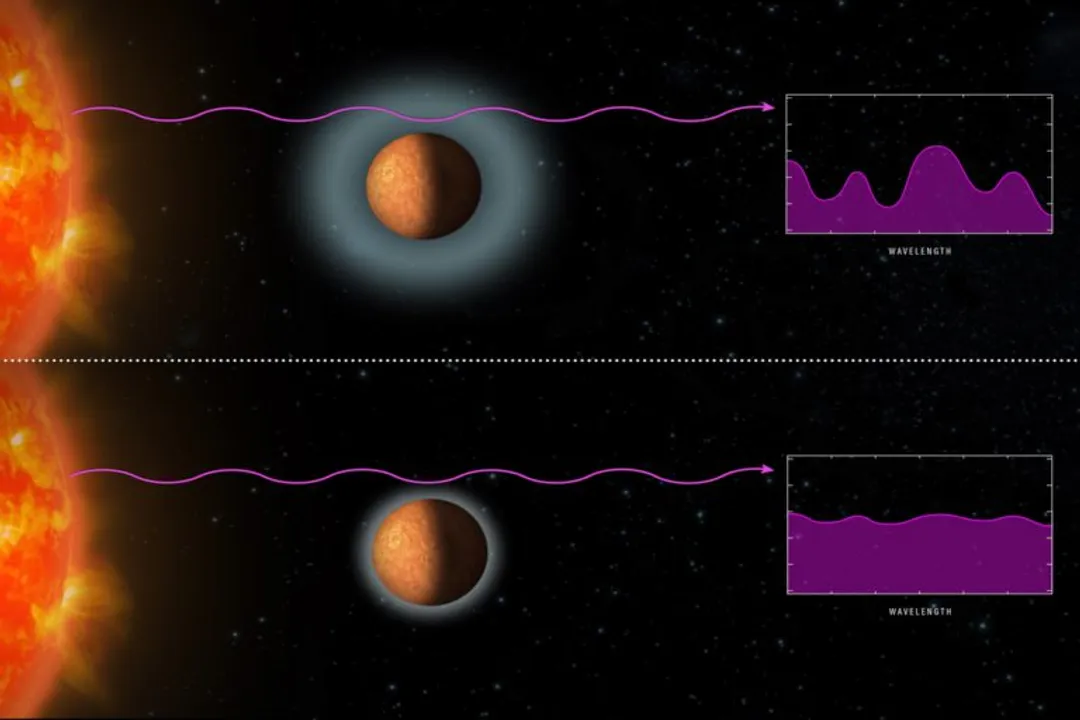
The search has expanded dramatically with the study of exoplanets—planets orbiting stars other than the Sun. [9] Modern searches focus on transit spectroscopy. When an exoplanet passes in front of its star, a small fraction of the star's light filters through the planet's atmosphere. [9] Scientists analyze this light, looking for specific spectral absorption lines that correspond to gases like oxygen (), ozone (), methane (), or water vapor (). [7] The presence of certain gases in disequilibrium—gases that should rapidly destroy each other unless constantly replenished by a biological process—is considered a strong potential biosignature. [7][9]
When analyzing these atmospheric profiles, researchers must be careful to rule out false positives—geological or photochemical processes that could mimic biological activity. [7] For instance, oxygen can be produced abiotically on planets lacking life. Therefore, confirming life requires finding a combination of gases that makes an abiotic source highly improbable, which speaks to the expertise required in this specialized field. [7][9]
# The Value of Exploration
Even separate from the ultimate discovery, the act of searching contributes significantly to humanity’s overall endeavor to understand the universe, which has historical parallels. [6] Just as Copernicus revolutionized our view by moving Earth from the center of the universe, the search for extraterrestrial life pushes the boundaries of where we believe we belong. [4] This quest instills a sense of purpose and encourages investment in pure science, which often yields unforeseen practical benefits down the line. [6]
The commitment to exploring space, whether robotic probes to Jupiter’s moons or advanced telescopes pointed at distant stars, ensures that scientific exploration remains a priority. [6] This commitment supports institutions dedicated to fundamental research and trains new generations in complex scientific disciplines. [8] From a purely practical viewpoint, the development of life-support systems for long-duration space missions, necessitated by the desire to study other worlds, has direct benefits for terrestrial environmental science and closed-loop ecological studies here on Earth. [6]
To summarize the potential payoff in a quantifiable, though speculative, way, one could look at the probability multiplier:
| Discovery Type | Estimated Impact on Biology | Estimated Impact on Philosophy/Society |
|---|---|---|
| Simple Life (Solar System) | Moderate: Life is common in our cosmic neighborhood. | High: Ends the "Are we alone?" question regarding basic biology. |
| Simple Life (Exoplanet) | Very High: Biology is a common cosmic outcome everywhere. | Very High: Forces a shift in cosmic significance; suggests the universe is teeming. |
| Complex/Intelligent Life | Revolutionary: Life evolves complexity reliably; the Filter is likely behind us. | Maximum: Alters every structure of human society, religion, and identity. |
Ultimately, searching for life on other planets is about answering foundational questions using the most rigorous methods available to us. [8] It is a testament to human intellect that we can design instruments capable of detecting the faint breath of another world. [9] Whether the answer is "Yes, we are surrounded by life," or "No, we are an isolated, precious anomaly," either outcome fundamentally changes the definition of humanity and our place in the vastness of existence. [1][2][4]
Related Questions
#Citations
Why We Search - NASA Science
Why would discovering life on another planet be important/matter to ...
Why is finding alien life important (please read before dismissing)
Why is there so much emphasis on finding life on other planets? I'm ...
Search for Life outside the Solar System - NCBI - NIH
Why Should We Explore Space? What Are the Benefits for Us?
Why do astronomers look for signs of life on other planets based on ...
Why Earth? Looking for Life on Other Worlds
How astronomers search for life on exoplanets | The Planetary Society
Extraterrestrial life - Wikipedia