Why is it important to study planets?
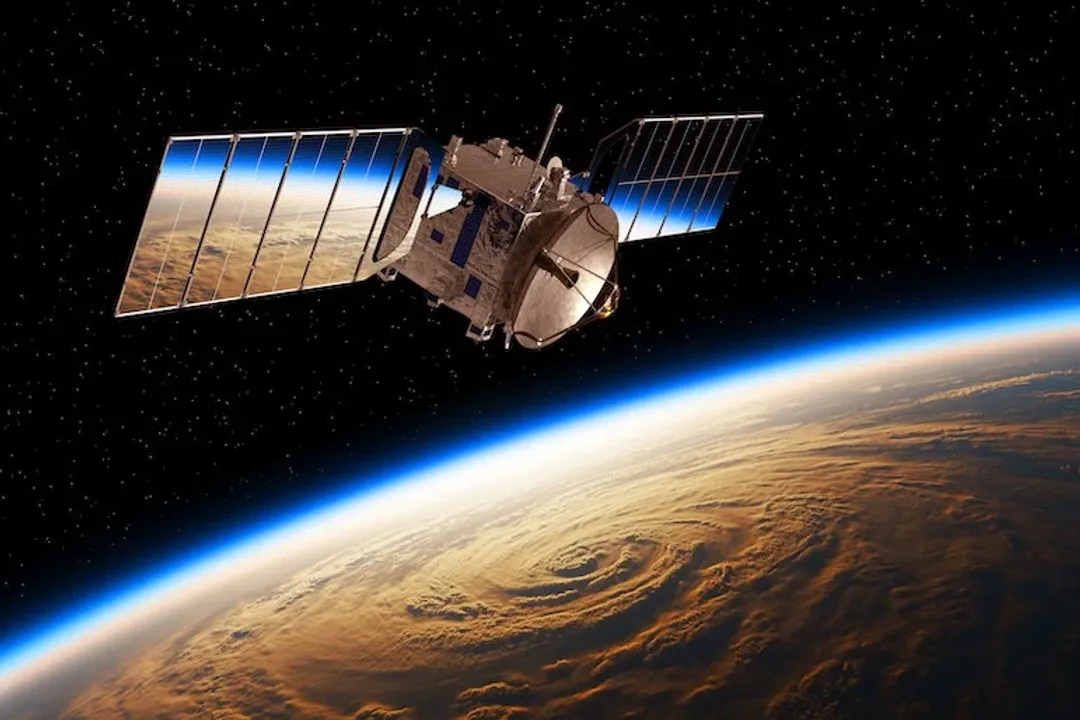
The simple act of looking up at the night sky connects us instantly to a scale far grander than our daily routines suggest, but the importance of studying planets extends far beyond mere astronomical curiosity. Planetary science is fundamentally about context—understanding where Earth sits in the cosmos and, more critically, what makes our home habitable and how we might keep it that way. [1][5] It is a field of deep inquiry spanning geology, chemistry, physics, and biology, all focused on worlds both familiar and utterly alien. [2] The drive to investigate these celestial bodies is intrinsically linked to answering age-old questions about our origins and our future. [9]
# Earth Context
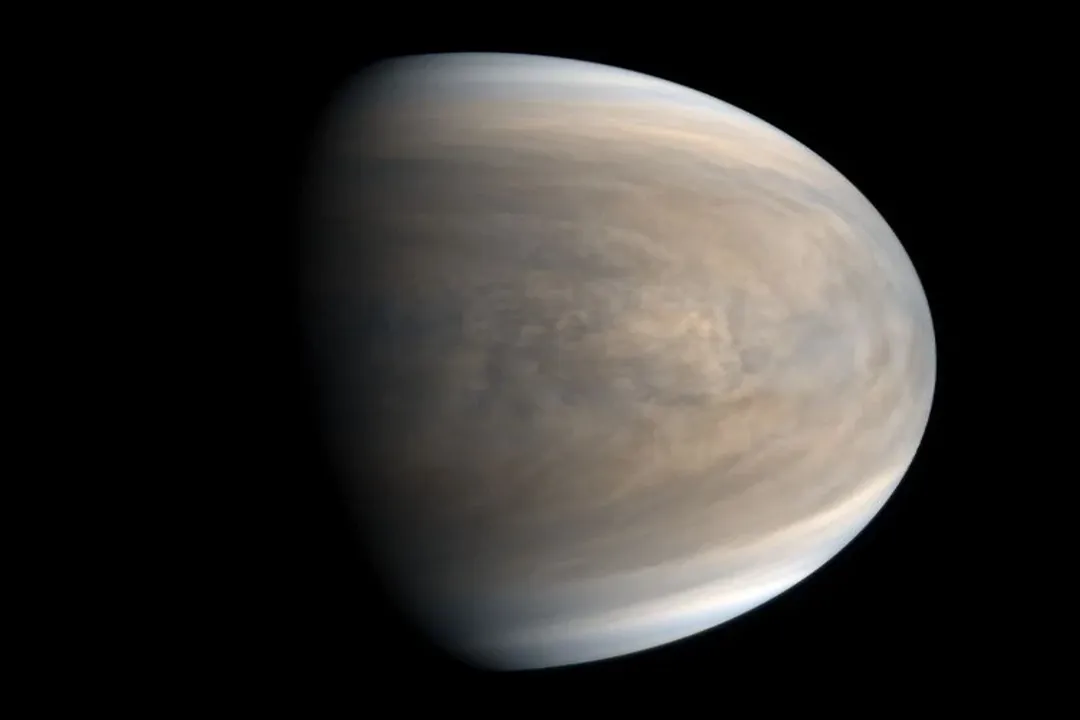
Examining other planetary bodies provides an invaluable comparative study for our own world. When scientists investigate the geology and climate of other planets, they gain crucial insights into the processes that have shaped Earth over billions of years. [1][5] For instance, understanding the atmospheric evolution of Venus, which experienced a runaway greenhouse effect, offers stark lessons about the delicate balance required to maintain temperate conditions on Earth. [7][10] Similarly, studying the geology of Mars or the icy moons of the outer solar system reveals how planetary surfaces change due to volcanism, tectonics, and the long-term effects of solar radiation. [3]
This comparative approach is vital for climate science. Planetary atmospheres, which can be studied remotely, reveal how different chemical compositions interact with incoming solar energy, a direct analogue to understanding Earth's own complex climate system. [7] If we can model how an atmosphere like Mars’s—thin and mostly carbon dioxide—behaved over time, or how Jupiter’s Great Red Spot functions as a massive, long-lived atmospheric storm, it sharpens our predictive capabilities for terrestrial weather and climate shifts. [2][7] A useful thought exercise for any student of environmental science is to consider that a planet like Mars, which lost its magnetosphere and subsequently most of its atmosphere, serves as a long-term case study in planetary atmospheric stripping, something Earth is protected from today but must monitor for its long-term viability. [10]
# Habitability Search

One of the most compelling reasons to study the planets within our solar system and those orbiting other stars is the search for extraterrestrial life. [7] Planetary science focuses heavily on identifying the conditions necessary for life as we know it—liquid water, energy sources, and the correct chemical building blocks. [2] This involves characterizing the environments of potentially habitable zones, such as the subsurface oceans believed to exist on moons like Europa or Enceladus, or the past watery surface of Mars. [3][9]
Planetary atmospheres are key biosignatures. The presence of certain gases, like methane or oxygen in specific ratios, can strongly suggest biological activity rather than purely geological or chemical processes. [7] Missions designed to study the atmospheres of exoplanets—planets orbiting stars outside our solar system—are direct extensions of this work. By analyzing the light that passes through an exoplanet's atmosphere, scientists can search for these tell-tale signs of life, an endeavor that defines much of modern planetary research. [1][7] This quest is not just about finding aliens; it is about determining if life is a common cosmic phenomenon or a rare terrestrial fluke. [8]
# Solar System Formation

At a more fundamental level, studying the planets helps piece together the story of our own solar system's birth and evolution. [5] The planets represent the main outcomes of the massive cloud of gas and dust that collapsed to form the Sun approximately 4.6 billion years ago. [3] By comparing the terrestrial worlds (Mercury, Venus, Earth, Mars) with the gas and ice giants (Jupiter, Saturn, Uranus, Neptune), researchers can test models of accretion, migration, and differentiation in planetary formation. [3][5]
For instance, the distinct differences between the inner, rocky worlds and the outer, massive worlds provide direct evidence for how temperature gradients in the early solar nebula dictated what materials could condense where. [3] Moreover, studying minor bodies like asteroids and comets, which are often considered primitive leftovers from this formation period, acts as a chemical time capsule, offering clues about the initial composition of the cloud that birthed us all. [3][9] The relative lack of heavy metals in the outer giant planets compared to their core mass estimates compared to Earth's composition suggests a more volatile-rich accretion disk in the outer regions, a key variable that must be tightly constrained in any successful formation model. [3]
# Technological Advancement

The pursuit of planetary science acts as a powerful engine for technological innovation. The challenges inherent in building spacecraft that can survive the harsh environments of space—extreme temperatures, radiation, and long operational lifespans far from Earth—drive the creation of new materials, sensors, and computational methods. [4][8] Many technologies we use daily have roots in space exploration programs. [4]
This development cycle is a significant benefit to society, often resulting in "spin-offs" that improve life on Earth. [4][10] Whether it is advanced medical imaging derived from techniques developed for remote sensing, lighter and more durable materials, or improvements in communication networks, the necessity of planetary exploration pushes the boundaries of engineering. [8] The investment in space exploration is therefore an investment in terrestrial innovation across many sectors, not just astronomy. [4]
# Societal Inspiration
Beyond tangible technology and scientific data, the study of planets holds profound cultural and educational value. [5] It appeals directly to human curiosity—the innate desire to discover what lies out there. [9] This excitement is particularly powerful in education. Astronomy and planetary science often serve as the hook that draws young people into science, technology, engineering, and mathematics (STEM) fields. [6]
When students learn about worlds that look nothing like Earth, or when they witness stunning images from a distant probe, it sparks imagination in a way few other subjects can match. [5] This engagement is critical for cultivating the next generation of scientists and critical thinkers. [6] As one perspective notes, the exploration of space is inherently worthwhile because it keeps alive the spirit of inquiry that defines humanity. [8]
# Funding Justification
Discussions about funding space and planetary science often raise the question of whether resources are better spent addressing immediate terrestrial problems. [4][6] Advocates counter this by pointing to the dual benefits: direct discovery and indirect technological advancement. [4] Furthermore, by putting Earth into a cosmic perspective, studying other planets can actually enhance our commitment to protecting our own world. [10] Realizing that Earth might be unique, or at least uniquely hospitable in our immediate vicinity, instills a greater sense of responsibility for its stewardship. [5]
Ultimately, the effort is a long-term commitment to understanding the universe we inhabit. [1] The focus areas of planetary science, ranging from the Sun's influence to the search for habitable worlds and understanding Earth's role as a planet, all feed into a larger, continuous effort to map our place in the cosmos. [2] It is about pushing the frontiers of knowledge, an endeavor considered essential by many because it reflects a fundamental human need to know and to explore. [8][9]
# Research Ecosystem
The study of planets thrives within a broad research structure. At institutions, the research is often broken down into specific areas of focus, such as understanding the evolution of solar systems, studying planetary atmospheres, or analyzing the interiors of rocky bodies. [3][7] This specialized yet interconnected approach, supported by bodies like NASA which funds research across many planetary focus areas, ensures that knowledge is built systematically. [2] The impact of this research is often seen not just in published papers, but in the data returned that feeds new technological pipelines and educational curricula. [1] This ecosystem sustains itself through continuous discovery, where each answer opens the door to several new, more complex questions about the nature of planets across the galaxy. [1][5]
Related Questions
#Citations
Why study planets? - Earth and Planetary Sciences
Studying our solar system - NASA Science
Solar System | Center for Astrophysics | Harvard & Smithsonian
Why Should We Explore Space? What Are the Benefits for Us?
Why does astronomy matter to society?
Help needed by science teacher. Why do we study planets? - Reddit
Planetary Atmospheres: Why study them? What can they teach us ...
Why space exploration is always worthwhile | The Planetary Society
Why do you think it is important to explore the solar system? - Quora
Solar System for Kids: How Learning about Space Benefits Earth