What technology is used to study planets?
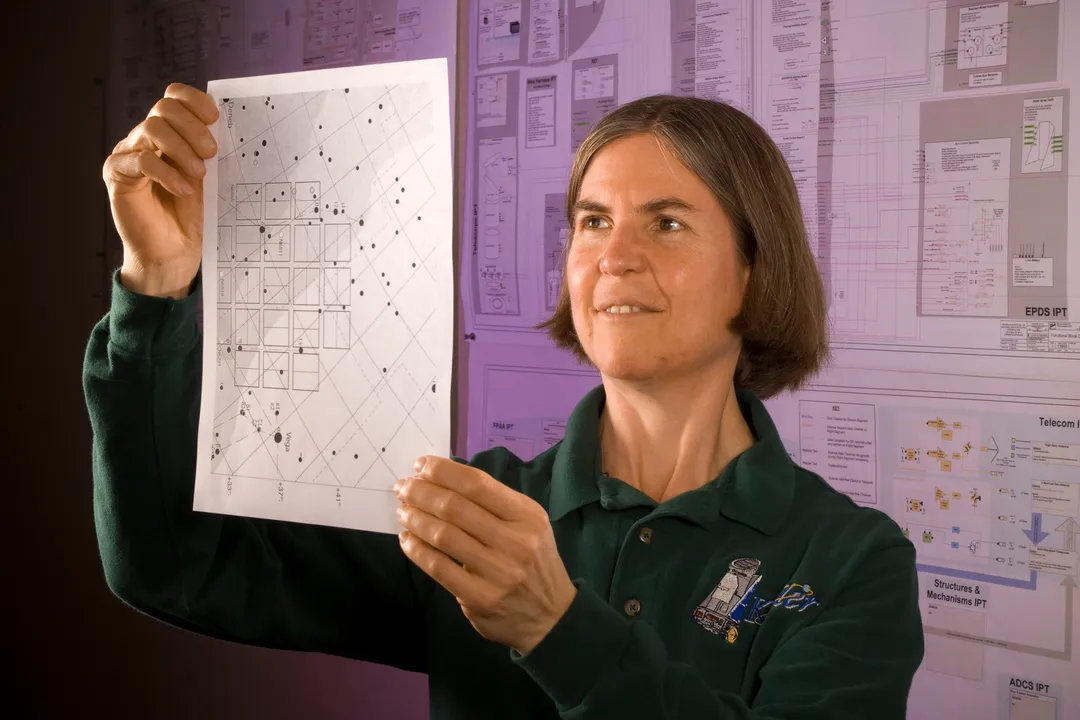
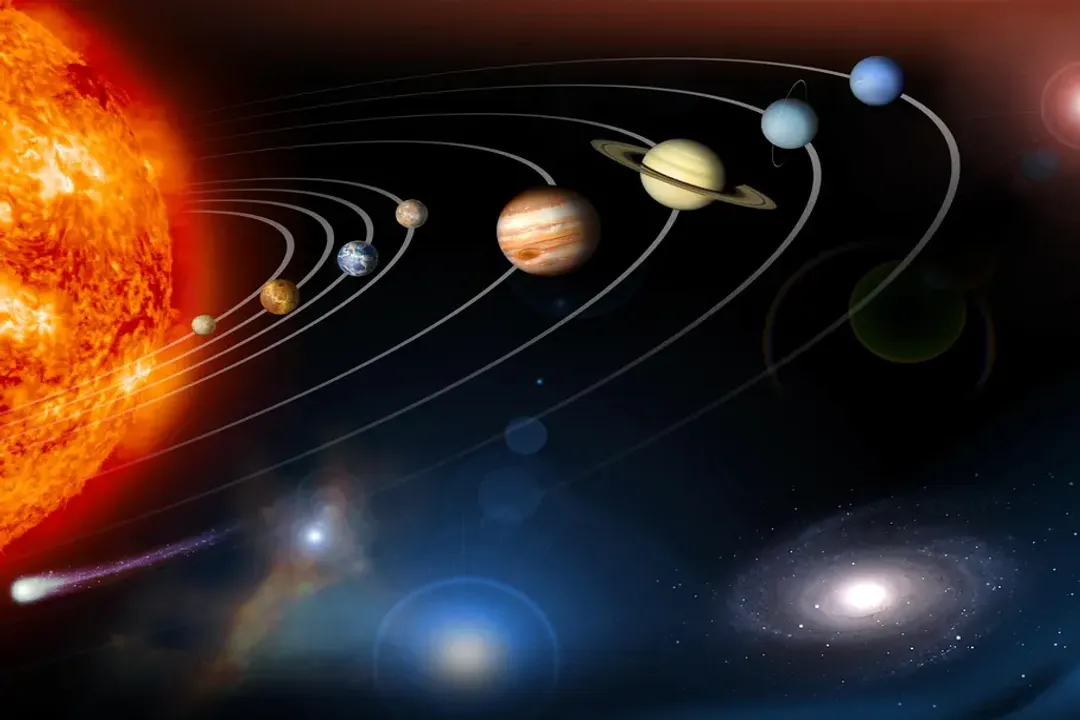
Understanding the worlds orbiting other stars, and indeed our own solar system neighbors, is fundamentally a story about technology. Astronomy itself, the study of celestial objects, space, and the physical universe as a whole, is inextricably linked to the tools we devise to see what is otherwise inaccessible. [4] Modern planetary science doesn't rely on a single gadget; it requires a vast arsenal of sophisticated instruments capable of capturing faint light, measuring subtle gravitational tugs, and withstanding the harshness of interplanetary space. [9]
# Seeing Far
The most immediate image most people associate with space science is the telescope. These instruments act as our primary window, gathering electromagnetic radiation that has traveled vast distances across the cosmos. [4] The evolution of telescopes, particularly optical telescopes, has been profoundly shaped by technological developments in materials science and manufacturing, allowing for larger, more precise mirrors that collect more light and achieve sharper images. [8]
However, what we look at dictates the type of "eye" we need. Observing planets in our own solar system, like Mars or Jupiter, often involves visible light, but understanding their atmospheres or surface composition requires looking beyond the visible spectrum. This is where the concept of detector technology becomes critical. [2] The advancement of instruments, often housed at facilities like the Harvard-Smithsonian Center for Astrophysics, focuses intensely on achieving unprecedented sensitivity to measure the faintest signals. [2]
When considering remote observations of exoplanets—planets orbiting distant stars—the challenge is immense because we are trying to spot a tiny, dim world next to a blindingly bright star. This demands instruments sensitive enough to detect miniscule dips in starlight as a planet passes in front of its host star, or to isolate the incredibly weak light signature coming directly from the planet itself. [9] The entire field of exoplanet discovery is therefore gated by how good our detectors are. If we could build a detector just slightly more sensitive tomorrow, we might confirm hundreds of currently ambiguous signals, a direct illustration of how instrument engineering dictates the pace of astronomical breakthroughs. [2]
# Direct Visits
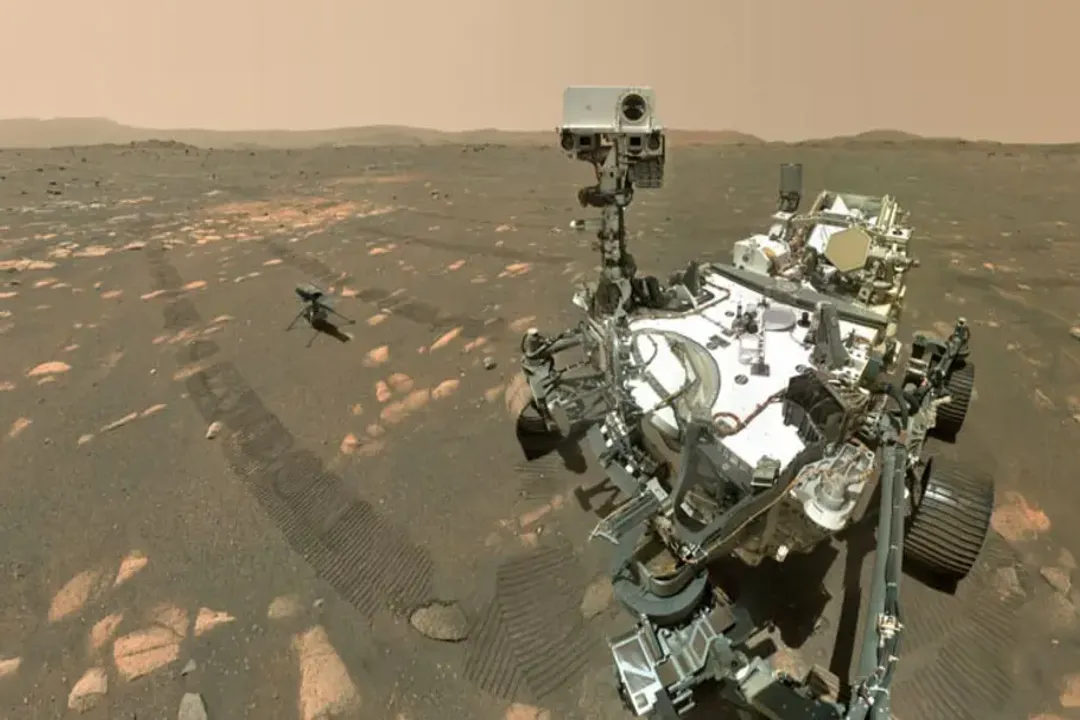
While remote observation gives us data on orbits and bulk properties, sometimes the only way to truly know a world is to go there. Space agencies utilize several methods to physically explore planets and moons. [5] This direct study involves sending specialized robotic emissaries into space, which is a technological feat of engineering far removed from building a glass mirror on Earth.
These missions fall into distinct categories, each defined by the technology required to execute the mission profile:
- Flybys: A spacecraft speeds past the target, taking readings as it passes by. This is the fastest method but provides only a snapshot in time. [5]
- Orbiters: These are essentially artificial moons, placed into stable paths around the target body. Orbiters use radar, cameras, and atmospheric sensors to study the planet over months or years, providing long-term atmospheric data and detailed mapping. [5]
- Landers and Rovers: These involve the most complex technologies, requiring systems for atmospheric entry, descent, and landing (EDL)—often called the "seven minutes of terror" for Mars missions. [5] Once on the surface, rovers, such as those sent to Mars, carry sophisticated laboratories that can analyze soil chemistry, drill into rocks, and search for signs of past or present life. [3]
The technologies required for these missions are varied. They include advanced power sources, lightweight yet durable materials to survive launch and space radiation, and precise navigation systems capable of autonomously correcting course over millions of miles. [3][7]
# Invisible Signals
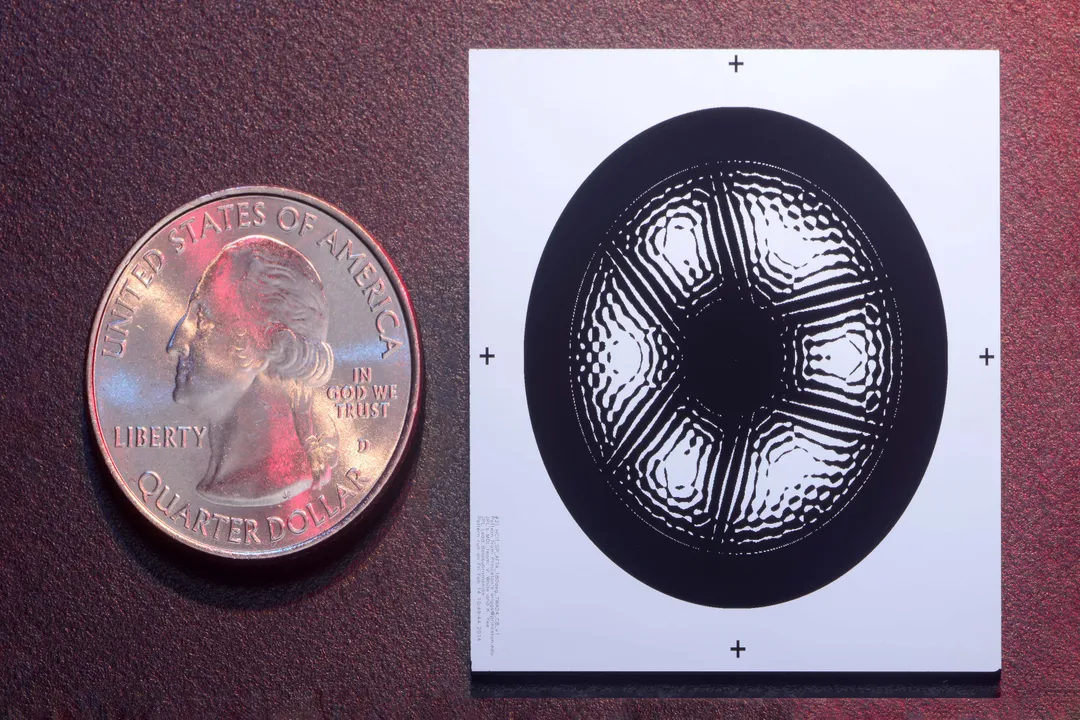
Planetary study isn't limited to light waves; scientists actively use fundamental physical forces as diagnostic tools. Gravity, for instance, is a powerful, indirect probe of planetary interiors and orbital mechanics. [1] By precisely tracking the slight wobble or change in speed of a planet or moon as it orbits, scientists can deduce the mass of the object and even infer the distribution of mass within it. [1] This technique is particularly effective for studying moons with subsurface oceans, where tidal forces dictated by the parent planet create gravitational tugs that create detectable signatures. [1]
Another crucial technological application involves the manipulation and reception of radio waves. [1] Radio astronomy allows researchers to probe environments that are opaque to visible light, such as the dense, cloud-shrouded atmospheres of Venus or the deep interiors of gas giants where magnetic fields are generated. [1][4] Furthermore, by bouncing radio signals off a planetary surface and measuring the time and frequency shift of the echo, scientists can map topography and measure atmospheric composition, sometimes without even leaving Earth's orbit. [1]
# Instrument Sophistication
The instruments used to capture these signals—whether visible light, radio waves, or gamma rays—must be incredibly precise. The demands of space research have driven innovation across instrumentation.
For example, capturing the faint light from an exoplanet requires specialized masks or coronagraphs integrated into the telescope to physically block out the overwhelming glare of the host star, a technique relying on highly precise optical engineering. [8]
To illustrate the necessary precision, consider the comparison between two methods of gathering data:
| Study Method | Primary Technology Focus | Data Output Example | Trade-off |
|---|---|---|---|
| Direct Probe (e.g., Rover) | Miniaturized in-situ chemical analysis, robotics | Direct measurement of mineralogical composition [3] | High cost, singular point of data, high mission risk |
| Remote Sensing (e.g., Spectroscopy) | High-sensitivity detectors, large aperture optics [2] | Atmospheric abundance of water vapor or methane [9] | Lower spatial resolution, dependent on atmospheric transmission |
The technologies employed are often born from necessity and later find uses elsewhere, a common pattern in scientific innovation driven by agencies like NASA's Jet Propulsion Laboratory (JPL). [3]
One challenge that unites all observation methods is distinguishing a true planetary signal from terrestrial noise or instrument artifacts. This means that the processing technology—the supercomputing power and advanced algorithms used to sift through petabytes of raw data—is just as important as the telescope itself. Without sophisticated noise reduction and signal processing, the faint, real data could easily be mistaken for background static. [6] This computational element is the silent partner in every major discovery, turning raw electronic readings into beautiful, interpretable maps and chemical signatures. [2]
In essence, studying planets is a testament to human ingenuity applied across physics, engineering, and computation. From the massive primary mirrors that shape light, to the tiny, hyper-sensitive detectors waiting to register a single photon, and the autonomous software guiding a rover across an alien plain, technology is the conduit through which we extend our senses across the solar system and into the galaxy. [9]
Related Questions
#Citations
How NASA Uses Gravity and Radio Waves to Study Planets and ...
Detector Technology | Center for Astrophysics | Harvard & Smithsonian
Astronomy and Physics - Technology
Astronomy - Wikipedia
4 Ways We Have Explored Our Planets
What technology do scientists use when they study about space?
Technology, Optics, Astronomy - Telescope - Britannica
Astronomy and Technology: How Innovation Shapes Space ...