What instrument is used to study stars?
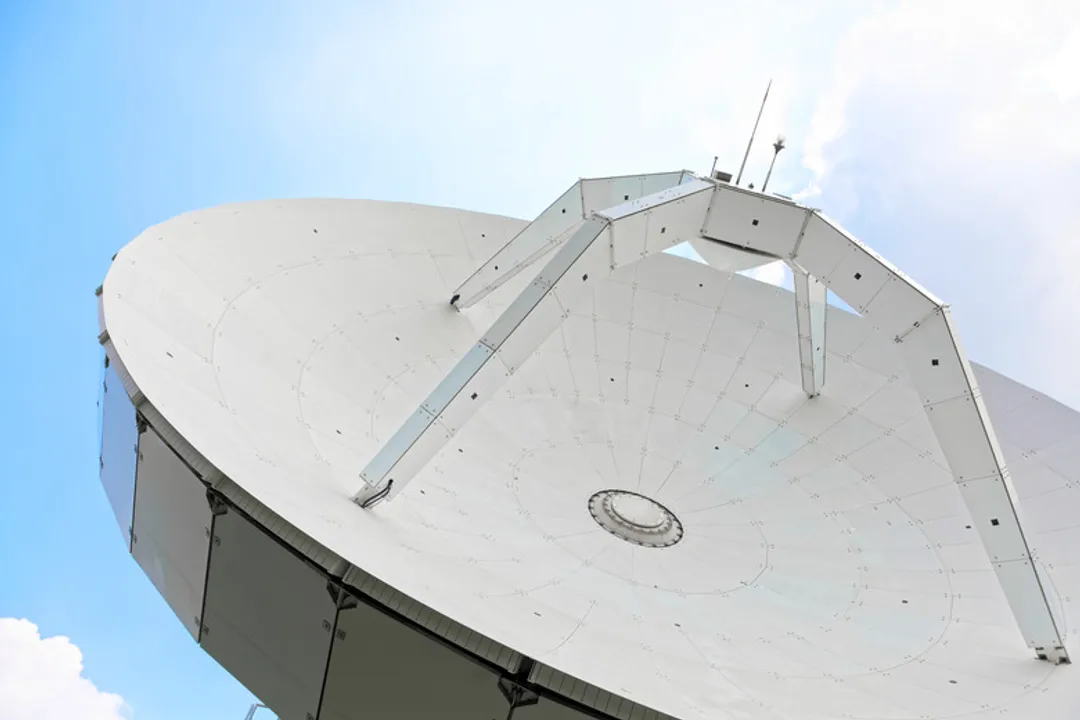
The systematic investigation of the stars, those distant pinpricks of light that have captivated humanity for millennia, relies on an astonishing array of instruments, ranging from simple calibrated sighting tools to massive orbital observatories. What instrument is used is less a single answer and more a discussion of technological evolution, as the tool must match the scientific question being asked, whether that question is about position, distance, composition, or age. [1][6]
# Ancient Measurement
Long before the invention of lenses, ancient civilizations needed instruments capable of precise angular measurement to map the sky, predict celestial events, and aid navigation. [8] Perhaps the most famous early instrument designed for tracking celestial bodies is the astrolabe. [4] This complex device allowed skilled users to determine the time, latitude, and local altitude of heavenly objects. [4] While it didn't magnify the stars, it transformed observation from a casual act into a quantifiable science by providing angular measurements relative to the horizon. [9] Other simple tools, such as the quadrant or the sighting instruments used by early astronomers, served a similar purpose: to create a fixed reference point for observing the movement of stars across the celestial sphere. [8]
# Light Gathering
The true revolution in stellar study began with the development of instruments designed not just to measure angles but to collect light—the telescope. [5][7] The primary function of any modern telescope, whether it sits atop a mountain or orbits Earth, is essentially to act as a highly efficient light bucket. [5] By using large mirrors or lenses, these instruments gather photons over a wide area and concentrate them onto a smaller focal point. [7] This magnification and brightening allow us to see objects too faint for the naked eye, effectively letting us observe stars that are much further away. [5]
The earliest iterations of this technology relied on refraction through lenses. [7] However, modern, large-scale research telescopes primarily utilize reflecting telescopes, which employ large, precisely shaped mirrors to focus the incoming light, avoiding many of the color distortions inherent in purely lens-based designs. [3][5]

# Modern Configurations
Today's observational astrophysics utilizes two main operational environments for these light-gathering systems: ground-based observatories and space-based platforms. [2][3]
# Ground Stations
Massive ground-based telescopes are constructed with apertures that can reach several meters in diameter. [3] These gargantuan structures are designed to maximize light capture for observing the faintest, most distant objects in the universe. [3] They often incorporate adaptive optics systems that use deformable mirrors to actively correct for the blurring effects caused by Earth's turbulent atmosphere. [8] These facilities are not limited to visible light; many house instruments sensitive to infrared radiation, which helps penetrate dusty regions of space where stars are born. [3] A collection of these facilities often works in concert, effectively creating a much larger virtual telescope through interferometry. [1]
# Orbital Observatories
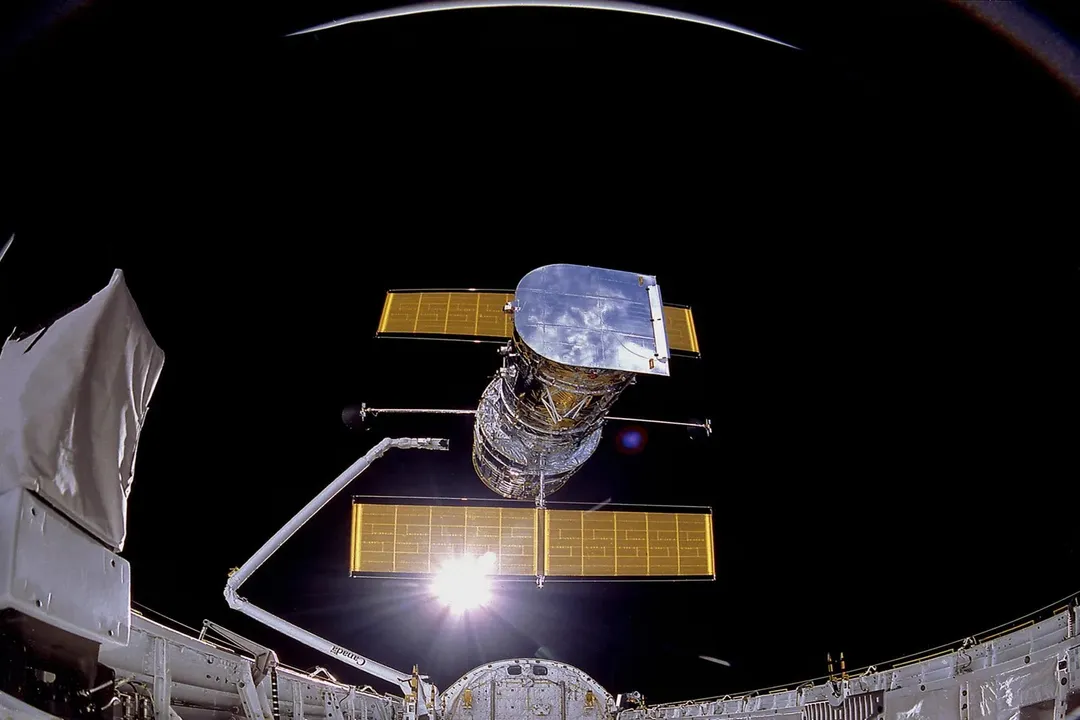
When the goal is pristine, unblemished vision or observation in wavelengths blocked by the atmosphere (like most ultraviolet or certain infrared bands), instruments must be placed into orbit. [2] The Hubble Space Telescope serves as a prime example of this capability. [2] Because it operates above the atmosphere, Hubble delivers images with an angular resolution far superior to nearly all ground-based instruments of its time, allowing astronomers to resolve fine details within star clusters or nearby galaxies. [2]
When comparing the two environments, a key difference emerges: ground telescopes can achieve vastly superior light-gathering power due to their sheer size, which is limited only by engineering and budget constraints. [3] Space telescopes, conversely, trade sheer size for atmospheric clarity and access to different parts of the electromagnetic spectrum. [2]
# Specialized Scientific Tools
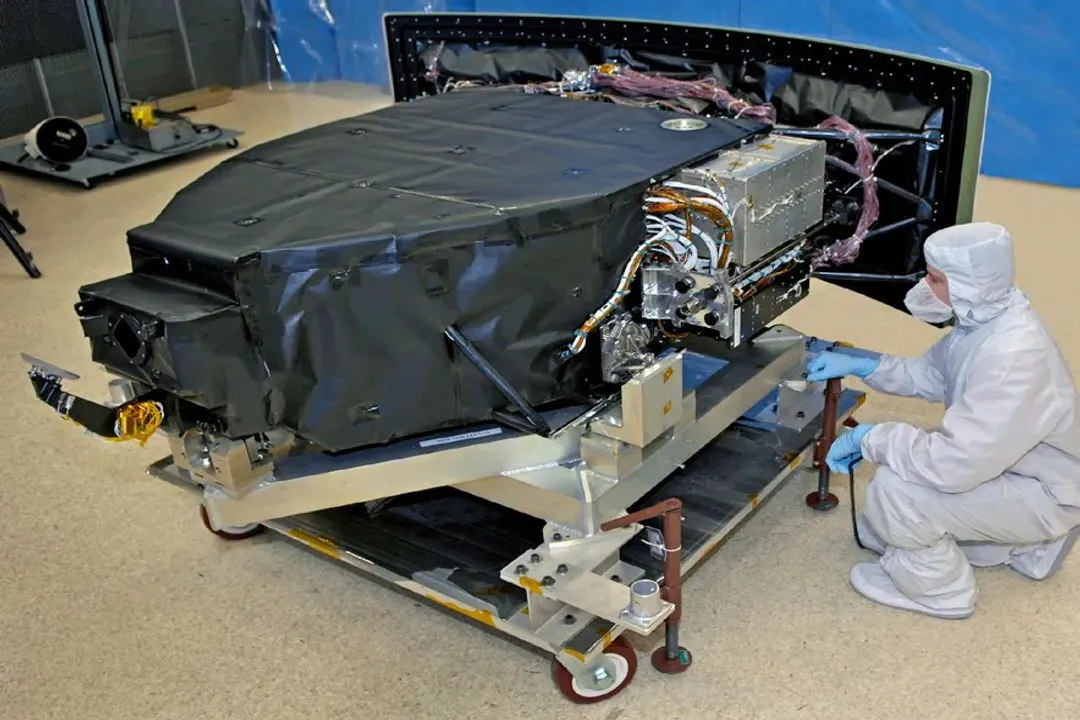
While the telescope structure is vital for gathering and pointing, the real star-studying work is performed by the specialized instruments mounted at its focus. [5] These are the devices that convert the concentrated light into usable scientific data. A modern observatory might host a range of these, including:
- Cameras/Imagers: These collect photons over a wide field of view, often using Charge-Coupled Devices (CCDs), which are highly sensitive electronic sensors that record the light as digital images. [5]
- Spectrographs: These are arguably the most scientifically important tools for studying stellar physics. [2] A spectrograph takes the focused starlight and splits it, much like a prism, into its component wavelengths (a spectrum). [2] By analyzing the dark or bright lines within this spectrum, scientists can determine a star's temperature, chemical composition, density, and velocity. [2]
- Photometers: These instruments measure the brightness of a star very precisely, which is essential for detecting transiting exoplanets or monitoring variable stars. [1]
For instance, the Hubble Space Telescope is equipped with instruments like the Wide Field Camera 3 (WFC3) for multi-band imaging and the Cosmic Origins Spectrograph (COS) for analyzing faint ultraviolet light signatures. [2] These tools are frequently swapped out or upgraded during servicing missions, demonstrating that the instrument package is the dynamic, evolving core of the observatory. [2]
While the primary focus is often on the optical and infrared light that stars emit, studying high-energy phenomena like stellar flares or accretion disks around black holes requires instruments sensitive to X-rays or gamma rays, which necessitates entirely different orbiting observatories that detect high-energy particles rather than focusing light through mirrors. [1]
While the sheer size of a primary mirror dictates how faint an object you can observe, the sensitivity and spectral range of the detector system dictate how much information you can extract from the light you do collect. [5] It is an interesting observation that a slightly smaller ground-based mirror feeding an extremely wide-band spectrometer might yield more profound chemical insights into a galaxy's structure than a marginally larger mirror paired with an older, narrower-band imager. This dynamic balance between light collection and light analysis underscores the complexity of modern instrument design.
# Data Handling
The study doesn't end when the photons hit the sensor. Once the specialized instrument captures the light, the resulting digital data must be processed. [3] Modern astronomical data sets are enormous, requiring significant computational power to correct for instrument noise, calibrate against known standards, and convert the raw electronic signals into the final scientific images or spectra that we interpret. [3] Even the most sophisticated telescope is only as good as the algorithms used to clean and interpret the signals it receives.
# Historical Context and Modern Tools
The evolution from ancient angular measurement to modern spectral analysis shows a consistent trend: pushing the limits of what can be detected and quantified. [4][8] While the astrolabe provided positional accuracy, it offered zero insight into the physical nature of the stars themselves. [4] The telescope provided the ability to see, but it was the attachment of the spectrograph that provided the understanding of what was being seen. [2][5]
The sheer variety of instruments listed in astronomical catalogs emphasizes this point; the category "instrument" encompasses everything from the basic sighting tubes used centuries ago to the complex interferometers and orbital sensors available today. [1][6] If you are simply charting an object’s position, a basic transit instrument might suffice, but if you want to know its age, velocity, and composition—the core questions of modern astrophysics—you absolutely require a dedicated spectrograph mounted on a powerful light collector. [2][3] Observing stars today is a multifaceted data-gathering exercise, not just a visual one.
Related Questions
#Citations
List of astronomical instruments - Wikipedia
Hubble Instruments - NASA Science
Telescopes & Instruments | Center for Astrophysics
6: Astronomical Instruments - Physics LibreTexts
Instruments Used To Study Stars - Sciencing
The First Telescopes (Cosmology - American Institute of Physics
Telescopes and Observatories - University of Oregon
Astronomy: The Instruments that Made it Possible to Understand the ...