What is the device used to read stars?
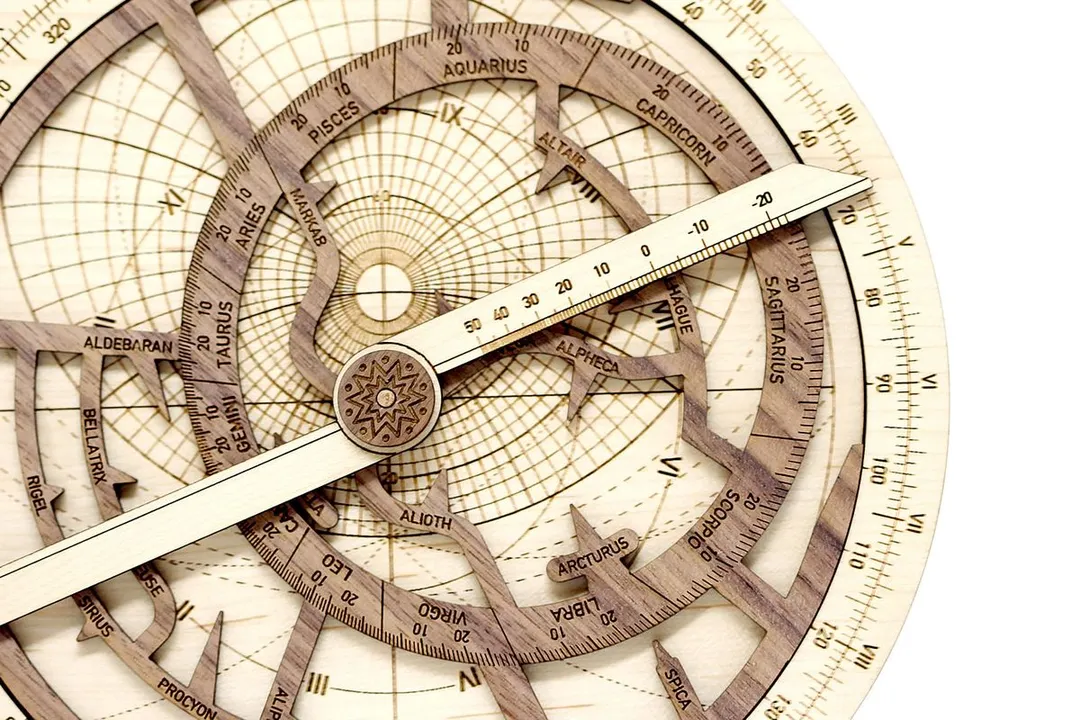
The device most commonly associated with the ancient art of reading and interpreting the heavens, particularly when discussing identification and measurement from antiquity, is the astrolabe. [2][5][6] This instrument represents one of humanity's earliest and most sophisticated analog computers, designed not for looking through at distant objects, but for calculating their positions, identifying stars, and determining the time. [2][6] While modern astronomy relies on massive optical telescopes and digital sensors, the astrolabe provided pre-modern scholars, navigators, and astrologers with an indispensable tool for understanding the cosmos from a fixed point on Earth. [1][6] It is a complex brass instrument, often beautifully engraved, which served as a model of the celestial sphere. [1][6]
# Ancient Tool
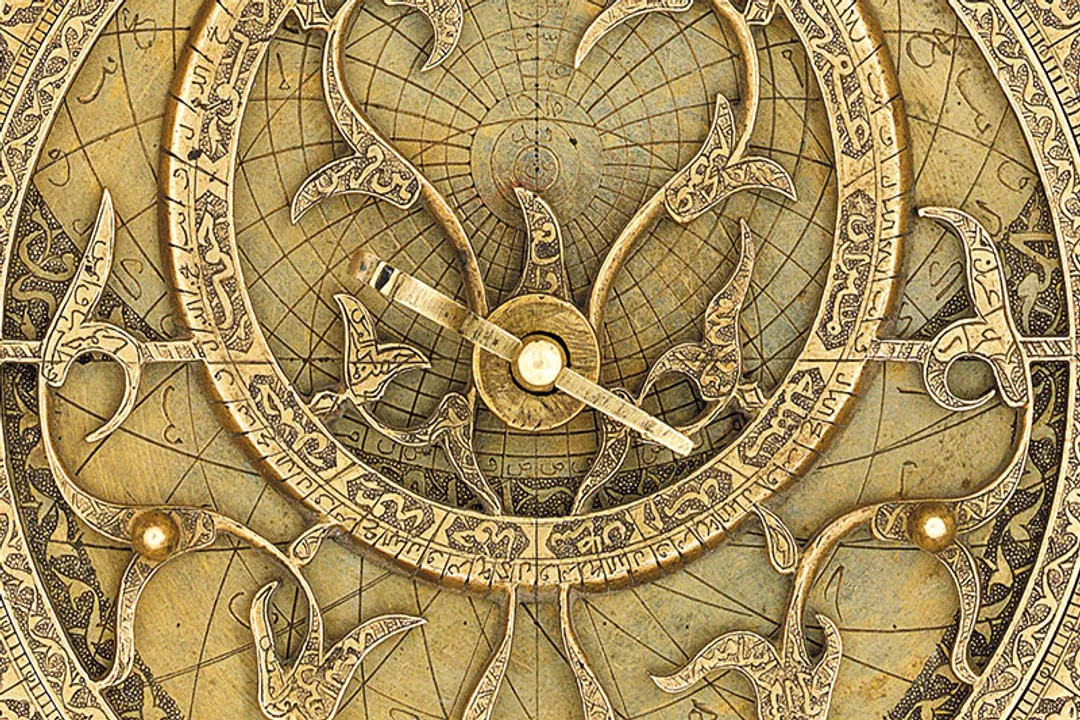
The term "astrolabe" itself derives from the Greek words astron (star) and lambanō (to take or receive), literally meaning "star-taker". [1] Its origins trace back thousands of years, with evidence suggesting Hellenistic development, though the form we recognize today was perfected and widely disseminated in the Islamic Golden Age. [1][6] This instrument wasn't just used for theoretical study; it was functional equipment that unlocked practical applications for daily life, religion, and maritime travel. [2][5][8] For medieval astrologers, the instrument was believed capable of unlocking the secrets of the stars, lending it a mystical significance alongside its scientific utility. [7] Unlike a modern sextant or telescope, which focuses on observation, the astrolabe performed computation based on input measurements. [6]
# Core Functions
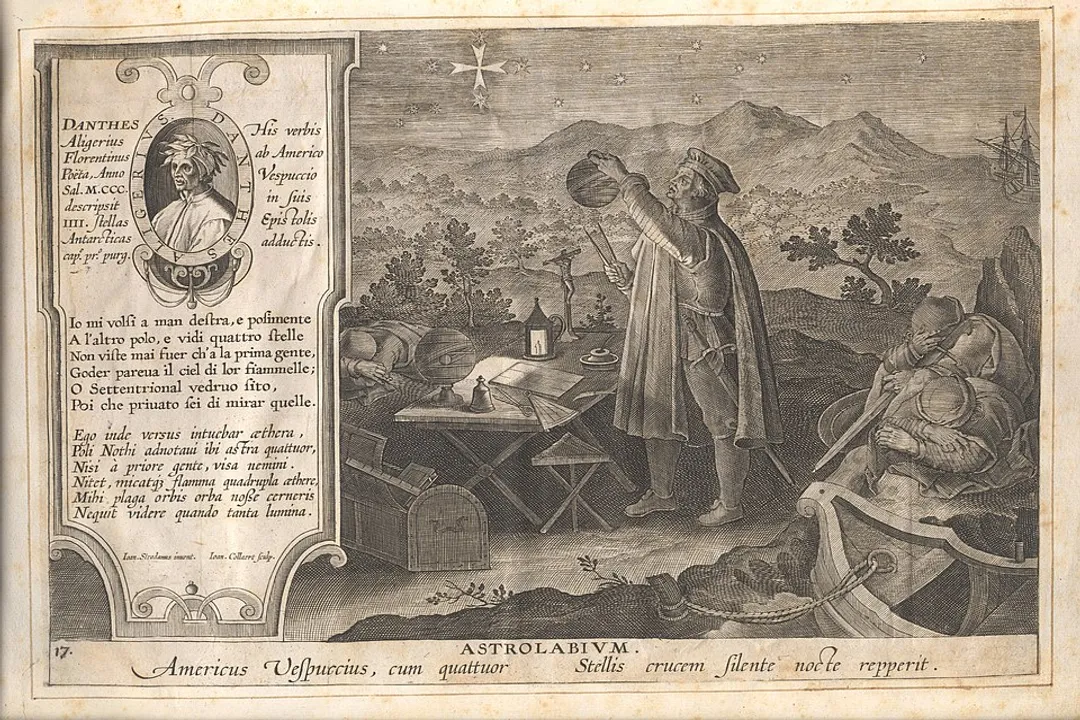
The primary purpose of the astrolabe revolves around measuring the position of celestial bodies relative to the observer and then translating that measurement into useful information. [6] One of its most fundamental roles was determining the altitude of stars and planets above the horizon. [5][9] This measurement, taken using the alidade (an sighting rule), was critical for establishing latitude, which in turn was vital for navigation and geographical understanding. [6][8]
Beyond angular measurements, the astrolabe excelled at timekeeping. It could be used to ascertain the local time, whether day or night, by measuring the position of the Sun or a known star. [2][6] In a society without reliable mechanical clocks, this capability was revolutionary. Furthermore, it allowed users to find the time of sunrise or sunset and to determine the azimuth—the direction along the horizon—of a celestial object. [1] For those interested in astrology, these calculations were the bedrock upon which horoscopes and celestial predictions were built. [7]

# Device Anatomy
To perform these varied calculations, the astrolabe is composed of several interconnected parts, each serving a specific mechanical or visual purpose. [1][6] Understanding these components reveals why the astrolabe is classified as an early computing machine:
- The Mater (Mother): This is the main body or shell of the instrument, usually a circular disc with a deep recess. [1] It serves as the housing for the other components and often bears degree markings around its rim. [6]
- The Plates (or Tablets): These are removable, engraved discs that fit precisely inside the mater's recess. [1] Each plate is engraved for a specific latitude, featuring a projection of the local horizon and altitude circles. [6] A user needed the correct plate corresponding to their location to perform accurate calculations. This requirement—that the instrument must be customized for the latitude—is a fascinating early example of a hardware/software dependency; the physical hardware (the mater and rete) required specific software (the latitude plate) to function correctly for a specific geographical location. [1][6]
- The Rete (Net): This is an openwork framework placed over the plates. [1] It carries pointers indicating the positions of important stars and the ecliptic (the path of the Sun). [6] The rete rotates over the fixed plates, simulating the motion of the heavens over time. [1]
- The Alidade: This is a rotating sighting rule mounted on the back of the astrolabe. [6] It features two pinholes or vanes that allow the user to sight a star or the Sun and read its altitude directly from the degree markings on the rim of the mater. [1]
If you are trying to imagine the complexity, think of the astrolabe as combining the functions of a modern GPS receiver (calculating position and time), a planetarium projector, and a slide rule—all housed in one portable, heavy metal object. [1][6]
# Historical Application
While the astrolabe was used across millennia, its deployment in navigation solidified its importance in world history. [8] Mariner's astrolabes, often simplified versions of the more ornate planispheric astrolabes used on land, were crucial for ocean voyages. [8] They allowed sailors to determine their latitude by measuring the Sun's altitude at noon or the altitude of the North Star. [8] Before the invention of the marine chronometer, determining longitude at sea was nearly impossible, but accurate latitude measurement—made possible by the astrolabe—was a massive step forward in global exploration and trade. [8]
In a different context, the instrument’s association with astrology highlights the blurred lines between science and mysticism in earlier eras. [7] The ability to precisely map the sky meant the ability to precisely map what medieval thinkers believed to be cosmic influences on earthly events. [7] The craftsmanship involved also made them objects of great value and prestige, as seen in surviving examples handled by auction houses today. [4]
# Insights on Application
When considering how an observer would have actually used this device in practice, the dependence on the latitude plate immediately stands out. You couldn't simply take an astrolabe from London and use it accurately in Cairo without swapping out the engraved plate. [6] This emphasizes that the accuracy of the astrolabe was entirely dependent on the observer knowing their local latitude beforehand, or being able to derive it using the instrument itself in an iterative process. [6] It wasn't a fully autonomous measurement device; it required an initial geographical context to unlock its power.
Furthermore, the astrolabe serves as a superb illustration of how astronomical knowledge underpins seemingly unrelated technologies. Every time a user calculated the time of prayer, determined the direction of Mecca (the qibla), or plotted a star's position, they were applying sophisticated geometric principles derived from spherical trigonometry. [1] The astrolabe is a physical manifestation of complex mathematical relationships rendered in brass, making abstract celestial mechanics tangible enough to hold and calculate with. [1][6] This physical, tactile interaction with mathematics is something modern digital tools have largely obscured.
# Modern Context
Today, the astrolabe is primarily an object of historical study, a collector's piece, or a tool for historical reenactment. [4] While some amateur astronomers might appreciate its mechanics, it is not a standard piece of modern astronomical equipment for discovery or serious observation. [2] Modern instruments like the telescope—which gathers light to make faint objects visible—or digital spectrographs—which analyze light composition—have superseded the astrolabe’s computational role. [1] However, the underlying principles—the relationship between celestial coordinates and terrestrial observation—remain the same, simply executed with far greater precision and power by modern technology. [6] The astrolabe, therefore, acts as an invaluable link, demonstrating how profoundly skilled our predecessors were at measuring and mapping a universe they could only see with the naked eye and a precisely calibrated mechanical aid. [1]
#Videos
How to use an astrolabe I Curator's Corner S3 Ep1 #CuratorsCorner
Related Questions
#Citations
Astrolabe - Wikipedia
A beginner's guide to the astrolabe | BBC Sky at Night Magazine
The astrolabe is an ancient tool used to identify stars and calculate ...
Astrolabes: Tools for decoding the movement of the stars - Christie's
What do you call an old instrument which was used to measure the ...
Astrolabe | Definition, History, & Facts | Britannica
Mariner's Astrolabe - Ages of Exploration
How to use an astrolabe I Curator's Corner S3 Ep1 #CuratorsCorner