What unit do we use to measure stars?
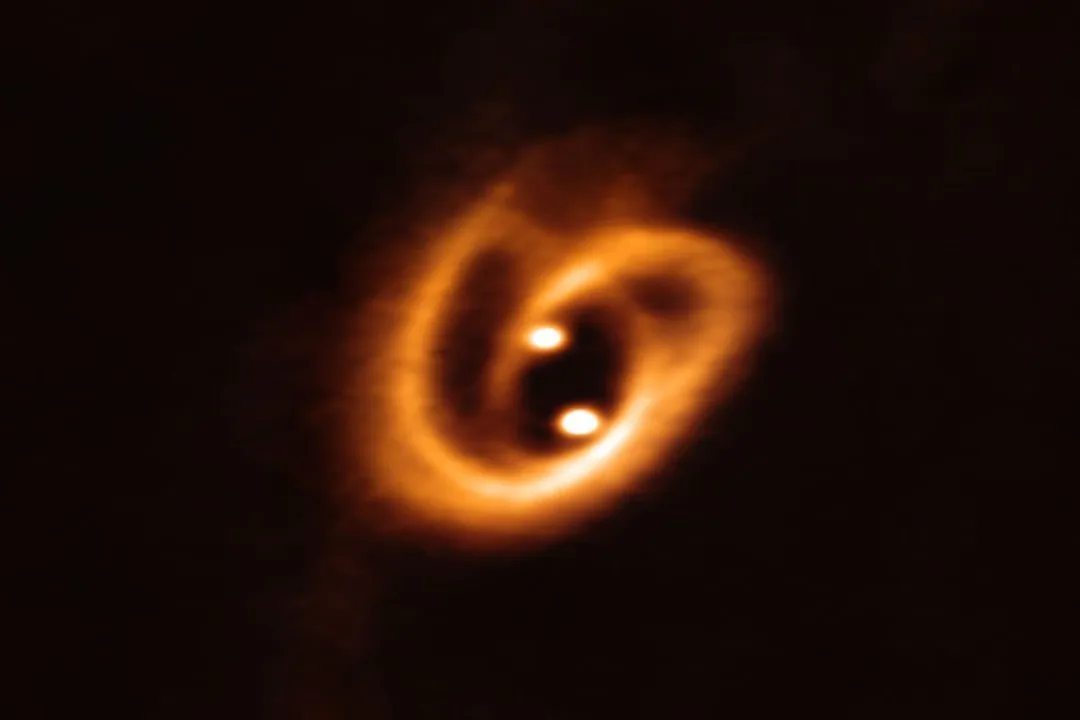
When we gaze up at the night sky, the dazzling points of light appear deceptively simple. Yet, measuring these celestial bodies—determining how big they are, how heavy they weigh, and just how far away they sit—requires a grab bag of specialized units because the distances involved stretch beyond our everyday comprehension. [6][9] Trying to describe the distance to Proxima Centauri in kilometers, for instance, would result in an unwieldy string of zeros, making comparison and understanding impossible. [7]
# Local Yardstick
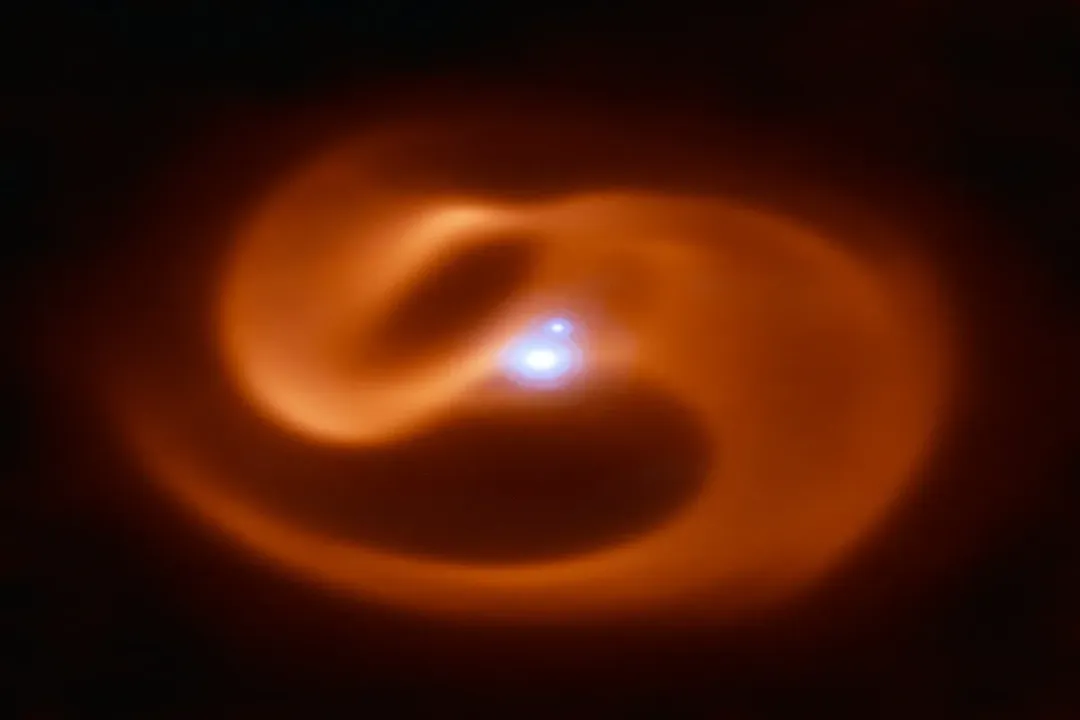
The most familiar starting point for any astronomical measurement, especially for objects within our own cosmic neighborhood, is the Astronomical Unit, or . [1][7] This unit is specifically defined as the average distance between the Earth and the Sun. [1][5][9] Historically, it was essential for mapping the planets. [7] Quantitatively, is approximately $149,597,870.7$ kilometers or about $93$ million miles. [1][5]
The serves as a remarkably convenient ruler for the solar system. For example, Jupiter orbits at roughly from the Sun, while the dwarf planet Pluto has an average orbit of about . [5] However, once you step outside the Sun's immediate gravitational influence, the rapidly becomes too small to be practical. [7] Consider the nearest star system, Alpha Centauri; its distance is far too great to express reasonably in alone, signaling the need for a much larger measuring stick. [7]
# Interstellar Measure
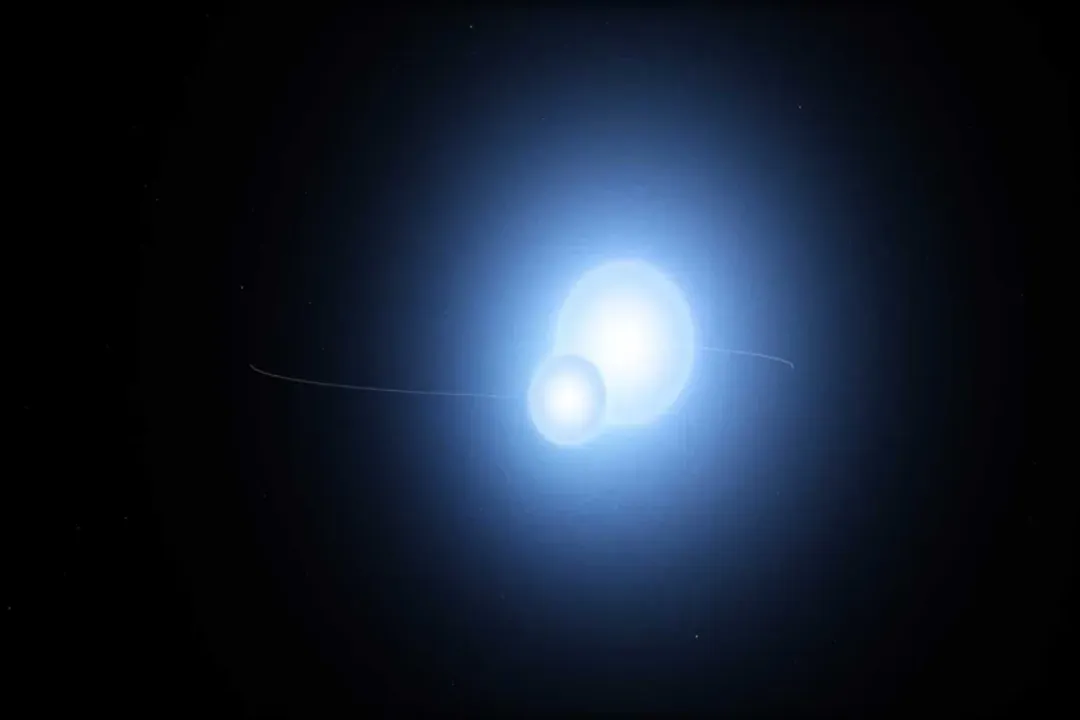
To span the gulfs between stars, astronomers switch to units based on the speed of light, which is the fastest thing in the universe. [7] The most commonly cited of these is the light-year. [6][7]
A light-year is not a measure of time, a common misconception, but rather a measure of distance: it is the distance light travels in one Julian year. [7] Since light travels at nearly $300,000$ kilometers per second, one light-year equates to an astonishing distance of approximately $9.46$ trillion kilometers ($5.88$ trillion miles). [7] For measuring stars outside our solar system, the light-year is intuitive because it directly relates distance to the time it takes for that star's light to reach us. [6] If a star is $500$ light-years away, the light we see tonight left that star $500$ years ago. [9]
A related, though often preferred by professionals, unit is the parsec. [6] The parsec is derived from the geometric method of measuring stellar distance called parallax, which is the apparent shift in a star's position as Earth orbits the Sun. [6] A parsec is defined as the distance at which one astronomical unit subtends an angle of one arcsecond—a very tiny angle. [6] This relationship makes the math clean for stellar distance calculations: $1$ parsec is precisely equivalent to about $3.26$ light-years. [6] While the light-year is often favored in public communication for its clarity, the parsec is an expertise unit, deeply embedded in the professional calculations astronomers use daily to map the galaxy. [6]
It is interesting to note that while works for our solar system, and parsecs/light-years work for the galaxy, even these units strain at the edges of the observable universe. For extragalactic distances, astronomers might use kiloparsecs (thousands of parsecs) or megaparsecs (millions of parsecs). [6]
| Unit | Approximate Value (km) | Primary Use Case | Relationship |
|---|---|---|---|
| Astronomical Unit () | Solar System distances [1][7] | light-minutes [9] | |
| Light-Year (ly) | Interstellar distances [7] | ||
| Parsec () | Professional stellar distance measurement [6] |

# Measuring Stellar Size
The question asks what unit we use to measure stars, and that moves us beyond simple distance. Stars are not pinpricks when you consider their true scale; they possess immense physical diameters and volumes. [4] However, determining the actual physical radius of a star is complicated by its distance. A star that is very large but extremely far away might appear the same size in the sky as a star that is small but relatively close. [4]
Because of this, astronomers often measure the angular size of a star first—how large it appears in the sky, usually measured in arcseconds or milliarcseconds. [4] To convert this angular size into a true physical diameter, the star's distance must be known precisely, often using parallax measurements. [4][6] Once the distance () and the angular size () are known, the actual physical radius () can be calculated. [4]
In practice, the radius of stars is often expressed relative to the Sun's radius, much like the is related to the Earth-Sun distance. [4] For instance, one might state that a star has a radius of $5$ solar radii (). [4] Betelgeuse, a famous red supergiant, has a radius estimated to be about $900$ times that of our Sun (). [4] Using solar units simplifies comparisons dramatically, allowing a reader to immediately grasp that Betelgeuse is vastly larger than our own star, even if the absolute kilometer measurement is less intuitive.
# Determining Stellar Mass
Perhaps even more fundamental to a star's nature than its size is its mass. Stellar mass dictates nearly everything about a star's life: how hot it burns, how long it lives, and what it will become when it dies. [4]
Mass is almost never measured by direct observation in the same way we might use a scale to weigh an object on Earth. Instead, stellar mass is inferred, most reliably, through observing the gravitational effects a star has on other objects. [4] This is where binary star systems become invaluable. If a star is orbited by a companion—another star, or even a planet—the period of the orbit and the size of the orbit allow astronomers to apply Kepler's Third Law of Planetary Motion, modified for the masses involved. [4]
The unit commonly used for stellar mass is the solar mass (), which is simply the mass of our Sun. [4] This is an expert unit derived from a precise calculation based on the Earth's orbit, the gravitational constant, and the Earth's orbital period. [1][7] When we say a star has , we mean it weighs ten times as much as our Sun. [4] Stars can range from fractions of a solar mass (red dwarfs) to over a hundred times the Sun's mass (massive blue giants). [4]
When comparing these scales, it’s fascinating to observe how the choice of unit reflects the scale of the phenomenon being studied. We use for the gravitational neighborhood of a star, but we use solar masses () for the star itself, illustrating a nested hierarchy of measurement scales. [1][4]
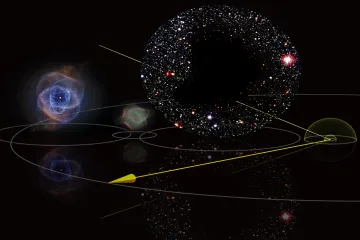
# Scale Visualization
To really appreciate the unit jump, consider a scenario: a scientist is studying a planet orbiting a distant star. They might find the planet's orbit is wide, and the planet takes $100$ Earth days to complete one revolution. [4] This data point, localized to the star's immediate sphere of influence, would be expressed using and Earth days. [4] However, to tell the public about this discovery, they must first convert that orbital distance into light-seconds or light-minutes to give a sense of the light-travel time, and then convert the star's mass from to kilograms—a number so huge it’s meaningless to most people. [7]
An interesting thought experiment is relating the speed of light to the . Since the distance from the Earth to the Sun is , and light takes about $8.3$ minutes to cross that distance, [9] this offers a great way to contextualize the for solar system objects. For example, a radio signal sent to the Mars rover takes about $15$ light-minutes (or in distance) to travel, depending on where Mars is in its orbit. [9] This bridges the gap between our terrestrial time-based perception and the vast distances defined by the scale.
When one moves to nearby stars, say $4$ light-years away, if we tried to express that in light-minutes, the number would be about $210$ million light-minutes. The parsec unit, $3.26$ light-years, simplifies that distance to about $1.22$ parsecs, which is a much cleaner number for scientific cataloging. [6]
# Practical Scale Comparison
Understanding the measurement units isn't just academic; it informs how we even see the sky. If an object is measured in , we are dealing with neighbors—the planets and asteroids. [5] If the measurement flips to light-years or parsecs, we are dealing with stellar neighbors, using methods like parallax to fix their location. [6] The shift in the required unit acts as a built-in indicator of astronomical scale.
For the everyday enthusiast observing the sky, relating these measurements back to what is visible can be helpful. Consider that every star you see with the naked eye (with the exception of the Sun) is less than about $1,000$ light-years away, placing them well within the realm where the light-year is the standard unit, far beyond the zone. [7] While we cannot directly "measure" the physical size of the Andromeda Galaxy in solar radii, we can measure its distance in Megaparsecs, demonstrating that as the object grows, the unit of measurement must balloon to maintain usability. The fundamental takeaway is that there is no single "star unit"; there are units for distance, units for mass, and units for size, all chosen to keep the resulting numbers manageable for human cognition and mathematical manipulation. [4]
Related Questions
#Citations
Astronomical unit - Wikipedia
What unit is used to express the size of a star? - Quora
What is the Astronomical Unit? | Science Guys - Union University
How do astronomers measure the size and mass of stars?
How is an Astronomical Unit (AU), which is equal to the distance ...
Star - Measurement, Parallax, Light-Years | Britannica
What is a parsec in astronomy? - Facebook
Astronomy 101: Astronomical distances
How Do You Measure the Distance to the Moon, Planets, Stars and ...