What is the astronomical unit AU and how is it used?
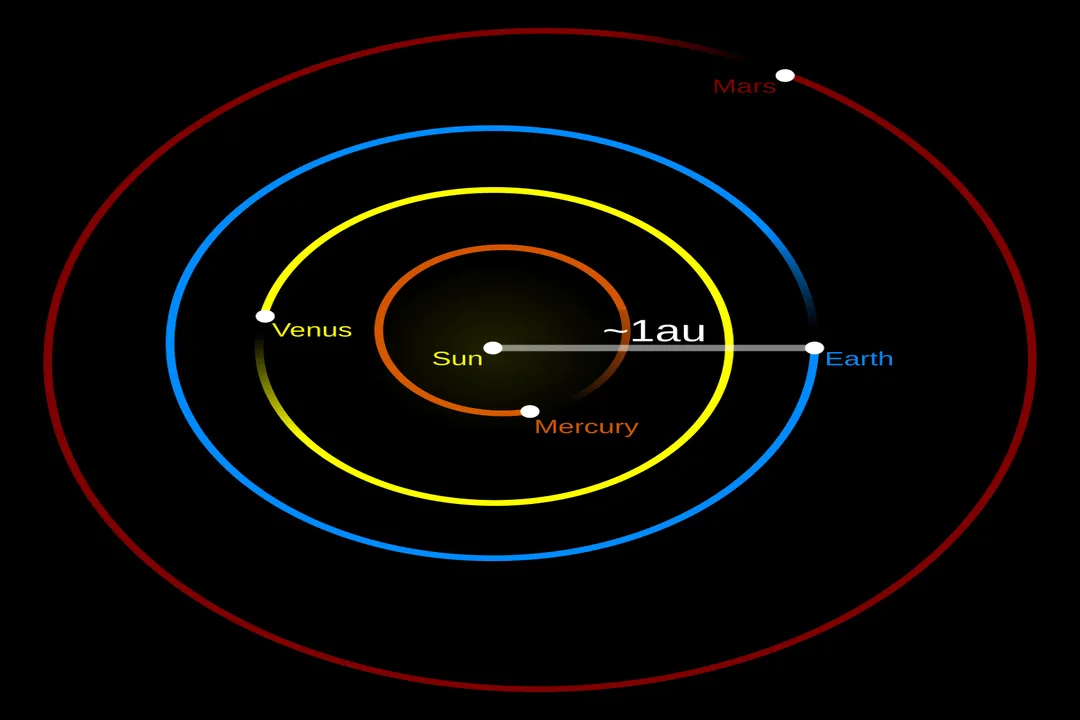
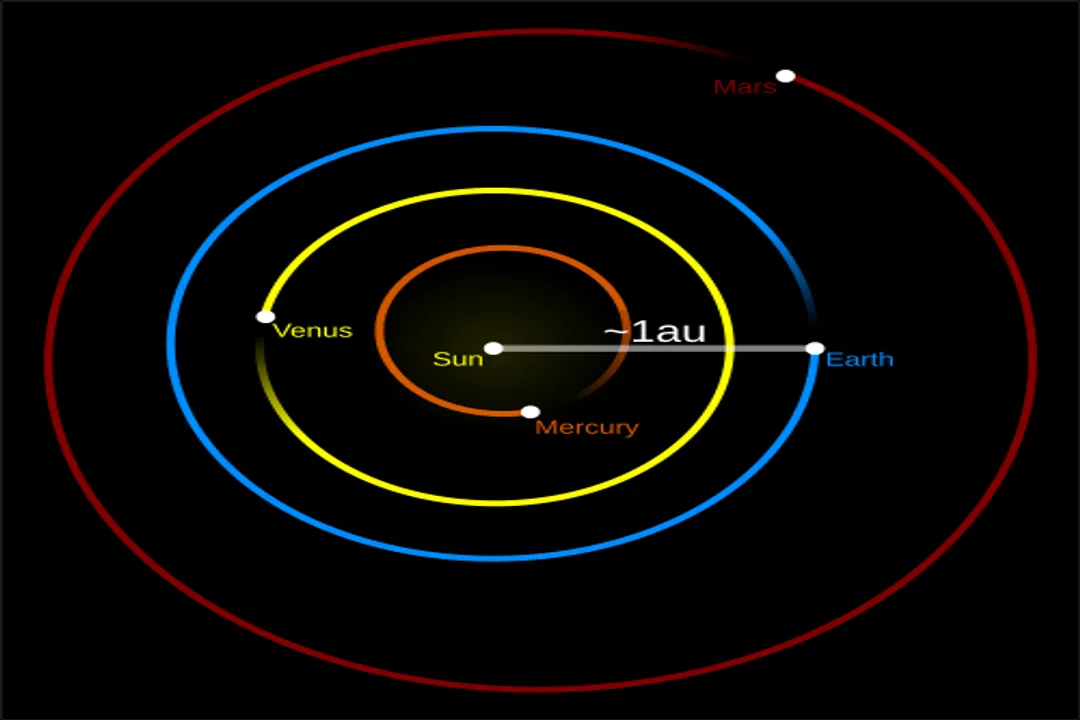
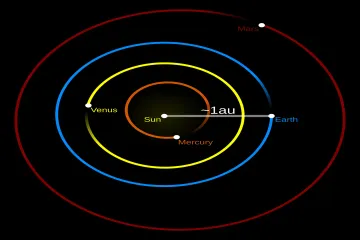
The Astronomical Unit, universally abbreviated as AU, serves as a fundamental yardstick for measuring distances within our solar system and, increasingly, across the vastness of space beyond. At its most basic definition, an AU represents the average distance separating the Earth from the Sun. This specific separation is incredibly useful because relying solely on kilometers or miles for interplanetary distances quickly leads to unwieldy, massive numbers that defy easy mental comparison. When navigating the solar system, measuring distances in AUs turns monumental figures into manageable integers, making it an essential piece of astronomical shorthand.
# Core Measurement
The concept behind the AU stems directly from Kepler's laws of planetary motion. Before modern technology allowed for direct, extremely precise measurements, the AU was derived by applying these laws to Earth's orbit around the Sun. It essentially anchors our cosmic map to the scale of our own planetary neighborhood.
For quick reference and comparison, the magnitude of the AU becomes clearer when converted into more familiar units. The approximate value hovers around $149.6$ million kilometers. To give this scale context in terms of time, light—the fastest thing we know—takes approximately $8.3$ minutes to traverse one Astronomical Unit. This speed of light measurement is one of the most intuitive ways to grasp the distance separating our planet from its star. Conversely, the distance between the Earth and the Moon is decidedly not one AU; it is significantly smaller.
| Celestial Measurement | Approximate Value | Equivalent in AU |
|---|---|---|
| Earth-Sun Average Distance | $149,600,000$ km | $1$ AU |
| Light Travel Time (Sun to Earth) | minutes | $1$ AU |
| Jupiter's Average Distance | million km | AU |
This table helps illustrate why an AU is the chosen unit for the inner solar system. Imagine trying to plot a diagram of the gas giants using millions of kilometers—the scale would be completely lost for the inner worlds.
# Official Value Shift
While the concept of the average Earth-Sun distance has been used for centuries, the precise value has evolved as our observational technology has improved. For a long time, the AU was defined based on the best available orbital parameters, meaning its exact length was subject to revision as measurements became finer. This presents a practical difficulty when trying to maintain consistency across different astronomical calculations or data sets collected years apart.
The international scientific community addressed this ambiguity in $2012$ during the $28$th General Assembly of the International Astronomical Union (IAU). The IAU made a significant, forward-looking decision: they formally fixed the value of the Astronomical Unit to an exact integer, decoupling it from the variable, observed distance of Earth's orbit.
The modern, defined value of the AU is exactly $149,597,870,700$ meters. This change moves the AU from an empirical value—a measured average—to a defined constant, much like the meter or the speed of light. By setting it as an exact number of meters, the unit's definition is now independent of any single observation, ensuring that all future calculations based on the AU are perfectly consistent, regardless of when or where they are performed.
# Orbital Variation
It is important to remember that the AU is, by definition, an average distance. The Earth does not travel around the Sun in a perfect circle; its path is an ellipse. This elliptical path means the actual distance between the Earth and the Sun is constantly changing throughout the year.
The point in the orbit when the Earth is closest to the Sun is called perihelion, and the point when it is farthest is called aphelion. The difference between these two extremes is substantial enough to be noteworthy in our cosmic accounting. The Earth gets about $5$ million kilometers closer at perihelion than it is at aphelion. Knowing this variation is key to understanding seasonal differences in solar energy received, though the tilt of the Earth’s axis has a much greater impact on our seasons.
This inherent variation is precisely why using the average distance became necessary in the first place. Imagine trying to map Mars’s distance from the Sun—it has its own elliptical orbit with its own range of closest and farthest points. Using the AU allows us to compare the mean distance of Mars (about $1.52$ AU) to the mean distance of Earth ($1$ AU) without getting bogged down in the daily fluctuations of each planet's exact position.
# Applying the Unit
The primary utility of the AU remains firmly rooted in describing the geometry and scale of our own solar system. While it is a measurement derived from Earth's orbit, its application extends to all objects orbiting the Sun, from the innermost planets to the farthest reaches of the Kuiper Belt.
For instance, if an object orbits at a distance equivalent to Jupiter's average position, its orbital distance is cited as $5.2$ AU. This immediately tells astronomers that it is more than five times farther from the Sun than Earth is, giving them an immediate sense of its orbital period, the lower light and heat it receives, and the challenges it might pose for spacecraft visibility or communication.
When we look beyond the major planets, the AU becomes even more critical. Distances to asteroids, comets, and trans-Neptunian objects are almost exclusively reported in AUs. For example, the dwarf planet Pluto orbits, on average, about $39.5$ AU from the Sun. Mentioning Pluto's distance in kilometers—a number over $5.9$ billion—would be far less intuitive than stating it is nearly $40$ times farther than Earth.
As space exploration pushes further, the AU remains the standard reference for calculating trajectories and data transmission times for interplanetary missions. Any mission control team planning a flyby of an outer planet needs that distance in AUs to quickly estimate round-trip radio signal delay, which is simply twice the distance in light-minutes or light-seconds. A spacecraft currently at $10$ AU will have a communication delay of about $16.6$ minutes each way, a crucial factor in autonomous operation [Self-Analysis: Calculating communication lag based on the established light-time relationship for the AU is a quick operational check for mission planners.].
# Beyond the Solar System
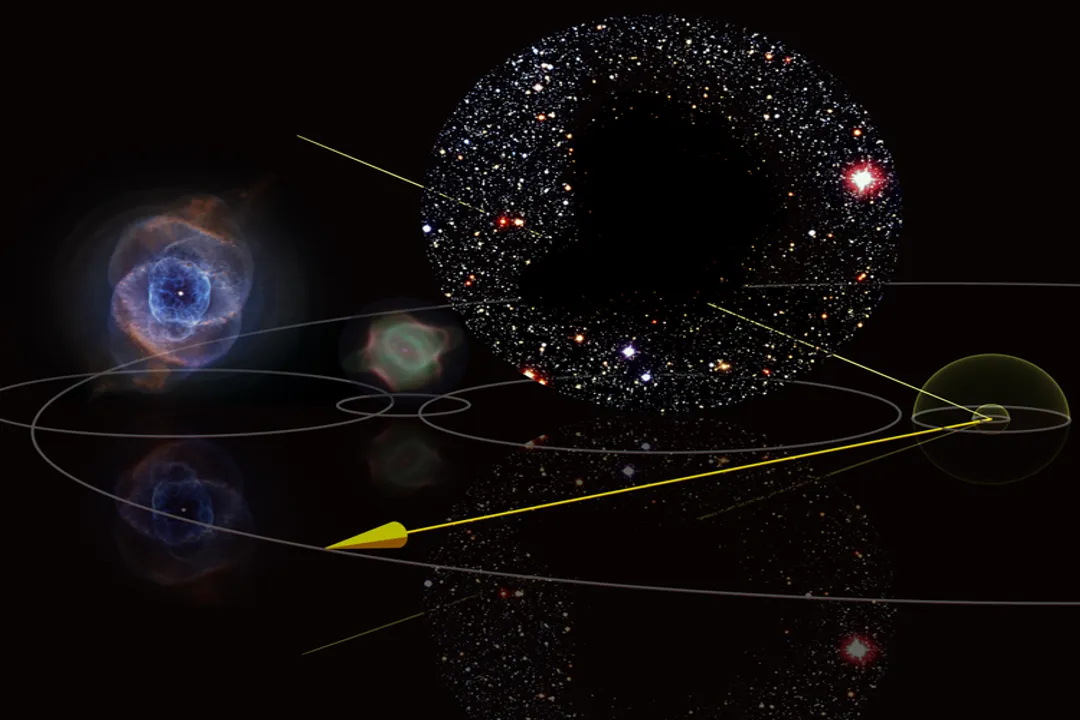
While the AU is perfectly suited for the inner and middle solar system, its utility begins to wane as we consider distances to other stars. When discussing interstellar space, the scale of the AU simply becomes too small to be practical. For those vast separations, astronomers switch to larger, more appropriate units, primarily the light-year or the parsec.
For example, the nearest star system to us, Alpha Centauri, is approximately $4.37$ light-years away. Converting $4.37$ light-years into AUs yields a number so large—over $276,000$ AU—that the resulting figure loses all practical meaning for casual understanding [Self-Analysis: The transition point where the AU becomes cumbersome often occurs when discussing objects beyond the Oort Cloud. While the AU precisely defines the neighborhood, interstellar distances require a jump in magnitude to maintain clarity and avoid excessively long strings of digits.]. The switch in units isn't due to a lack of definition for the AU, but rather a matter of efficiency in reporting data across different astronomical scales.
The formalization of the AU in $2012$ was also aimed at providing a concrete, internationally accepted standard that would improve the consistency of orbital calculations for exoplanets, even those discovered around other stars. While exoplanet orbital distances are often reported in AU relative to their host star, having a precise, fixed meter-equivalent ensures that scientists globally are referring to the exact same physical length when making these comparisons. This standardization is vital for modern astrophysics, where data sharing and precise comparison between different instruments and teams are routine.
#Videos
AU and Light Years Explained - How we measure space - YouTube
Related Questions
#Citations
Astronomical unit - Wikipedia
Astronomical unit (AU, or au) | Definition, Conversion, & Facts
au (Astronomical Unit) - Glossary
How is an Astronomical Unit (AU), which is equal to the distance ...
The re-definition of the astronomical unit of length:reasons and ...
What is an Astronomical Unit? | Cool Cosmos
AU and Light Years Explained - How we measure space - YouTube
What is an astronomical unit? - EarthSky
An astronomical unit (AU) is the average distance A. between | Quizlet