What units are used in space?
Measuring the cosmos requires a different kind of yardstick than the one we use to measure a room or drive across a state. Distances in space are so staggering that using standard metric units, like the meter or kilometer, quickly results in unmanageable numbers stuffed with zeros, making scientific communication cumbersome and prone to error. [9] Therefore, astronomers have adopted several specialized units designed to make these grand scales more digestible and practical for calculations. [1][4]
# Solar Scale

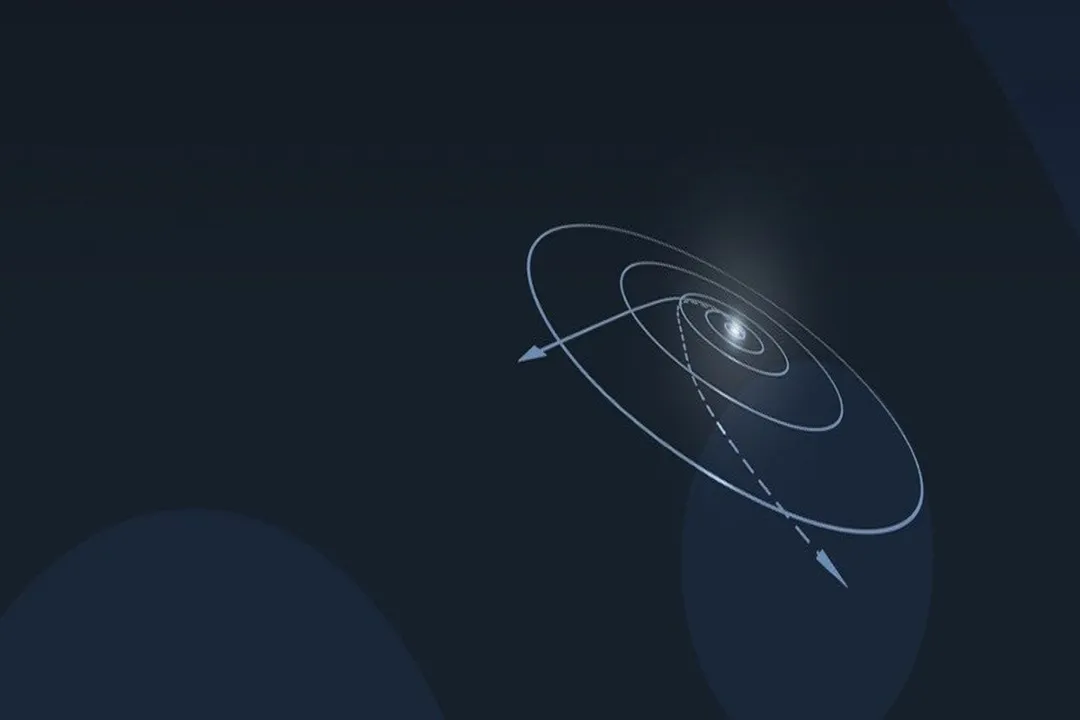
The most fundamental unit for navigating our own solar neighborhood is the Astronomical Unit (AU). [3][8] This unit is essential because the distances between planets, asteroids, and comets are far too large for kilometers but too small to warrant jumping straight to light-years. [1]
# Defining the AU
The Astronomical Unit was historically defined based on the average distance between the Earth and the Sun. [8] While early definitions were based on observational measurements, the unit has since been standardized for greater precision. [2] In 2012, the International Astronomical Union (IAU) fixed the value of the AU to an exact number of meters: $149,597,870,700$ meters. [2][10] This precise definition means that the AU is no longer dependent on slight variations in Earth's orbit but is a fixed length, which is helpful when communicating across different scientific communities. [2]
To put this scale into perspective, the distance from the Earth to the Sun is exactly $1$ AU. [8] Mars orbits at about $1.5$ AU, Jupiter is around $5.2$ AU out, and Neptune orbits at roughly $30$ AU from the Sun. [1][4] Thinking about mission planning in terms of AUs versus kilometers highlights the benefit: stating that a probe is heading to Mars at $78$ million kilometers sounds less intuitive than saying it is traveling to $0.52$ AU, even though the latter requires recalling the constant . [9] A practical consideration for mission control, for instance, is that while using kilometers might seem more "fundamental," the sheer number of digits in interplanetary distance calculations increases the likelihood of transcription or calculation errors when dealing with numbers exceeding . [9]
# Interstellar Gaps
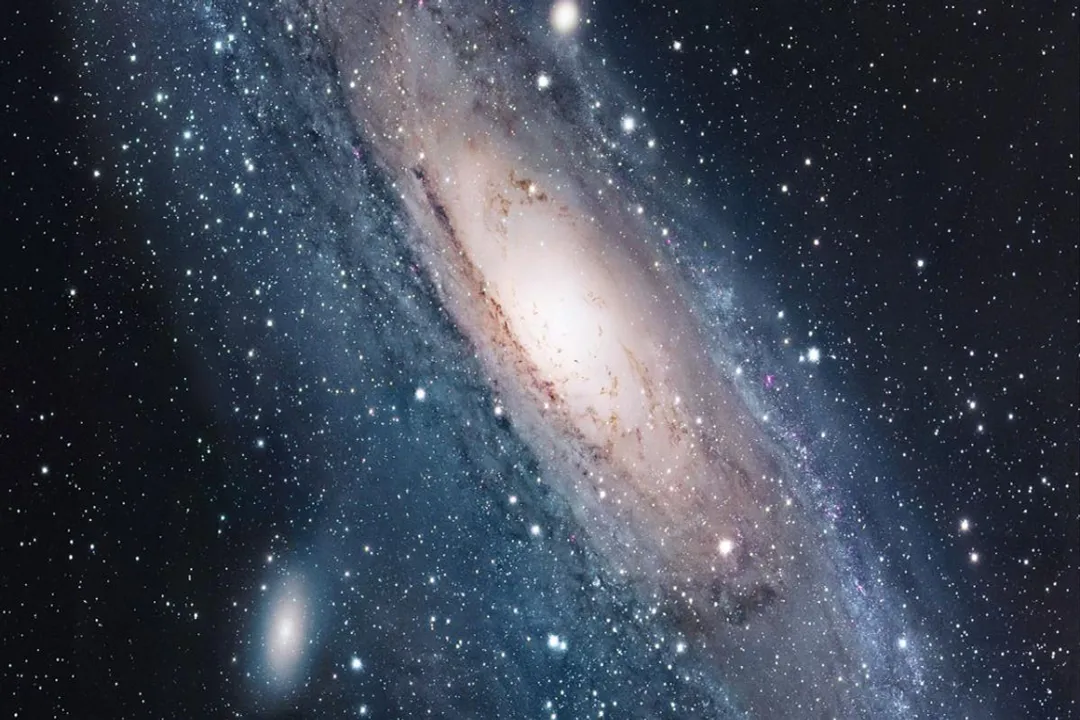
When we shift focus from planetary orbits to the distances separating stars, the AU becomes inconveniently small. It is far more efficient to use units based on the speed of light, which leads us to the light-year and the parsec. [3][4]
# Light Year
The light-year is perhaps the most famous unit in astronomy, often misunderstood as a measure of time. [3][7] In reality, a light-year quantifies distance: it is the distance that light travels in one Earth year. [1][3] Light moves incredibly fast, nearly $300,000$ kilometers per second, or about $186,000$ miles per second. [1]
Multiplying that speed by the number of seconds in a year yields a colossal distance. One light-year is equivalent to approximately $9.46$ trillion kilometers. [1][7] For example, the nearest star system to our own, Alpha Centauri, lies about $4.37$ light-years away. [1] If you were to use AUs to measure this, it would translate to roughly $276,000$ AUs, demonstrating why the light-year is the preferred choice for stellar separation. [1]
# The Parsec Standard
While the light-year is great for public outreach, professional astronomers often prefer the parsec for measuring distances to stars. [4] The term "parsec" is a contraction of parallax second. [4][10] This unit is derived geometrically from the parallax method, the primary technique used to measure the distances to relatively nearby stars. [10]
A parsec is defined as the distance at which one astronomical unit subtends an angle of one arcsecond. [10] This definition ties the unit directly to Earth’s orbital geometry, making it mathematically convenient for calculations based on parallax measurements. [4]
When comparing the parsec to the light-year, the parsec is larger:
This means that $1$ parsec is equivalent to about $3.26$ light-years. [1][4] If a star is $10$ parsecs away, it is about $32.6$ light-years away. The parsec offers a cleaner mathematical relationship to the raw observational data (the parallax angle) than the light-year, which relies on the constant speed of light. [4]

# Galactic and Beyond
Measuring the distances between galaxies requires units exponentially larger than the parsec. When looking across the Milky Way or to other galaxies, astronomers adopt prefixes that denote millions or billions of parsecs. [7]
# Larger Measures
For distances within our own galaxy or to nearby galaxies, the kiloparsec (), equal to $1,000$ parsecs, is common. [7] For instance, the center of the Milky Way is estimated to be about $8$ kiloparsecs away from our solar system. [7]
When discussing the vastness between galaxy clusters, the megaparsec () becomes necessary. A megaparsec represents one million parsecs. [7] This scale is used when mapping the structure of the universe on the largest observable scales. The nearest major galaxy cluster to us, the Virgo Cluster, is roughly $15$ to $20$ megaparsecs away. [7]
To make these scales more intuitive, consider this relative comparison:
| Unit | Equivalent in Kilometers (Approx.) | Typical Application | Relative Size Example |
|---|---|---|---|
| AU | Planetary orbits | Earth to Sun | |
| Light-Year () | Nearby stars | Distance light travels in a year | |
| Parsec () | Stellar distances (Parallax) | ||
| Megaparsec () | Galaxy clusters | Intergalactic voids |
# Other Cosmic Metrics
While distance is the most frequently discussed dimension in astronomy, the scale of celestial objects also demands specialized units for mass and time. [1]
# Stellar Mass
When talking about the mass of stars, planets, or black holes, the standard kilogram often becomes impractical. For instance, the Sun’s mass is about kilograms. [1] To avoid writing out thirty zeros, astronomers frequently use the Solar Mass () as their standard unit for mass in astrophysics. [1][10] One solar mass is simply the mass of our Sun. [1] Similarly, planetary masses are often compared to Earth’s mass (). [10]
# Time Measurement
Timekeeping in space also has its preferred metric. While seconds and years are used, the Julian Year is often the standard for defining time intervals in astronomical calculations, especially those involving long-term orbital mechanics. [10] The Julian Year is defined as exactly $365.25$ days, making it a constant unit, unlike the Gregorian year which varies based on leap year rules. [10]
The choice of unit is not arbitrary; it reflects the scale of the phenomenon being studied. For planetary probes, AU works best because mission timelines and maneuver calculations are tied to the geometry of the solar system. [9] For stellar evolution models, where star lifetimes span billions of years, Solar Mass and Julian Years provide consistent, manageable parameters. [10] This deliberate selection of measurement systems allows scientists to maintain clarity and consistency across the widely varying scales encountered in modern astronomy. [4]
#Videos
Units in Astronomy: Explained! - YouTube
Related Questions
#Citations
Basics of Spaceflight: Units of Measure - NASA Science
Astronomical unit - Wikipedia
Units in Space - Museum of Science
Units for Distance and Size in the Universe
Units in Astronomy: Explained! - YouTube
What units of measurement are used in space? - Quantum Physics
What is an astronomical unit? - EarthSky
Why do scientists use specialized units for distance when metric ...