What measurement do astronomers use?
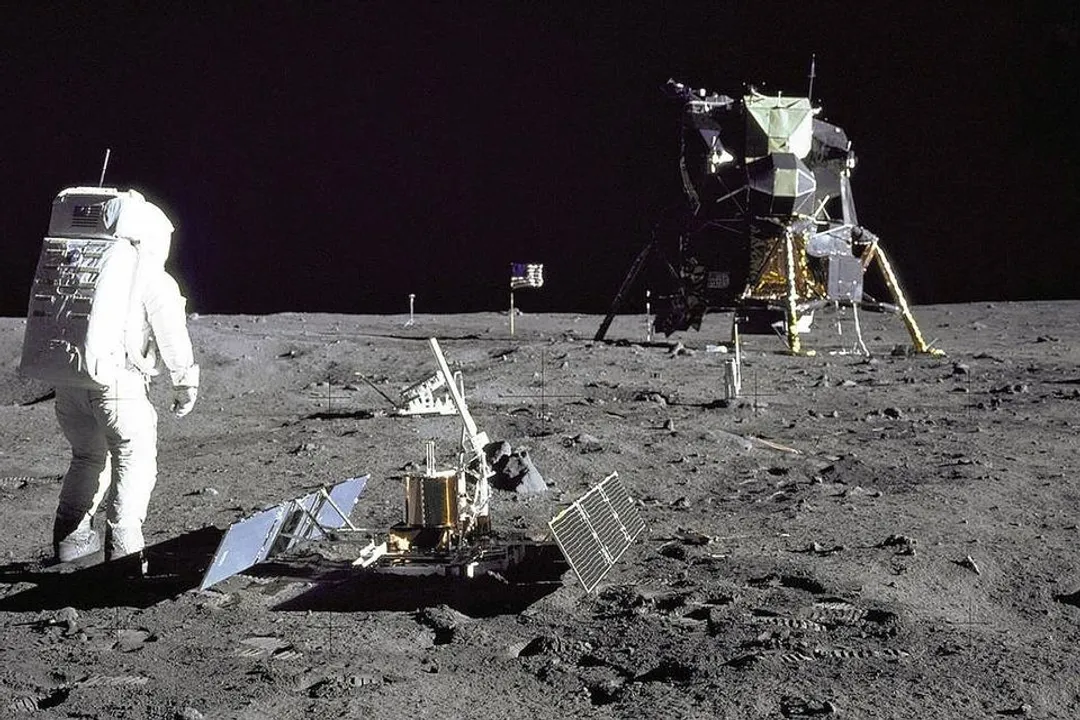
Measuring the cosmos presents a unique challenge, one where the everyday metrics of feet, miles, and kilometers quickly become unwieldy and abstract. When looking out at the Moon, planets, stars, and galaxies, the sheer magnitude of the distances involved demands specialized units that can handle numbers beyond simple human comprehension. The universe doesn't negotiate its scale to fit our convenient counting systems; instead, we have developed a toolkit of measurement standards, each tailored to a specific cosmic neighborhood, moving outward from our own planet.
# Solar Unit
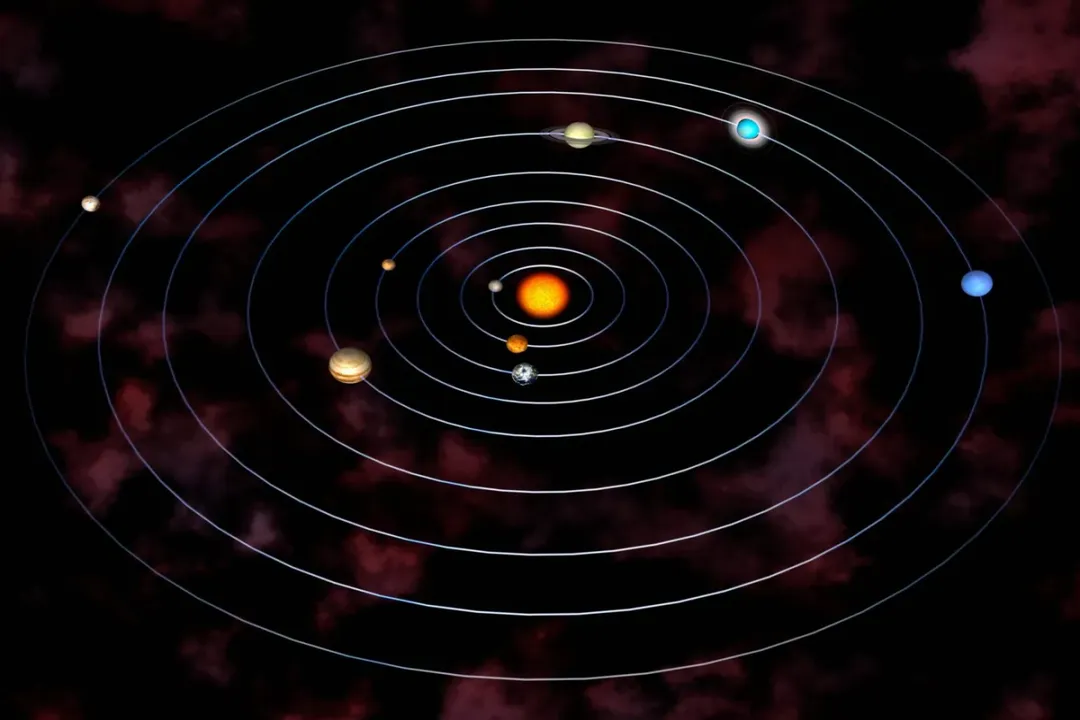
The most intimate of these large-scale units, essential for keeping track of our neighbors within the Sun’s immediate gravitational dominion, is the Astronomical Unit (AU). This unit is defined by the geometry of our own solar system.
# Defining the AU
The Astronomical Unit is fundamentally tied to the orbit of Earth. Specifically, it represents the mean distance separating the center of the Earth from the center of the Sun. It is a yardstick for the solar system, making distances within it much more manageable than expressing them in kilometers or miles. For instance, Mars orbits at roughly away, a cleaner figure than stating its average distance as about 228 million kilometers.
Before a formal international agreement, the value of the AU was based on observational data that carried inherent uncertainty. However, in $2012$, the International Astronomical Union (IAU) redefined the AU to have an exact, fixed value, divorced from future measurements of the Earth-Sun distance. This official modern definition sets the Astronomical Unit precisely as . This move is somewhat analogous to defining the meter based on the speed of light, providing an unchangeable, fundamental standard for all subsequent solar system distance calculations.
# Why Not Kilometers
The preference for the AU over kilometers or miles for describing planetary distances comes down to practicality and the desire to keep numbers grounded in a relatable scale for those within our system. If we consistently used kilometers, the distances would involve enormous strings of zeros, obscuring the relative scale between planets. Consider that Jupiter is roughly from the Sun, while Neptune is nearly . Expressing these as $778$ million and $4.5$ billion , respectively, tells us less about the orbital structure at a glance than the simple $5.2$ versus $30$ ratio. The AU acts as a natural normalization factor for our corner of the galaxy.
# Stellar Distances
When astronomers turn their instruments toward other stars, or when they want to describe the distances to objects outside the immediate Solar System, the AU becomes too small to be practical. For interstellar and intergalactic gulfs, two units take precedence: the light-year and the parsec.
# Light Years
The light-year (LY) is perhaps the most famous term used to describe cosmic separation, but it measures distance, not time, despite its name. A light-year is the distance that light travels in one Earth year through a vacuum. Light travels incredibly fast—about $299,792,458$ meters per second—so a light-year is a staggeringly large distance. One light-year translates to approximately $9.46$ trillion kilometers. Using this unit allows astronomers to discuss the nearest star systems in comprehensible terms. For instance, Proxima Centauri, our closest stellar neighbor, is about $4.24$ light-years away. This means the light we see from it tonight actually left the star over four years ago.
# Parsecs
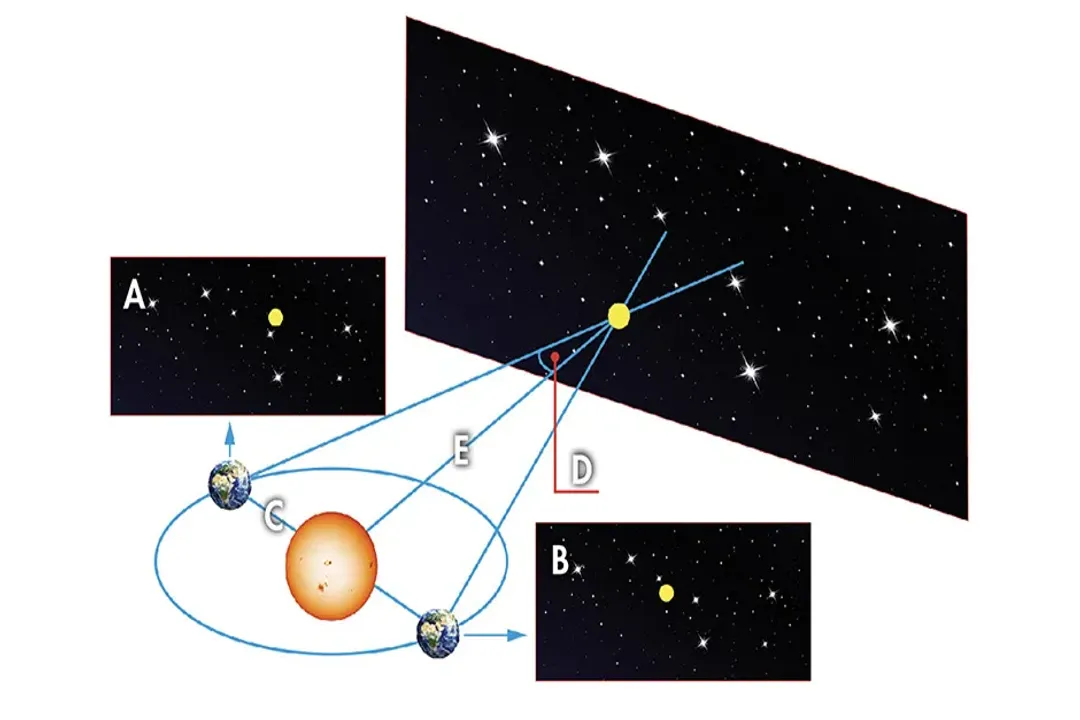
For professional astronomers, the parsec (pc) is often the preferred unit for measuring interstellar distances, and it is mathematically related to the concept of parallax, the apparent shift of a star against the background as the Earth orbits the Sun. The term "parsec" itself is a portmanteau of parallax and second.
A parsec is formally defined as the distance at which one astronomical unit subtends an angle of one arcsecond. While the AU is excellent for solar system measurements, the parsec becomes the unit of choice when measuring distances to nearby stars using trigonometric parallax methods. The conversion is significant: one parsec is approximately $3.26$ light-years, or about $30.9$ trillion kilometers. To put this in perspective for an observer, if you were measuring a star $100$ parsecs away, you would need an observationally derived distance using an measurement as its foundational yardstick, illustrating how these units build upon one another along the cosmic scale.
| Unit | Symbol | Primary Use Case | Equivalent in Meters (Approx.) |
|---|---|---|---|
| Astronomical Unit | AU | Solar System Distances | |
| Light-Year | ly | Interstellar Distances | |
| Parsec | pc | Nearby Stars (Parallax) |
Understanding the relationship between these scale units is key to appreciating the vastness; a jump from AU to LY is a jump across systems, while a jump from LY to parsec is a fine-tuning step among stars.

# The Measurement Toolbox
The choice of unit is dictated by the measurement technique available, which itself depends on how far away the object is. Astronomers effectively employ a cosmic distance ladder, where rungs of measurement rely on the success of the previous, closer rung.
# Close Range Ranging
For the nearest objects, direct measurement techniques are possible. To gauge the distance to the Moon or the planets, astronomers use radar ranging. This involves bouncing radio waves off the target and measuring the precise time it takes for the signal to return. Since the speed of the radio wave (the speed of light) is known with extreme accuracy, the distance can be calculated directly from the time-of-flight, yielding results that are accurate to within centimeters for the Moon.
# Stellar Parallax
When moving beyond the immediate solar system to measure the distances to relatively nearby stars, the primary technique relies on geometry: trigonometric parallax. As the Earth moves from one side of its orbit to the other over six months, a nearby star appears to shift slightly against the background of much more distant stars. This shift is the parallax angle. By knowing the diameter of Earth's orbit (which is twice the value of one AU) and measuring this tiny angular shift, the distance to the star can be calculated using basic trigonometry. This method is the bedrock for calibrating all further distance measurements, as it directly uses the established AU as its baseline.
# Standard Candles
Once stars are too far away for their parallax shift to be accurately measured—a limit reached relatively quickly, even for the largest telescopes—astronomers must turn to "standard candles". These are celestial objects whose intrinsic (actual) luminosity is known or can be reliably estimated. If you know how bright an object truly is, and you measure how dim it appears from Earth, you can calculate the distance based on how much the light has dimmed over the intervening space.
Two major types of standard candles are frequently cited:
- Cepheid Variables: These are pulsating stars whose period of variation is directly related to their absolute brightness.
- Type Ia Supernovae: These explosions of white dwarf stars are thought to reach nearly the same peak absolute luminosity every time, making them visible across vast cosmic distances.
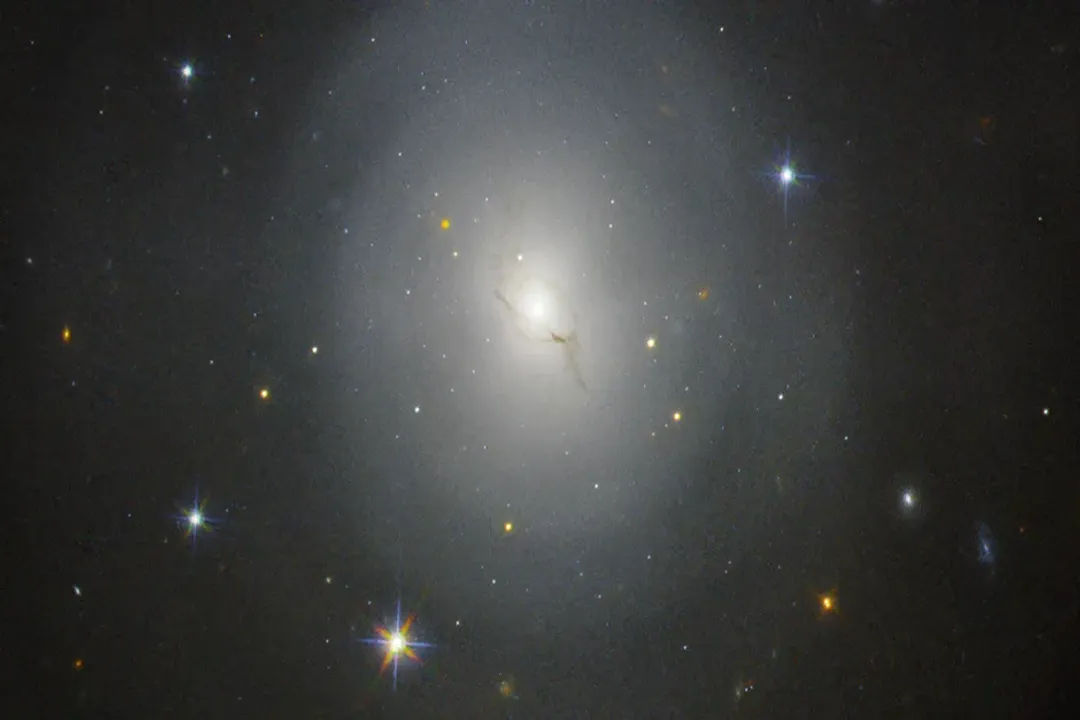
Applying the standard candle technique allows astronomers to measure objects in other galaxies, moving the scale from light-years to megaparsecs (millions of parsecs). The reliability of the entire outer ladder rests on the initial accuracy of the parallax measurements based on the AU baseline. A fascinating implication here is that any slight historical error in the precise baseline AU value would have propagated into a systemic error in the distance calculation for every galaxy in the observable universe, emphasizing why fixing the AU's value was so important for modern precision astrophysics.
# Conceptualizing Scale
It can be difficult to mentally map these units, as they cover such disparate scales. To offer some context, consider a journey starting at the Sun. First, you travel across the inner solar system using AU measures. Next, you cross the vast, nearly empty space to the orbit of Neptune, perhaps away, a distance that takes light about $4$ hours to cross. Once you leave the solar system's boundary, you enter the realm of the light-year, needing to travel over $4$ of them to reach the nearest star.
If we were to create a simplified map where was equivalent to on the desk:
- The distance to Earth () is .
- The distance to Jupiter () is about .
- The distance to Proxima Centauri (, or about ) would require a line stretching nearly $2.7$ kilometers—about $1.7$ miles.
- The center of our own Milky Way galaxy, about $26,000$ light-years away, would place the destination about $800,000$ kilometers away on this map, illustrating why we need parsecs and megaparsecs for galactic cartography.
This mental scaling exercise underscores why the tiered system—AU for local, LY/pc for interstellar, and brighter candles for intergalactic—is not mere academic preference but a necessity born from the physical distances involved. The measurement unit directly reflects the physical phenomenon or geometric setup that allows the distance to be determined in the first place.
Related Questions
#Citations
Cosmic Distances - NASA Science
Units for Distance and Size in the Universe
Astronomical unit - Wikipedia
How do we measure distance in space? | BBC Sky at Night Magazine
How Do You Measure the Distance to the Moon, Planets, Stars and ...
What does the astronomical unit measure? : r/askscience - Reddit
Astronomy 101: Astronomical distances
SCALE AND DISTANCE - Chandra X-ray Observatory
[PDF] Explanation of the cosmic distance ladder
Why do astronomers use astronomical units (AU) to express ... - Quora