What does an astronomer measure?
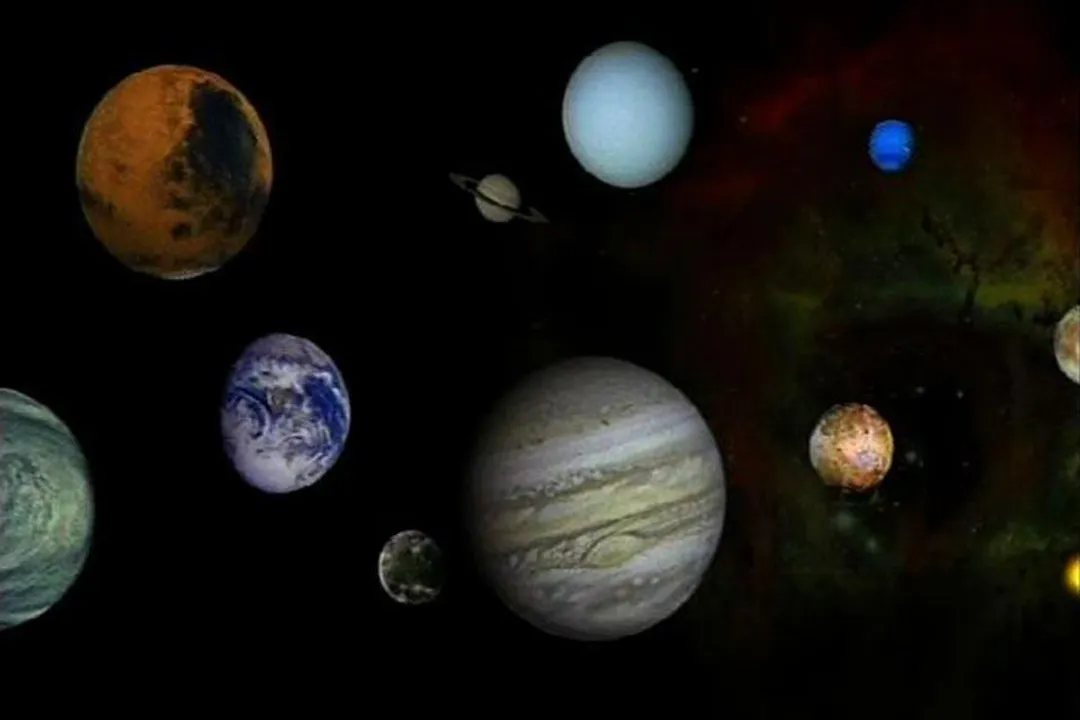
The breadth of what an astronomer measures is vast, stretching from the subtle wobbles of nearby stars to the faint redshift of the universe's most distant structures. However, when we talk about the fundamental language of these measurements, we are often discussing distance—the primary challenge when cataloging objects millions or billions of miles away. [4][7] Because the distances involved are so immense, relying on familiar metrics like miles or kilometers quickly becomes impractical, necessitating the creation of specialized, scaled units for different cosmic neighborhoods. [8][9]
# Solar Yardstick
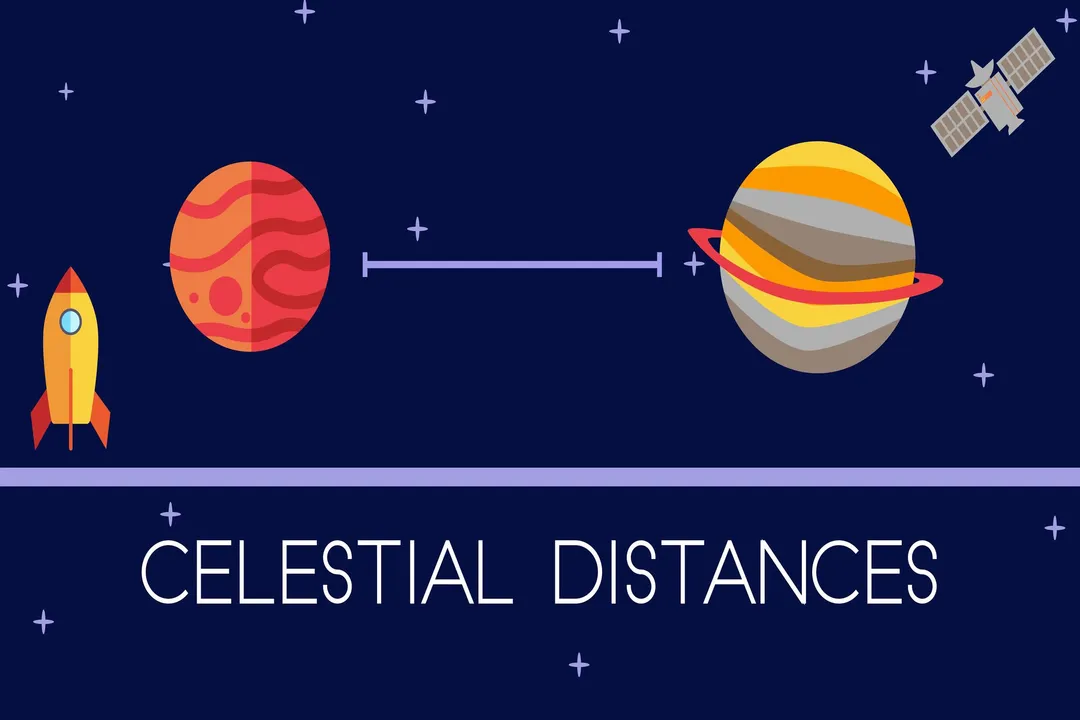
The most common and essential measurement unit for mapping out our immediate neighborhood—the Solar System—is the Astronomical Unit (AU). [4][5][8] Simply put, the AU is defined as the average distance between the Earth and the Sun. [1][6] This unit anchors all other distances within our solar system, providing a convenient ruler for interplanetary travel times and orbital sizes. [9]
Historically, the AU was a difficult measure to nail down precisely, relying on geometric triangulation and observations of transits. Today, however, its definition is fixed. The International Astronomical Union (IAU) officially set the nominal value of the astronomical unit to exactly 149,597,870,700 meters. [1][6] This precise, defined number allows astronomers to compare data collected across decades and by different international observatories with high confidence. [1]
To put this scale into context, if you are looking at the orbital path of Mars, you know it circles the Sun at roughly 1.52 AU. [9] Jupiter, the giant of the system, orbits at an average distance of about 5.2 AU. [9] For comparison, the light reflecting off the Moon that reaches Earth takes just over one second to travel, while light from the Sun, covering 1 AU, takes about 8 minutes and 20 seconds to reach us. [2][7] The distances involved within our own system are already staggering enough to require this specialized unit. [8]
# Scaling Measures
When constructing models or visualizing the solar system, the AU becomes indispensable. If we take that established distance of 1 AU as a fixed reference point—say, one meter in a model—then the orbit of Mars would be represented by a circle with a radius of 1.52 meters, and Neptune’s orbit would stretch out to roughly 30 meters. [9] This scaling exercise clearly demonstrates why simply using miles would result in numbers too large to manage easily in standard astronomical reports. [8] The AU allows these comparisons to be made intuitively within the solar system context. [2]
# Distances Beyond
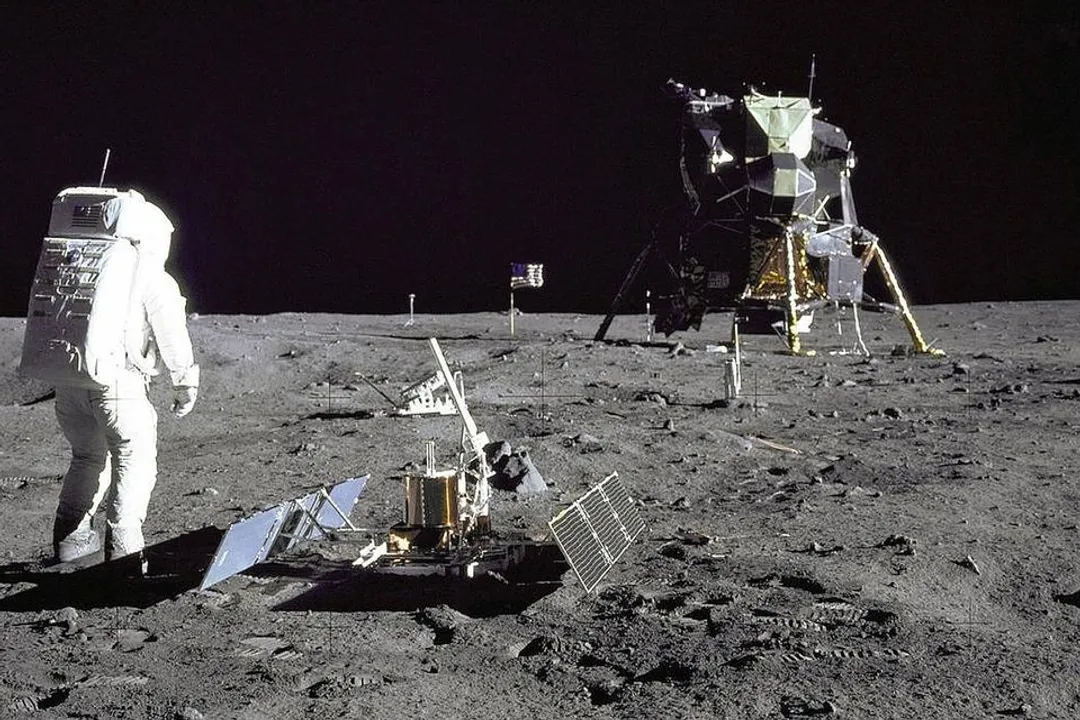
While the AU is perfect for the planets, it rapidly becomes cumbersome when astronomers turn their gaze toward the stars. For objects outside our Sun's gravitational dominion, an even larger unit is required: the light-year. [4][7] The light-year is the distance light travels in one Earth year. [7]
When measuring distances to stars near our Sun, the AU is still sometimes used in conjunction with parallax measurements, but the resulting numbers are often expressed in parsecs or light-years instead. [7] This shift highlights a key feature of astronomical measurement: the unit used is dictated entirely by the scale of the object being observed. [4] A measurement involving the distance to the Moon or inner planets demands the AU, whereas measuring the distance to a star in the nearby Alpha Centauri system—about $4.37$ light-years away—demands a much larger metric. [4][7]
An interesting practical application emerges when considering how these larger units are derived. Since the AU is defined by Earth’s orbit, establishing its precise value underpins all subsequent calculations for stellar distances via parallax, which relies on observing apparent shifts in stellar positions as the Earth moves along its AU-sized orbit. [1][6] Therefore, the reliability of the AU directly influences our accuracy in mapping the galaxy. [4]
# Establishing Certainty
The act of measurement in astronomy is not static; it involves continuous refinement, even for established units like the AU. [1] While the modern definition is fixed in meters, the initial effort to measure that distance relied on observing specific phenomena, like the transit of Venus across the Sun's face, to triangulate distances to other solar system bodies, which then helped lock down the Earth-Sun distance. [7]
Modern techniques now involve bouncing radar signals off nearby planets, like Venus, and timing the round-trip travel time with extreme accuracy. [7] Since we know the speed of light (a constant) very well, measuring the time it takes allows astronomers to calculate the precise distance with far greater precision than purely optical methods. [7] For example, measuring the distance to Mars or Venus using radar provides a fixed baseline from which the orbit of the Earth itself, and thus the length of the AU, can be refined against that radar baseline. [4]
A subtle point in this measurement refinement relates to the true shape of orbits. Planetary orbits are not perfect circles but ellipses, meaning the Earth is sometimes slightly closer to the Sun and sometimes slightly farther away than the mean distance that defines the AU. [6] When astronomers report the distance to a planet like Saturn, they might give a value in AU, but that value represents an average over time, acknowledging that the instantaneous distance is always fluctuating. [9] This concept of dealing with averages versus instantaneous values is crucial across all scales of astronomical measurement. If we were to graph the distance from Earth to Jupiter over a year, the resulting line would look like a slightly wobbly, elongated sine wave, with the center of that wave falling near $5.2$ AU.
# Other Cosmic Attributes
While distance is arguably the most fundamental quantity an astronomer measures—since everything we observe is fixed in position relative to us—astronomers measure many other properties essential to understanding celestial objects.
# Light and Energy
All astronomical data ultimately arrives as electromagnetic radiation—light. [7] Therefore, measuring the properties of this light is central to the field. Astronomers quantify:
- Brightness (Flux): How much light energy arrives at the telescope per second from a specific star or galaxy. [7] This measurement, often calibrated to standard candles, allows astronomers to estimate how far away a light source is, provided they know its actual intrinsic brightness. [4]
- Wavelength (Color): The precise color of the light tells astronomers about the object’s temperature and composition. For distant galaxies, the stretching of this light toward the red end of the spectrum (redshift) is what allows us to measure their velocity away from us, which is directly related to the expansion of the universe. [7]
# Motion and Dynamics
Measuring movement is another core task. This includes radial velocity (movement toward or away from us, measured via the Doppler shift of spectral lines) and proper motion (movement across the sky). [7] These dynamic measurements allow astronomers to calculate masses of binary star systems or map the rotation curves of galaxies. For instance, the speed at which the Sun orbits the center of the Milky Way, a value essential for mapping the galaxy’s structure, is determined by painstaking measurements of its relative motion against background stars. [4]
For anyone looking to appreciate the work involved, consider this: measuring the distance to the Moon is done with centimeter accuracy today using lasers reflected off special mirrors left by the Apollo missions. [7] Scaling that precision up to measuring a planet 5 AU away, or a star 50 light-years away, requires entirely different physical principles, demonstrating the ingenuity required to solve the measurement problem at every scale. [4][7] The progression from radar ranging for planets to stellar parallax for nearby stars, and finally to standard candles for galaxies, is essentially a hierarchy of measurement techniques, each building upon the accuracy of the one before it. [4]
#Videos
How Does An Astronomical Unit (AU) Measure Cosmic Distances?
Related Questions
#Citations
Astronomical unit - Wikipedia
What does the astronomical unit measure? : r/askscience - Reddit
What is the Astronomical Unit? | Science Guys - Union University
Cosmic Distances - NASA Science
What is an astronomical measure of distance called? - Quora
Astronomical unit (AU, or au) | Definition, Conversion, & Facts
How Does An Astronomical Unit (AU) Measure Cosmic Distances?
How Do You Measure the Distance to the Moon, Planets, Stars and ...
Measuring Distance in the Solar System | NASA Planetary Sciences