What equipment do scientists use to study galaxies?
The study of galaxies, those colossal islands of stars, gas, and dust scattered across the cosmos, demands more than just a powerful lens. It requires an arsenal of highly specialized scientific instruments designed to capture faint light across vast cosmic distances and dissect it into its fundamental components. Scientists rely on a suite of interconnected technologies, both orbiting above the atmosphere and anchored firmly on the ground, to piece together the history and mechanics of the universe. [2][3]
# Light Collection
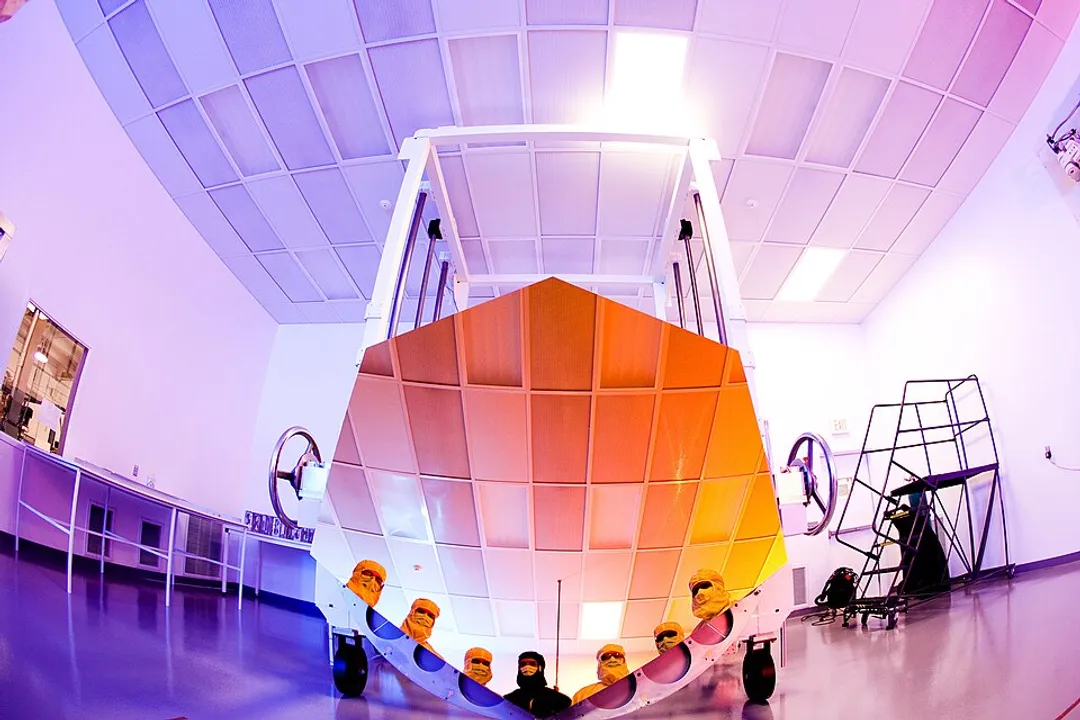
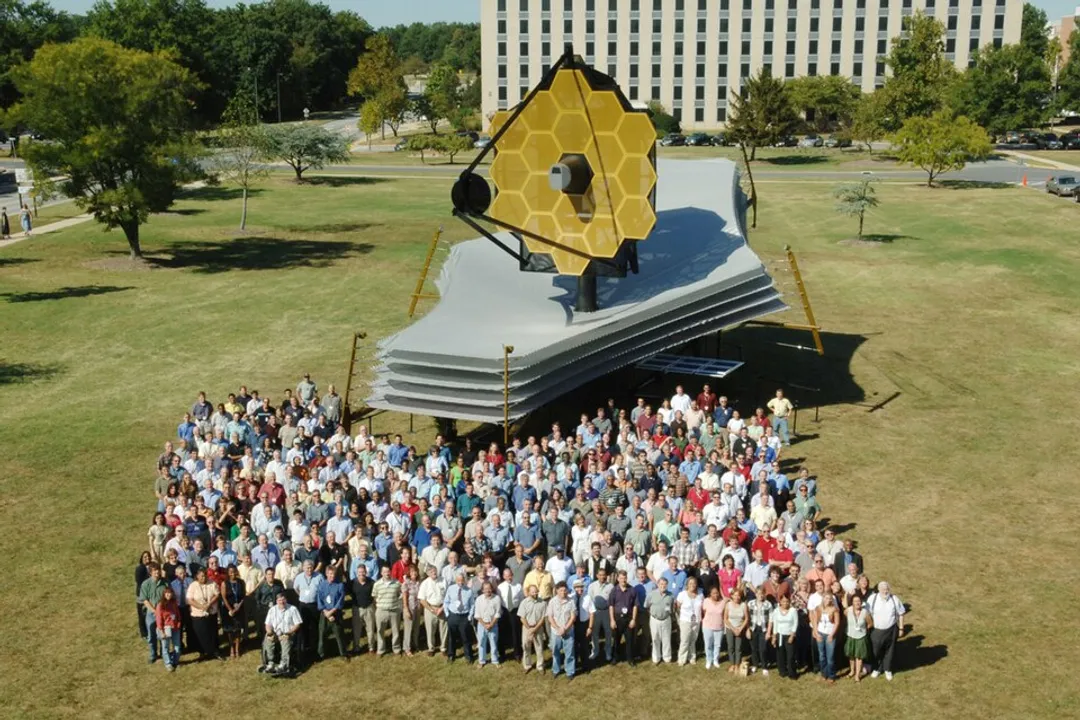
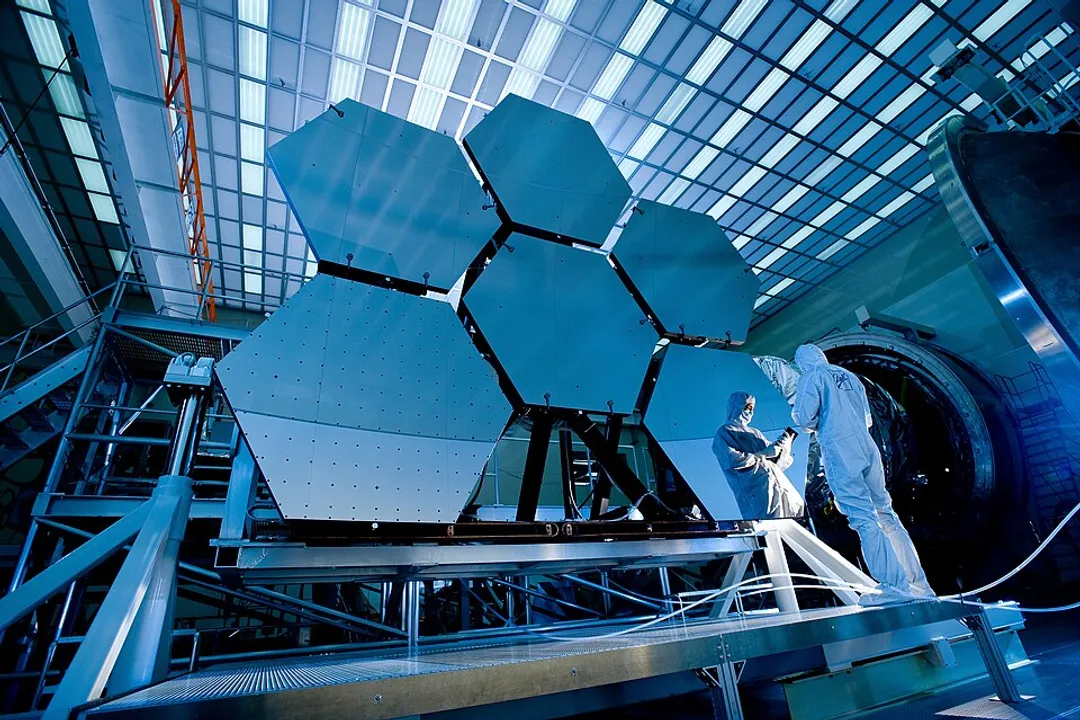
At the most basic level, any equipment used to study distant objects must first gather as much light as possible. A telescope functions primarily as a light bucket; the larger its primary mirror, the more photons it can collect, allowing it to detect fainter, and therefore more distant, objects. [5] This fundamental principle drives the engineering behind every major observatory, whether it resides on Earth or in space. [2] For instance, the James Webb Space Telescope (JWST) boasts a primary mirror spanning 6.5 meters. [6]
# Space Observatories
Observatories positioned in space bypass the blurring and absorption effects of Earth's atmosphere, granting them unparalleled clarity and access to wavelengths blocked by our air, particularly in the ultraviolet and infrared ranges. [1][6] The Hubble Space Telescope remains an iconic example, designed to observe primarily in visible and ultraviolet light. [1] In contrast, Webb was engineered specifically to capture infrared light. [6]
This difference in primary focus is not arbitrary; it is dictated by what scientists are trying to observe. As light from the most distant galaxies travels across billions of years toward us, the expansion of the universe stretches its wavelength—a phenomenon known as cosmological redshift. Light that was emitted as visible or ultraviolet light billions of years ago is stretched so severely by the time it reaches us that it arrives primarily in the infrared spectrum. [6] Therefore, while Hubble excels at studying galaxies as they looked relatively "recently" in cosmic time, Webb is built to see the universe's earliest structures because it captures that redshifted infrared glow. [6]
# Hubble Instruments
The Hubble Space Telescope houses several sophisticated scientific instruments working in concert to gather data. [1][4] These tools generally fall into two categories: cameras and spectrographs. [1]
For imaging, Hubble carries instruments like the Wide Field Camera 3 (WFC3) and the Advanced Camera for Surveys (ACS). [1] These capture stunning, detailed photographs, enabling astronomers to map the structure and distribution of stars and gas within galaxies. [1]
For deeper analysis, instruments like the Cosmic Origins Spectrograph (COS) and the Space Telescope Imaging Spectrograph (STIS) are employed. [1] These devices do not take pretty pictures; instead, they take the light and break it apart into its constituent colors, revealing critical physical information. [3]
# Webb Capabilities
The JWST carries an even newer generation of hardware optimized for its infrared mission. Its primary imaging instrument is the Near-Infrared Camera (NIRCam). [6] For spectrography, the telescope is equipped with the Near-Infrared Spectrograph (NIRSpec), which can simultaneously observe over one hundred objects, gathering detailed spectral data at unprecedented speeds. [6] It also includes the Mid-Infrared Instrument (MIRI), which is essential for studying cooler dust and highly redshifted objects. [6] A final component, the Fine Guidance Sensor/Near Infrared Imager and Slitless Spectrograph (FGS/NIRISS), assists with precision pointing while also providing complementary scientific data. [6]
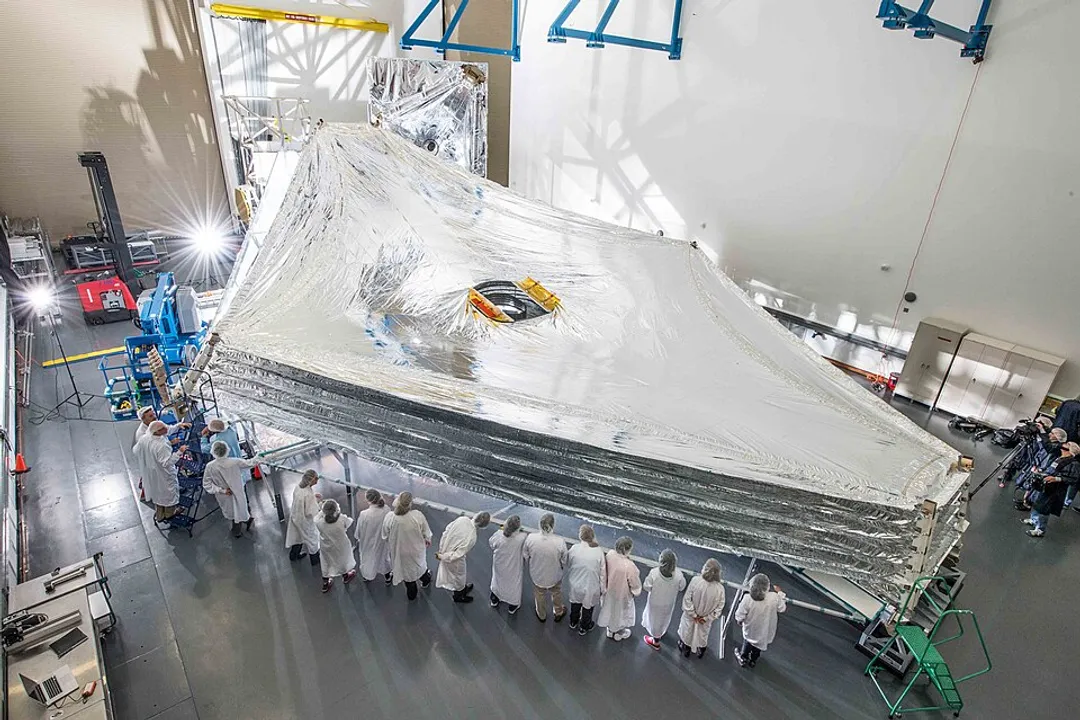
The engineering challenge inherent in capturing infrared light is perhaps one of the most fascinating constraints on modern astronomy. Since everything warm emits infrared radiation—including the telescope itself—instruments like MIRI must be kept incredibly cold to prevent their own heat from swamping the faint signals from distant galaxies. [7] To achieve this, JWST utilizes a massive sunshield and a specialized cryocooler to maintain operating temperatures for MIRI down to about 7 Kelvin (around -447 degrees Fahrenheit). [6] This active cooling system is a crucial piece of equipment itself, ensuring that the detectors are sensitive enough to register photons originating from the dawn of time, rather than registering the warmth of the telescope sitting just a few hundred miles away from Earth. [7]

# Analyzing Spectra
Whether using Hubble's STIS or Webb's NIRSpec, the function of a spectrograph remains central to understanding galactic physics. [1][2] A spectrograph works by dispersing incoming light, much like a prism separates white light into a rainbow. [3] By examining the resulting spectrum—the detailed pattern of dark or bright lines superimposed on the rainbow—scientists can deduce key properties about the galaxy or the gas cloud within it. [3] These lines act as fingerprints, identifying specific elements present, determining the object's temperature, and measuring its velocity through the Doppler effect (whether it is moving toward or away from us). [3] This is how we know that most galaxies are rushing away from us, an observation underpinning the expansion of the universe. [3]
# Detector Technology
No matter how much light a mirror collects or how well a spectrograph separates it, the data must ultimately be recorded by a detector. In modern astronomy, this role is primarily filled by scientific-grade Charge-Coupled Devices (CCDs) or specialized infrared arrays. [3][7] These devices are intricate semiconductor chips that convert incoming photons into electrical charges, which are then read out as digital data. [7]
The quality of the detector dictates the quality of the final image. Astronomers focus heavily on minimizing noise—unwanted signals that interfere with the real data. [7] This is achieved through advanced manufacturing techniques to reduce intrinsic chip defects and, critically, through extreme cooling, as mentioned earlier, particularly for observing longer, redder wavelengths of light. [7] The development of these highly sensitive, low-noise detectors represents a significant portion of the investment in modern astronomical instrumentation. [2] For example, comparing a modern CCD to older photographic plates reveals a difference in light-gathering efficiency that can be measured in factors of ten or more, meaning an observation that once took weeks of exposure time can now take only hours. [3]
# Ground Systems
While space telescopes offer the ultimate clarity, ground-based observatories are still indispensable. [2] Large optical telescopes on Earth, like those operating in the high, dry deserts of Chile or Hawaii, complement their space-based cousins. [2] These sites host massive instruments, often using adaptive optics—a technology involving rapidly deforming mirrors to correct for the atmospheric turbulence that causes stars to twinkle—to achieve sharpness closer to what space telescopes manage. [2] Furthermore, ground-based instruments can often study light across the entire radio spectrum, a range inaccessible to Hubble and JWST, allowing for the study of cold gas clouds and magnetic fields within galaxies that optical and infrared light cannot probe. [3]
The equipment used to study galaxies is therefore not a single telescope but a layered system: large primary collectors, specialized spectral and imaging cameras tailored to specific wavelengths, and ultra-sensitive detectors kept at extreme temperatures to capture the faintest whispers of ancient light across the cosmos. [1][6][7]
#Videos
Telescopes in Space! | How We Study Space | SciShow Kids
James Webb Space Telescope's science instruments explained
Related Questions
#Citations
Hubble Instruments - NASA Science
Instrumentation | Center for Astrophysics | Harvard & Smithsonian
Equipment Introduction - Astronomy Tools
Hubble Space Telescope - BAE Systems
James Webb Space Telescope - Wikipedia
Telescopes in Space! | How We Study Space | SciShow Kids