What is the ancient study of stars?
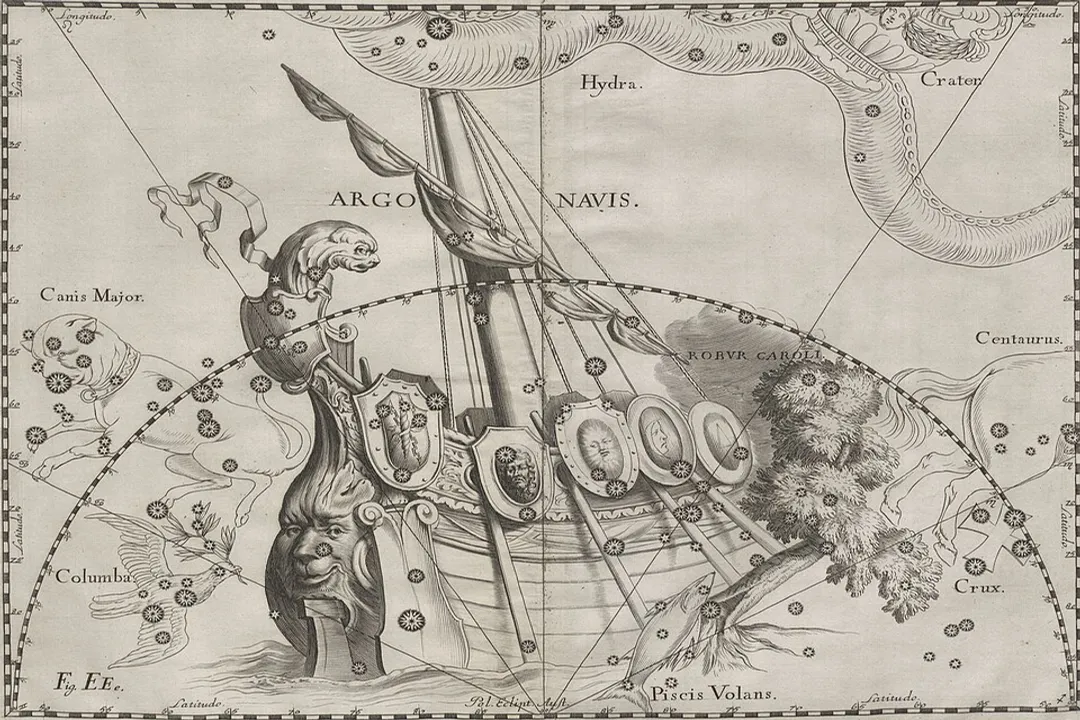
The study of stars in ancient times was far more than just gazing upward; it was an intrinsic blend of necessity, spiritual belief, and the earliest stirrings of mathematics. This ancient endeavor was less about distant galaxies and more about immediate survival and establishing cosmic order on Earth. For early societies, the sky was a predictable, reliable clock and calendar etched in light, essential for managing the fundamental rhythm of agricultural life, sea travel, and religious observance [Cite: 4][Cite: 6][Cite: 8]. The sheer regularity of celestial motion provided humanity with its first tools for measuring time, allowing for the tracking of seasons for planting and harvesting, crucial for sustaining communities [Cite: 8].
This foundational practice, rooted in observation, built expertise over millennia. The deep familiarity required for ancient astronomical knowledge implies a level of sustained, multi-generational observation that modern sky-watching, often relying on instant digital assistance, rarely demands. This dedication transformed simple recognition of patterns into functional, life-directing knowledge [Cite: 4].
# Practical Needs
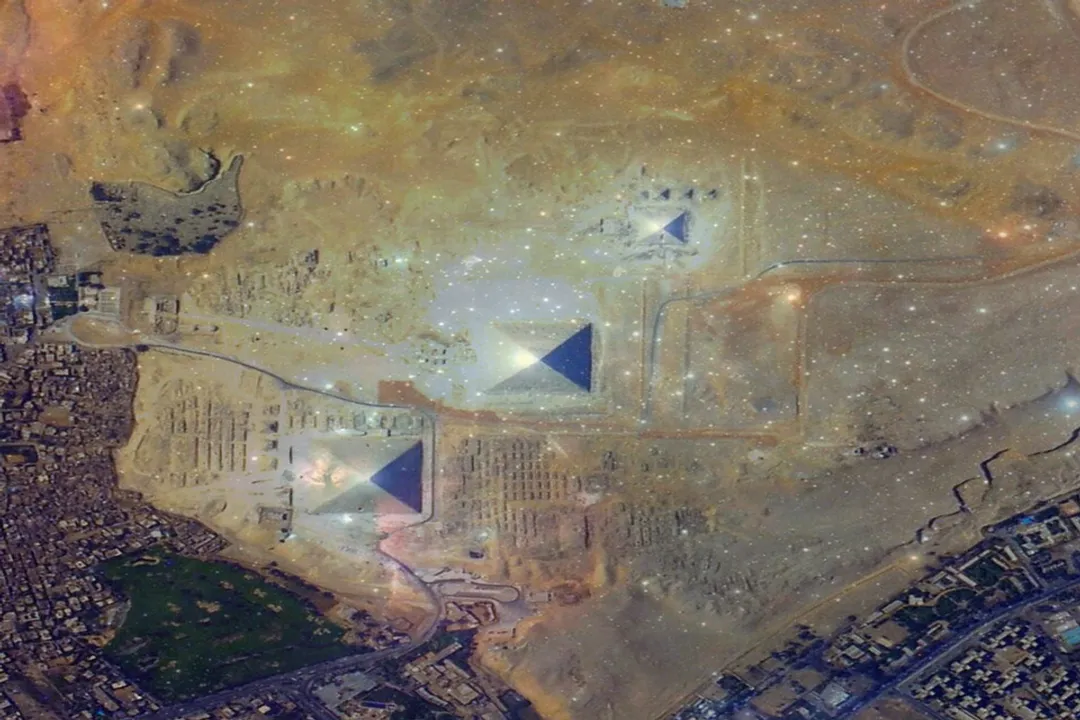
The initial motivations for observing the heavens were decidedly terrestrial. Without modern weather forecasting or printed calendars, the rising and setting of specific star patterns signaled impending changes in climate or season [Cite: 8]. For instance, the heliacal rising—the first time a star becomes visible just before sunrise after a period of invisibility—often marked the annual inundation of rivers, as was vital to ancient Egyptian life along the Nile [Cite: 2]. Navigation also relied heavily on these fixed points. Sailors and travelers used constellations and bright stars as reliable guides across featureless landscapes or open seas, turning the firmament into a universal map [Cite: 6].
The celestial sphere provided the framework for social structure as well. Many ancient systems intertwined astronomical events with religious festivals and rites of passage [Cite: 6]. The sky became a living document of prophecy and divine will, meaning accurate observation was not just practical but spiritually mandated.
# Cultural Expressions
While the need for a calendar was universal, the interpretation and organization of the stars varied dramatically across the globe, creating rich, distinct traditions. Astronomy, in its earliest form, was decentralized, flourishing independently in various cradles of civilization [Cite: 2].
The Babylonians, for example, developed sophisticated methods for tracking planetary movements, creating detailed star catalogues and recording celestial events with surprising precision, largely in service to astrology and divination [Cite: 2][Cite: 9]. Meanwhile, in the Americas, cultures like the Maya demonstrated advanced mathematical understanding by creating intricate calendars, predicting solar and lunar eclipses, and integrating astronomical events into their monumental architecture [Cite: 2]. The Chinese tradition focused heavily on the Emperor's mandate, viewing celestial disturbances, such as comets or supernovae, as direct omens impacting the ruler’s fate, leading to meticulous, long-term record-keeping [Cite: 2].
This diversity shows that the "study" wasn't a single discipline but a collection of culturally specific solutions to the common problems of time, prediction, and meaning. A star map created in Mesoamerica served a vastly different cultural purpose than one developed in Mesopotamia, even if both relied on similar observational input [Cite: 2].
# Celestial Models
As observations accumulated, some cultures began moving beyond mere record-keeping toward explaining the heavens through systematic models. Ancient Greek astronomy marks a significant transition from mythologically dominated systems toward abstract, geometric reasoning [Cite: 9]. Early Greek thinkers, such as Thales and Pythagoras, began attempting to describe the cosmos using geometry rather than strictly narrative accounts [Cite: 3].
The Greeks grappled with phenomena that simple observation couldn't easily explain, such as the retrograde motion of planets—the apparent backward loop they make in the sky. To account for this, brilliant minds developed increasingly complex mechanisms [Cite: 9]. The culmination of this tradition came with systems like that developed by Claudius Ptolemy, which firmly established the Earth as the stationary center of the universe, surrounded by crystalline spheres carrying the Sun, Moon, planets, and fixed stars [Cite: 3]. This model, while scientifically incorrect regarding the Earth's place, was mathematically rigorous and accurately predicted planetary positions for over a millennium, demonstrating the power of abstract modeling [Cite: 3][Cite: 9].
# Cosmic Views
What did the ancient people believe the stars actually were? This is where the study parts ways with modern science, blending into cosmology and theology. The answers varied widely depending on the civilization and the era [Cite: 7].
In many belief systems, stars were divine beings, spirits of ancestors, or openings through which the light of a higher realm shone [Cite: 6][Cite: 7]. For some cultures, the constellations were direct pictorial representations of gods, heroes, or important mythological events, serving as mnemonic devices for religious narratives [Cite: 6]. The concept of the firmament, or a solid dome holding the stars in place, was common. Some interpretations suggested the stars were lights affixed to this dome [Cite: 7]. A more radical, though often debated, ancient view suggested the stars were actual holes poked through the dark celestial shell, allowing the "true" inner light to escape [Cite: 7].
This contrasts sharply with the later Greek mathematical approach. While the Babylonians used observations for practical divination, the Greeks sought universal, impersonal laws that governed motion, separating the how of celestial mechanics from the who of divine actors [Cite: 9].
# Physical Evidence
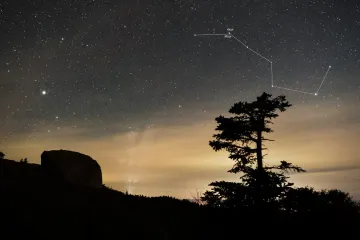
The discipline dedicated to understanding how ancient people interacted with the sky is known as Archaeoastronomy [Cite: 5]. This field combines archaeology, astronomy, anthropology, and history to study the astronomical practices of past cultures through physical remains [Cite: 5]. It moves beyond texts and oral traditions to examine tangible evidence.
The most compelling evidence comes from architectural alignments. Structures like Stonehenge in England or Newgrange in Ireland are meticulously oriented to mark significant celestial events, particularly the solstices [Cite: 5]. Building a monument that requires precise calculation to align with the sunrise on a specific day proves that celestial observation was a driving force in monumental construction [Cite: 5].
When analyzing these alignments, it is important to remember that ancient calendar systems rarely relied on a single fixed date like our modern solstices; they often incorporated intercalary elements or required visual verification by observers on the ground, making the structure a reminder system as much as a fixed pointer. This integration of architecture and time-keeping is the key subject of archaeoastronomy [Cite: 5].
# Data Mapping
Modern tools have allowed researchers to re-examine ancient observations with unprecedented accuracy, sometimes revealing surprising precision in older systems. For instance, when studying ancient star maps, modern science can calculate the apparent position of stars thousands of years ago, adjusting for precession (the slow wobble of the Earth's axis) [Cite: 1]. This process helps confirm whether a historical site was aligned to a position that was accurate at the time of its construction, rather than being viewed through the lens of today's sky.
The work done by projects utilizing modern space-based astrometry helps to solidify the baseline data against which ancient observations are measured, effectively allowing us to digitally rewind the sky [Cite: 1]. This allows scholars to evaluate the observational skill of ancient astronomers, distinguishing true astronomical purpose from accidental alignment, thereby strengthening the authority of the archaeological record.
In essence, the ancient study of stars was the first true science, merging the needs of the body—food, navigation, timing—with the yearnings of the mind—order, meaning, and a place in the cosmos. It required dedication, mathematical intuition, and a deep, abiding respect for the objects that governed life on Earth.
Related Questions
#Citations
A History of Astrometry – Part I Mapping the Sky From Ancient to Pre ...
7 Ancient Cultures and How They Shaped Astronomy
Ancient Greek Astronomy and Cosmology | Modeling the Cosmos
Early Astronomy - Northern Arizona University
Archaeoastronomy - Wikipedia
The Importance of Stars in Ancient Cultures - Name a Star
What did ancient people think stars were? Was there a general idea ...
Early Astronomers: From the Babylonians to Galileo
Astronomy - Ancient Greece, Stars, Planets | Britannica