What energy do stars give out?
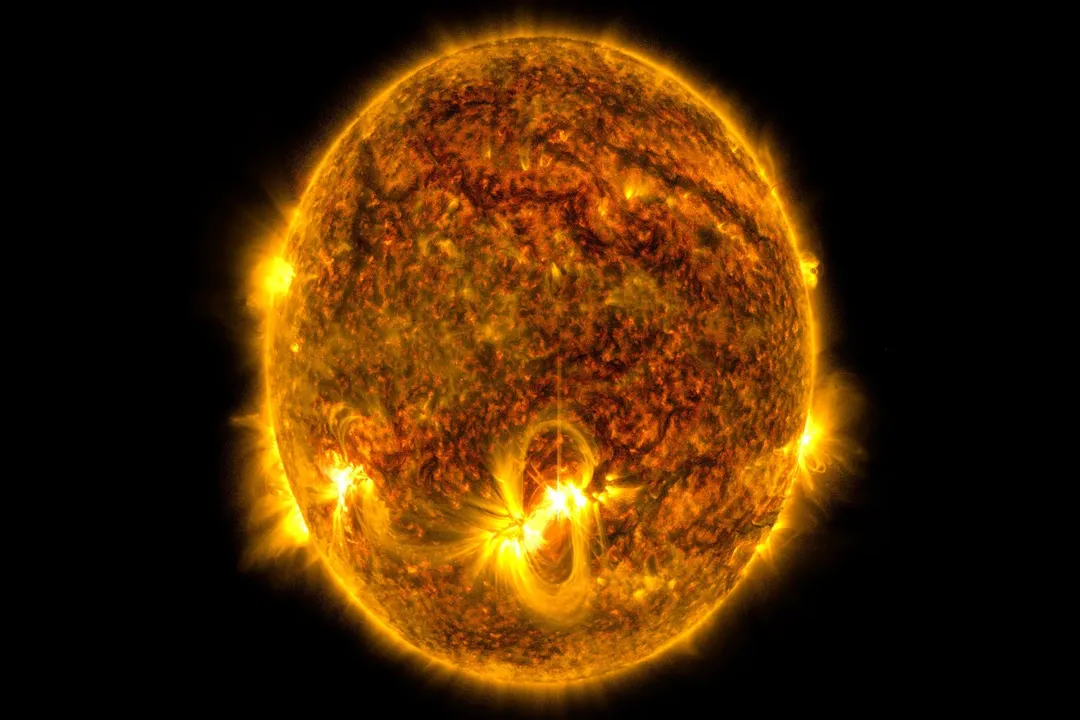
The energy that streams across the cosmos from distant stars is what allows us to see them, feel their warmth (if they are close enough), and understand the fundamental processes occurring deep within their fiery cores. To the naked eye, this output appears simply as light, but the true nature of stellar emission is far more complex, encompassing a wide range of electromagnetic radiation and subtle particles that travel outward across unimaginable distances. [1]
# Radiation Spectrum
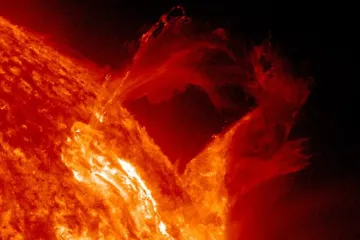
What we perceive as starlight is just one sliver of the total energy radiating from a star. [1] Stars are essentially immense, self-contained nuclear reactors, and the energy they generate is emitted across the entire electromagnetic spectrum. [1] This means that alongside the visible light that our eyes process, stars are constantly pouring out radio waves, infrared radiation (heat), ultraviolet light, X-rays, and even gamma rays. [1] For example, while our Sun feels hot because of the infrared and visible light it sends, distant, massive stars might be predominantly strong X-ray or ultraviolet emitters, depending on their surface temperature. [1]
This breadth of emission is critical for astrophysics. By observing which parts of the spectrum are strongest—the star’s spectral signature—scientists can deduce its surface temperature, chemical composition, and even its speed relative to Earth. [1] The very act of a star shining is the visible manifestation of nuclear reactions happening deep inside its core. [6]
# Fusion Core
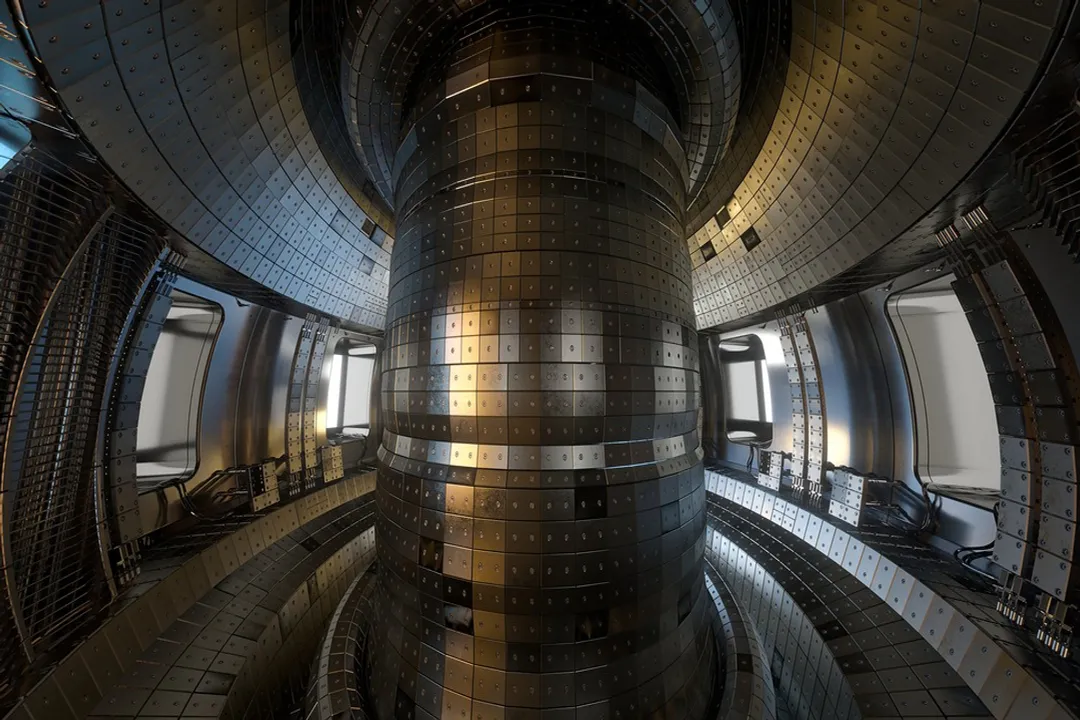
The engine driving this perpetual energy release is nuclear fusion. [2][5] In a star’s incredibly dense and hot core, the extreme pressure forces atomic nuclei to overcome their natural repulsion and merge, forming heavier elements. [4] This process, known scientifically as stellar nucleosynthesis, converts mass directly into pure energy, following the famous equation . [4]
For the vast majority of a star’s life, specifically when it resides on the main sequence—like our own Sun—the process is primarily the fusion of hydrogen nuclei into helium nuclei. [2][5][8] This reaction is what sustains the star against the inward crush of its own gravity, creating an outward pressure that maintains hydrostatic equilibrium. [5] The core must maintain incredibly high temperatures and pressures for this reaction to continue sustaining the star over geological timescales. [5]
In contrast to smaller stars like the Sun, more massive stars burn their fuel far more aggressively and utilize different fusion pathways, such as the CNO cycle (Carbon-Nitrogen-Oxygen cycle), once their cores are hot enough. [4] These massive stars then proceed to fuse the newly created helium into heavier elements like carbon and oxygen in subsequent stages of their lives. [4]
# Energy Transport
The energy, born from fusion in the very center of the star, does not instantly escape. It takes a long, sometimes agonizingly slow, path outward through the star’s internal structure. [2] This journey involves moving energy primarily through two mechanisms: radiation and convection. [2]
In the inner region, often called the radiative zone, energy is carried by photons that are continually absorbed and re-emitted by the plasma. A single photon might take hundreds of thousands of years to randomly bounce its way through this dense material before reaching the next layer. [2]
Once the energy reaches the outer layers, where the gas is cooler and less dense, convection takes over. [2] This is similar to boiling water: hot pockets of gas rise, release their energy at the surface, cool down, and then sink back down to be reheated by the layer below. [2] Only after traversing these zones does the energy finally escape the star’s surface, often called the photosphere, and stream out into space as electromagnetic radiation. [2]
If you imagine the Sun’s energy output, which is staggering—approximately watts—it's easy to think of that power as being directed solely toward Earth. However, the energy radiates uniformly in all directions. [1] The minuscule fraction that actually intercepts our planet, spread across the Earth's cross-sectional area at our distance, is what warms us, yet it is this tiny fraction that dictates nearly all life processes here. The true scale of the star’s output is the entirety of that sphere of radiation expanding into the void, which is why the physics of stellar energy release is so dependent on the star's total mass and size, not just its surface brightness. [5]
# Non-Radiant Outputs
While light and heat dominate what we observe, stars emit other forms of energy that are much harder to detect but are still critical to stellar physics. [3] The most significant of these are neutrinos. [3]
Neutrinos are fundamental, nearly massless particles that interact so weakly with matter that they stream out of the star’s core virtually unimpeded, carrying away a small but measurable fraction of the fusion energy. [3] For the Sun, neutrinos escape the core in just over two seconds, whereas a photon takes millennia to reach the surface. [3] Detecting these solar neutrinos provides direct, real-time confirmation of the fusion reactions happening at that very moment in the solar core, bypassing the long diffusion time of the photons. [3]
Another, even more subtle, form of energy release comes from gravitational waves. [3] While the steady energy output of a stable star primarily involves radiation, changes in a star's structure—such as a core collapse or the merging of stellar objects—can ripple spacetime itself, releasing energy as gravitational waves. [3]
# Sustaining Power
The longevity of a star's energy output is directly tied to its mass and how quickly it consumes its fuel supply. [5] A star like our Sun can maintain its hydrogen-to-helium fusion for billions of years because its mass keeps the core temperature and pressure just high enough to fuse hydrogen at a relatively economical rate. [5][8]
Conversely, much more massive stars have significantly higher core temperatures and pressures, forcing them to fuse hydrogen into helium at an enormously faster rate. [4] While they start with more fuel, their energy production rate is so much higher that they exhaust their primary fuel source within mere millions of years, leading to a much shorter, though far more brilliant, existence. [8] A star’s energy output thus acts as a dimmer switch on its own lifespan: the brighter it shines today, the sooner it will transition to its later life stages involving heavier element fusion or collapse. [4][8] The equilibrium between the outward energy pressure and the inward gravitational pressure is the delicate balance that defines a star's entire active lifetime. [5]
Related Questions
#Citations
Star Basics - NASA Science
How do stars create and release their energy? - Astronomy Magazine
Where does the energy of stars go? : r/astrophysics - Reddit
Stellar nucleosynthesis - Wikipedia
What is the source of a star's energy and how does it sustain ... - Quora
stars | AMNH
The energy of the stars on Earth - ERT
Stars and their life-cycle (article) | Khan Academy
What is the process by which stars like our Sun generate energy?