How is energy generated in a protostar?
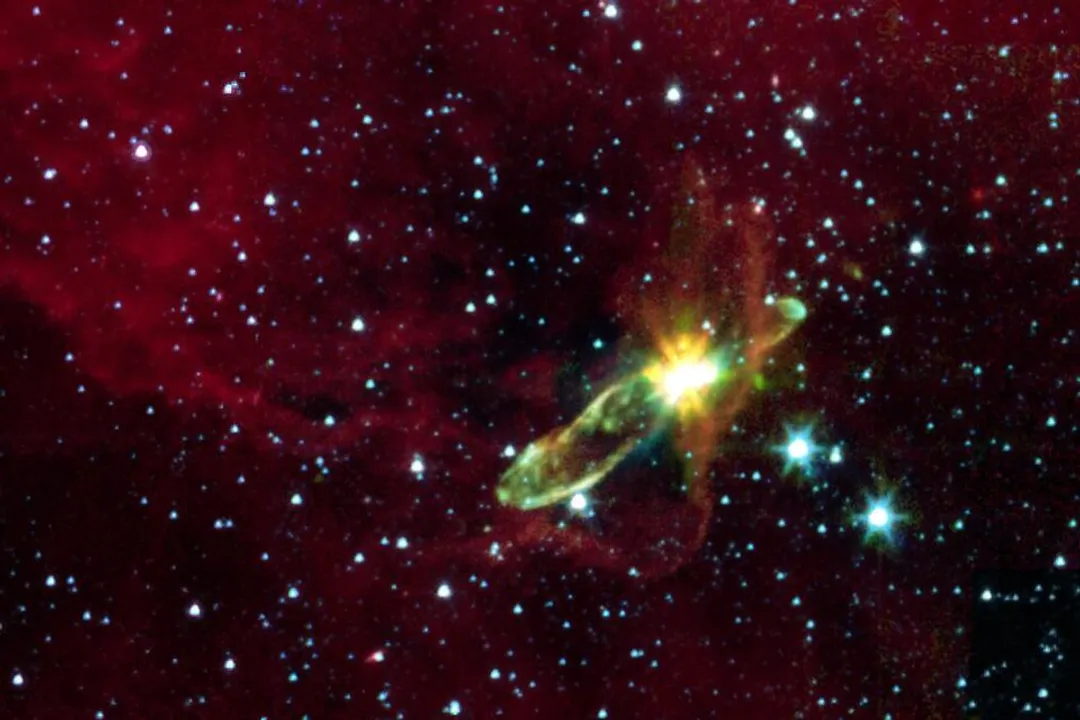
The moment a dense core of gas and dust begins to collapse under its own weight, it ceases being just a cloud fragment and becomes a protostar. This object represents a crucial, though fleeting, phase in stellar evolution—the necessary, fiery prelude before a true, self-sustaining star is born. It is not yet hot enough in its center to ignite the thermonuclear reactions that power mature stars like our Sun, meaning its immediate energy supply must come from somewhere else entirely.
# Cloud Collapse
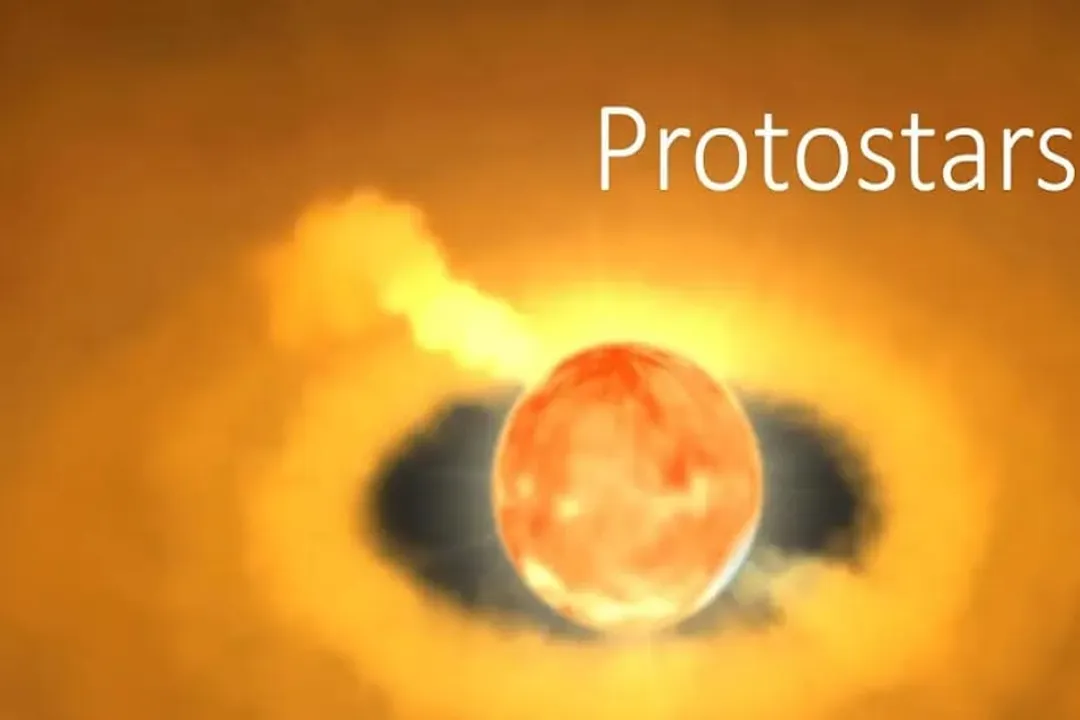
The initial material for a protostar originates in the cold, dark reaches of interstellar space, specifically within giant molecular clouds. These clouds, vast reservoirs of mostly hydrogen and helium gas mixed with dust grains, possess slight density fluctuations. When a section of this cloud becomes sufficiently massive and dense, its self-gravity overwhelms the outward pressure holding it apart, initiating a runaway gravitational collapse.
As the material falls inward toward the center of the collapsing mass, the cloud fragments, and the central region begins to heat up dramatically. This contraction is the defining process of the protostellar stage. The star is essentially gathering its mass, and the violence of that gathering is what keeps it hot.
# Gravitational Power
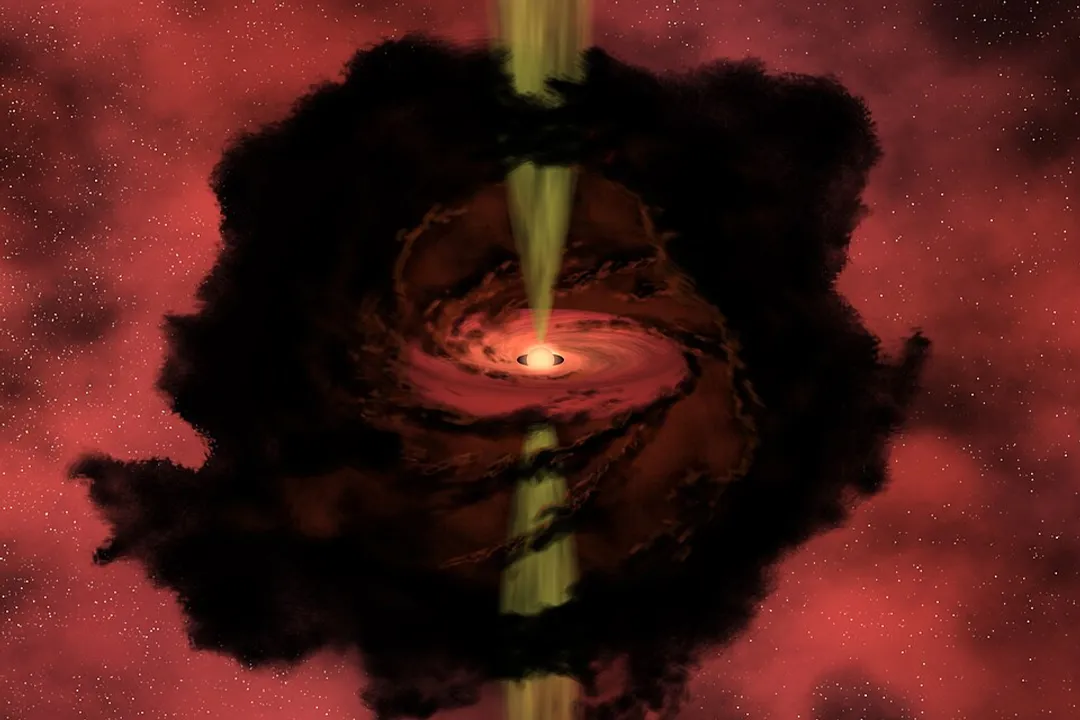
The source of the protostar's intense heat and light is not, surprisingly, the same process that fuels the Sun later on. Instead, the primary mechanism is the conversion of gravitational potential energy into thermal energy. This process is formally known as the Kelvin-Helmholtz mechanism.
Imagine a large, diffuse cloud of gas. As gravity pulls every particle closer to the common center of mass, those particles gain kinetic energy. When these speeding particles collide with others or with the already compressed core, that kinetic energy is converted into internal thermal energy—heat—and radiated away as light and infrared radiation. The more the cloud shrinks, the faster the material falls, and the hotter the center gets. This continuous process of gravitational contraction generates the energy that makes the protostar visible, even though thermonuclear fusion remains absent.
It is important to recognize that this energy source has a time limit. Gravitational contraction is an impressive source of power for a young object, but it is intrinsically unsustainable over the billions of years that a main-sequence star shines. It is a temporary "warming-up" phase powered by compression, not a permanent power plant fueled by mass conversion.
# Accretion Heating
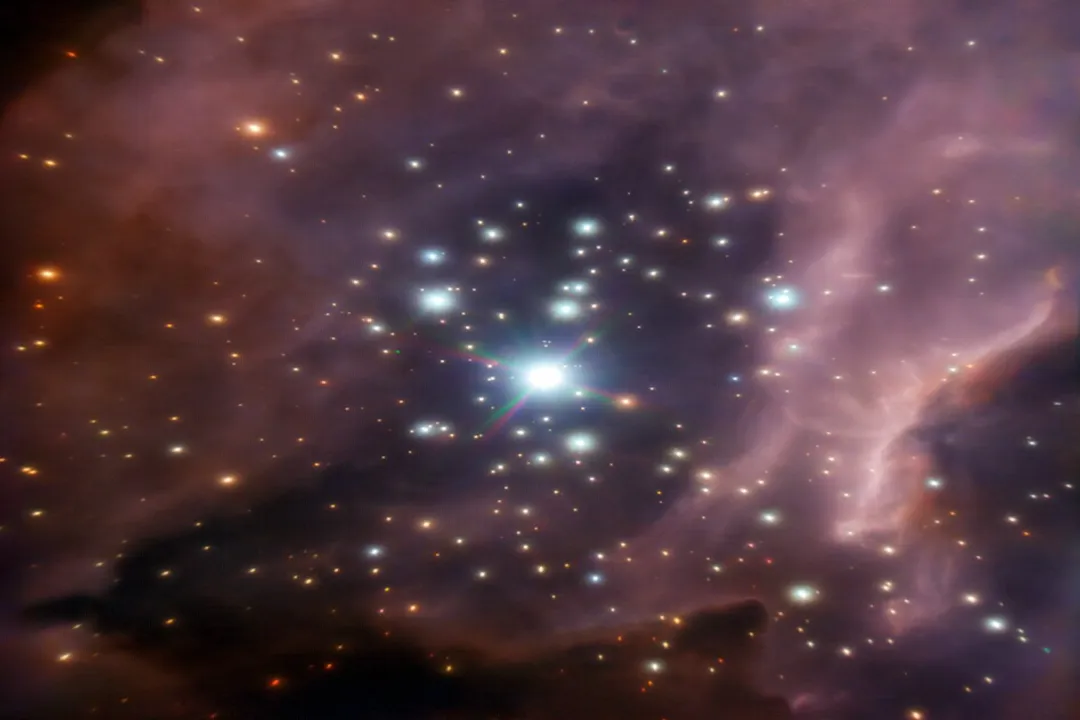
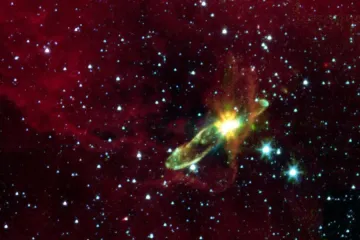
The energy generated by the simple act of collapsing is compounded by the influx of new material from the surrounding cloud. A protostar is almost always surrounded by an accretion disk—a flattened swirl of gas and dust orbiting the central object.
As material from this disk spirals inward, it too gains speed due to the protostar's gravity. When this high-velocity matter finally slams into the existing surface of the protostar, the kinetic energy of the infalling material is violently converted into thermal energy right at the surface. This "accretion luminosity" can be the dominant source of the object's observed brightness, particularly for very massive protostars, sometimes outshining the heat being generated by the internal gravitational compression itself. Think of it like continuously dropping heavy bricks onto an already hot stove; the impact energy adds significantly to the overall thermal output.
This inflow process is not smooth; it happens in bursts and requires the star system to effectively funnel matter from the large, wide disk down to the smaller stellar surface, a complicated interplay of magnetic fields and angular momentum transfer.
# Bipolar Ejection
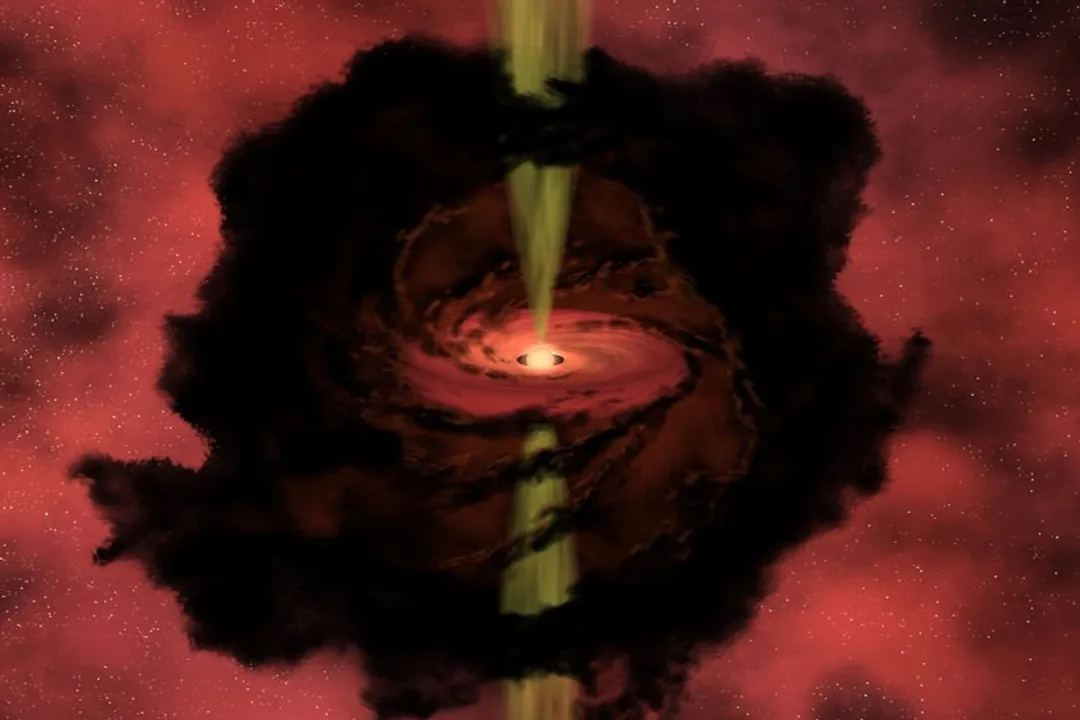
While the protostar is busy drawing in material from the disk above and below it, it simultaneously expels material out the poles. These high-speed, narrow streams are known as bipolar outflows or jets. These jets are thought to be generated by magnetic fields near the inner edge of the accretion disk, launching material outward perpendicular to the disk plane.
These outflows are vital because they help clear away the remaining envelope of gas and dust that initially obscured the protostar from view. They act as a feedback mechanism, effectively stopping the star from accumulating too much mass too quickly and allowing the central object to become optically visible as it transitions toward a true star. A comparison of the energy budget might show that while gravitational infall powers the core heat, the outflows reveal the intensity of the processes happening near the stellar surface. For instance, a protostar surrounded by a thick, obscuring envelope—often classified as a Class 0 or Class I protostar—is still heavily dependent on the accretion process to feed its growth, whereas a more evolved T Tauri star that has blown away its cocoon shines more purely from its internal contraction and early fusion.
# The Ignition Threshold
The contraction phase must continue until the core temperature and density reach a critical point—the ignition threshold for hydrogen fusion. For an object like our Sun, this requires the core temperature to reach approximately 15 million Kelvin. Only once this temperature is achieved can the strong nuclear force overcome the electrical repulsion between hydrogen nuclei, allowing them to fuse into helium, releasing enormous amounts of energy according to Einstein's famous equation, .
When this fusion ignites, the outward pressure from the radiating energy finally balances the inward pull of gravity. At this precise moment, the object stops being a protostar and settles onto the main sequence, where its energy source becomes the sustained, long-term nuclear fusion of hydrogen into helium. The gravitational collapse effectively ceases to be the primary energy source because the new, far more efficient nuclear furnace takes over.
The time it takes to reach this threshold varies tremendously based on the initial mass of the cloud fragment. While a solar-mass protostar might take tens of millions of years to contract to the main sequence, a much more massive star can reach fusion conditions much faster, sometimes in only a few hundred thousand years, due to the much stronger gravitational forces at play.
If the initial mass is too low—below about $0.08$ times the mass of the Sun—the core will never achieve the necessary temperature for hydrogen fusion to begin. In this case, the object becomes a brown dwarf, a stellar remnant that shines only dimly from the residual heat of its initial contraction, eventually cooling down over eons.
# Power Source Comparison
To truly appreciate the protostar phase, it helps to place its energy generation next to that of its successor. Gravitational contraction (Kelvin-Helmholtz) is powerful enough to heat an object to millions of degrees, but it is fundamentally limited by the mass available to contract. The energy released per kilogram of infalling mass is substantial, but it is dwarfed by the energy released through nuclear fusion per kilogram of matter converted.
For instance, when hydrogen fuses into helium, about $0.7%$ of the mass is converted directly into energy. This efficiency is orders of magnitude higher than what can be achieved by merely squeezing the gas. This inherent difference explains why stars can burn steadily for billions of years once fusion begins, whereas the gravitational contraction phase typically lasts only a few million years for Sun-like stars. This difference in energy production efficiency dictates the entire lifespan of the object: a temporary blaze of contraction followed by a stable, long-lived fusion flame. It’s the difference between burning fuel quickly to stay warm versus burning it slowly and consistently for an entire epoch.
The visible characteristics of the protostar, such as its temperature and luminosity, are complex functions of its mass and its accretion rate. A very massive protostar, for example, will have incredibly strong gravitational binding energy driving up its internal temperature quickly, yet its outward appearance is heavily masked by the thick envelope of infalling material, meaning the luminosity we measure often reflects the efficiency of the mass transfer onto the star rather than the rate of internal thermal conversion. Observing these objects requires looking in the infrared spectrum precisely because the dense dust cocoon blocks visible light, a clear indicator that the formation process is still very much active and incomplete.
Related Questions
#Citations
Protostar - Wikipedia
Fusion: The energy source of stars
Protostar - Las Cumbres Observatory
Nuclear Fusion in Protostars | ASTRO 801
What is the main thermal energy source for a protostar, the ...
Protostars and Nebulae - ASPIRE
protostars form in regions of cold, dense molecular clouds in space ...
The Outer Planets: A Star is Born
Protostars | American Scientist