What prevents a protostar from collapsing?
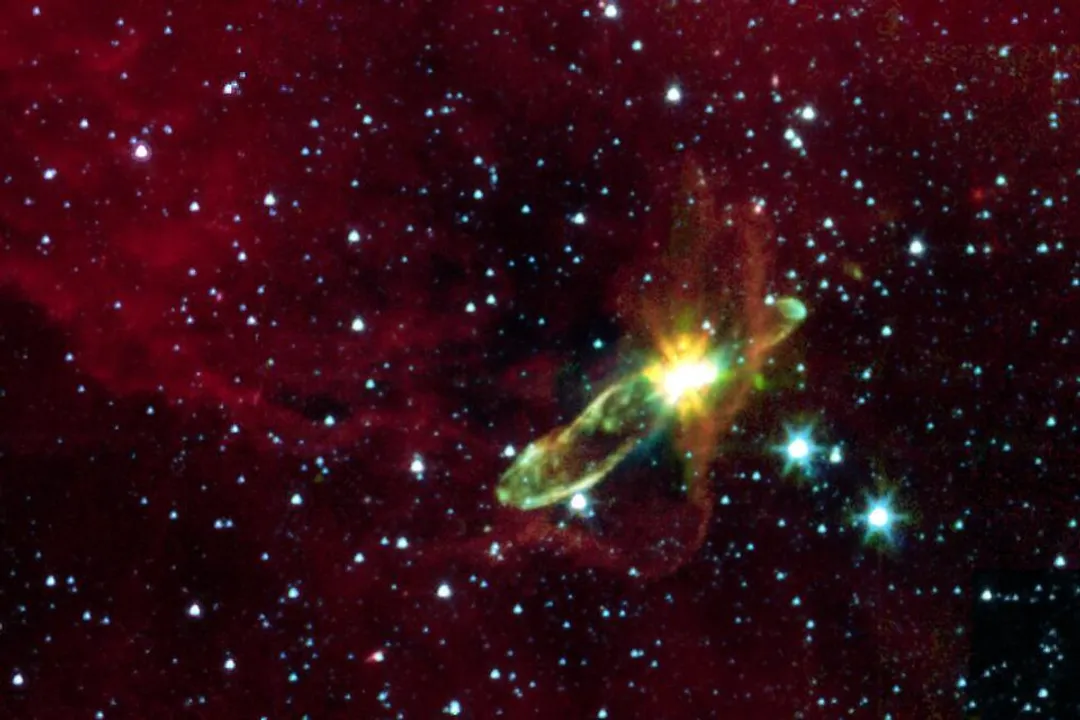
The initial stages of a star’s life are a violent, drawn-out battle against the most fundamental force in the universe: gravity. When a dense core forms within a vast, cold molecular cloud, gravity immediately begins trying to compress this material into the smallest possible volume. [5] What prevents this dense, nascent object—the protostar—from collapsing instantly into a singularity is a rapidly increasing internal resistance generated by the very act of shrinking itself.
# Stellar Embryo
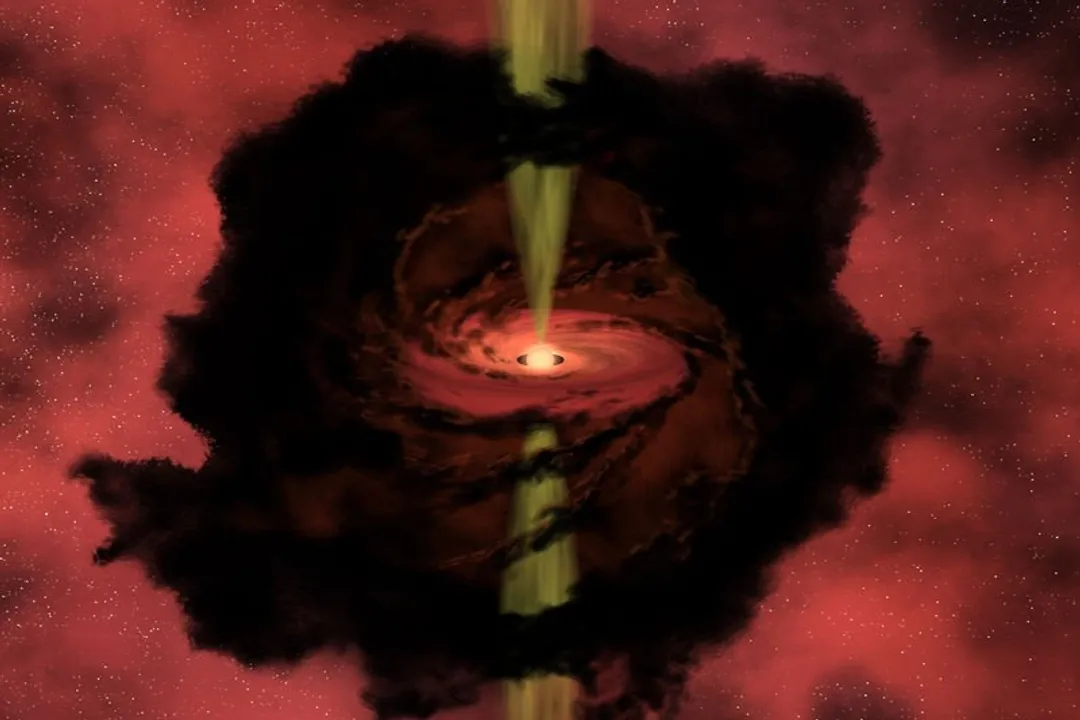
A protostar is not yet a true star; it is a stellar embryo undergoing gravitational collapse. [2][7] It exists in the phase between the initial cloud fragmentation and the onset of self-sustaining thermonuclear fusion in its core. [7] The mass required to form a star must be sufficient to generate intense internal pressure, meaning objects below about $0.08$ solar masses will never ignite hydrogen fusion and will become brown dwarfs instead. [5] For those destined to become stars, the structure is defined by an envelope of infalling gas and dust surrounding a hot, dense core. [1]
# Inward Pressure
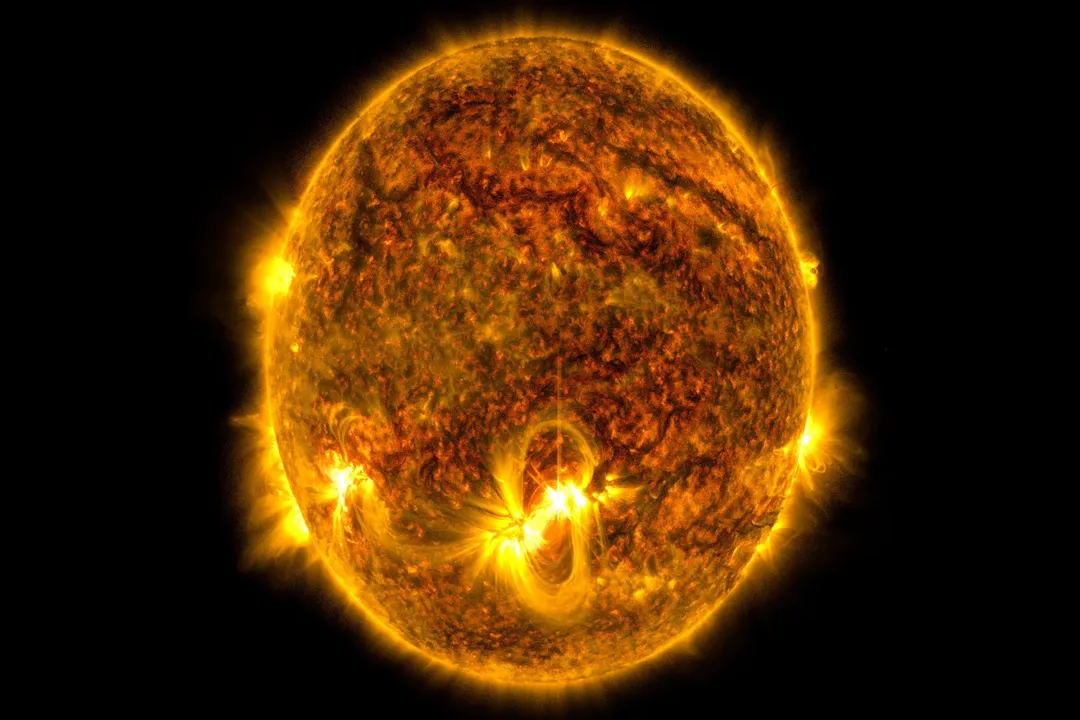
The driving engine of this entire formation process is gravity. [7] As enormous amounts of material—primarily hydrogen and helium—are drawn inward from the surrounding molecular cloud, the gravitational potential energy of the system is constantly converted into kinetic energy, and then into heat. [7] This infall is what defines the protostar's existence. If there were no opposing force, the collapse would continue unimpeded, a process that, in the most extreme cases of stellar collapse, can lead directly to a black hole. [5]
# Thermal Resistance
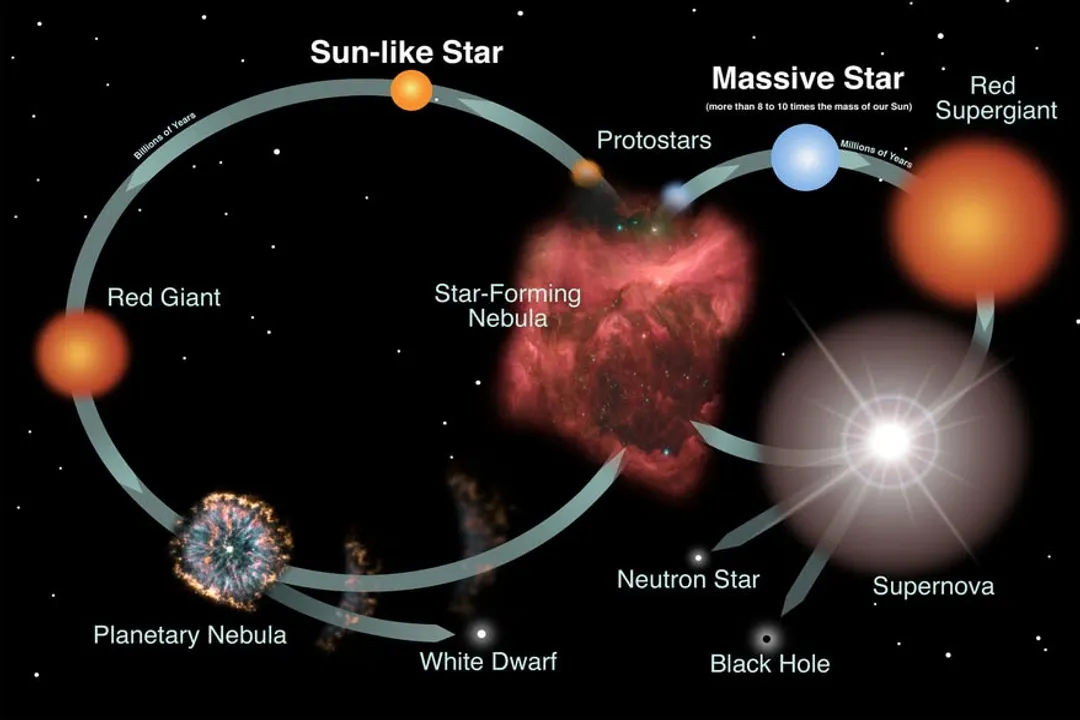
The critical mechanism that resists this crushing gravitational force during the protostar phase is the development of thermal pressure. [7] As the gas particles compress, they move faster, and the core temperature rises dramatically. This rising temperature creates an outward pressure gradient that pushes back against the relentless inward pull of gravity. [7] This nascent outward pressure slows the rate of collapse significantly, transforming what would be a near-instantaneous free-fall into a much longer, sustained contraction phase. [7] The protostar is essentially being supported, temporarily, by the heat generated by its own shrinking.
The process is one of dynamic equilibrium, even if it hasn't reached the perfect hydrostatic balance of a Main Sequence star. The rate at which gravitational energy is released heats the core; this heat generates the pressure that resists the continued infall. If the accretion rate of new material slows down, the core might stabilize at a certain temperature and pressure for a time. However, for the object to proceed toward full stardom, this contraction must continue until the core reaches the extreme temperatures necessary for fusion.
A fascinating point in this balancing act relates to the initial conditions of the cloud. If a collapsing fragment has significant initial angular momentum—a consequence of the turbulence and rotation within the parent cloud—gravity alone would cause the object to spin so fast it would tear itself apart before reaching the necessary central density. [2] While the formation of an orbiting accretion disk around the protostar channels some of this material, the eventual shedding of excess angular momentum, often via powerful bipolar outflows or jets, is essential for the central object to grow large enough to ignite fusion. [1][2]
# Fusion Ignition
The collapse is halted definitively when the core temperature and pressure become so immense that they trigger sustained nuclear fusion. [5][7] For a Sun-like star, this critical threshold is approximately 10 million Kelvin ($10^7$ K). [5] At this point, hydrogen nuclei begin fusing into helium, releasing an enormous amount of outward energy. [5] This energy outflow creates a vastly more powerful and stable outward pressure than the simple thermal pressure generated by contraction alone.
When this fusion-driven pressure perfectly counters the force of gravity, the object achieves hydrostatic equilibrium. [5] The object is now officially a main-sequence star, and the protostar phase is over. [7] The object ceases to shrink rapidly and settles into a stable existence that can last for billions of years, regulated by the rate at which it consumes its core hydrogen fuel. [5]
To compare this to the earlier phase: the protostar is inefficiently supporting itself by converting gravitational energy into heat (a finite resource tied to the object's size), whereas the main-sequence star is supported by a continuous, self-regulating nuclear energy source (the hydrogen fuel). [7] The transition is marked by the switch from one support mechanism to the other.
# Later Stability
It is important to distinguish the protostar's temporary resistance from the mechanisms that support objects after they have completely exhausted their nuclear fuel. For instance, once a low-to-intermediate mass star like the Sun dies and sheds its outer layers, the remaining core becomes a white dwarf. [4] A white dwarf is prevented from collapsing further by electron degeneracy pressure. [4][6] This is a quantum mechanical effect based on the Pauli exclusion principle, which dictates that no two electrons can occupy the same quantum state, creating an outward pressure completely independent of temperature. [4]
Similarly, if a stellar core is much more massive and collapses past the point where electron degeneracy pressure can halt it (the Chandrasekhar limit), it will collapse further until it is supported by neutron degeneracy pressure. [4] These degeneracy pressures are extremely stiff and can support massive stellar remnants indefinitely, provided the remnant mass does not exceed the Oppenheimer-Volkoff limit. [4]
The protostar, however, is still very much a dynamic object made of relatively normal, hot gas. Its resistance is purely thermal, a direct consequence of the gravitational work being done on the gas, making its equilibrium fragile and temporary until the fusion furnace ignites. The protostar’s survival hinges on a brief window where its rate of gravitational heating is matched by the rate at which it can vent that heat outward, allowing the accretion process to continue until the critical mass is achieved.
Related Questions
#Citations
Protostar - Las Cumbres Observatory
Protostar - Wikipedia
Star Basics - NASA Science
What prevents all dense stars from collapsing into black holes?
Star formation
Lecture 12: Star Formation
What keeps a white dwarf from collapsing under its own gravity?
The formation of a star begins as a cloud of gas and dust - Facebook
Protostar physics | IOPSpark