What is the nebular collapse theory?
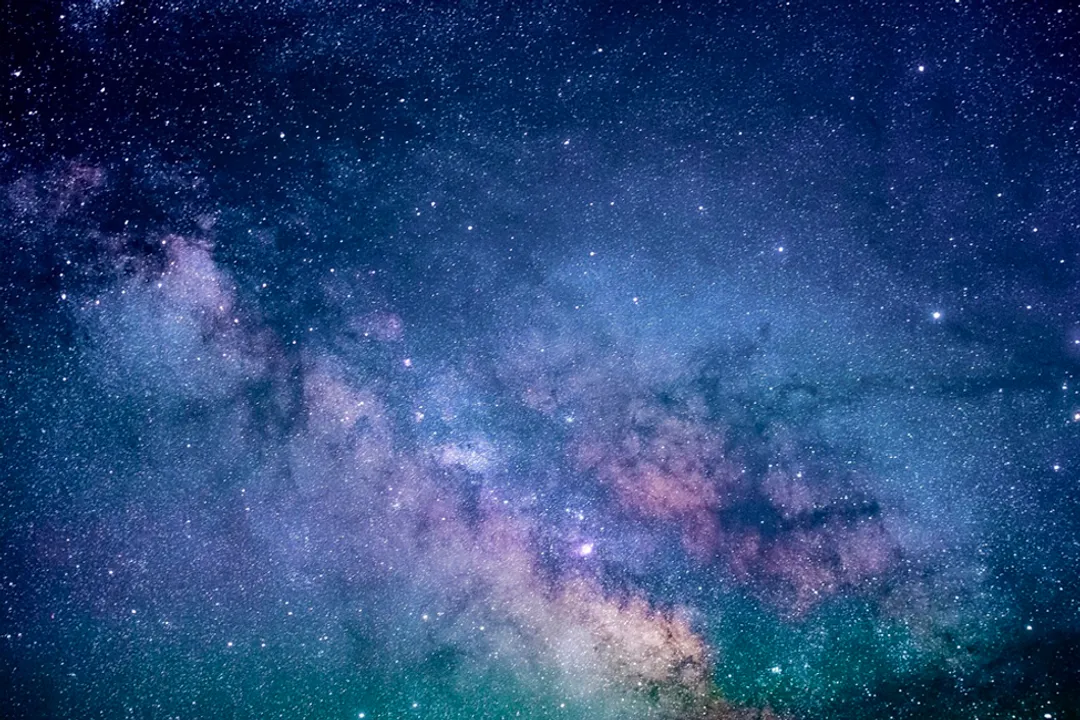
The concept explaining the origin of our Solar System begins with a vast, rotating cloud of gas and dust known as the solar nebula. [2][4][6] This nebular hypothesis, or nebular theory, stands as the dominant scientific model for how stars, planets, and other solar system bodies form from such interstellar material. [1][5][6] It posits that the Sun and the planets condensed from this same initial rotating cloud. [3]
# Historical Basis
While modern astronomy refines the specifics, the foundational idea traces back centuries, notably associated with thinkers like Immanuel Kant and Pierre-Simon Laplace. [1][9] Laplace’s contribution, formalized in the late 18th century, described a cooling, rotating nebula that contracted, shedding rings of material that eventually coalesced into planets. [9] This provided an elegant, entirely naturalistic explanation, moving away from more dramatic, less plausible scenarios, such as the older tidal theory which suggested a close, violent encounter between the Sun and another star ripped material free to form planets. [1][3][5] The nebular theory’s strength lies in its ability to explain observable characteristics of our system, such as the fact that nearly all planets orbit the Sun in nearly the same plane and in the same direction. [1][5]
# Nebula Composition
The starting material wasn't just primordial hydrogen and helium; it was the recycled remnants of earlier cosmic generations. [5] This nebula contained heavier elements—what astronomers call "metals"—like silicon, iron, oxygen, and carbon, forged in the hearts of previous, now-dead stars and scattered into space by supernova explosions. [2][5] The distribution of these elements is key, as it dictated the raw ingredients available for the formation of different types of planets. [2] The entire colossal structure was massive, cold, and held together by gravity, though it possessed a slight initial rotation. [4][8]
# Collapse Initiation
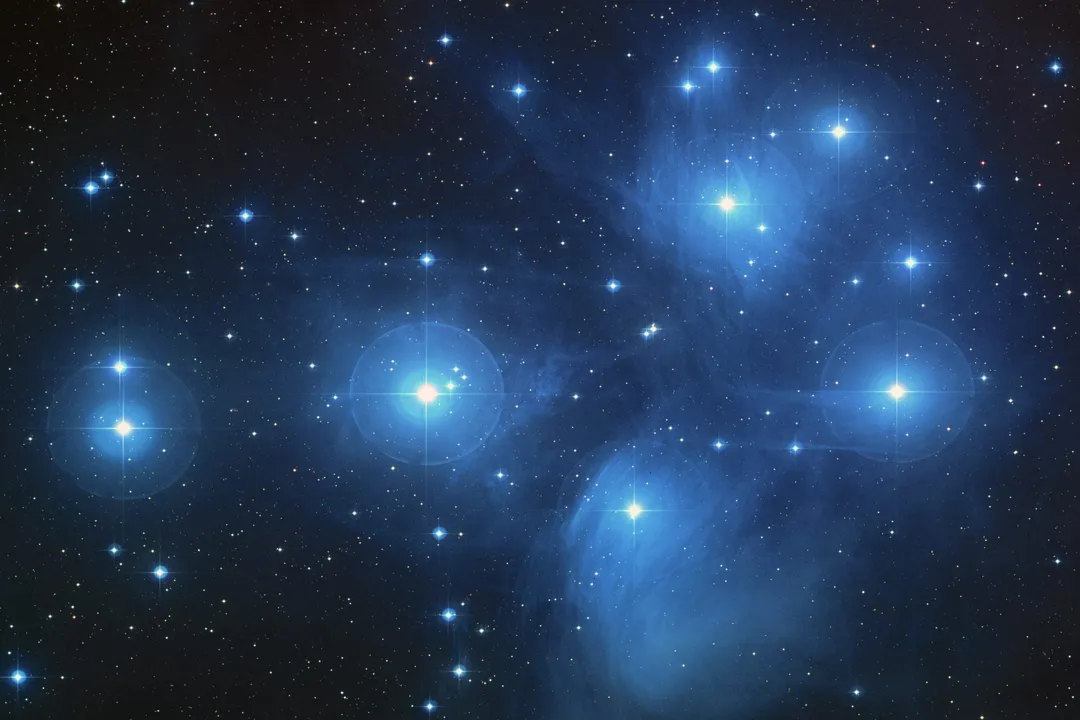
For such a large, diffuse cloud to begin forming a star and planets, something must trigger its gravitational collapse. While the initial spin is slight, the process requires a trigger to overcome the outward gas pressure that keeps the cloud stable. [2][6] Modern interpretations suggest this trigger is often an external event, such as a shockwave passing through the interstellar medium, perhaps from a nearby supernova explosion. [2][6] This compression initiates a runaway gravitational instability within the nebula. [2]
# Rotational Dynamics
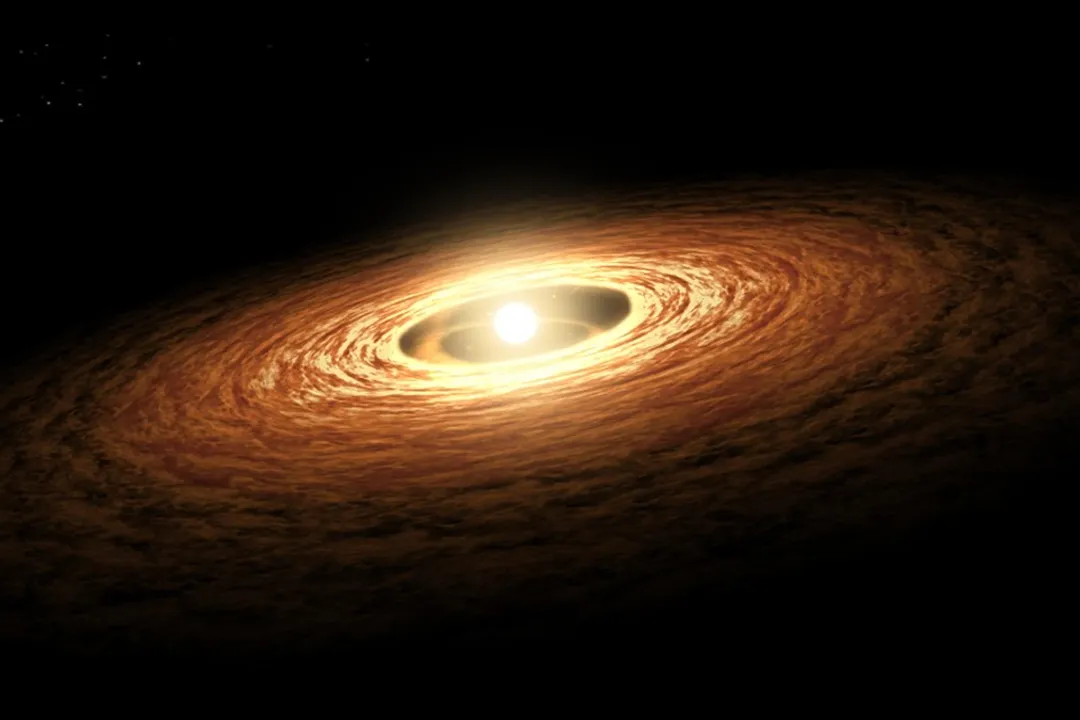
As the cloud begins to contract under its own immense gravity, a fundamental principle of physics takes over: the conservation of angular momentum. [2][4] Imagine an ice skater pulling their arms in while spinning—they speed up. The same effect occurs with the nebula; as its radius shrinks, its rate of rotation must increase dramatically. [2] This rapid spinning forces the cloud to flatten perpendicular to its axis of rotation, much like spinning pizza dough flattens out. [4][6] The result is a thin, pancake-shaped structure known as the protoplanetary disk rotating around a dense, hot core. [4][8]
# Star Formation
At the center of this flattening disk, the vast majority of the nebula's mass accumulates. [2][4] Under relentless gravitational pressure, this central mass heats up tremendously due to the conversion of gravitational potential energy into thermal energy. [2] When the temperature and pressure at the core become high enough, nuclear fusion—the process that powers stars—ignites, and the protostar officially becomes a star, like our Sun. [2][4] The star’s eventual solar wind begins to push away the remaining gas and dust, especially from the inner system. [6]
# Disk Differentiation
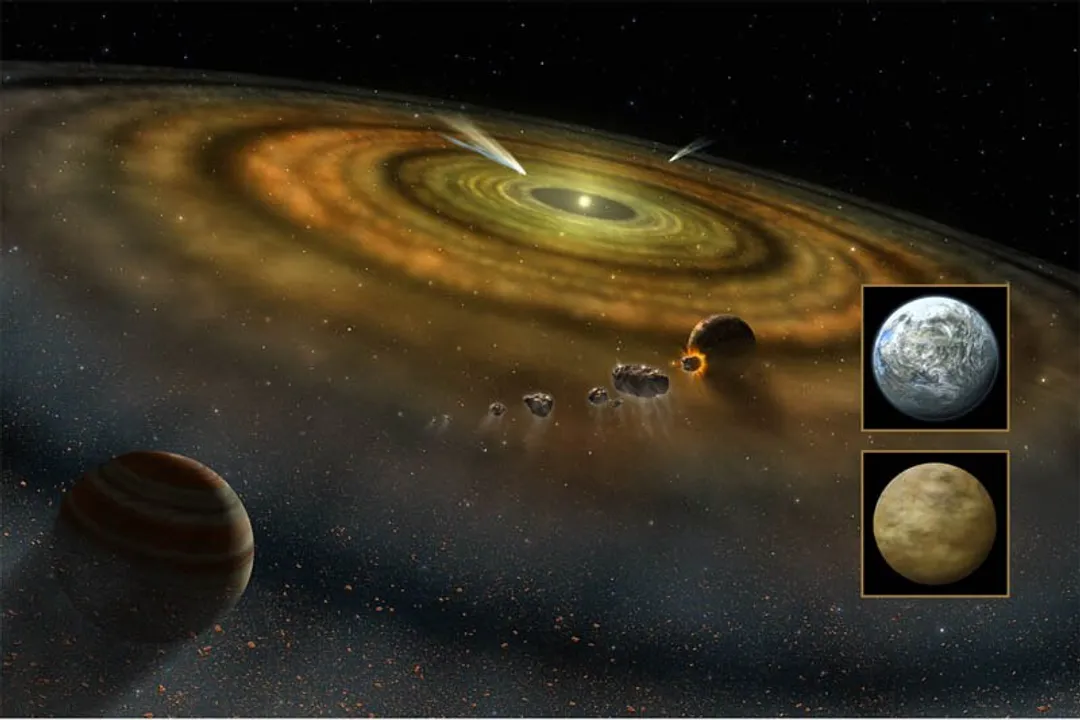
The protoplanetary disk is not uniform in composition or temperature; it is marked by a significant thermal gradient. [6] Closer to the newly formed central star, temperatures are extremely high. This heat prevents volatile materials, such as water ice and frozen methane, from remaining solid. [6] Only materials with high melting points, primarily metals like iron and silicates (rock-forming minerals), can condense into solid particles in this inner region. [6]
Conversely, farther out in the disk, beyond the "frost line" or "snow line," temperatures are low enough for ices to remain solid. [6] This distinction is perhaps the most crucial aspect governing the structure of a solar system. In the inner, hotter zone, the scarcity of solid material means the resulting planets—the terrestrial or rocky planets—form relatively small and dense, composed mostly of rock and metal. [6] Beyond the frost line, planet-building material is dramatically more abundant because rock plus ice is available, allowing larger cores to rapidly form, which then become massive enough to gravitationally capture vast amounts of the remaining light gases, hydrogen and helium, leading to the formation of the gas giants. [6] Thinking about it this way, the location of that initial frost line acts as a cosmic dividing barrier, setting the fundamental architecture of the entire planetary arrangement based on temperature alone. [1]
| Region | Primary Solid Material | Resulting Planet Type |
|---|---|---|
| Inner Disk | Metal and Silicates (Rock) | Terrestrial (Rocky) |
| Outer Disk | Metal, Silicates, and Ices (Water, Methane) | Jovian (Gas/Ice Giants) |
# Building the Planets
Once the solid material condenses in the disk, the process shifts to accretion. [5] Microscopic dust grains collide and stick together through electrostatic forces, gradually building larger clumps. [3][5] This process continues, forming pebble-sized objects, then kilometer-sized bodies known as planetesimals. [3][5] These planetesimals possess enough gravity to attract other bodies through direct gravitational influence, leading to more energetic, high-speed collisions. [3] Through this process of runaway growth, the largest planetesimals sweep up the smaller ones, forming the final protoplanets that evolve into the planets we see today. [3][5] The residual material that doesn't end up in a planet contributes to smaller bodies like asteroids and comets. [5]
# Modern Refinements and Challenges
The basic framework of the nebular hypothesis remains extremely strong because it successfully explains many systemic features. [1] However, as observational technology has advanced, especially with the discovery of thousands of exoplanet systems, scientists have noted areas where the original theory required adjustments. [1]
One area of ongoing study involves angular momentum. The early solar nebula must have possessed a way to shed a significant amount of its initial spin to the forming planets, allowing the Sun to form with only about 1% of the system's total angular momentum. [4] This transfer mechanism is complex, potentially involving magnetic fields that couple the central protostar's spin to the surrounding disk material as it falls inward. [4] If the nebula were significantly less massive, or if the initial rotation were much slower, the resulting star system might have had its planets forming much closer to the star, perhaps resulting in a system dominated by close-in "super-Earths" rather than distinct gas giants orbiting far out. The precise rate and timing of this transfer dictate the architecture of the final product. [1]
Another refinement involves in situ formation versus migration. While the classic model suggests planets formed where we see them now, observations of other star systems suggest that planets, particularly the large ones, often form farther out and then migrate inward due to interactions with the remaining gas in the disk. [1] This migration explains some anomalies in the distribution of planetary sizes and orbits observed elsewhere, implying that the final positions of planets are not always their birth positions. [1]
The nebular theory, in its modern incarnation, is a powerful narrative that begins with a simple cloud of cosmic dust and ends with a complex, ordered system of orbiting worlds, all through the relentless, predictable action of gravity and basic physics. [2][3] It successfully marries chemistry (condensation temperatures) with mechanics (angular momentum) to produce a complete picture of solar system genesis. [6]
Related Questions
#Citations
Nebular hypothesis - Wikipedia
The Nebular Theory – Introduction to Astronomy
8.2: Origin of the Solar System—The Nebular Hypothesis
[PDF] Lecture 7 Formation of the Solar System Nebular Theory
Nebular theory and the formation of the solar system - OpenGeology
2.4 Nebular Theory: From Nebula to Accretionary Disk
[PDF] The Nebular Theory
Nebular Hypothesis – Formation of the Solar System ... - Facebook
The Nebular Theory of Laplace Solar System - Unacademy