What is the protoplanet theory in simple terms?
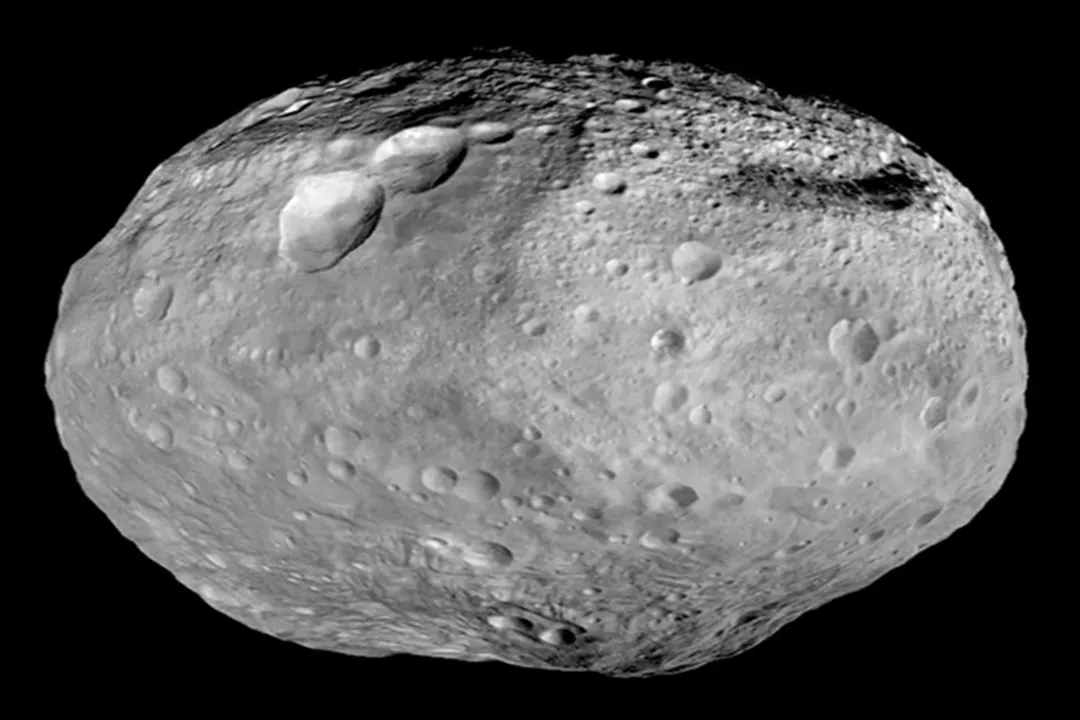
The concept of a protoplanet describes a massive, intermediate stage in the formation of a planet, essentially a "baby planet" that has already accumulated a great deal of mass but has not yet fully established its gravitational dominance in its orbital path. [2][4] These colossal bodies are the direct descendants of smaller building blocks, called planetesimals, which themselves coalesced from the vast disk of gas and dust that surrounded a newly forming star. [3][9] A protoplanet represents the critical step where growth shifts from being driven by mere sticking or random collisions to being governed by the object's own substantial gravity. [6] They are considered the embryos of the planets we observe today. [2]
# Nebular Origin
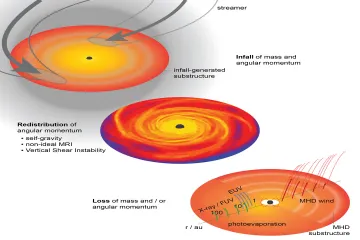
The entire story of the protoplanet is rooted in the Nebular Hypothesis. [3] This model posits that our Sun and planets condensed from a gigantic, spinning cloud of gas and dust known as the solar nebula. [3][9] As this cloud collapsed, it flattened into a spinning disk with the proto-Sun at its center. [3][4] The material remaining in this disk is the source of all future planets. [3][9]
The initial process involves microscopic particles attracting each other, much like static cling, to form pebbles and then larger clumps. [4][6] Once these aggregates reach a size of perhaps a few kilometers across, they are classified as planetesimals. [2][4] These planetesimals are numerous and densely packed in their orbits. [4]
# Runaway Growth
The transition from a planetesimal to a protoplanet is powered by accretion. [6] When a body reaches a certain size, its self-generated gravitational field becomes strong enough to actively pull in and sweep up nearby planetesimals and smaller debris. [2][4] This switch accelerates growth dramatically, moving the object into the protoplanet category. [6]
The size required to become a protoplanet is substantial; objects are typically considered to be at least the size of our Moon or Mars, potentially growing up to the mass of Earth or Venus before stabilization. [2] What truly defines this stage is the competition. A protoplanet shares its orbital neighborhood with other bodies of comparable, significant mass, all vying to absorb or gravitationally scatter the others. [5] The process is highly dynamic, leading to what astronomers term oligarchic growth, where a few massive entities dominate the available material in a region of the disk. [8]
The general pathway of growth can be visualized through these progressive mass stages:
| Stage Name | Key Characteristic | Gravitational Role |
|---|---|---|
| Dust/Pebbles | Small, weak attraction | Passive within gas flow |
| Planetesimal | Kilometers in size | Gravity begins to matter |
| Protoplanet | Moon to Mars size | Active gravitational accretion |
| Planet | Full orbital sweep achieved | Gravitationally dominant |
| [2][4][5] |
# Contrasting Formative Paths
The nature and destiny of a protoplanet were heavily dependent on its location relative to the central star. [4]
In the inner solar system, temperatures were high, meaning only heavier, rocky, and metallic materials could condense into solids. These protoplanets grew more slowly, relying only on this denser, but scarcer, material, eventually leading to the terrestrial worlds like Earth. [4]
Beyond the frost line—the distance where water and other volatile compounds could freeze into ice—the amount of solid building material increased dramatically because ice grains were abundant. [4] Protoplanets forming here grew much faster, assembling large cores, perhaps 10 to 20 times the mass of Earth. [4] Once these cores reached a specific mass threshold, they could rapidly capture the enormous amount of surrounding light gas, primarily hydrogen and helium, leading to the formation of the gas giants like Jupiter and Saturn. [2][4] Thus, an outer system protoplanet was on a path to become a giant, while an inner one was destined for a rocky fate.
# The End of Construction
A defining constraint on the protoplanet phase is the lifespan of the protoplanetary disk itself. [3] Once the young star begins to shine brightly, its solar wind and radiation pressure eventually blow away the remaining gas and fine dust. [3][4] This dispersal event cuts off the primary food source for the growing bodies. [3]
If an outer system protoplanet core did not manage to capture a massive gaseous envelope before the gas disappeared, it would be left as a large, icy/rocky body, unable to become a gas giant. [4] For the inner system, the lack of gas forces the final stages of planet formation to rely on collisions between the remaining few large protoplanets. [2] This final, violent clearing process, which can take tens to hundreds of millions of years, defines the transition to a stable planetary system. [8] The Moon's existence is a strong indicator of this final, massive impact phase involving Earth and another large protoplanet. [2]
It is useful to think about the stability we see today as the resolution of the chaos that defined the protoplanet stage. The gravitational interactions between multiple, similarly massive protoplanets in close orbits were inherently unstable, leading to orbits becoming highly elliptical and resulting in catastrophic, system-altering collisions. [8] The orbits that survived and cleared out all rivals are what we now classify as planetary orbits. [5]
# Graduation Criteria
The boundary between a massive, round protoplanet and a true planet is formalized by the requirement that the body must have cleared the neighborhood around its orbit. [5] Both a planet and a mature protoplanet are massive enough to be spherical due to self-gravity (i.e., they are in hydrostatic equilibrium). [2] The difference lies in orbital dominance.
If an object is still contending with other gravitationally significant bodies in its orbital zone, it remains a protoplanet or is classified as a dwarf planet. [5] A compelling case study is Ceres in the asteroid belt. Ceres is large enough to be round, but Jupiter's massive influence perpetually stirs up the region, preventing any single body from absorbing all others and achieving clear dominance. [4] Ceres is therefore a remnant, a protoplanetary core whose growth was arrested by external forces. [4]
A conceptual checklist for planetary success hinges on surviving this dynamic period:
- Sufficient Mass Acquisition: Grow past the planetesimal stage via gravitational accretion to become round.
- Survival of Conflict: Engage in, and win, gravitational interactions (sometimes through catastrophic merger) with other similar-sized bodies.
- Orbital Dominance: Achieve a state where the gravitational influence of the body has either ejected or accreted all other planet-sized objects sharing its orbital path before the natal gas disk vanishes. [5][8]
The evidence for this entire sequence is seen in the very composition of our solar system—the highly differentiated structures of asteroids and the cratered surfaces of the inner worlds—all pointing back to a time when the space between Mars and Jupiter was not empty, but crowded with massive, colliding protoplanetary embryos. [1] The theory of protoplanets explains not just how planets formed, but why the architecture of our solar system looks the way it does today. [3]
Related Questions
#Citations
Protoplanet | Formation, Accretion, Solar System - Britannica
Protoplanet - Wikipedia
How Are Planets Formed? - Universe Today
Origin of the Solar System - University of Oregon
When does a protoplanet become a planet? - Quora
Video: How Do Protoplanets Grow? - Study.com
The Protoplanet Hypothesis | PDF | Solar System | Planets - Scribd
The formation of the solar system: a protoplanet theory. - NASA ADS
The Protoplanet Theory by Sean Ridera on Prezi