How do protoplanets become planets?
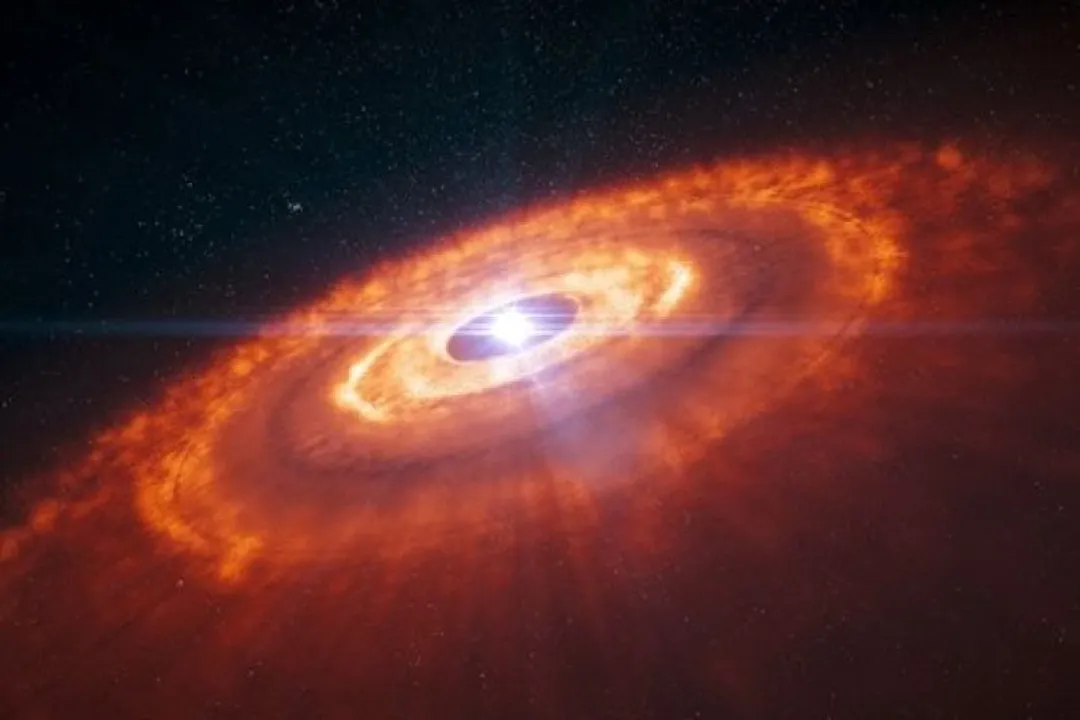
The genesis of a planet is a slow-motion cosmic drama unfolding within a vast, spinning cloud of gas and dust known as a solar nebula. Long before a stable, spherical world like Earth or Jupiter emerges, the material must pass through an intermediate, often violent stage: the protoplanet. This entire construction process, from tiny speck to a mature body, is primarily governed by the interplay of particle sticking, gravity, and the dwindling supply of raw material surrounding a nascent star.
# Dust Clumps
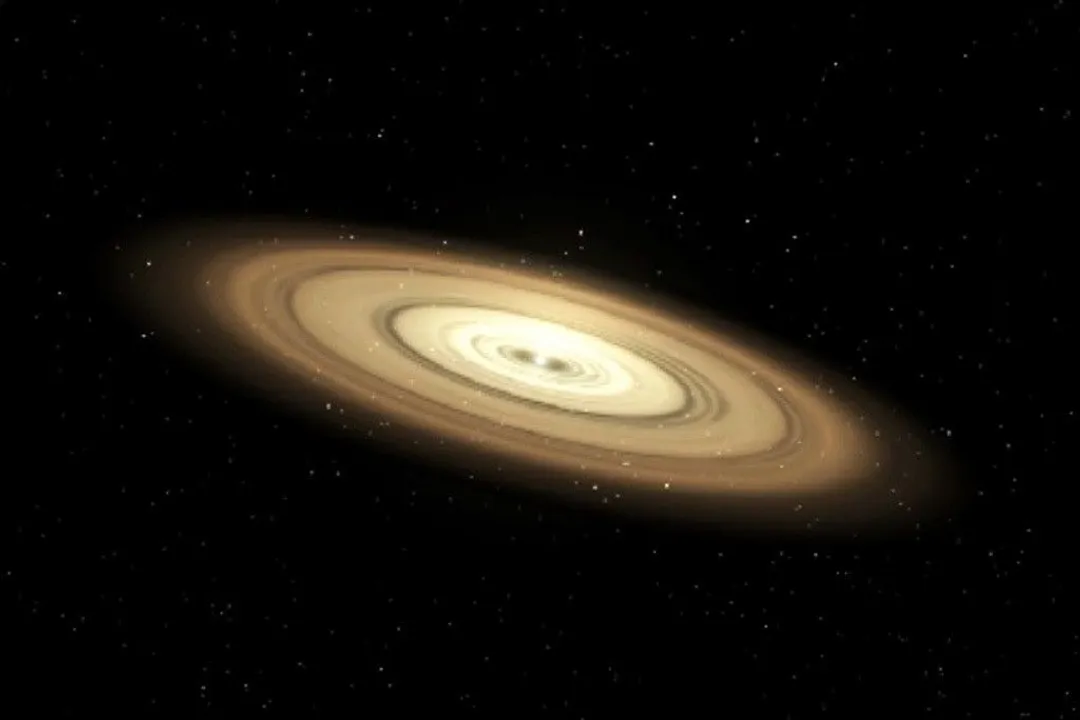
The very first step in this planetary construction project requires the microscopic dust grains present in the protoplanetary disk to overcome their natural repulsion and begin sticking together. Initially, these dust particles, often smaller than a grain of sand, aggregate through simple electrostatic forces, much like dust bunnies forming under furniture. As these clumps grow, they reach sizes where gentle collisions are enough to keep them bound, rapidly increasing their size from micrometers into centimeter and meter scales. This process of gradual accumulation, called accretion, builds up the building blocks of planets.
This early phase presents a significant hurdle known as the "meter-size barrier." Once particles reach about a meter in diameter, they are susceptible to the gas drag within the disk, which can quickly spiral them inward toward the central star, effectively removing them from the planet-building material pool. Overcoming this barrier is essential for the next stage of growth to begin in earnest.
# Planetesimal Growth
For a body to survive the meter-size barrier and become a true planet builder, it must transition from relying solely on gas drag and gentle sticking to a mechanism dominated by self-gravity. Objects that successfully navigate this barrier grow into what astronomers call planetesimals, typically defined as bodies about one kilometer or more in diameter. At this size, their own gravitational field becomes strong enough to noticeably influence nearby material, causing them to attract and sweep up smaller dust and pebble-sized bodies.
The growth from a planetesimal to a larger body enters a phase often described as runaway growth. In this dynamic, the largest objects grow disproportionately fast because their larger gravitational cross-sections allow them to accrete material more quickly than their smaller neighbors. Imagine a snowball rolling down a hill; the bigger it gets, the more snow it can pick up per second, exponentially increasing its lead over the smaller snowballs still on the hill. This competitive accretion leads to the rapid formation of the next major stage: the protoplanet.
A critical bottleneck in this system involves the competition for material. In any given region of the disk, the dominant planetesimals are hoarding the available mass. If a collision between two similarly-sized planetesimals occurs at too high a relative velocity, instead of merging, they can shatter into smaller fragments. This fragmentation can effectively reset the local progress, creating a slower growth environment where a small gravitational perturbation or a single high-speed impact can delay the formation of a giant body by thousands or millions of years. This underscores that planet formation is not just about accumulation, but also about controlled, non-destructive merging within a dynamically calm region of the disk.
# Gravitational Dominance
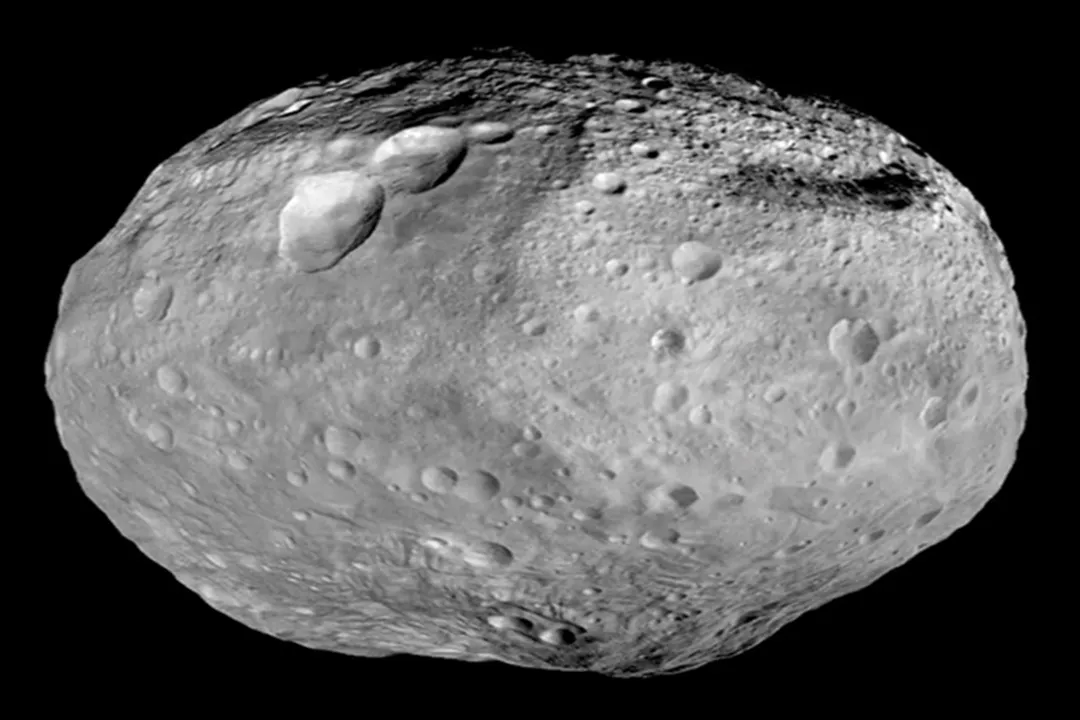
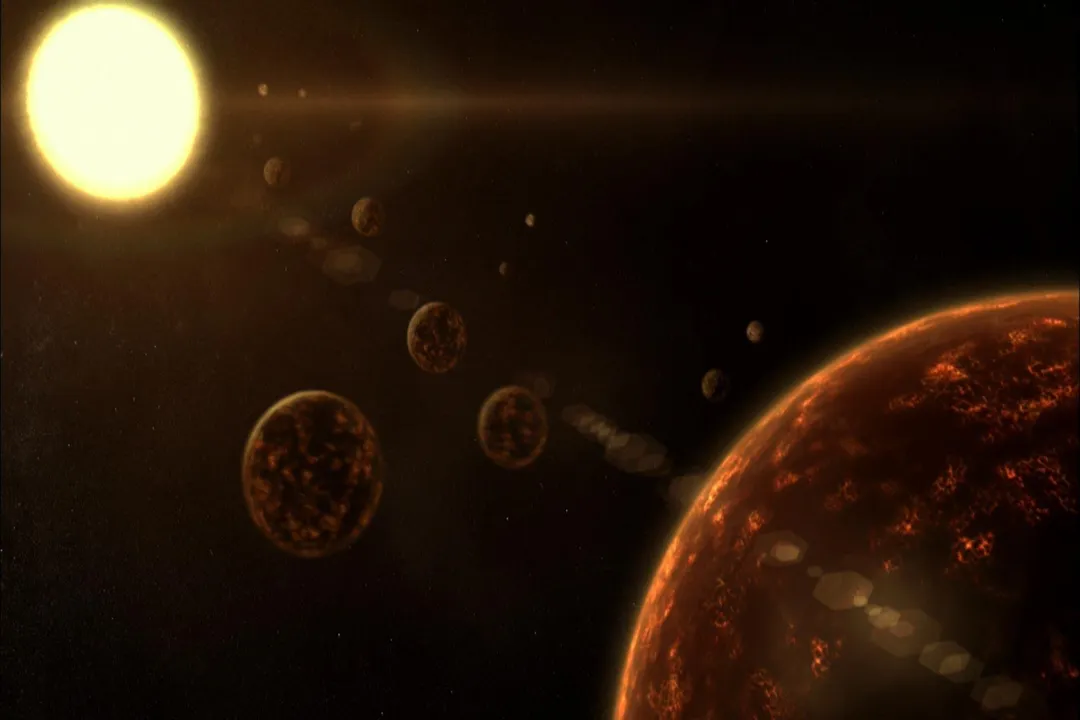
A protoplanet is the result of this runaway accretion of planetesimals. These are large bodies, potentially moon- to Mars-sized or even larger, that have gathered a substantial portion of the solid mass in their orbital neighborhood. The defining characteristic that separates a protoplanet from a mere planetesimal is the sphere of influence its gravity exerts. A protoplanet’s gravity is powerful enough to systematically clear out or incorporate other kilometer-sized bodies in its path, whereas a planetesimal's influence is more localized to direct, gentle impacts.
In our own solar system's history, the inner regions—where temperatures were too high for ices to condense—were populated by numerous protoplanets composed mostly of rock and metal. These bodies collided repeatedly over millions of years, with the largest ones surviving through mergers to eventually become the terrestrial planets we observe today, like Mercury, Venus, Earth, and Mars. The final structure of these rocky bodies—their core, mantle, and crust—is a direct result of this intense, energetic amalgamation process, which involved significant heating and subsequent differentiation based on material density.
# Core Accretion
The path a protoplanet takes toward becoming a planet diverges sharply depending on its location relative to the frost line (or ice line) in the young solar system. This line separates the inner, hotter region where only rock and metal can condense from the outer, colder region where abundant ices (water, methane, ammonia) can also solidify.
In the outer solar system, beyond this line, protoplanets could access a far greater reservoir of solid mass because ices were abundant alongside rock. This allowed the solid cores of these outer bodies to grow much larger, much faster. Once an icy/rocky core reached a critical mass—estimated to be around 10 times the mass of Earth—its gravity became immense enough to trigger the next, dramatic phase: capturing the surrounding gaseous nebula. This rapid ingestion of gas, primarily hydrogen and helium, is how the massive gas giants like Jupiter and Saturn formed their enormous envelopes.
This difference in solid material availability creates a significant mass ceiling for inner system planets. The terrestrial protoplanets were limited by the total amount of rock and metal available before the gas cleared, preventing them from ever acquiring substantial gas envelopes. A terrestrial protoplanet might reach the mass of Mars or Venus through accretion of solids, but it cannot grow into a gas giant because the necessary 10-Earth-mass core simply could not form in time from only refractory materials.
# Final Sweep
The transition from a large, dominant protoplanet to a fully fledged planet is marked by the clearing of its orbital zone. Once a protoplanet reaches a sufficient size, its gravitational influence becomes so pronounced that it gravitationally scatters, captures, or merges with nearly all remaining planetesimals and smaller protoplanets in its path. A true planet is generally defined as a body massive enough to be rounded by its own gravity, but which has also cleared the neighborhood around its orbit.
Observational evidence confirms this process in other star systems. Astronomers have successfully observed protoplanetary disks exhibiting gaps and rings, which are telltale signs of young planets actively carving out their paths by gravitationally interacting with the remaining dust and gas. Catching a planet "in the act of being born" provides direct confirmation that the gravitational clearing mechanism is the final gatekeeper for planetary status.
# End of Era
The entire planetary formation sequence, from the first dust sticking to the final gravitational sweeping, occurs on relatively short astrophysical timescales—spanning a few million to tens of millions of years. This relatively quick timeline is due to the finite amount of material available in the disk, which orbits the young star.
The ultimate end of the growth phase is dictated by the star itself. As the central star matures, its increasing radiation pressure and powerful stellar wind eventually blow away the vast majority of the remaining gas and fine dust from the protoplanetary disk. Once this primordial gas reservoir is gone, the primary fuel source for the rapid growth of gas giant cores is removed, effectively halting the formation process for all bodies that had not yet achieved their final mass. This dispersal event locks in the structure of the planetary system, leaving the observed architecture of rocky inner worlds and gaseous outer giants. The fact that we see massive gas planets in other systems, sometimes orbiting very close to their stars, suggests that these bodies may form extremely rapidly, perhaps within the first few million years, or that their final orbital positions are often dictated by later migration events occurring while the gas was still present. The surviving protoplanets—those that failed to merge or were ejected—become the asteroid and Kuiper belts of the mature system.
Related Questions
#Citations
Protoplanet - Wikipedia
Planet Formation - Center for Astrophysics | Harvard & Smithsonian
Research on Planet Formation and Evolution - Carnegie Science
Video: How Do Protoplanets Grow? - Study.com
How Do Planets Form? - NASA Science
Protoplanet | Formation, Accretion, Solar System - Britannica
How do rocky planets form? | NSF - U.S. National Science Foundation
Astronomers Catch a Planet in the Act of Being Born - Universe Today
Finding Life Beyond Earth | How the Inner Solar System Formed