How is a true planet generally distinguished from a protoplanet regarding its orbital zone?
Answer
A planet must have cleared the neighborhood around its orbit
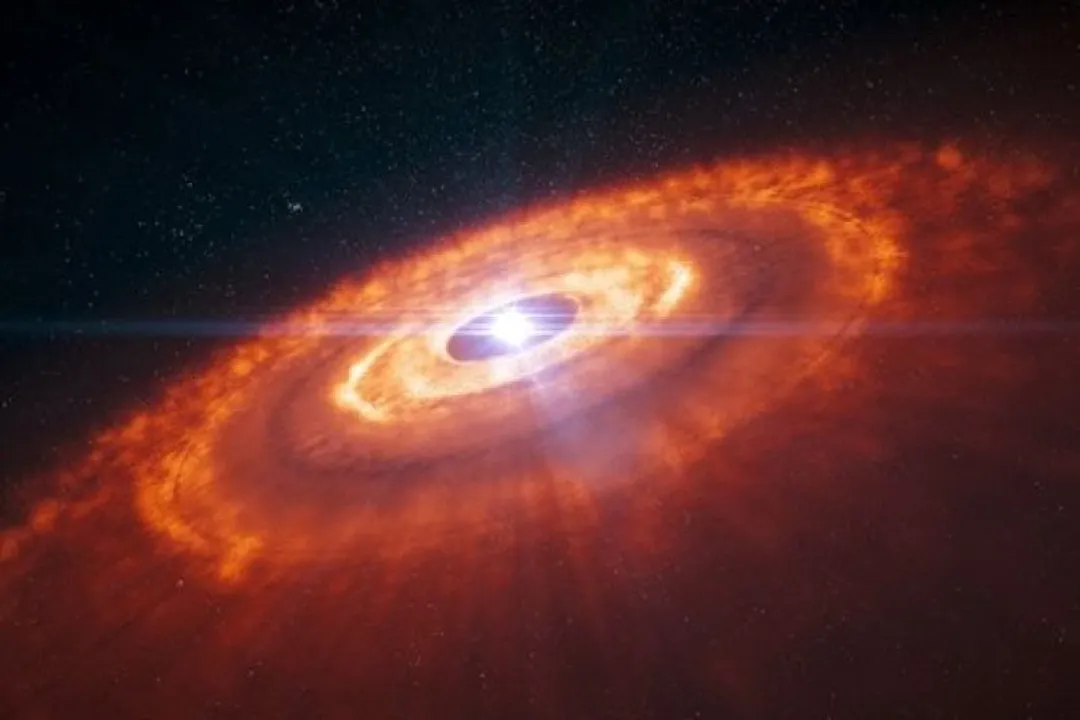
While protoplanets are massive enough to be rounded by their own gravity, the final criterion for achieving the status of a true planet involves dominance over its orbital path. A planet is defined as a body that is massive enough to overcome its initial gravitational formation stages, but crucially, it must have gravitationally scattered, captured, or merged with nearly all remaining smaller bodies, including planetesimals and smaller protoplanets, within its orbital zone. Observational evidence of gaps and rings in other disks confirms this gravitational clearing mechanism is the final prerequisite for planetary status.
Related Questions
What mechanism causes particles to spiral toward the central star when they reach about one meter in diameter?What is the approximate minimum diameter required for an object to be classified as a planetesimal where self-gravity becomes the primary growth driver?What growth phase describes the disproportionately fast accretion of material by the largest planetesimals in a region?What critically defines a protoplanet, setting it apart from a smaller, kilometer-sized planetesimal?What astronomical demarcation line dictates whether a protoplanet can access abundant solid ices for growth?What critical core mass must an outer system protoplanet achieve to trigger the rapid capture of hydrogen and helium gas?What explains the structural differentiation (core, mantle, crust) observed in terrestrial planets like Earth?What is the ultimate consequence of a high-speed collision between two similarly-sized planetesimals instead of merging?What role does the central star play in concluding the era of rapid planetary growth?How is a true planet generally distinguished from a protoplanet regarding its orbital zone?