What is the significance of the nebular theory?
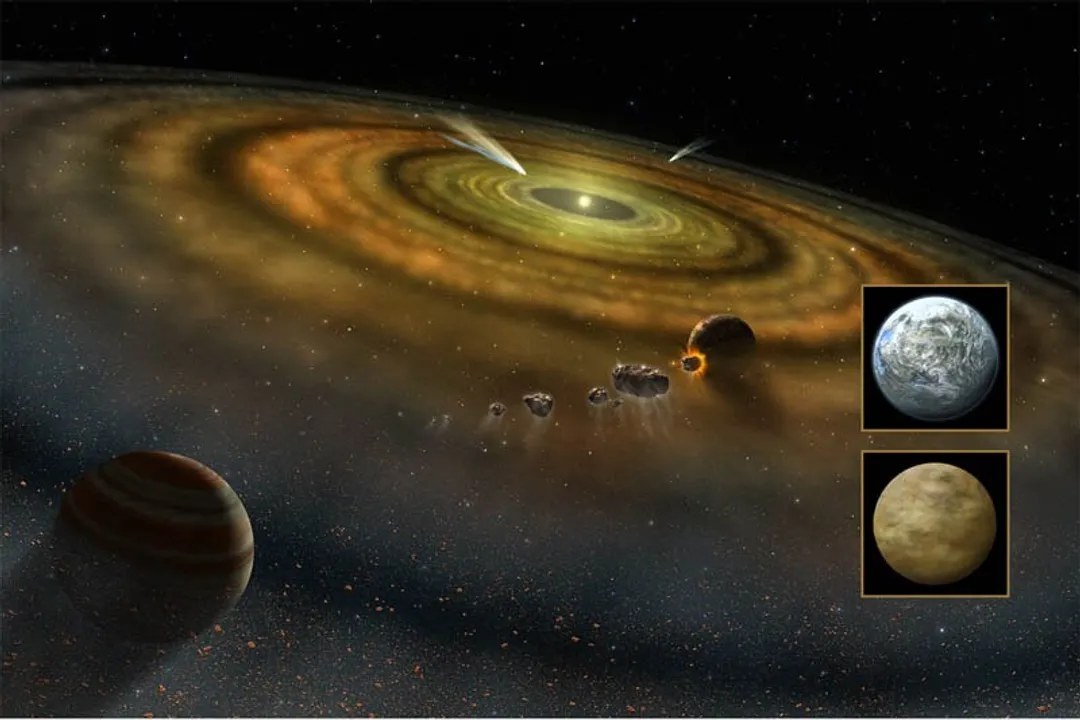
The quest to understand how our Sun, Earth, and all other celestial bodies came to occupy their specific places in the void has preoccupied thinkers for centuries. The modern significance of the nebular theory lies precisely in its power to weave these disparate observations—the near-circular orbits, the alignment of planetary paths, and the chemical distinction between inner rocky worlds and outer gas giants—into a single, coherent narrative of solar system birth. [1][5] It represents a foundational shift from philosophical speculation toward a physical, gravitationally driven account of cosmic construction. [2]
# Historical Genesis
The concept itself, known formally as the nebular hypothesis, gained significant traction in the late 18th century, primarily through the work of the French mathematician and astronomer Pierre-Simon Laplace. [2][6][8] Around , Laplace put forth his hypothesis, suggesting that the Solar System originated from a vast, rotating cloud of gas and dust, a nebula. [6][8] This idea wasn't entirely new, as earlier concepts involving rotating clouds existed, but Laplace provided a more detailed, mathematically grounded mechanism. [6]
It is worth noting that while Laplace is often credited with popularizing the model, Immanuel Kant had proposed a similar theory decades earlier, suggesting the nebula collapsed under gravity to form the Sun and planets through rotation and flattening. [6] However, Laplace's articulation, which proposed that centrifugal forces flinging off material formed the planets, became the key reference point for subsequent scientific evolution. [6][8] The very structure of the hypothesis shifted cosmology from viewing the solar system as a static or randomly assembled collection of objects to a dynamic product of astrophysical processes. [5]
# Nebula Collapse
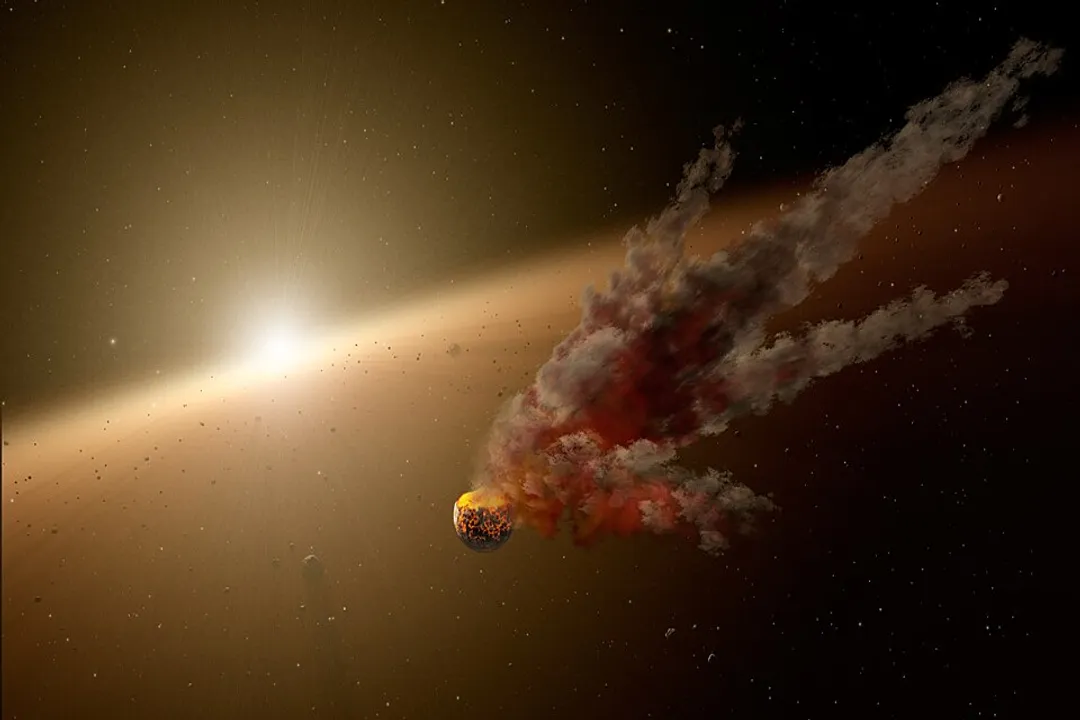
The core significance of the theory rests on its sequence of events, beginning with a massive, diffuse cloud of interstellar gas and dust—the solar nebula. [1][3][4][7] This nebula, composed primarily of hydrogen and helium, along with traces of heavier elements formed in previous generations of stars, began to contract. [1][3]
This contraction was likely triggered by an external event, such as a shockwave from a nearby supernova explosion. [3] As gravity pulled the material inward, the conservation of angular momentum dictated that the cloud must spin faster as it shrunk, much like a spinning skater pulling in their arms. [1][2][4] This increase in rotation caused the cloud to flatten into a rotating disk structure, an accretion disk, with most of the mass concentrating at the center. [1][2][4][9] This central concentration eventually became hot and dense enough to ignite nuclear fusion, forming the Sun. [1][3]
It is fascinating to reflect on the initial conceptual hurdle this model presented: the Sun holds about $99.8%$ of the total mass of the solar system, yet the planets, especially the giant outer ones, possess the vast majority of the angular momentum. [1] Early, simpler versions of the nebular model, particularly those relying solely on centrifugal force shedding material, struggled mightily to account for this massive disparity in rotational energy distribution. The theory's modern acceptance owes much to later refinements that incorporated magnetic fields and viscous interactions within the spinning disk, which efficiently transferred this angular momentum outward to the forming planets, cementing the theory's explanatory success where earlier iterations faltered. [1][4]
# Disk Dynamics
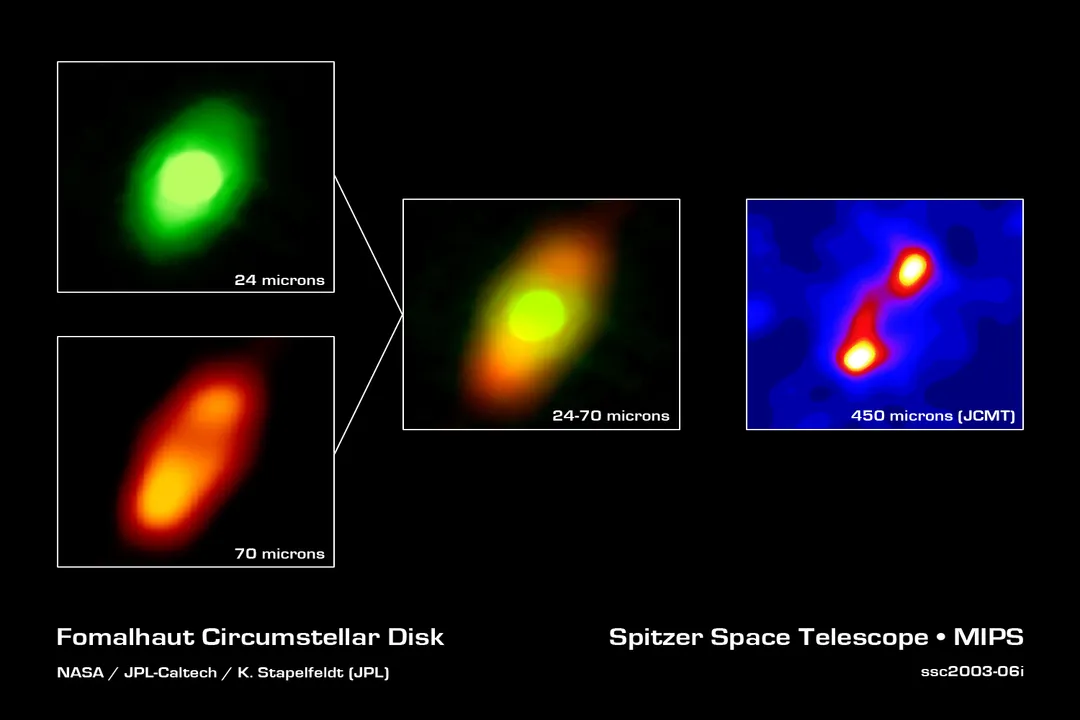
Within this flattened, spinning disk, the remaining material began the process of planet building, which is perhaps the theory's most enduring contribution to understanding planetary science. [5] The material obeyed temperature gradients dictated by their distance from the newborn Sun. [1][5]
Closer to the hot central star, only materials with high melting points, like silicates and metals, could remain solid. [1][5] This led to the formation of the small, dense, terrestrial planets (Mercury, Venus, Earth, Mars) through the slow accretion of these solid grains into planetesimals, and eventually, protoplanets. [1][5]
Farther out, beyond the "frost line" (or ice line), temperatures were low enough for volatile compounds—water, methane, and ammonia—to condense into solid ice grains. [1][5] This abundance of solid material allowed planetary cores to grow much larger, quickly exceeding the mass threshold needed to gravitationally capture vast amounts of the surrounding light gases, predominantly hydrogen and helium, thus creating the gas giants like Jupiter and Saturn and the ice giants like Uranus and Neptune. [1][5]
# Significance Explained
The true significance of the nebular theory is its ability to explain the systematic arrangement we observe, rather than just describing individual objects. [1]
# Planetary Regularities
The theory provides natural explanations for several key regularities:
- Planar Orbits: Because the planets formed from a flattened disk of material orbiting the protosun, their orbital planes are all nearly coplanar (lying on roughly the same flat surface). [1][4]
- Direction of Orbit: All major planets orbit the Sun in the same direction that the original nebula was spinning, which is counterclockwise when viewed from above the Sun’s north pole. [1][4]
- Compositional Gradient: The theory elegantly accounts for the stark division between the small, rocky inner planets and the large, gaseous/icy outer planets, directly linking composition to the temperature gradient within the protoplanetary disk. [1][5]
These features are not random coincidences; they are consequences of the physical laws governing the collapse and flattening of a rotating mass. [5] The nebular hypothesis transforms the solar system from a collection of chance placements into a geometrically ordered outcome of physical necessity. [2]
# Modern Testing
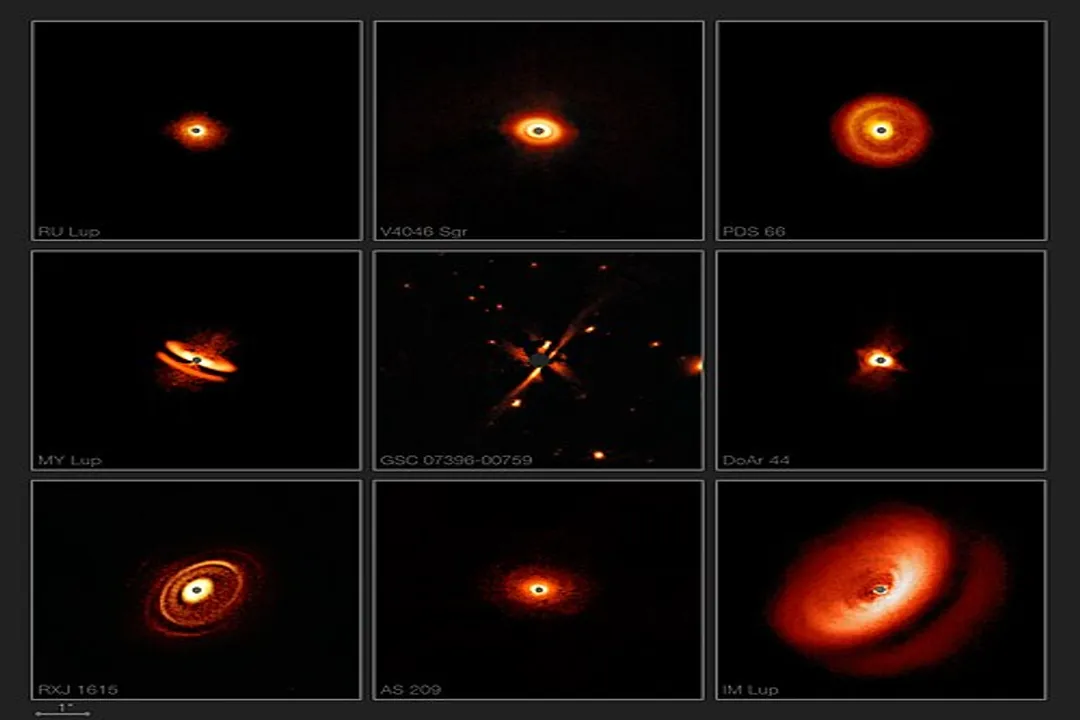
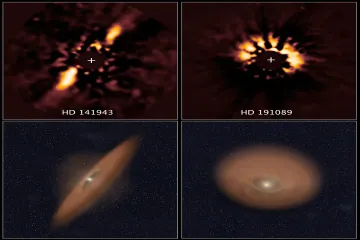
One major area where the theory demonstrates its enduring authority is in its predictive power when applied to current astronomical observations. [3] When we look out into space today, we are no longer limited to studying our own system as the only example. The development of powerful telescopes has allowed astronomers to directly observe other star systems in formation. [3]
We can now witness protoplanetary disks—the very structures predicted by the nebular hypothesis—orbiting young stars in regions like the Orion Nebula. [3] These disks show clear evidence of structures, gaps, and dust concentrations that strongly suggest the ongoing process of planet formation within a flattened gaseous medium. [3] This direct observation moves the nebular hypothesis from a successful historical model for our own system to a currently active model applicable across the galaxy. [2]
If you were to analyze images of star-forming regions, you would see countless dust lanes and dark shadows cast by dense rings, which are the shadows of nascent planetary systems. Seeing these structures elsewhere validates the essential mechanics proposed over two centuries ago. It illustrates that the physical mechanism—the transformation of a diffuse sphere into a rotating, stratified disk—is a universal principle of gravitational collapse when angular momentum is present.
# Theory Evolution
While the fundamental premise of a rotating nebula remains central, the model has not remained static; it has evolved significantly since Laplace's initial formulation. [2] Modern astrophysics has integrated concepts like magnetohydrodynamics, detailed chemical modeling, and high-resolution imaging to refine the details. [4]
The original formulation was sometimes challenged by issues surrounding the origin of asteroid belts or the details of giant planet formation, but subsequent modifications have addressed these complexities. [4] For instance, the Grand Tack hypothesis, while not strictly part of the original Laplace model, is a modern accretion disk scenario suggesting Jupiter migrated inward and then outward due to gas drag and gravitational interactions before settling into its current orbit, demonstrating how the core idea allows for complex, non-linear development within the disk. [4] The hypothesis serves as the essential scaffolding upon which more detailed, specific planetary migration and evolution models are built. [1][4]
# Comparing Models
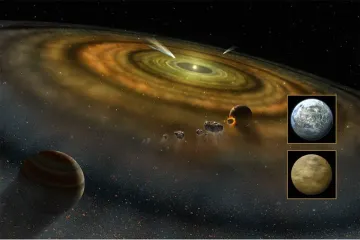
The significance of the nebular theory is often best understood by contrasting it with the alternatives it replaced. Before its widespread acceptance, models often relied on catastrophic explanations, such as a rogue star passing close to the Sun and tidally stripping material away to form the planets. [5]
| Feature | Nebular Hypothesis | Catastrophic Models |
|---|---|---|
| Origin | Internal gravitational collapse of a nebula [2][5] | External, chance collision or near-miss event [5] |
| Orbital Consistency | Naturally explains coplanar, prograde orbits [1][4] | Fails to explain uniform orbital direction/plane [5] |
| Compositional Gradient | Directly explained by temperature gradients in the disk [1][5] | Difficult to explain the systematic inner/outer division |
| Frequency | Predicts planet formation is a common cosmic process [2] | Predicts planet formation is extremely rare |
The catastrophic models suffered from a severe statistical hurdle: the probability of a star passing close enough to trigger planetary ejection would make solar systems exceedingly rare, whereas observations now confirm that planetary systems are common occurrences across the galaxy. [2] The nebular theory, conversely, places planet formation as a natural, expected byproduct of star formation, a conclusion strongly supported by exoplanet surveys today. [2] This shift from rare anomaly to expected outcome represents a massive conceptual leap enabled by the nebular framework. [5]
# Enduring Significance
The nebular theory is significant not just as a historical curiosity or an explanation for our local neighborhood, but as the indispensable template for all modern theories of solar system formation. [4] It provides the necessary physics—rotation, gravity, accretion, and thermal stratification—that must be incorporated into any successful model attempting to describe the assembly of stars and their attendant worlds. [1][3] It shifted the discussion from what the solar system is to how it developed physically, creating a methodology for testing hypotheses against observational data, whether that data comes from the Kuiper Belt or distant galaxies. [2][4] The theory remains the bedrock upon which all current research into planet building rests. [3]
Related Questions
#Citations
8.2: Origin of the Solar System—The Nebular Hypothesis
Nebular hypothesis - Wikipedia
1.2. How did our Solar System form? - NASA Astrobiology Program
Nebular Theory | Definition, Development & Problems - Lesson
Nebular theory and the formation of the solar system - OpenGeology
Pièrre Simon Laplace: The Nebular Hypothesis - Answers in Genesis
The Nebular Theory of Laplace Solar System - Unacademy
Nebular Theory Might Explain How Our Solar System Formed