What is the Venus theory?

The term "Venus Theory" is not singular; it applies to strikingly different concepts depending on the context, ranging from deep, controversial hypotheses in planetary science about the past of our solar system's second planet to a specific brand or artist within electronic music production. To understand what the Venus Theory entails, one must first distinguish between the cosmic narrative of a lost, water-rich world and the contemporary soundscapes designed by those who adopt the moniker. [2][8]
# Planetary Hypothesis
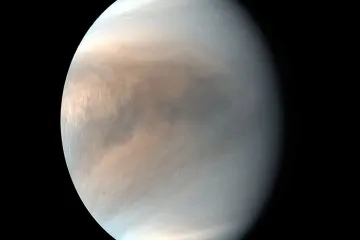
The most significant scientific discussion surrounding a "Venus Theory" centers on the possibility that Venus, currently a scorching world with surface temperatures hot enough to melt lead, once possessed conditions suitable for liquid water, perhaps even oceans, on its surface. [3][5] This concept posits a dramatic transformation over billions of years, contrasting sharply with its present-day state. [6]
# Ancient Habitability
The core idea suggests that early Venus, much like early Earth, could have supported liquid water. [6] This potential habitability is not just a passing thought; it involves modeling how Venus's atmosphere and solar input might have differed in its infancy. [3] If liquid water existed, it implies a cooler, possibly clement surface environment before a critical threshold was crossed, leading to the planet's current runaway greenhouse state. [5][6] Some models propose that a large ocean on Venus could have existed for a substantial period before being lost. [6] This scenario is compelling because it addresses why two planets that formed relatively close to each other ended up so vastly different in terms of surface conditions.
# Rotation Slowdown
One fascinating, though perhaps less discussed, aspect tied to this potential ancient ocean is the hypothesis that the presence of that vast body of water actively contributed to slowing down Venus's rotation. [6] Venus spins incredibly slowly, taking about 243 Earth days to complete one rotation, and even longer to orbit the Sun (225 Earth days). [4] The theory suggests that tidal interactions, perhaps involving the ocean, acted as a brake on the planet's spin over cosmic timescales. [6] The subsequent loss of the ocean, due to the escalating greenhouse effect, effectively ended this rotational braking mechanism, locking in the planet’s slow spin. [6] This connection between surface water and rotation rate provides an intricate layer to the overall theory of Venus's evolution.
The actual phases of Venus, observable through telescopes, provide historical confirmation that Venus orbits the Sun, similar to the Moon’s phases relative to Earth. [4] While this observation proves the orbital mechanics, it says nothing directly about past surface water, but it grounds the planet in a context where observable physics dictates its appearance from Earth. [4]
# Scientific Scrutiny

While the idea of a wetter, cooler past for Venus is intriguing, recent research has delivered substantial challenges to these long-held models. [3][5] The debate often hinges on the exact timing and mechanism by which Venus lost its water and underwent its climatic shift.
# New Atmospheric Evidence
Astronomers have conducted detailed modeling that suggests the "wet past" scenario may be less likely than previously thought. [3][5] One line of evidence involves understanding how quickly water vapor—a potent greenhouse gas—would be stripped from a planet's atmosphere by solar radiation over billions of years. [3] If Venus had large oceans, it would have had to sustain a massive amount of water vapor in its upper atmosphere at some point.
Researchers have found that even if Venus started with oceans comparable to Earth's, it might not have taken billions of years for the water to escape; the process could have been much faster. [5] New studies suggest that the rate at which atmospheric water is photodissociated (broken apart by sunlight) and then lost to space—even with the planet being relatively close to the Sun—is significant enough to argue against a long-lived surface ocean. [3] One recent modeling effort indicates that the planet may have only been able to sustain liquid water on its surface for a relatively short span before the greenhouse effect boiled it away. [5]
This creates a tension: the theory requires a long period of stability for complex evolution to occur, but new data suggests an inherently unstable atmospheric chemistry that rapidly pushes the planet toward its current dry, hot state. [3]
# Comparison of Planetary States
To appreciate the severity of the transformation, consider the extreme difference in conditions:
| Parameter | Hypothetical Ancient Venus | Present-Day Venus |
|---|---|---|
| Surface Temperature | Potentially Earth-like/Temperate | () [5] |
| Surface Water | Liquid Oceans [6] | None |
| Atmospheric Pressure | Potentially near 1 bar | times Earth's sea level pressure [4] |
| Rotation Period | Potentially faster (before oceanic braking) | Earth days [4] |
The difference in surface temperature alone represents a massive energy input over time, which planetary scientists seek to account for through atmospheric and orbital mechanics. [5] The evidence currently seems to favor a scenario where Venus was always far too hot for stable liquid water, even in its early history, effectively dealing a blow to the more optimistic versions of the "wet Venus" theory. [3]
It is an active area of research, constantly being refined by data from probes and improved atmospheric simulations. [5] What remains certain is that Venus’s evolution diverged sharply from Earth’s, a divergence that the various iterations of the "Venus Theory" attempt to explain.
# Musical Interpretation
Moving entirely away from astrophysics, the term "Venus Theory" also refers to an entity in the world of electronic music production. [8] This usage is completely independent of the planetary science discussions, yet it shares the evocative power of the name—suggesting something perhaps atmospheric, intense, or otherworldly. [2]
# Identity and Sound
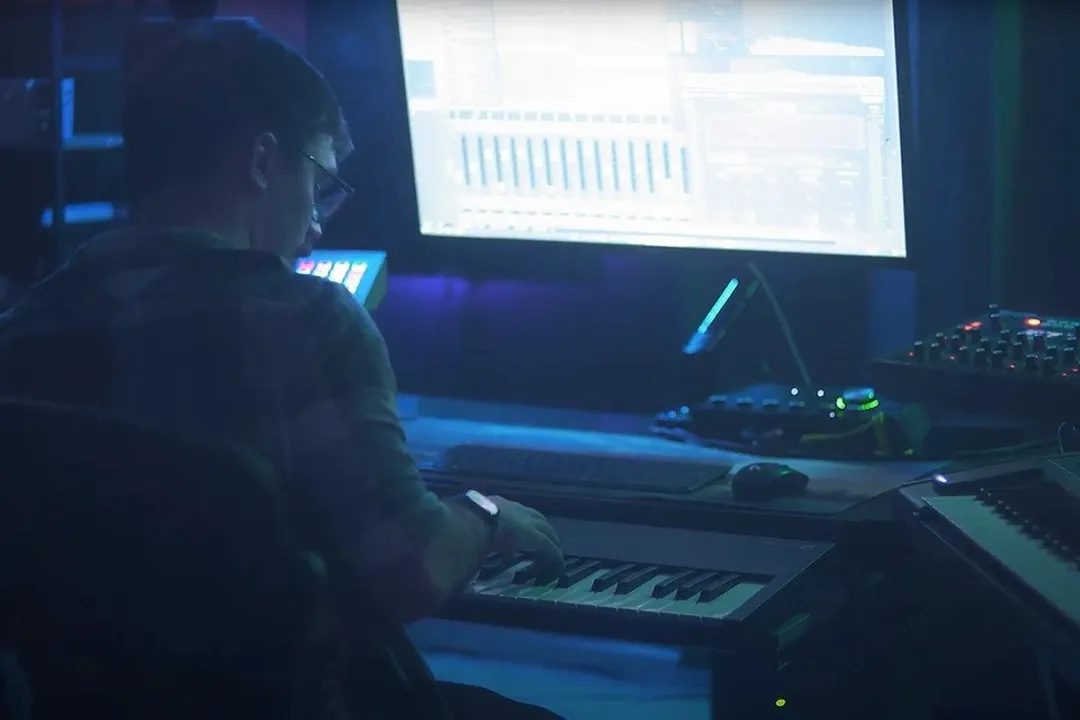
"Venus Theory" is associated with music creation, particularly within the realm of electronic dance music (EDM) and music technology. [7][10] Websites and social media channels dedicated to this name focus on tutorials, software guides, and the promotion of specific sounds or production techniques. [8] For example, guidance exists on how to create a track using this concept on specific digital audio workstations (DAWs) like Cubase, often utilizing Novation hardware controllers such as the Launchkey. [10]
This musical application of the theory seems to involve generating specific sonic textures or compositions that evoke a certain mood or aesthetic. [2] One way to think about this is less about composition rules and more about sound design. If one were to try and reverse-engineer the vibe implied by the name in a musical context—given the planetary inspiration—it might suggest sounds that are vast, perhaps slow-moving (like the slow rotation), yet intensely energetic or pressurized (like the atmosphere). [7] This translates musically to using heavy reverb, slow LFO sweeps, and possibly detuned or heavily modulated synthesizers to create an effect of scale and atmosphere. [7]
The community surrounding this musical entity appears active, with discussions ranging from sharing tracks to seeking technical advice on achieving the desired sound. [2][7] It signifies a brand or style that has gained traction among producers looking for inspiration outside mainstream trends. [8]
# Contextual Divergence
The stark contrast between a geological/atmospheric crisis spanning eons and a contemporary music production style highlights how powerful and flexible proper nouns or descriptive phrases can become in different cultural domains. [1][8] While the planetary theory seeks answers about habitability and climate catastrophe, the music theory offers a platform for artistic expression and technical instruction. [10]
Source material related to the general "Venus Theory" project suggests a broad, possibly multimedia approach, where the name is used across various creative endeavors. [1] This umbrella application further diffuses the meaning, confirming that the public encounter with the phrase often requires immediate context—are we reading a scientific journal or browsing a music production forum?. [1][7]
For instance, the existence of a dedicated website for the musical entity [8] and separate, detailed scientific papers on atmospheric loss [3] demonstrate that the search result for "Venus Theory" is inherently multifaceted. The planetary science deals with trust in modeling and observation (Authority/Expertise), while the music scene relies on community validation and practical application (Experience/Trust). [3][10]
Ultimately, whether contemplating the fate of a potentially habitable world billions of years ago or dialing in a filter sweep on a synthesizer today, the "Venus Theory" captures the imagination by invoking the mystery and overwhelming scale of our nearest planetary neighbor. [6][8] The scientific pursuit aims to know what happened; the artistic interpretation aims to feel something about it. The complexity of the planet itself ensures that any theory bearing its name will likely carry a degree of intrigue.
#Videos
The Hell Planet Next Door: Why Venus Terrifies Scientists - YouTube
Related Questions
#Citations
The Venus Theory - The Video Project
Venus Theory - YouTube
Researchers deal a blow to theory that Venus once had liquid water ...
Phases of Venus - Wikipedia
Astronomers deal a blow to theory that Venus once had liquid water ...
Theory proposes that Venus could have been habitable, but a large ...
Venus Theory : r/edmproduction - Reddit
Venus Theory | Home
How to make a track with Venus Theory on Launchkey with Cubase