How does a protostar generate energy?
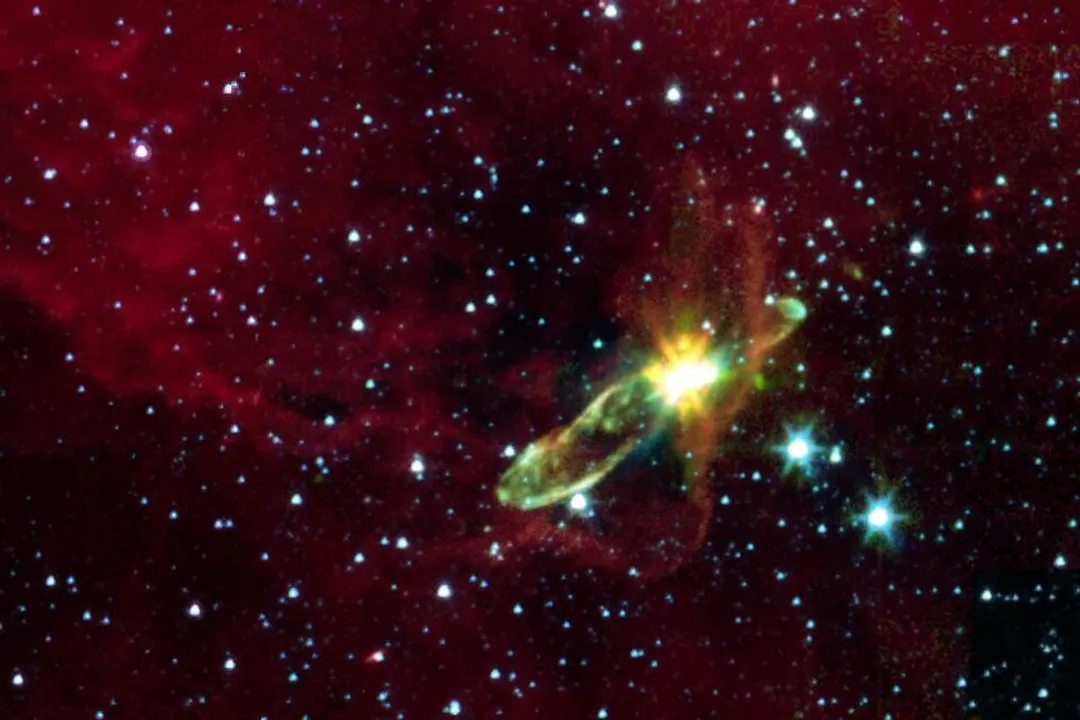
The creation of a star is not an instantaneous event but a drawn-out, tumultuous adolescence where gravity wrestles with physics to forge a stable nuclear furnace. Before a celestial body can be called a true star, capable of sustaining itself through thermonuclear reactions, it must pass through the phase of the protostar. This is the earliest stage in a star’s life cycle, a hidden embryonic form that spends its time deep within the cold, dark clouds of the interstellar medium.
A protostar is fundamentally defined by what it is not yet: its core is not hot or dense enough for efficient, sustained hydrogen fusion—the process that powers mature stars like our Sun. Yet, it shines. This early glow, this initial output of energy, comes from a purely mechanical process driven by the object’s very construction: the unstoppable inward pull of its own self-gravity. Understanding how this energy is generated requires looking past the eventual clean energy of fusion and focusing on the raw, chaotic power of collapse.
# Gravitational Heating
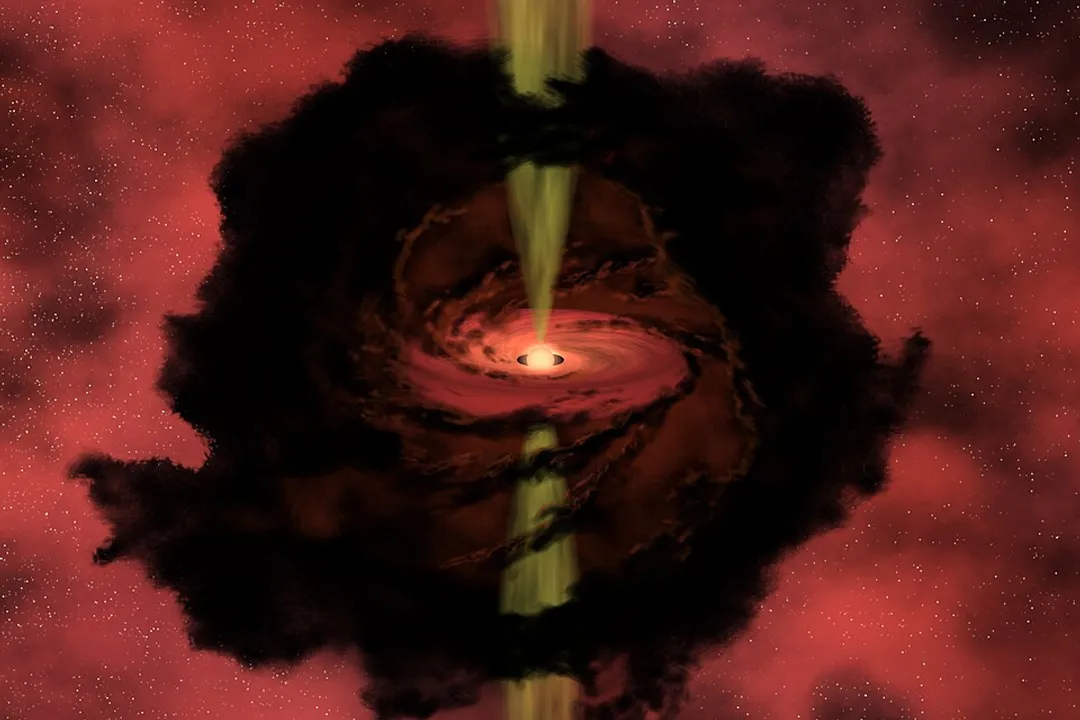
The story begins when a dense clump, or core, within a vast molecular cloud becomes gravitationally unstable. Once this trigger occurs, gravity relentlessly begins to compress the gas and dust inward. As matter falls toward the center, the gravitational potential energy that existed between the distant particles is converted into kinetic energy—the energy of motion—and then, through collisions and compression, into thermal energy—heat.
This conversion process is often described by the Kelvin-Helmholtz mechanism, the primary source of luminosity for a protostar. Imagine compressing a gas quickly; it heats up. The protostar is doing this on a colossal scale. As the object shrinks, its center grows hotter and denser. The energy liberated by this infall of matter is radiated away as light and heat, making the object visible, even if only faintly at first.
The density of the surrounding material plays a critical role here. Initially, the heat generated deep inside struggles to escape, which causes the internal temperature to soar. As the protostar gathers more mass through accretion—the process of pulling in surrounding material—this trapped radiation heats the interior even more rapidly. Interestingly, when observed, protostars are often more luminous than the subsequent pre-main-sequence (PMS) stars of similar size because the active process of accretion itself is generating so much energy from the impact of infalling gas onto the surface.
If we consider the total energy budget, the initial phase is dominated by this colossal conversion of gravitational energy. For a star like the Sun, this phase of gravitational collapse can last a considerable time, perhaps around 50 million years. Over this span, the energy released provides the star’s primary visibility. It is a useful comparison to note that while gravitational contraction drives the early visibility, the subsequent hydrogen fusion will power the star for billions of years. This means that for every joule of energy released by gravity during the protostar phase, many more joules will be released by nuclear fusion over the star's main sequence life; however, the rate of energy generation from contraction during the early collapse phase is what defines the protostar's observable existence. The physics dictates that half of the gravitational potential energy released during contraction is radiated away as heat, while the other half is retained as kinetic energy within the falling material, further heating the object.
# Deuterium Pause
Before the massive hurdle of regular hydrogen fusion can be cleared, the protostar often gets a temporary reprieve, fueled by a less demanding nuclear reaction. While the core temperature is not yet at the required to fuse normal hydrogen (protons) into helium, it can often reach about . At this intermediate temperature, the star can begin to fuse deuterium () into helium-3 ().
Deuterium is an isotope of hydrogen with one proton and one neutron, making it far easier to fuse than the simple proton-proton fusion. This deuterium burning becomes incredibly important because it releases a significant amount of energy that works against the ongoing gravitational squeeze.
When this reaction kicks in, it acts like a stellar thermostat. If the core contracts further, the temperature would rise, causing the deuterium fusion rate to spike, which in turn heats the surrounding plasma, causing it to expand and counteract the collapse. This establishes a quasi-equilibrium that can last for a period, sometimes extending for millions of years, depending on the object's mass. During this time, the deuterium burning supplies the vast majority of the thermal energy and luminosity, effectively halting the further contraction driven by gravity.
This phase is critical because it allows the object to accumulate more mass from its surroundings while maintaining a relatively stable radius and luminosity—a different evolutionary track than it would take without this energy source. For lower-mass objects, this deuterium-burning phase can be extended, allowing them to grow more massive before the final ignition.
# Structure and Shedding
The energy generated, whether from contraction or deuterium burning, is radiated outward, but much of it struggles to escape the natal environment. A protostar is typically swaddled in a thick, dusty envelope of gas and dust remaining from the original molecular cloud. This dust is highly effective at absorbing visible light, rendering the protostar invisible to optical telescopes. Observations are only possible by looking at longer wavelengths, such as infrared and millimeter radiation, which can penetrate the cloud.
The system's rotation is another major feature influencing its structure and energy output. As the initial cloud collapses, angular momentum is conserved, meaning the material spins faster as it shrinks. This rotational motion prevents all the material from falling directly onto the center, causing the gas and dust to flatten into a spinning protostellar disk surrounding the nascent star. This disk is the birthplace of future planetary systems.
This rapid rotation, coupled with strong magnetic fields generated by the spinning, conductive plasma, drives powerful outflows. Many protostars emit fierce bipolar winds and high-speed jets of gas that stream outward, typically aligned along the axis of rotation. These jets and winds are essential not just for shedding excess mass, but for revealing the protostar itself. Over time, these energetic outflows scour away the surrounding envelope of gas and dust. It is ironic that astronomers often detect these young objects not by their faint central glow, but by the visible signature of the jets colliding with surrounding interstellar medium.
When analyzing the rotational properties of these young systems, a fascinating pattern emerges. Protostars often exhibit much higher projected rotation velocities than the slightly older, pre-main-sequence stars that have already shed their envelopes. This difference suggests an active process is responsible for coupling the angular momentum of the surrounding material to the central object. One compelling model suggests that while the protostar is actively accreting material from its inner disk, it is closely coupled to that rapidly spinning material, effectively spinning it up. Once accretion slows down significantly, the object enters the PMS phase where "disk braking"—where the disk's magnetic influence tugs on the star—can slow the rotation down.
# Final Ignition
The entire protostellar episode concludes when the relentless compression finally forces the core temperature past the critical threshold for efficient, sustained fusion of ordinary hydrogen () into helium (). For a star like the Sun, this benchmark is about .
When hydrogen fusion begins, it generates a massive outward pressure from the energy of the emitted photons (radiation pressure). This outward pressure finally balances the crushing inward force of gravity, achieving a state known as hydrostatic equilibrium. This balance marks the end of the contraction phase and the beginning of the star’s long, stable adult life on the Main Sequence.
Not all collapsing masses achieve this necessary temperature. If the protostar’s mass is too low—less than about solar masses—the core never gets hot enough for sustainable hydrogen fusion. These "failed stars" become Brown Dwarfs, which shine dimly by cooling down and possibly burning their small reserves of deuterium before fading entirely. Conversely, stars that are too massive, exceeding about solar masses, generate such intense internal radiation pressure that gravity cannot contain them, and they risk blowing themselves apart before ever becoming stable stars.
The transition point is therefore a competition: gravity drives the object toward the heat of fusion, but the interim energy sources—gravitational collapse and deuterium burning—dictate the length and path of the journey. The mark is the ultimate finish line, a point of no return that transforms a mere gathering of gas into a shining, self-sustaining nuclear reactor.
Related Questions
#Citations
Protostar - Las Cumbres Observatory
Protostar - Wikipedia
Protostars and Nebulae - ASPIRE
What is the main thermal energy source for a protostar, the ...
Protostars | American Scientist
Nuclear Fusion in Protostars | ASTRO 801
Lecture 12: Star Formation
Fusion: The energy source of stars