What is the primary source of energy that causes a protostar to glow before sustained hydrogen fusion begins?
Answer
The inward pull of its own self-gravity
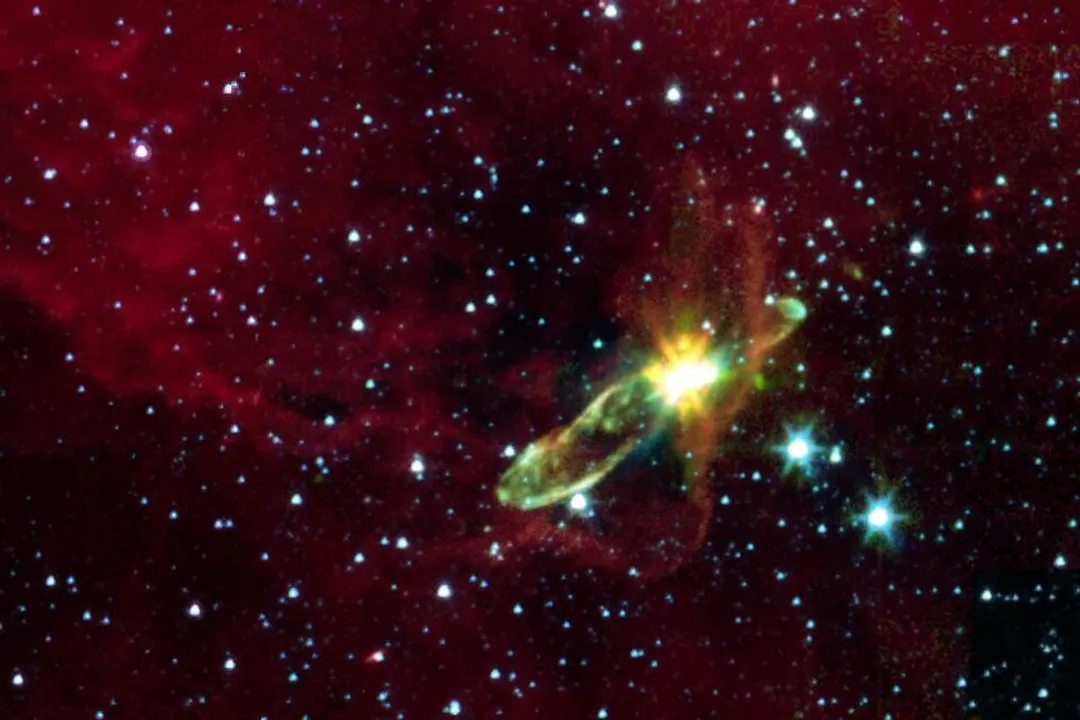
The initial energy output of a protostar comes from gravitational heating. As the object contracts, gravitational potential energy is converted into thermal energy, a process often described by the Kelvin-Helmholtz mechanism.
Related Questions
What is the primary source of energy that causes a protostar to glow before sustained hydrogen fusion begins?Which mechanism primarily describes the generation of luminosity through gravitational collapse in a protostar?Approximately how long does the gravitational collapse phase last for a star similar to our Sun?What process causes a protostar to gain mass from its surrounding environment?At what approximate core temperature can a protostar initiate the fusion of deuterium into helium-3?What temporary state is established when deuterium fusion generates energy that counteracts further gravitational collapse?What characteristic of the natal environment renders protostars largely invisible to optical telescopes?What structure forms around the protostar because the initial cloud's angular momentum is conserved during collapse?What powerful emission feature streams outward from the protostar, often aligned along the axis of rotation?What critical temperature must the core eventually reach to begin sustained, efficient fusion of ordinary hydrogen?