What core temperature must a Sun-like object reach to ignite sustained hydrogen fusion and become a Main Sequence star?
Answer
Approximately 10 million Kelvin ($10^7$ K)
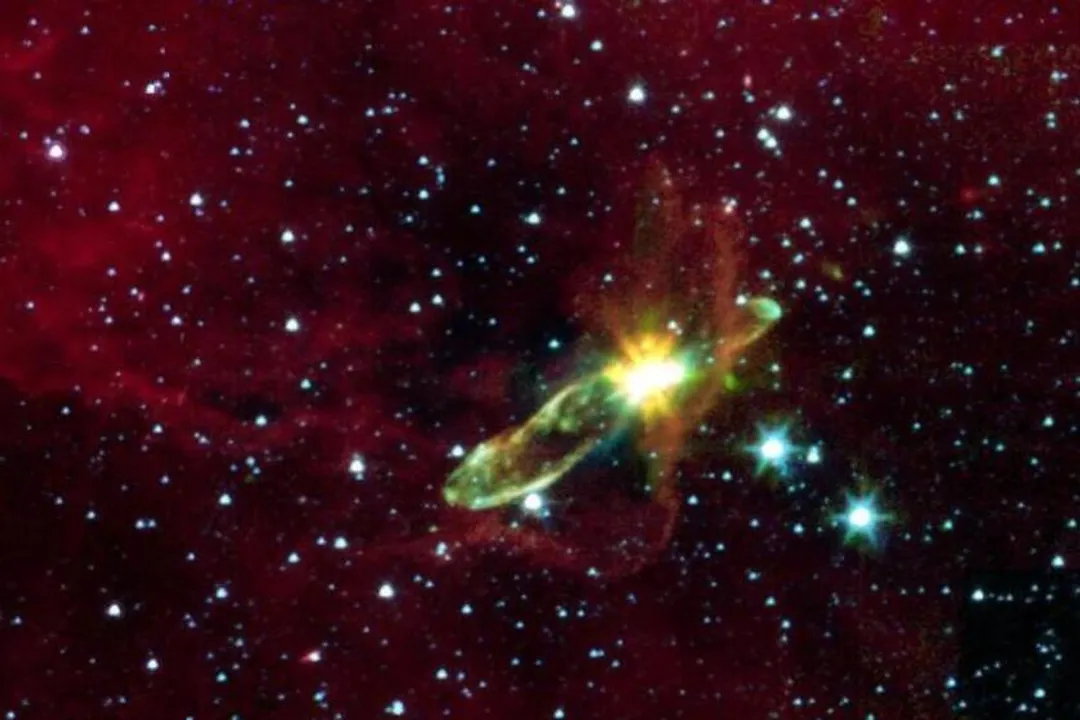
The transition from a protostar to a true star occurs when the core temperature and density are high enough to initiate sustained, self-sustaining hydrogen fusion, which requires a temperature threshold of about 10 million Kelvin for solar-mass stars.
Related Questions
What primarily powers the luminosity of a protostar before it becomes a true star?What core temperature must a Sun-like object reach to ignite sustained hydrogen fusion and become a Main Sequence star?What physical principle forces the rapidly shrinking, collapsing gas cloud into a spinning, flattened structure?How does the luminosity of a protostar compare to the main-sequence star it will eventually become?What type of radiation dominates the early emission from a protostar, making it invisible to standard optical telescopes?What role does deuterium burning play within the protostar core before hydrogen fusion ignites?What external event can serve as a trigger for the initial gravitational collapse leading to star formation?What process defines the object as a protostar rather than just a contracting dense core?When a star reaches the Zero-Age Main Sequence (ZAMS), what mechanism ultimately stops the rapid gravitational contraction?Why must astronomers use infrared telescopes to observe the ongoing accretion onto a protostar?