What type of energy are the Sun and stars?
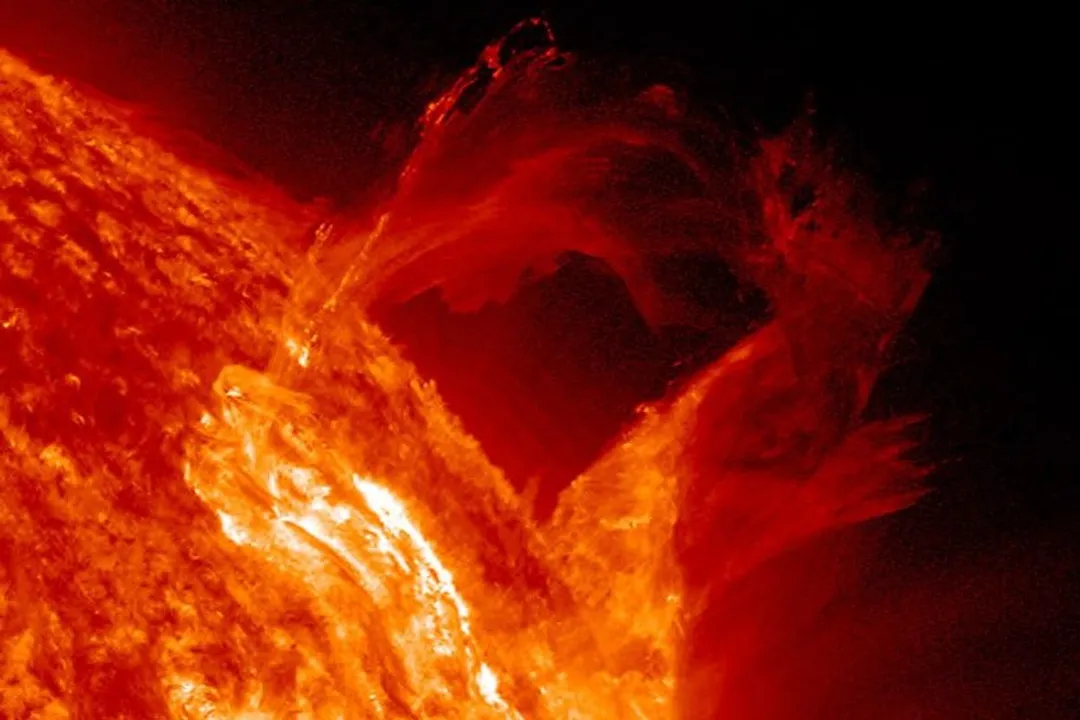
The Sun and every other star in the night sky function as immense, natural nuclear reactors. Unlike a fire on Earth, which relies on chemical combustion to release energy, the Sun relies on nuclear fusion to create light and heat. [3][5] This process involves the transformation of matter into energy within the extreme environment of a star’s interior. [7][8] By squeezing hydrogen atoms together under incredible pressure and temperature, stars act as cosmic engines that sustain life on planets like Earth. [1][4]
# Nuclear Fusion
At the heart of the energy generation process lies nuclear fusion. In the core of the Sun, temperatures reach approximately 15 million degrees Celsius, creating an environment where atoms cannot maintain their standard structure. [2][7] Instead of neutral atoms, the material exists as plasma, a soup of electrons and nuclei stripped away from each other. [2] Because these nuclei are all positively charged, they naturally repel one another, a force known as the Coulomb barrier. [5]
To overcome this repulsion, the density and temperature must be high enough to force the nuclei together. When the nuclei collide with enough velocity, they overcome the repulsion and fuse into a heavier element, specifically helium. [5][6] This fusion process releases a tiny fraction of the original mass as energy. [3] It is not a combustion reaction involving oxygen; rather, it is a subatomic reconfiguration that changes the fundamental nature of the matter involved. [8]
# Gravity's Role
If the Sun were simply a ball of gas, it would expand and cool instantly. The reason it remains stable for billions of years is gravity. [7] The immense mass of the Sun exerts a crushing gravitational force inward, pulling everything toward the center. [2] This gravitational pressure is what creates the high density required for fusion in the first place. [5]
There is a constant "tug-of-war" occurring inside every star. Gravity wants to collapse the star, while the energy produced by nuclear fusion pushes outward. [8] When these two forces balance, the star reaches what astronomers call hydrostatic equilibrium. [5] This equilibrium keeps the star stable, preventing it from either exploding or collapsing under its own weight. If the fusion rate drops, the star contracts, which increases the pressure, raising the temperature, and restarting the fusion rate. [2] This self-regulating mechanism is why stars can shine steadily for billions of years. [3]
# Energy Conversion
The connection between mass and energy is defined by Einstein’s famous equation, . [3][7] This equation dictates that energy () is equal to mass () multiplied by the speed of light squared (). Because the speed of light is a very large number, squaring it results in an astronomical value. [6] This means that even a tiny amount of mass can be converted into a tremendous amount of energy. [5]
In the Sun, four hydrogen nuclei fuse to create one helium nucleus. However, the resulting helium atom has slightly less mass than the four individual hydrogen protons that started the process. [2] This "missing" mass—about 0.7 percent of the original—is released as energy. [3] The Sun converts roughly 600 million tons of hydrogen into 596 million tons of helium every second. [2] The 4 million tons of "missing" mass are transformed into the light and heat that radiate throughout the solar system. [2]
# Energy Comparison
To understand the scale of this energy release, it helps to compare nuclear fusion with traditional chemical energy sources.
| Feature | Chemical Burning | Nuclear Fusion |
|---|---|---|
| Source | Electron interactions | Nuclear interactions |
| Efficiency | Relatively low | Extremely high |
| Byproducts | CO2, water, ash | Helium, neutrinos, radiation |
| Requirement | Oxygen and fuel | High heat and pressure |
| Duration | Short-lived | Billions of years |
While burning wood releases energy from the rearrangement of chemical bonds between molecules, fusion releases energy from the rearrangement of nucleons (protons and neutrons) inside the atomic nucleus. [8] This is why a small amount of fusion fuel can provide power for a duration that chemical reactions simply cannot match. [3]
# Stellar Lifecycle
Not all stars will burn the same way forever. The fusion process consumes hydrogen, the most abundant fuel in the universe. [5] Eventually, a star will run out of hydrogen in its core. When this happens, the balance between gravity and internal pressure is disrupted. [2] The core begins to contract again, which raises the temperature even further, allowing the star to begin fusing heavier elements like helium into carbon and oxygen. [2][7]
This progression marks the aging of a star. As the star switches fuels, it often expands into a red giant, cooling on the surface but burning hotter in the core. [2] This cycle continues until the star can no longer generate enough outward pressure to counteract gravity. Depending on the star's initial mass, it will either end its life as a white dwarf, a neutron star, or, in the most massive cases, collapse into a black hole. [2][7] The energy type remains nuclear fusion throughout these stages, though the specific elements being fused change as the star evolves. [5]
# Analyzing Efficiency
One interesting analytical perspective involves the sheer volume of energy production relative to human consumption. The Sun emits energy at a rate of roughly watts. [2] To visualize this, consider the total annual energy consumption of the entire human civilization on Earth, which is roughly Joules. The Sun radiates enough energy in a single second to satisfy the energy needs of the entire human population for over 500,000 years.
This disparity highlights why solar energy is such a powerful resource. We do not need to replicate the conditions of the Sun's core to harvest its output. Instead, we use photovoltaic cells or thermal collectors to capture the energy that has already been "processed" and radiated across the vacuum of space. [9] The fusion reaction is so efficient that the Sun loses only a fraction of its total mass over billions of years, remaining largely unchanged in size while acting as a reliable, long-term power source. [2][7]
# Measuring Output
While we cannot visit the core of the Sun to measure its energy directly, scientists determine the energy type and output using spectroscopy. [2] By analyzing the light coming from the Sun, we can see absorption lines that reveal the chemical composition of the solar atmosphere. [2] Since we know what elements are present and the temperature of the photosphere, we can calculate the internal pressure and the fusion rate required to maintain the Sun's current luminosity. [8]
This observational data confirms that the Sun is composed primarily of hydrogen (about 73 percent) and helium (about 25 percent). [2] If the Sun were powered by gravitational contraction alone—slowly shrinking to release energy—it would have run out of energy in a few million years, which contradicts the geological evidence that Earth and the Sun are billions of years old. [3][7] This confirms that nuclear fusion is the only viable mechanism capable of providing the sustained energy output we observe. [5]
# Solar Impacts
The energy generated by the Sun does more than just shine light on Earth; it drives the entire solar system's climate and weather patterns. [9] The radiative energy travels outward through the radiative and convective zones of the Sun before reaching the photosphere, where it is released into space. [8] This light takes roughly eight minutes to reach Earth. [2] Once it arrives, it interacts with the atmosphere and surface, driving the water cycle, wind patterns, and photosynthesis. [9]
Understanding that this energy originates from subatomic fusion helps clarify the nature of solar flares and coronal mass ejections. [7] These events are essentially magnetic disruptions caused by the boiling, convective motions of the Sun’s plasma. [2] Because the Sun is a dynamic ball of conductive gas, the motion of charged particles creates magnetic fields. [2] When these fields become tangled and snap, they release bursts of energy that can impact satellites and power grids on Earth, reminding us that the Sun is a volatile and active nuclear engine. [7]
#Videos
The Sun: Star of Our Solar System - Energy, Structure & Role I ...
Related Questions
#Citations
Our Sun: Facts - NASA Science
Sun - Wikipedia
What is the main source of energy of the sun and stars? - Quora
Learn About The Sun & Stars | Science Lesson for Kids | Grades 3-5
Star Energy | Physical Geography - Lumen Learning
The Sun: Star of Our Solar System - Energy, Structure & Role I ...
The Sun, our Solar System's star | The Planetary Society
Solar structure and energy | Research Starters - EBSCO
Types of Energy from the Sun - UCAR Center for Science Education