How do protostars generate heat?
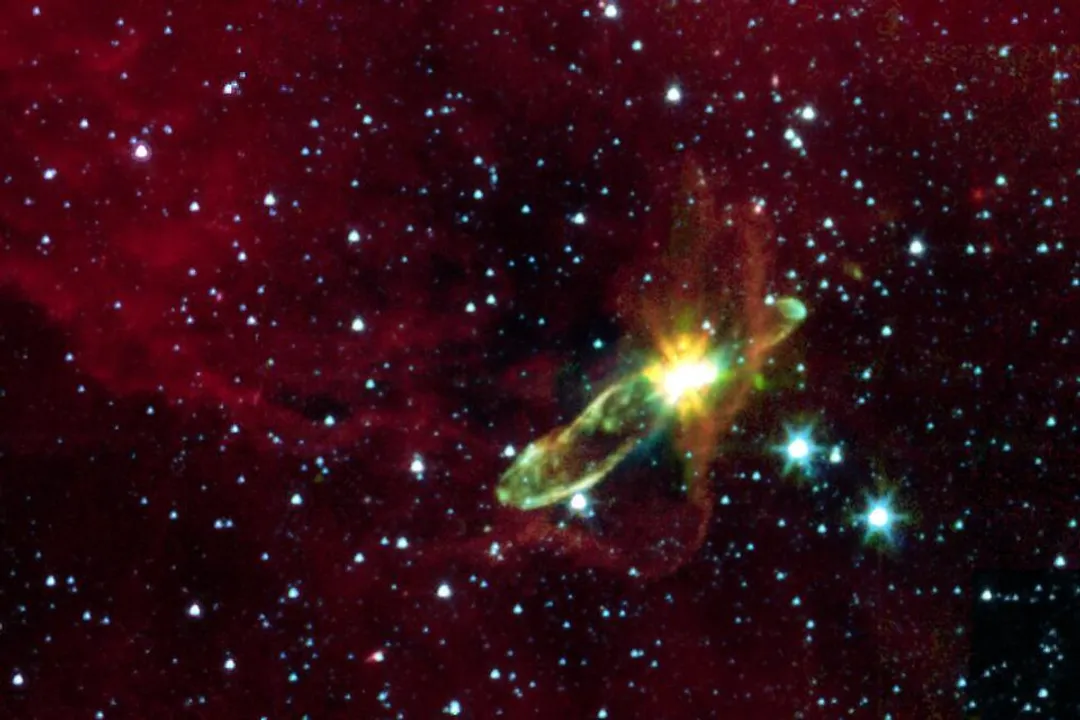
The fiery heart of a newborn star doesn't begin with the spectacular ignition of nuclear fusion. Before a true star switches on its internal furnace, it spends a crucial period generating light and warmth through a much older, more fundamental cosmic process: gravity pulling things together. A protostar is essentially a massive ball of gas that has gathered enough mass from its parent molecular cloud to become gravitationally bound, but its core has not yet reached the staggering temperatures and pressures required to fuse hydrogen into helium. [1][7]
The sheer scale of this gravitational collapse dictates how much energy is released. Consider a vast, cold, dark region within a giant molecular cloud, perhaps disturbed by a passing shockwave. This dense clump begins to contract under its own weight. [7][8] As this immense cloud shrinks, the material at the edges falls inward toward the center of mass. This inward fall is the engine driving the heat, converting potential energy into kinetic energy, and then into thermal energy. [4]
# Cloud Origins
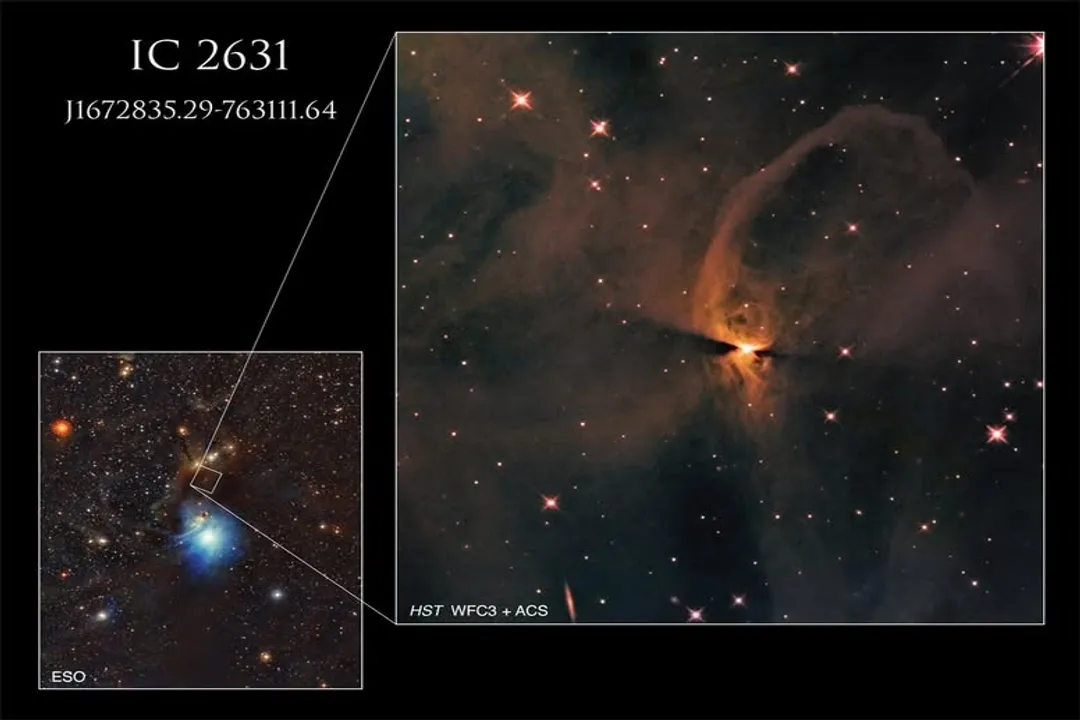
The starting material for any star, including our Sun, is an interstellar cloud made up primarily of cold hydrogen and helium gas, along with trace amounts of heavier elements and dust. [1][2] These clouds are incredibly cold, often hovering just a few tens of degrees above absolute zero. [7] In this state, the gas particles move slowly, and the internal pressure is very low. For collapse to begin, the mass of a particular region must exceed a certain threshold, allowing gravity to overcome the slight outward pressure from the cold gas. [8] Once this tipping point is reached, the process becomes self-accelerating: the more the clump contracts, the stronger the central gravity, and the faster the infall continues. [7]
# Gravitational Power
The primary source of thermal energy powering a protostar is this ongoing gravitational contraction. [4][5] Think of it like compressing a spring; the stored energy is released as the compression happens. In the astronomical context, gravitational potential energy—the energy an object possesses due to its position in a gravitational field—is being converted directly into heat. [4]
As vast amounts of gas rush inward toward the center, the particles collide violently with each other and with the existing material near the core. These high-speed impacts instantly translate kinetic energy into thermal energy, raising the temperature of the gas. [4] The resulting object is intensely luminous, shining brightly in infrared light because the obscuring layer of infalling dust and gas traps much of the heat near the core, re-radiating it at longer wavelengths. [1][7]
# Contraction Physics
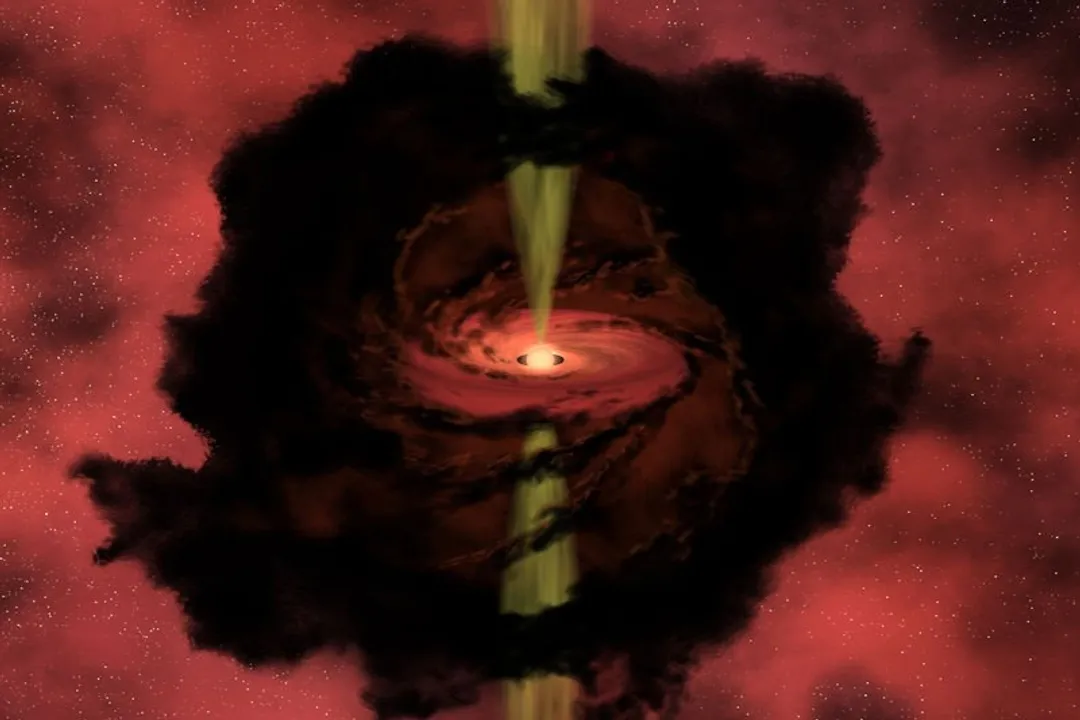
The physical mechanism responsible for this conversion is sometimes referred to in astrophysics as the Kelvin-Helmholtz mechanism, which describes the slow contraction of a celestial body that is not undergoing nuclear fusion. [5] This process is familiar even closer to home, as brown dwarfs and large gas giants like Jupiter generate their heat primarily through this same method: gravitational contraction. [5][6]
However, the scale matters immensely. While Jupiter slowly radiates away the heat from its formation, a stellar-mass protostar is destined for a much more dramatic end state. The difference lies in the final equilibrium: Jupiter or a brown dwarf settles into a stable size where gravity and internal thermal/degeneracy pressure balance, radiating away its birth heat slowly over billions of years. [5] A protostar, if it gathers enough mass (at least about $0.08$ times the mass of the Sun), cannot stop contracting. Its gravitational potential is so immense that the temperature and pressure in the core will continue to rise unchecked by the internal pressure until the conditions for fusion are met. [1][5] When comparing the sheer amount of potential energy released by a star collapsing from a vast molecular cloud versus a planet collapsing from a protoplanetary disk, the star releases orders of magnitude more energy simply because the final density required for fusion is so much higher than the density needed for a stable gas giant. [5][6]
# Fusion Threshold
The protostar phase is inherently temporary, defined by the physics it lacks. The contraction will proceed, raising the central temperature steadily. [4] This heating continues until the core temperature hits approximately 15 million Kelvin. [1] At this critical temperature and the associated pressure, the electrostatic repulsion between hydrogen nuclei is finally overcome, allowing them to combine in the proton-proton chain reaction, initiating sustained nuclear fusion. [1]
The moment fusion begins, the immense outward pressure generated by the thermonuclear reactions perfectly balances the inward crush of gravity. The object stops contracting, stabilizes its core temperature, and transitions from a protostar to a main-sequence star. [1][5] This transition marks the end of the heat generation derived solely from gravitational collapse.
This distinction between pre-fusion heat and fusion heat is vital for understanding stellar life cycles. If a collapsing object does not accumulate enough mass to reach that $15$ million Kelvin milestone, it will simply cool down and fade away, perhaps becoming a brown dwarf—a celestial object that is not quite a star. [5] The duration of the protostar phase, therefore, is entirely determined by the rate at which the infalling material feeds the growing core and the efficiency of gravitational energy conversion. A slightly more massive initial core may reach the fusion threshold much faster, shortening the period where infrared emission dominates the star's observable signature.
# Accretion Effects
The heat generated by contraction plays a direct role in how the star grows. The material falling onto the protostar, known as the accretion envelope, is constantly being compressed and heated by the growing central object. [7] Furthermore, the rotation present in the initial cloud fragments and contracts along with the mass, leading to the formation of an accretion disk around the protostar. [1] The friction and compression within this disk, a miniature version of the central process, also generate heat, contributing significantly to the system's overall infrared output before the star fully forms. [7] This entire complex system—the core, the infalling envelope, and the surrounding disk—is a giant radiator, constantly shedding the heat generated by gravitational collapse into the cold vacuum of space. [1]
Related Questions
#Citations
Protostar - Wikipedia
Star Basics - NASA Science
Lecture 12: Star Formation
What is the main thermal energy source for a protostar, the ...
When a star is forming does it reach a critical temperature and 'turn ...
Protostars and gas giants generate heat via the Kelvin ... - Quora
Star Formation - THE INFRARED UNIVERSE - IPAC/Caltech
Protostar - Las Cumbres Observatory
Stars take shape within vast clouds of gas and dust, like ... - Facebook