How does a star heat up?
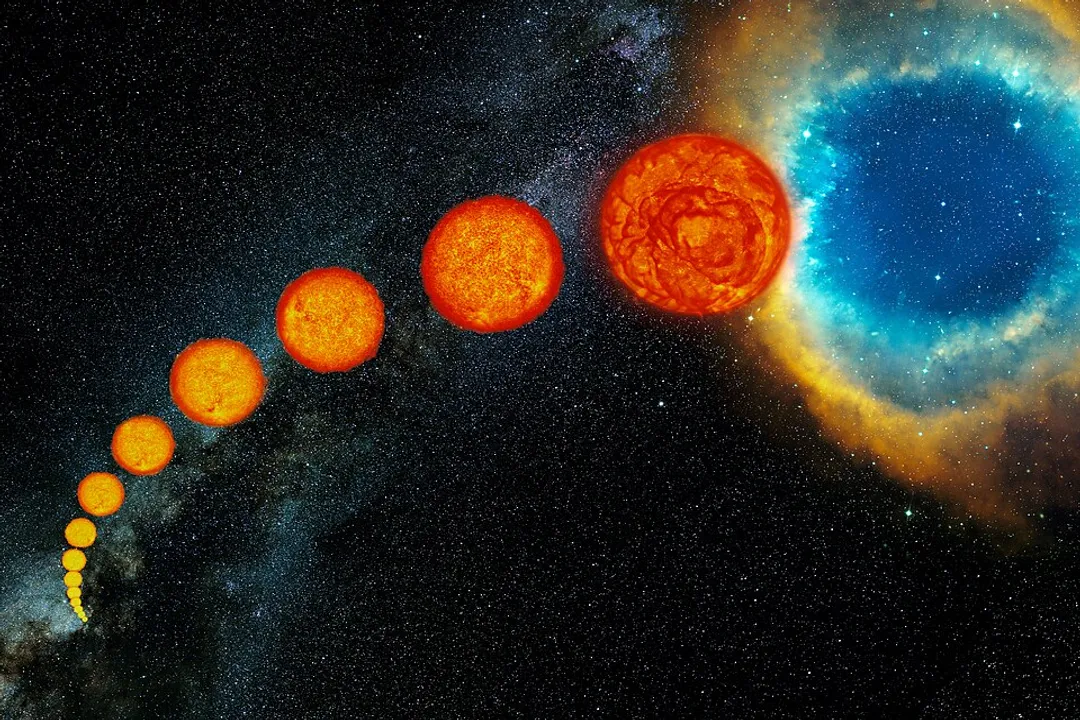
The fiery radiance we observe from a star is the result of an incredibly energetic process that begins long before fusion ignites, rooted in the fundamental forces of the cosmos. A star doesn't simply appear hot; it must undergo a dramatic transformation where gravitational energy converts into the thermal energy that defines its existence. This entire sequence, from a cold cloud of gas to a stable, shining sphere, is part of a grand process known as stellar evolution.
# Cloud Formation
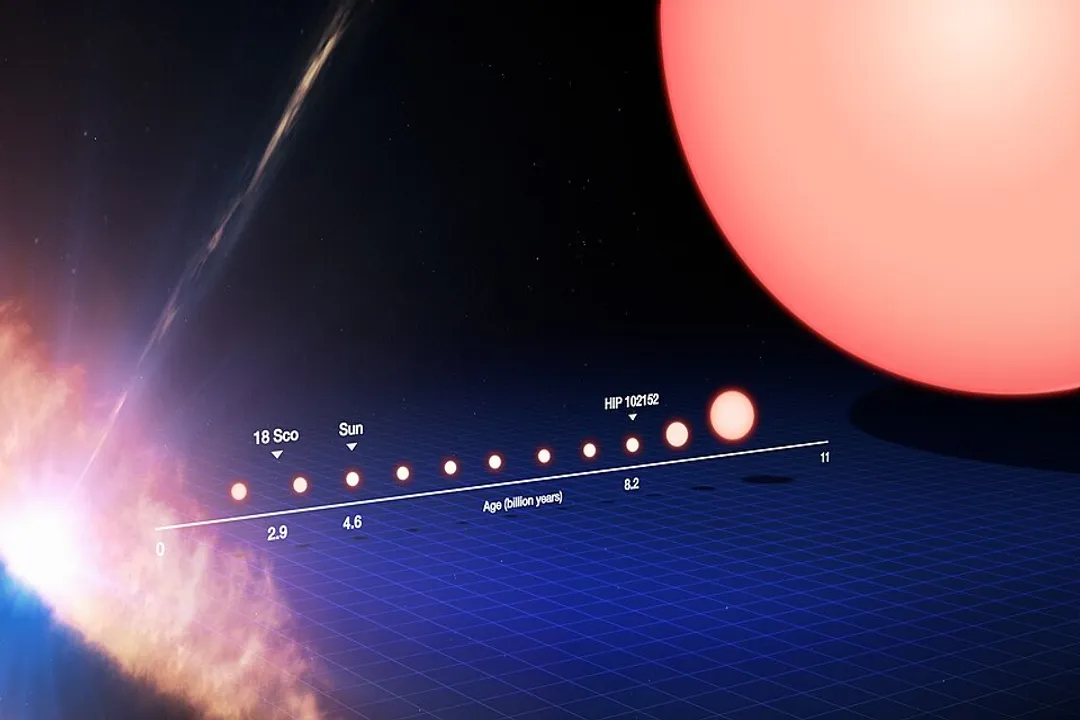
Before any light is emitted, the raw material for a star—a vast, cold, diffuse molecular cloud primarily composed of hydrogen and helium—begins to coalesce. A trigger, perhaps a passing shockwave or local instability, causes a denser region within this cloud to begin collapsing under its own gravity. As this enormous mass of matter contracts inward, the gravitational potential energy stored in the widely separated particles is transformed into kinetic energy, which immediately manifests as heat. This initial heating is gradual but relentless. The contracting mass forms a dense, hot core known as a protostar. Even at this stage, the object glows faintly due to this gravitational contraction, though it has not yet achieved the true definition of a star.
# Core Ignition
The protostar continues to shrink, and its core density and temperature climb higher and higher. This phase is essentially a race against collapse, where the rising internal heat must eventually balance the overwhelming force of gravity trying to crush the object inward. The critical moment arrives when the core temperature reaches an extraordinary threshold—approximately 15 million degrees Celsius (around 27 million degrees Fahrenheit). At this specific, extreme temperature and density, the kinetic energy of the hydrogen nuclei becomes high enough to overcome their mutual electrostatic repulsion. When they collide with sufficient force, they fuse together to form helium nuclei. This process, nuclear fusion, releases vast quantities of energy, vastly exceeding the energy generated by mere gravitational contraction. This sudden release of thermonuclear energy finally halts the collapse and establishes a stable, self-luminous star.
# Hydrogen Burning
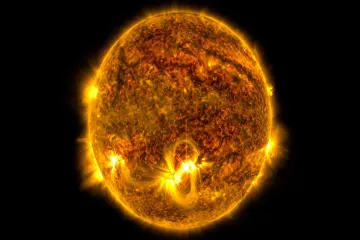
Once ignited, the star settles into its longest and most stable phase: the main sequence. During this extended period, the star achieves a state of hydrostatic equilibrium. This means the outward pressure created by the continuous energy generation in the core perfectly counteracts the inward pull of gravity exerted by the star's massive outer layers. The heat that sustains the star day in and day out comes almost entirely from this steady conversion of hydrogen into helium in its innermost region. It is this ongoing thermonuclear furnace that defines the star's steady output of light and heat. The physical relationship between the star's mass and its internal temperature is very strong; a more massive star has significantly stronger gravity, requiring a much hotter, faster-burning core to maintain that equilibrium against the greater weight.
# Central Pressure
It is crucial to understand that the heat is not uniformly distributed throughout the star; rather, the hottest region is always the very center. This steep temperature gradient exists because of the sheer physical weight of the star's material above the core. For a star like our Sun, the pressure in the core is immense—millions of times greater than the pressure we experience at sea level on Earth. It is this crushing pressure that packs the hydrogen fuel so tightly and forces the protons to collide with enough violence to initiate fusion. Think of it like trying to compress a gas in a very strong container; the more you compress it, the higher the internal energy (temperature) rises. In the star, gravity acts as the infinite compressor. Any reduction in core temperature would allow gravity to win temporarily, causing the core to contract, which in turn increases the temperature and pressure until fusion speeds up again to restore balance.
# Long Equilibrium
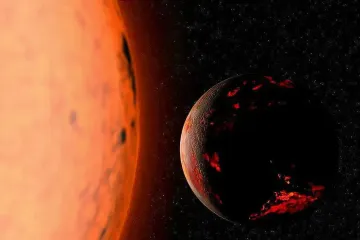
The duration of this hydrogen-burning phase is entirely dependent on the star's initial mass. Stars that are born with far greater mass than the Sun possess much greater core temperatures and burn through their hydrogen fuel at an astonishing rate. While a star like the Sun is expected to shine steadily for roughly ten billion years on the main sequence, a star ten times more massive might exhaust its core fuel in only a few tens of millions of years. This comparison illustrates the extreme sensitivity of the fusion rate to the core conditions. While the energy generation mechanism remains the same—hydrogen to helium—the speed at which the reaction proceeds is dictated by how effectively gravity has managed to compress and heat the core during the star's birth.
The process of heating up is, therefore, a continuous feedback loop. Gravity pulls; the core compresses and heats up; if the temperature reaches the fusion threshold, the outward energy production pushes back, creating a stable, hot star. The ongoing heat is the result of mass being converted into energy via Einstein's famous equation, , a process far more efficient than the initial heating generated purely by gravitational contraction. When the core eventually exhausts its hydrogen supply, the outward pressure drops, gravity briefly takes over again, causing the core to contract and heat up even more intensely. This secondary heating allows the star to ignite heavier elements, such as fusing helium into carbon, leading to the next, often more luminous, evolutionary stages.
Related Questions
#Citations
Stellar evolution - Wikipedia
Question about why stars are hotter in the middle : r/AskPhysics
What Makes Stars Hot? - Astronomy Stack Exchange
Stars and their life-cycle (article) | Khan Academy
How do stars produce the heat and light energy they give off? - Quora
Untitled
Star Life Cycle - ASPIRE
The Life Cycles of Stars - Imagine the Universe! - NASA