What energy source drives the initial heating of the collapsing mass forming a protostar?
Answer
Gravitational potential energy transforming into kinetic energy and heat
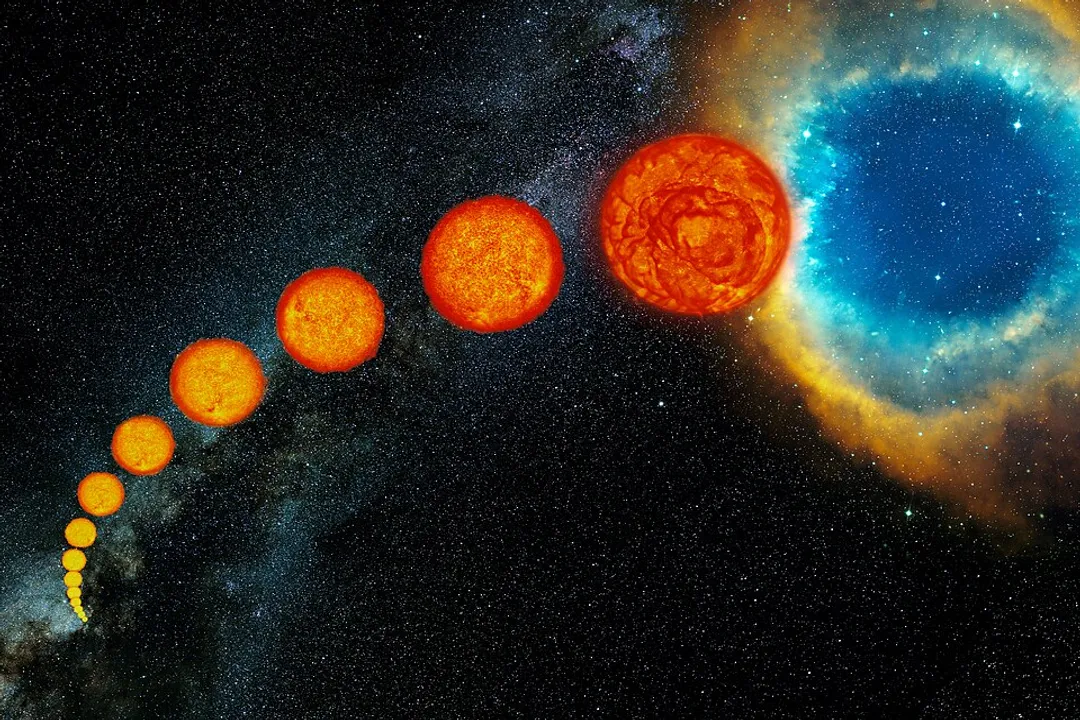
The formation of a protostar begins when a dense region in a molecular cloud starts to contract under its own gravity. As this massive aggregation of gas and particles pulls inward, the energy stored in their widely separated positions, known as gravitational potential energy, is converted into kinetic energy. This kinetic energy manifests immediately as thermal energy, causing the core temperature to rise relentlessly. This process is essential because it dictates the initial warmth the core possesses, setting the stage for the much more powerful nuclear reactions to follow, although the protostar itself does not yet generate significant light through fusion.
Related Questions
What energy source drives the initial heating of the collapsing mass forming a protostar?What critical temperature threshold must the protostar core exceed for nuclear fusion to commence?What state describes the balance between opposing forces within a star during its main sequence phase?What is the specific conversion process powering the star during the Hydrogen Burning phase?What physical element contributes to the steep temperature gradient and immense pressure at the star's center?How does the lifespan of a Sun-like star compare to a star ten times its mass on the main sequence?What process allows a star to ignite heavier elements after the core hydrogen supply is depleted?What is the immediate result of converting gravitational potential energy during the initial collapse of the molecular cloud?What relationship links the star's mass to the required core temperature for maintaining stability?Which famous equation describes the energy generation far exceeding gravitational heating during ongoing fusion?