What is the heat of the core of a star?

The heart of a star is an environment defined by extremes, a place where matter is compressed to incredible densities and heated to temperatures that dwarf any terrestrial experience. This central region, known as the stellar core, is not merely the hottest part of a star; it is the engine that provides the outward pressure necessary to balance the crushing force of the star’s own gravity, a dynamic balance scientists term hydrostatic equilibrium. Without this furious internal heat, generated by nuclear reactions, a star would simply collapse under its mass. The specific temperature achieved in this zone is the single most important factor determining a star’s lifespan, its fusion processes, and its final fate.
# Fusion Threshold
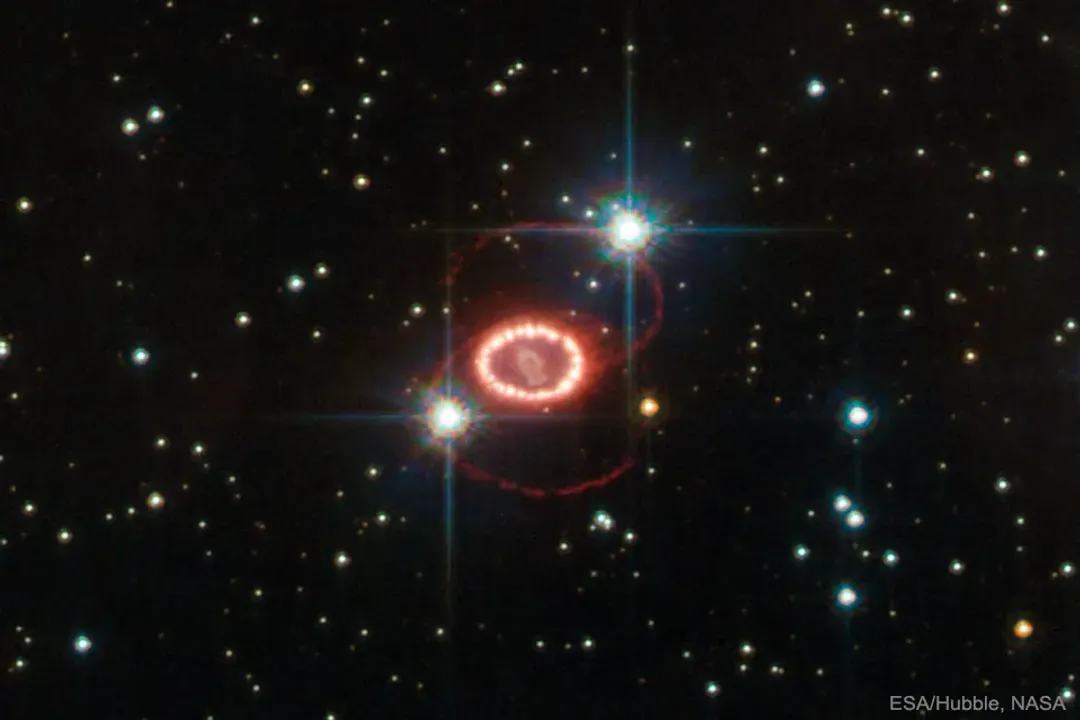
For any celestial body to genuinely qualify as a star—a brilliant, self-sustaining sphere of hot gas—its core must achieve a critical temperature high enough to initiate thermonuclear fusion. This minimum threshold is consistently cited at approximately 10 million Kelvin (), or , which is equivalent to about $15$ million degrees Celsius (). Below this temperature, even though the gas is extremely hot, the kinetic energy of the hydrogen nuclei is insufficient to overcome the electrical repulsion that keeps them apart, preventing them from fusing.
Only objects massive enough to generate this heat can sustain this reaction. The least massive object capable of sustaining hydrogen fusion in its core is about $7.5%$ the mass of the Sun (); anything smaller fails to reach the necessary core temperature and settles into the state of a brown dwarf. Once this minimum thermal requirement is met, the primary energy-generating mechanism begins: the fusion of four hydrogen nuclei into a single helium atom.
# Sun’s Inner Furnace

Our own Sun, an average main sequence star, provides the most familiar benchmark for these conditions. In the Sun’s core, the temperature reaches precisely 15,000,000 K. This furnace is not some vast volume; rather, it occupies only about $20%$ of the Sun's total radius, equating to a diameter of roughly $278,000$ kilometers. Within this relatively compact space, the density skyrockets, exceeding . This immense pressure, combined with the staggering heat, is what creates the thermal pressure pushing outward, perfectly counteracting the inward tug of gravity, keeping our solar system stable.
The energy produced by fusion is transported outward through the surrounding stellar envelope, eventually radiating away from the surface (photosphere), which maintains a much cooler temperature of around . For a star like the Sun, this core hydrogen-fusing phase, the majority of its stable life, lasts for about ten billion years.
# Varying Stellar Cores

The core heat is deeply tied to the star’s initial mass. While the Sun burns at , larger stars possess significantly hotter cores and burn through their fuel much faster. Stars with about $1.5$ times the Sun’s mass can have core temperatures reaching . The largest stars can see their cores hit temperatures around 18 million Kelvin and utilize a different fusion pathway entirely.
For stars below the Sun’s mass, the process is simpler, primarily relying on the proton-proton () chain reaction. In contrast, stars exceeding about generate a greater proportion of their energy via the cycle, which uses carbon, nitrogen, and oxygen as intermediaries to fuse hydrogen into helium. This difference in mechanism leads to profound structural consequences.
One interesting way to view this is to recognize the fundamental difference in how these two processes respond to small temperature fluctuations. The cycle is far more temperature-sensitive than the chain reaction. This increased sensitivity in massive stars creates a much steeper thermal gradient from the center outward. This gradient is so pronounced that it destabilizes the plasma, resulting in a convective core where energy is transported via the bulk movement of hot material rising and cooler material sinking. In contrast, lower-mass stars often develop a radiative core where energy diffuses slowly through photons, overlaid by a thin convection zone just beneath the surface. In essence, the precise temperature dictates the dominant reaction, and the dominant reaction dictates the core’s internal structure and energy transport efficiency.
# Second Stage Heat
A star’s life does not end when its core hydrogen is exhausted; it simply transitions to a new, hotter phase requiring a greater degree of compression and heat. Once the core is predominantly helium, fusion in the center ceases, causing the core to contract under gravity. This contraction dramatically increases the core’s temperature, eventually igniting hydrogen fusion in a shell surrounding the inert helium core, causing the star to expand into a red giant.
For stars similar to the Sun, this contraction continues until the helium core becomes hot enough to ignite helium fusion via the triple-alpha process, where helium fuses into carbon. For stars up to about $1.5$ times the Sun’s mass, this core becomes degenerate before ignition, meaning pressure is supported by quantum mechanical effects (electron degeneracy pressure) rather than just thermal gas pressure. When this degenerate core finally reaches the necessary temperature—around —the ignition is explosive and sudden across the entire volume, an event called the helium flash, which lifts the core out of degeneracy without being visible on the surface. In Sun-like stars, the core temperature during helium burning can rise to the tens of millions of Kelvin. Stars significantly more massive than the Sun avoid this degeneracy and heat up more smoothly, initiating core helium fusion as soon as their main sequence hydrogen supply is depleted.
# Extreme Temperatures
The most dramatic heating events occur in stars exceeding about $8$ to $20$ times the mass of the Sun. These massive stars continue fusing elements heavier than carbon in their cores once helium is spent. As the core contracts and heats in successive stages, it generates progressively heavier elements, from oxygen and neon up through silicon, until the core is entirely composed of iron. At this point, fusion stops because fusing iron consumes energy rather than releasing it, and the core can no longer support itself against gravity.
This marks the transition to catastrophic heat. The core collapses inward until the temperature spikes to an incredible where carbon atoms fuse into elements like oxygen and nitrogen in the stages leading up to iron. When the final collapse occurs, leading to a supernova, temperatures can reach . The sheer physics of this instantaneous gravitational crunch drives temperatures to levels that seem almost incomprehensible. When a core collapses to form a neutron star, the initial interior temperature can crest around 1 trillion Kelvin (). If the core is massive enough (), it continues to collapse past the neutron star stage into a singularity—a black hole—where the temperatures required at the center must become even higher, though this is beyond what can be directly observed.
It is a sobering thought to compare the starting temperature for life——with the temperatures reached when fusion fails. The collapse to a neutron star involves core temperatures exceeding 100 Billion Kelvin. This means the final heat generated by gravity during the collapse is nearly ten times greater than the steady-state heat required for the star to be born and live for billions of years. The transformation of stellar matter from a controlled fusion reaction to a free-fall implosion results in an exponential leap in thermal energy.
# Stellar Remnants
Even after the supernova explosion, the collapsed cores remain staggeringly hot, though their surface temperatures are lower than their core peak. A young white dwarf, the remnant of a solar-mass star, can have a surface temperature of or more, potentially hotter than the surface of some blue supergiants. For the cores that become neutron stars, they initially reach trillions of Kelvin internally, but their surfaces rapidly cool; even after just a few years, they may settle to surface temperatures around . These neutron stars represent the densest, non-singular objects known, a testament to the colossal heat and pressure they endured during their formation.

# Core’s Influence
The heat within a stellar core is more than just a measurement; it is the active ingredient in a star's existence. From the modest required to start the engine of our Sun to the multiple billions of degrees needed to forge heavy elements, the core’s temperature dictates which fusion processes are active and how rapidly the star consumes its fuel. The calculations used to model these internal conditions often rely on density distribution models, where a more realistic model, like the linear density profile, yields slightly different, yet still comparable, estimates for central temperature than a simpler constant density model. Ultimately, the entire stellar structure, from its size to its light output, is a direct consequence of the pressure wave originating from this small, intensely hot center.
Related Questions
#Citations
Stellar core - Wikipedia
Stars - StarChild - NASA
How hot is the core of a star just before it collapses to form a black ...
Section 2.3 - Stellar Evolution - Astronomical Returns
How hot are the hottest stars in the Universe? - Big Think
Core of a Star - Universe Today
Pressure and Temperature Inside Stars