What is the core of a giant star?
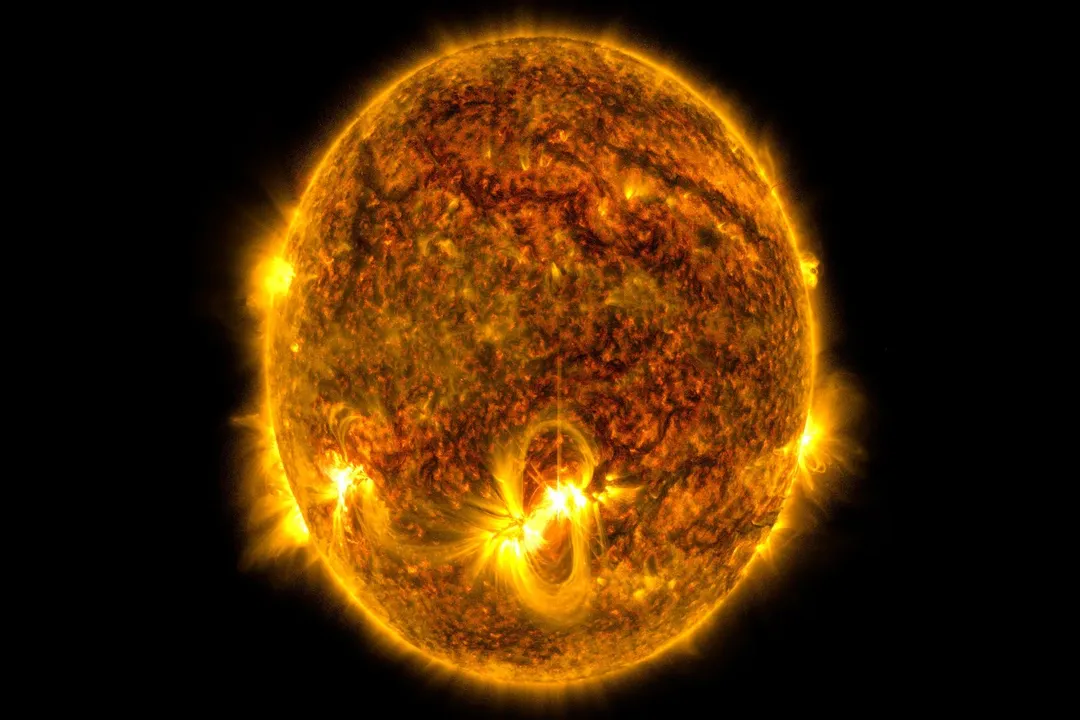
The heart of any star, regardless of its eventual size, is an environment unlike anything else in the cosmos. It is the place where gravity and energy wage a perpetual, balanced conflict, defining the star's entire existence. [7] For a star classified as a giant star—one that has swelled far beyond the dimensions of its main-sequence youth—this core has undergone profound transformation. It is no longer the simple hydrogen-fusing furnace that characterized its earlier life; instead, it represents the accumulated, processed fuel of billions of years. Giant stars are, by definition, stars that are much larger than the Sun, often indicating they are well into the later stages of their stellar life cycles. [2]
# Fusion Site
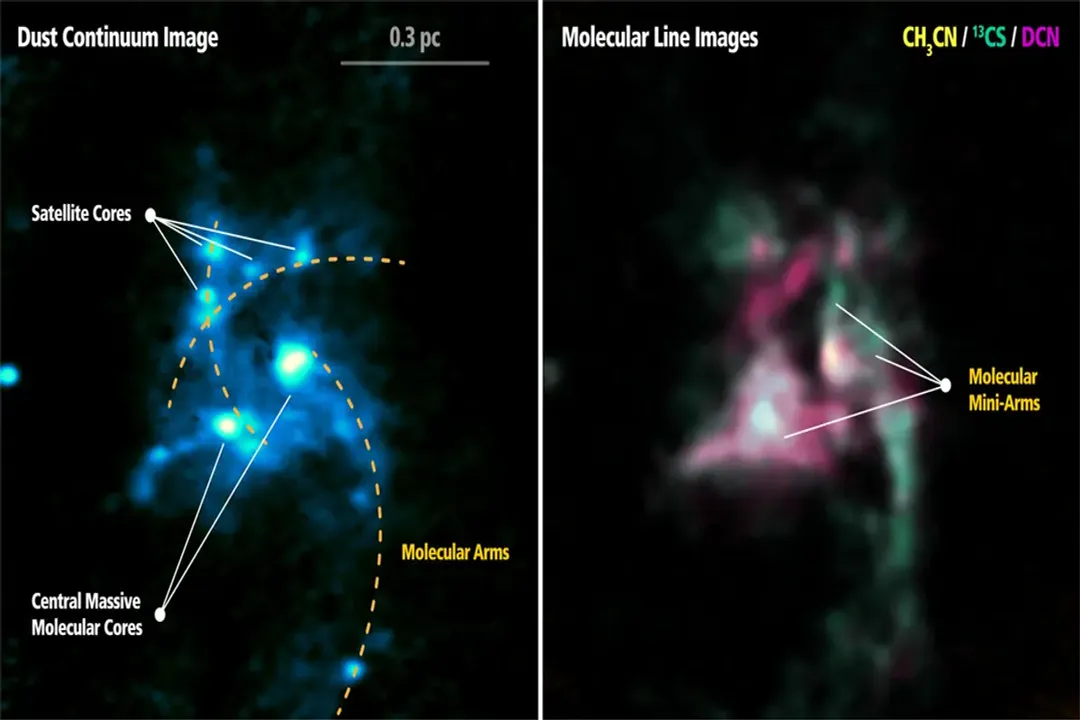
The function of any stellar core is straightforward on paper: it is the site of nuclear fusion, the process that generates the outward pressure necessary to resist the inward crush of the star’s immense mass. [7] In the most massive stars, this process is ongoing and highly efficient, but in a star that has become a giant, the core's fuel source has changed based on its evolutionary history. [2]
When a star like our Sun first settles onto the main sequence, its core primarily converts hydrogen into helium. [7] However, as that hydrogen is depleted, the star expands, becoming a giant or supergiant. [2] At this point, the core shrinks and heats up dramatically until it reaches the temperature necessary to ignite the next fuel source—helium. This new phase of fusion, where helium atoms combine to create carbon and oxygen, defines the active core of many luminous red giants. [7] It is this shift in the primary energy production mechanism that fundamentally separates the core of a giant star from that of a younger, less evolved star.
# Extreme Conditions

The physical parameters within the core of a giant star are staggering, driven by the overwhelming gravitational force pulling all that stellar mass inward. [5][7] Temperatures in the core often exceed ten million Kelvin. [5][7] To put this into perspective, consider a lower-mass giant star, perhaps an evolved star similar to the Sun, which has begun helium burning. While its surface might be relatively cool (a few thousand degrees), the pressure and heat required in the core to fuse helium (which requires temperatures around 100 million Kelvin) is immense. [7]
The density is perhaps the most difficult concept to grasp. In the core of a star like the Sun, the density is about 150 times that of water. [5] In a more massive giant or supergiant, the pressure is far greater, leading to densities that can be millions of times greater than the star’s surface layers. [5] In some instances, especially as these stars age further or approach collapse, the pressure becomes so intense that the matter exists not as ordinary gas, but as a state called degenerate matter, where quantum mechanical effects prevent further collapse until the fusion fuel is exhausted or conditions change drastically. [7] This transition from purely thermal pressure support to degeneracy support—where the core's state is dictated more by quantum rules than simple temperature—is a key differentiator in the late-life stages of stellar cores.
# Core Burning

The sequence of burning layers within a giant star is dictated almost entirely by its initial mass. [6] For intermediate-mass stars that become red giants, the core stabilizes around helium fusion for a time. [7] Once the helium is mostly consumed, the core consists mainly of inert carbon and oxygen ash. [7] These stars may then attempt to fuse carbon, but for Sun-like stars, the layers surrounding this core—the shell—will often continue hydrogen fusion, causing the star to puff up even further into an asymptotic giant branch star. [2]
Massive stars, however, follow a much more dramatic path. Their cores are hot and massive enough to sustain fusion far beyond carbon and oxygen. A very massive giant star's core can cycle through burning neon, oxygen, and silicon in successive shells, each stage producing heavier elements. [7] This process creates an "onion-like" structure, where the outermost layer is still fusing hydrogen, the next layer might fuse helium, and the innermost layers are fusing elements closer to iron. [7] The existence of these layers of heavier element fusion is the clearest signature of a high-mass giant core compared to a lower-mass one.
| Element Fused | Typical Stellar Mass Requirement | State in Low-Mass Giant Core | State in High-Mass Giant Core |
|---|---|---|---|
| Hydrogen (H) | All Stars | Exhausted or Shell Burning | Shell Burning |
| Helium (He) | > 0.5 Solar Masses | Active Core Burning | Shell Burning |
| Carbon (C) / Oxygen (O) | > 8 Solar Masses | Inert Ash | Active Core Burning |
| Silicon (Si) | > 11 Solar Masses | Not reached | Active Core Burning |
| Iron (Fe) | N/A | Never reached | Terminal Product |
# Mass Influence
The initial mass of the star acts as the master control for the conditions in the core of the giant phase. [6] A star born with slightly more mass than the Sun will develop a core that burns helium until it forms a dense, degenerate carbon-oxygen core, eventually shedding its outer layers to leave behind a white dwarf. [2] The core itself remains relatively cool compared to the cores of truly massive stars.
Conversely, a star that begins life weighing, say, twenty times the mass of the Sun, will experience such extreme core pressures that fusion proceeds down the periodic table rapidly. [7] The core of such a massive star must be continuously supported by the enormous thermal energy generated by fusing increasingly heavy elements. When the core finally fills up with iron—the heaviest element that can be produced via fusion that releases energy—the support mechanism instantly fails, leading to the catastrophic collapse that forms a supernova. [7] The difference in the core's ultimate fate, from a slow cooling (white dwarf) to an explosive implosion (supernova), hinges entirely on the mass that was initially available to compress that core. [2]
# End State
For the majority of stars that become giants, the core's evolution culminates not in an explosion, but in a slow settling down. Once fusion ceases in the core because the resulting ash (like carbon and oxygen) cannot be ignited under the current pressure, the core begins to shrink under gravity until the material reaches a point where electron degeneracy pressure halts the contraction. [7] This leaves behind a stellar remnant—a white dwarf—which is the dense, hot core that remains after the star sheds its outer gaseous envelope. [2] This remnant core slowly cools over eons, radiating away the immense thermal energy it retained from its active life. [5] The remaining core of the giant star is a compact body, incredibly dense, that simply fades away, no longer an engine of nuclear power, but a cosmic ember of its former self. [2][7]
Related Questions
#Citations
Glossary term: Giant Star - IAU Office of Astronomy for Education
Giant star - Wikipedia
What is the core of a star : r/Stars - Reddit
Star Basics - NASA Science
Core of a Star - Universe Today
What is the composition of a star's core in terms of its mass? - Quora
The Evolution of Massive Stars and Type II Supernovae | ASTRO 801
ALMA Reveals the Cradles of Dense Cores
Lecture 15: Red Giants