How hot are star cores?
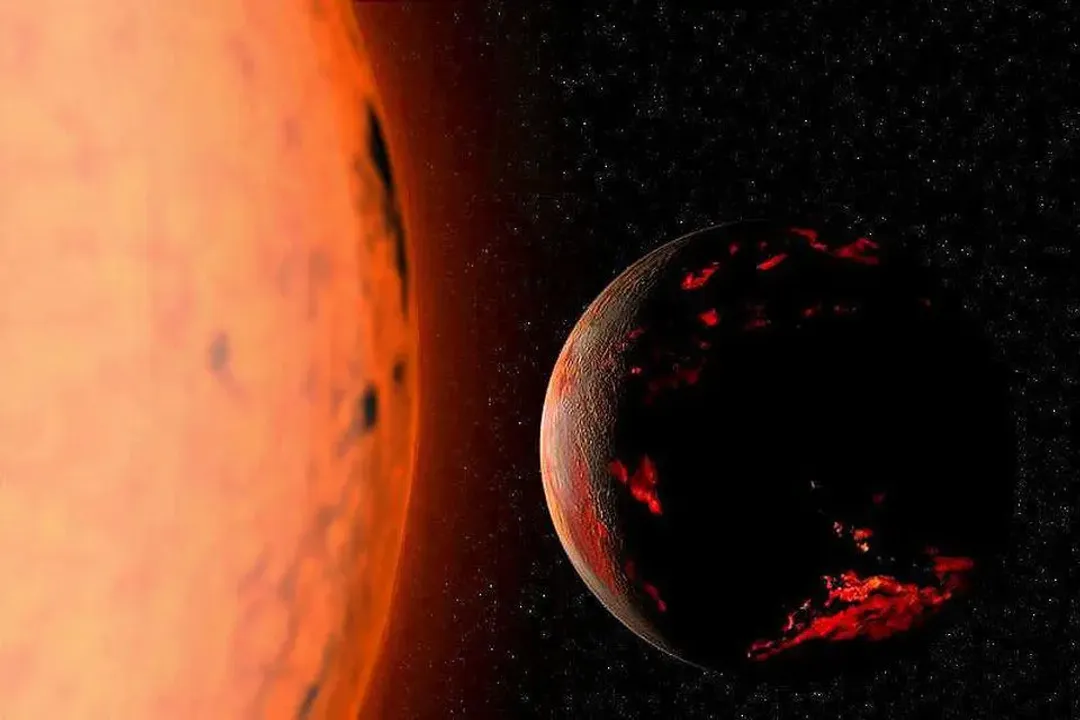
The internal temperature of a star is the engine room of the cosmos, dictating its life, death, and the very elements it creates. When we talk about how hot these stellar cores are, we are immediately entering realms of physics that defy everyday comprehension, where temperatures are measured not in degrees we might feel, but in millions of Kelvin. This heat is not static; it is the direct result of immense gravitational pressure forcing atomic nuclei together in a process we call nuclear fusion. [2][7]
# Sun's Baseline
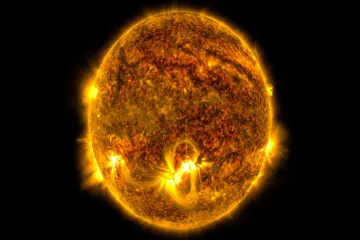
For humanity, the most important stellar core is our own, the one that powers our solar system. The Sun operates at a relatively modest (by astronomical standards) core temperature. Measurements based on solar models, which track the energy balance and neutrino production, place the temperature in the central region of the Sun at approximately Kelvin, or $15$ million K. [2][7] Some sources place this closer to $16$ million degrees, which is functionally the same in this context, acknowledging the slight variations in modeling techniques. [4] This heat is precisely what is needed to sustain the fusion of hydrogen into helium, the primary fuel source for a star like the Sun throughout its main-sequence life. [2]
# Mass Dictates Heat

The key variable determining the core temperature of any star lies almost entirely in its initial mass. Gravity is the sculptor here; a more massive star has a significantly greater gravitational pull pressing inward on its center. [3] To resist being crushed into an infinitely small point, the core must generate an equally immense outward pressure, which is achieved only by driving nuclear fusion at a vastly accelerated rate. [3] This translates directly into higher core temperatures.
The relationship between mass and core temperature is not linear, which is an important distinction for understanding stellar evolution. The relationship is far more aggressive than a simple doubling of mass resulting in a doubling of core temperature. A star with just a few times the mass of the Sun can have a core temperature that is substantially higher than $15$ million K, perhaps reaching $20$ million K or more, simply because the required resistance to that increased gravity is so much greater. [3] It is this exponential relationship that truly separates the long-lived, gentle stars from the short-lived, furious giants. The required pressure and corresponding temperature rise sharply to maintain hydrostatic equilibrium in more massive objects. [3]
# Hottest Stellar Cores
When we look toward the most massive stars in the universe—the blue O-type stars or Wolf-Rayet stars—the core temperatures soar far beyond our Sun's baseline. [5] These titans, sometimes exceeding $100$ or even $200$ times the Sun's mass, require incredible internal furnace temperatures to keep from collapsing immediately. [1][5] While the surface temperatures of these extremely hot stars can reach up to or even exceed , [1][5][9] the core is the true powerhouse. For a star twenty-five times the mass of the Sun, the core might approach $30$ million K (). [3] For the absolute most massive known stars, like , which is over $265$ times the Sun's mass, the core temperature is predicted to be even higher, though pinning down a precise, confirmed figure for the very hottest cores remains a complex astrophysical challenge. [1][3]
The difference between the visible surface and the core is profound. A star's visible color is determined by its surface temperature, with blue light signifying the hottest surfaces. [9] Yet, even the hottest surface recorded is only a fraction of the nuclear heat churning millions of miles beneath it. For instance, a surface reading of is generated by a core that is likely $25$ to $30$ million K, operating under pressures that make Earth's atmosphere seem like a vacuum.
| Star Type | Approximate Core Temperature (Kelvin) | Primary Energy Source | Lifespan Factor (vs. Sun) |
|---|---|---|---|
| Sun-like Star | million K | Hydrogen Fusion | Very Long |
| Star | million K | Hydrogen Fusion | Short |
| Neutron Star (Post-Collapse) | K (Initial Decay) | Residual Heat | Cooling over eons |
| Neutron Star (Old) | K | N/A (Degenerate Matter) | Near infinite stability |
# Remnants Heat Differently
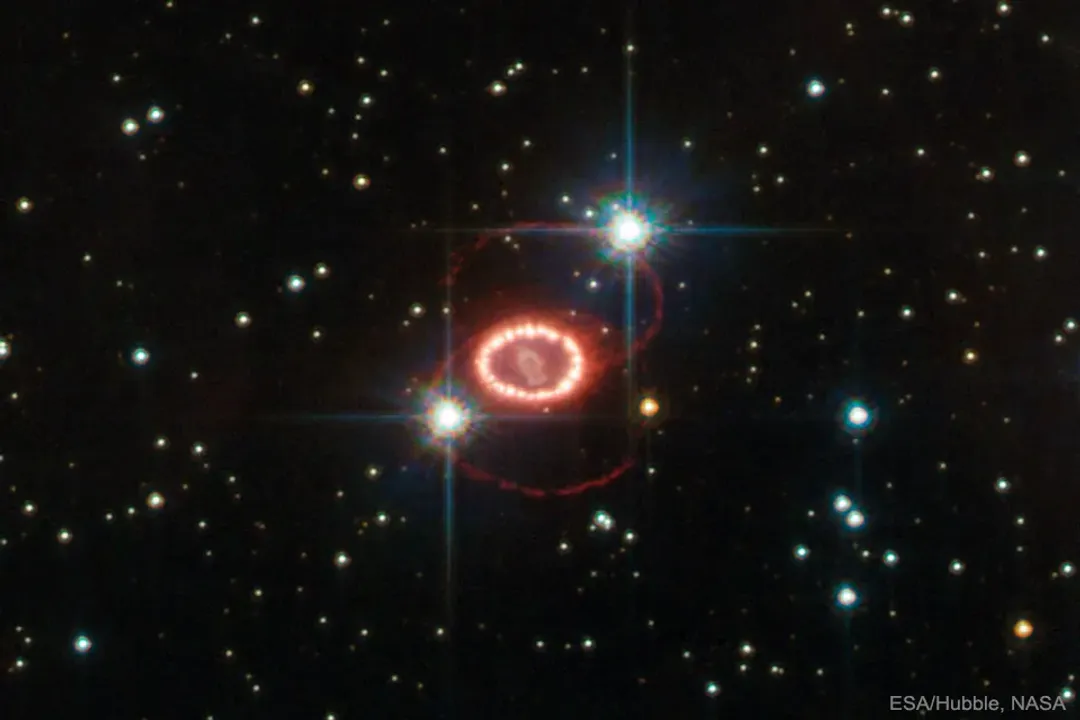
Not all stellar cores are hot because of active, ongoing fusion. The aftermath of a supernova explosion leaves behind incredibly dense remnants, the most extreme of which are neutron stars. The core of a neutron star is supported not by thermal pressure, but by neutron degeneracy pressure. [2] However, immediately following the collapse that forms them, these cores are unimaginably hot. Estimates suggest that a newly formed neutron star core can reach temperatures of up to $100$ billion Kelvin (). [6] This extreme temperature is a product of the violent gravitational energy release during the collapse, rather than steady-state fusion.
These remnants cool rapidly. Within a short astronomical timescale, the core temperature drops significantly, stabilizing perhaps around $100$ million K (). [6] While $100$ million K sounds hotter than the Sun's $15$ million K, it is important to remember that this residual heat is transient, whereas the Sun's $15$ million K is a stable, self-regulating temperature maintained over billions of years. The cooling process for such dense objects means that even an old, isolated neutron star core, though incredibly dense, will eventually radiate away most of this initial thermal energy, settling into a state that is much cooler than its birth temperature, though still astronomically hot by human standards. [6]
# Context and Scale
To put these astronomical figures into context, comparing the temperature scales helps illustrate the sheer magnitude involved. While the Sun's core sits at $15$ million K, the hottest recorded surface temperature of a star is nowhere near that high. [1] The Celsius and Fahrenheit scales become meaningless comparisons at these extreme ranges. The Kelvin scale, which measures temperature from absolute zero, is the standard because it directly relates to the kinetic energy of the particles involved. If the Sun’s core were to suddenly cool by just a few million degrees, the fusion reactions would slow down, gravity would win, and the star would begin a rapid contraction, a precursor to dramatic changes in its structure.
The vast thermal gradient from the core outward—from $15$ million K in the Sun's center to perhaps on its surface—is what defines a star's structure. This gradient drives the energy transport, whether through radiation or convection, moving the intense nuclear heat to the outer layers where it finally escapes as light and heat into space. [7] Understanding these core temperatures is not just about collecting impressive numbers; it is fundamental to understanding nucleosynthesis—the creation of elements heavier than hydrogen and helium—which happens exclusively under those intense central conditions. [2]
#Videos
How Hot Is A Neutron Star Core? - Physics Frontier - YouTube
Related Questions
#Citations
How hot are the hottest stars in the Universe? - Medium
Stellar core - Wikipedia
Is the temperature of the hottest star's core known?
The Core of a Star Reaches 16 Million Degree Celsius. A Grain of ...
How hot are the hottest stars in the Universe? - Big Think
Are neutron star cores cold or hot because somethings say ... - Quora
Lecture 8: How Hot is a Star?
How Hot Is A Neutron Star Core? - Physics Frontier - YouTube
The Color of Stars with the Highest Surface Temperature - Oreate AI