What is the temperature at the core of a star?
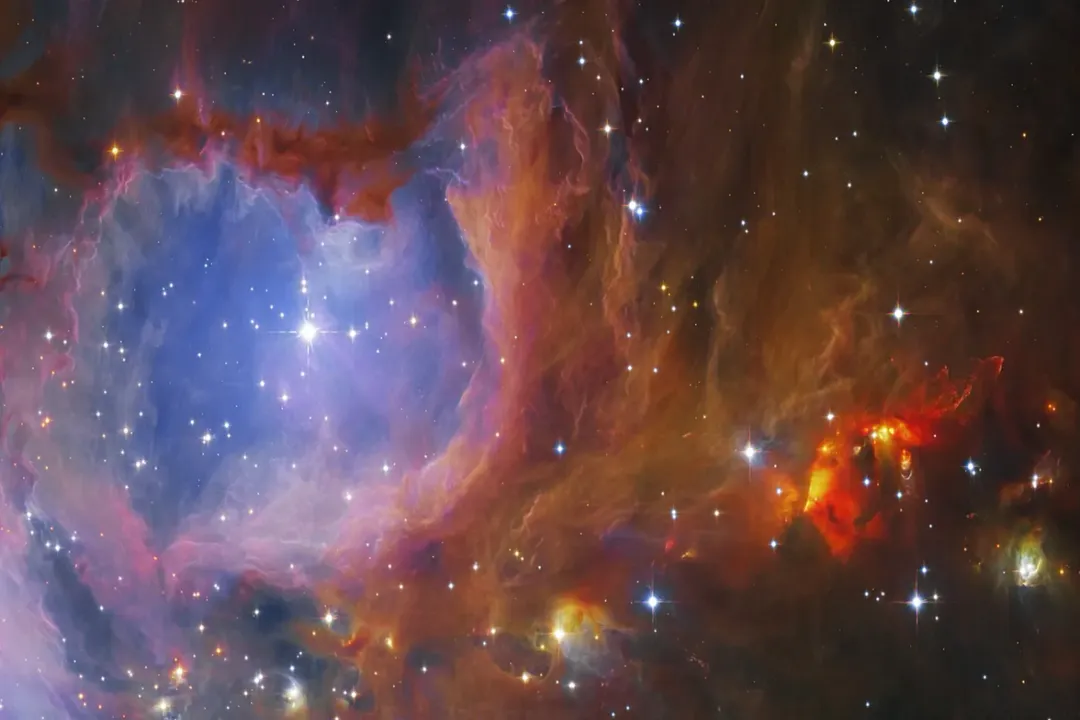
The heart of any star is a realm of unimaginable pressure and heat, a continuous thermonuclear furnace where the very building blocks of matter are rearranged to generate the light and energy that define these celestial beacons. [5] Determining the exact temperature at the core of a star is not a single answer but rather a sliding scale dictated almost entirely by the star's total mass. For an average star like our Sun, the temperature required to keep the nuclear reactions blazing hot is approximately 15 million Kelvin. [2][7] This extreme environment, confined to the star's innermost region, is the source of the star's outward pressure, perfectly balancing the inward crush of its own immense gravity—a state known as hydrostatic equilibrium. [6]
# Stellar Pressure
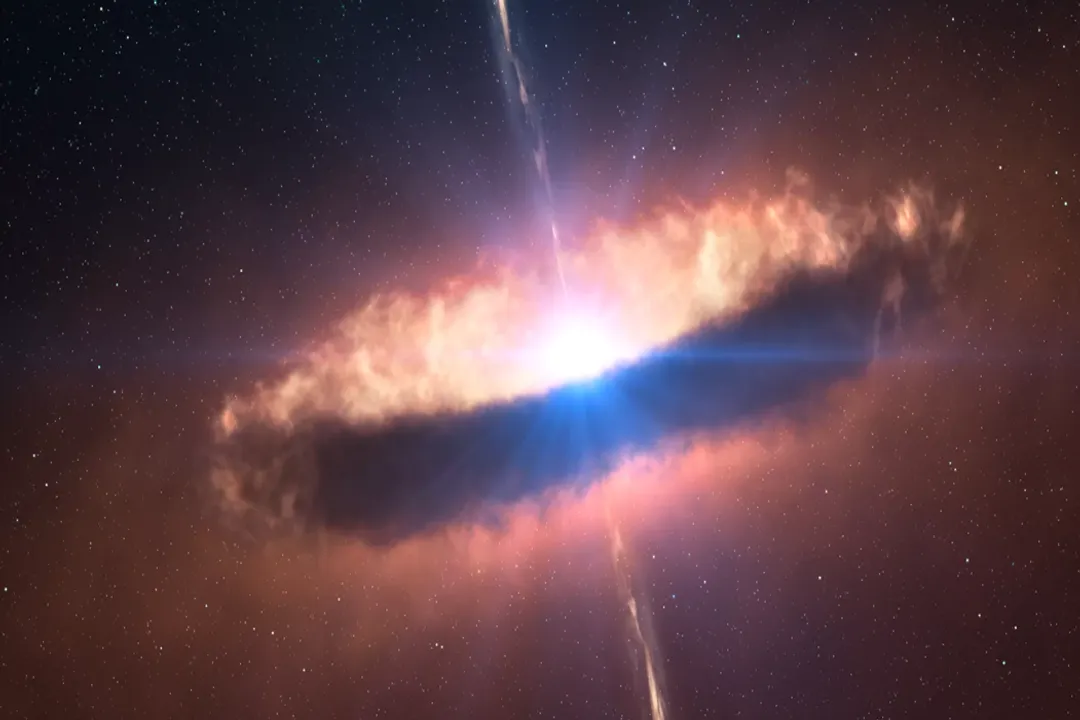
The immense temperatures found in stellar cores are a direct consequence of the star’s mass compressing its interior material. Gravity pulls everything inward, compressing the gas to extraordinary densities until the temperature rises high enough to initiate nuclear fusion. [2] This fusion process—the smashing together of atomic nuclei—is the engine of the star, releasing vast amounts of energy. [5] Without this energy release counteracting gravity, the star would rapidly collapse. [6] The boundary of the core is often defined as the region where the energy produced by nuclear reactions significantly exceeds the energy transported outward by radiation or convection. [1]
For the Sun, the core temperature of about Kelvin is just sufficient to sustain the proton-proton chain reaction, where four hydrogen nuclei (protons) combine to form one helium nucleus. [2] While $15$ million degrees sounds incredibly hot, the density is even more staggering, reaching perhaps 150 times the density of water in our own solar center. [1] This balance is incredibly precise; a slight decrease in temperature would slow fusion, allowing gravity to contract the core slightly, which in turn raises the temperature and density back to the equilibrium point.
# Mass Determines Heat
The temperature scales dramatically as we look at stars significantly more massive than the Sun. While the Sun's core sits near $15$ million K, stars much larger burn their fuel much faster and hotter. [6] The critical threshold for changing the primary fusion mechanism lies around $1.3$ times the Sun’s mass (), where the core temperature climbs high enough to favor the Carbon-Nitrogen-Oxygen (CNO) cycle over the proton-proton chain. [1][6] The CNO cycle uses carbon, nitrogen, and oxygen as catalysts to convert hydrogen into helium, and it is far more efficient at these higher temperatures. [6]
For stars that are many times the Sun's mass, the core temperature jumps significantly. Highly massive stars, such as those categorized as O-type stars, possess cores reaching perhaps $30$ to $40$ million Kelvin. [3] These stars are luminous giants that burn through their fuel supply over a few million years, a stark contrast to the Sun's expected 10-billion-year lifespan. This difference highlights a fundamental trade-off in stellar physics: greater core temperature buys spectacular luminosity but dramatically shortens the star's time on the main sequence. [9] The sheer crushing weight of these massive envelopes necessitates this much higher internal heat just to maintain stability. [6]

# Wolf Rayet Cores
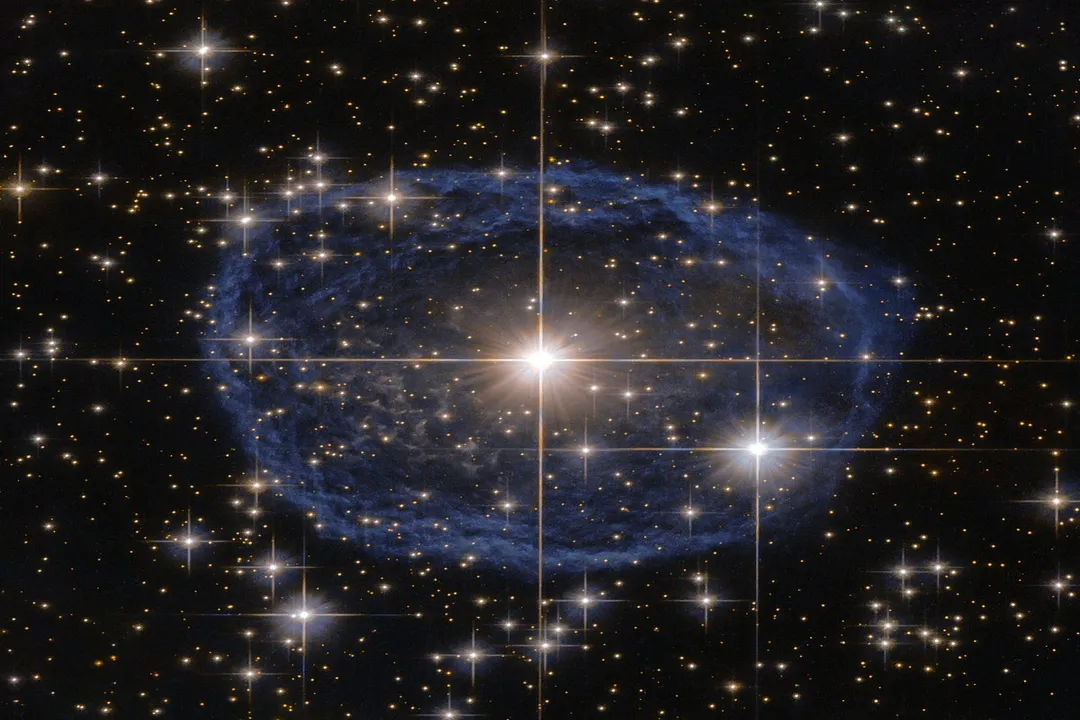
Wolf-Rayet stars represent a late, extreme stage for some of the most massive stars known, having already shed their outer hydrogen envelopes. Their cores are undergoing extremely rapid, high-temperature fusion, often fusing heavier elements after depleting their initial hydrogen supply. The core temperatures in these behemoths soar far past those of their main-sequence counterparts. [8] Estimates for the core temperature of a Wolf-Rayet star often place it around to million Kelvin, or possibly even higher, depending on the exact mass and evolutionary stage. [8] These temperatures facilitate the burning of helium and even heavier elements into carbon, oxygen, and beyond, rapidly building up the elements that will eventually be expelled in a supernova. [9]
Consider an analogy to understand the pressure disparity: if the Sun's core were a high-efficiency gas furnace, a core supporting a star would be like trying to run that same furnace inside a container built to withstand the pressure of an entire mountain range resting on its lid. [6] That external pressure demands a correspondingly higher internal heat to resist collapse.
# Collapse Temperature
The absolute upper limit on stellar core temperature is reached only in the final, catastrophic moments of the most massive stars—those destined to become black holes or neutron stars. As a star exhausts its nuclear fuel, fusion ceases in the iron core, and gravity wins the long battle, leading to rapid implosion. [9] The core material, now compressed to incredible densities—far beyond that of a white dwarf—heats up drastically before the final bounce or collapse. [4]
During this final implosion, the temperature can spike to staggering heights, potentially reaching temperatures in the range of $5$ billion to $10$ billion Kelvin, or perhaps even higher, just moments before the complete formation of a black hole. [4] At these temperatures, matter no longer exists in the familiar state of ionized plasma; instead, the energy is so high that photons possess enough energy to break apart atomic nuclei into free neutrons and protons, a process called photodisintegration. [1][4] This process actually helps drive the collapse because it consumes energy that would otherwise provide thermal pressure, accelerating the implosion toward the final singularity. [4]
# Temperature Variations
It is important to remember that the core temperature is not static throughout a star's life, nor is it uniform across all stars currently existing. Low-mass stars, such as M-dwarfs, which are the most common stars in the galaxy, have much cooler cores than the Sun, sometimes only reaching 5 to 10 million Kelvin, allowing them to burn hydrogen very slowly over trillions of years. [1][9]
Conversely, when a star like the Sun evolves off the main sequence and swells into a red giant, its core contracts and heats up significantly as it prepares to ignite helium fusion. The helium-burning core in a red giant reaches temperatures around million Kelvin to ignite the triple-alpha process (fusing helium into carbon). [9] This is an order of magnitude hotter than its hydrogen-burning phase. While this is still far below the temperatures of massive stars, it represents a significant, albeit temporary, internal heating phase for solar-mass stars.
If we chart the dependence of core temperature on mass, we see an extremely steep, non-linear relationship, which is often expressed via scaling laws in astrophysics. For general readers, visualizing this difference is key: if you were to take the core of our Sun and compress it down to the density of a neutron star (where the core material is nearly pure neutrons), the temperature required to maintain that level of gravitational stability would be vastly higher than the $15$ million K we observe today. [1][4] The primary differentiator between a star achieving stable hydrogen fusion and one exploding as a supernova is the initial mass, which sets the baseline core temperature and dictates the subsequent fusion stages it will be capable of sustaining.
# Core Measurement Challenges
We cannot directly place a thermometer into the core of a star, even our own. [5] All our knowledge about these extreme temperatures relies on sophisticated mathematical models based on fundamental physics principles like the conservation of energy and the laws of thermodynamics, combined with observations of the star's surface temperature, luminosity, and mass. [6] The models map out the internal structure, density, and temperature gradients from the surface inward until the conditions for fusion are met. [1]
For instance, one way we test these models is by observing neutrinos produced during core fusion. Because neutrinos interact so weakly with matter, they stream directly out of the star’s core almost instantaneously, carrying a direct signature of the temperature and reaction rate occurring there. [5] The successful detection of solar neutrinos confirms that the fusion reactions described by the standard solar model—which demands that $15$ million K core temperature—are indeed occurring beneath the Sun’s surface. [2] If the core were significantly cooler, fewer neutrinos would be detected, and if it were much hotter, the rate of neutrino emission would be significantly higher. [6] This makes neutrinos a unique probe of stellar interiors, offering a verifiable check on the computed temperature profiles. [5]

# Comparing Stellar Engines
To solidify the concept of temperature variation, it can be helpful to look at a simplified comparison between the three main types of hydrogen-fusing stars:
| Star Type (Mass relative to Sun, ) | Core Temperature (Approximate Kelvin) | Primary Fusion Process | Lifespan (Approximate) |
|---|---|---|---|
| Red Dwarf () | $5-10$ Million K | Proton-Proton Chain | Trillions of years |
| Sun-like Star () | $15$ Million K | Proton-Proton Chain | Billion years |
| Massive Star () | $20-40$ Million K+ | CNO Cycle | Millions of years |
| [1][2][3][6] |
This table clearly shows that while the physics governing the core is universal—balancing gravity with pressure—the scale of the temperature required rises dramatically with mass. The sheer inefficiency of the proton-proton chain at lower temperatures is what grants small stars longevity, while the highly efficient, temperature-sensitive CNO cycle in massive stars leads to their spectacular but brief existence. [9]
The precision required for a star to exist in a stable state is astonishing. A star's mass determines its core temperature, which in turn determines its luminosity and lifespan. If you could magically reduce the Sun’s core temperature by just a few hundred thousand degrees, the resulting drop in outward pressure would cause the star to begin a slow but inexorable contraction until the core was hot enough to compensate, effectively setting a new, lower equilibrium point. [6] The star naturally adjusts to maintain hydrostatic equilibrium, a process inherently linked to the core's thermal state.
# The Fate of Heat
The end-state temperatures are fascinating because they are not just about sustained fusion but about the energy released during collapse. When the heaviest stars collapse, the immense gravitational energy is converted into kinetic energy, which then shocks the core, briefly raising temperatures astronomically high before the remnant settles into a new state, such as a neutron star or a black hole. [4] This collapse-induced heating far surpasses the stable fusion temperatures of the main sequence. For instance, the formation of a neutron star involves core densities so extreme that the electrons are forced into the protons, creating a mass of degenerate neutrons, and this state is maintained by neutron degeneracy pressure, not thermal pressure in the same way. [1] The flash of heat during the collapse that triggers the supernova explosion involves that brief, trillion-degree environment before the core settles into its final, non-fusing state. [4]
Ultimately, the temperature at the core of a star is the defining characteristic of its existence, setting its color, its lifespan, and its eventual fate. From the steady 15 million K of our local star to the superheated engines of distant giants, it is the temperature that truly unlocks the power of the cosmos. [5]
#Videos
How Hot and Dense Must a Star's Core Be? - YouTube
Related Questions
#Citations
Stellar core - Wikipedia
Stars - StarChild - NASA
How hot are the hottest stars in the Universe? - Medium
How hot is the core of a star just before it collapses to form a black ...
How Hot and Dense Must a Star's Core Be? - YouTube
Lecture 8: How Hot is a Star?
The Core of a Star Reaches 16 Million Degree Celsius. A Grain of ...
What is the core temperature of a wolf rayet-type star? - Quora
Section 2.3 - Stellar Evolution - Astronomical Returns