What is the specific conversion process powering the star during the Hydrogen Burning phase?
Answer
The steady conversion of hydrogen into helium in the innermost region
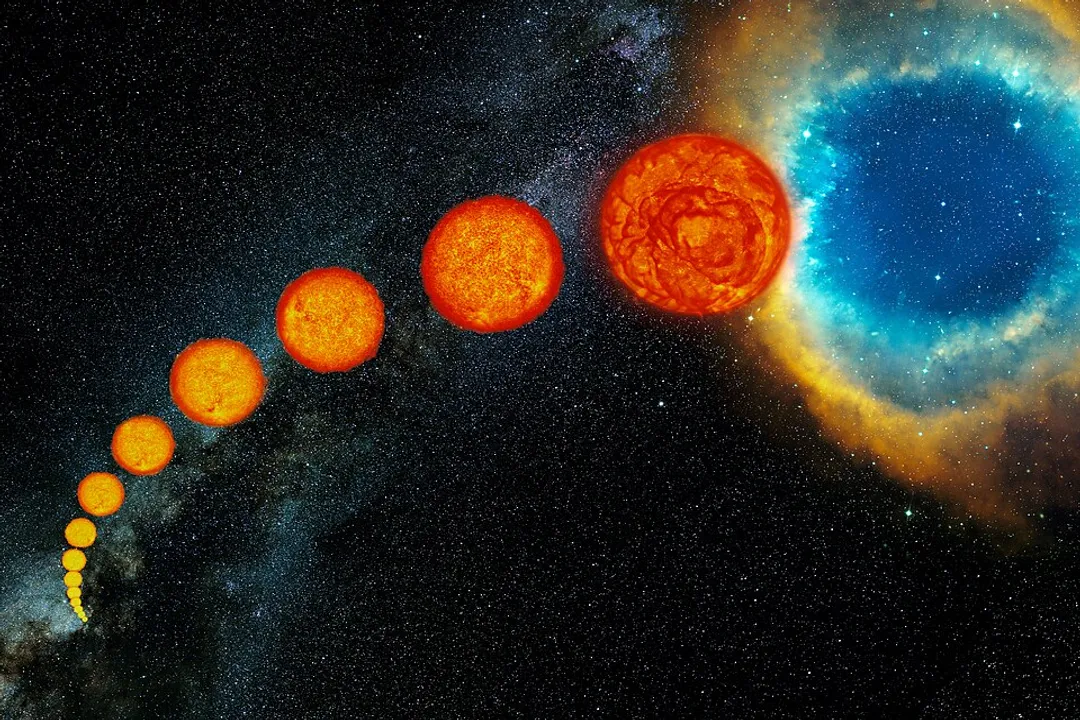
The extended, stable life of a star on the main sequence is sustained entirely by the ongoing nuclear reactions occurring in its very center. This process involves the thermonuclear furnace where hydrogen atoms are continuously fused together to create helium nuclei. This conversion releases enormous quantities of energy, which provides the essential outward pressure that prevents the star from collapsing under its own colossal weight. This steady, reliable energy source dictates the star's consistent output of light and heat over billions of years, provided the fuel supply remains adequate.
Related Questions
What energy source drives the initial heating of the collapsing mass forming a protostar?What critical temperature threshold must the protostar core exceed for nuclear fusion to commence?What state describes the balance between opposing forces within a star during its main sequence phase?What is the specific conversion process powering the star during the Hydrogen Burning phase?What physical element contributes to the steep temperature gradient and immense pressure at the star's center?How does the lifespan of a Sun-like star compare to a star ten times its mass on the main sequence?What process allows a star to ignite heavier elements after the core hydrogen supply is depleted?What is the immediate result of converting gravitational potential energy during the initial collapse of the molecular cloud?What relationship links the star's mass to the required core temperature for maintaining stability?Which famous equation describes the energy generation far exceeding gravitational heating during ongoing fusion?