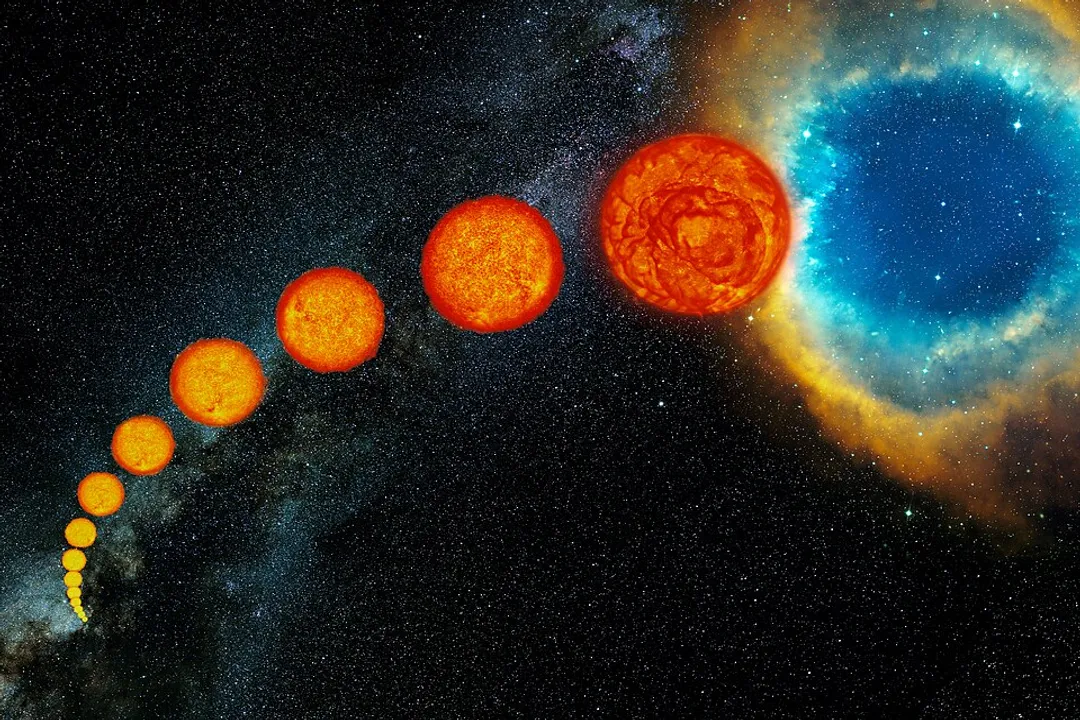
How does the lifespan of a Sun-like star compare to a star ten times its mass on the main sequence?
The Sun is expected to shine for roughly ten billion years, while the more massive star burns out much faster, perhaps in tens of millions of years
The duration a star spends in its stable, hydrogen-burning phase is exquisitely sensitive to its initial mass. Stars born significantly more massive than the Sun experience much greater gravitational forces inward, necessitating significantly higher core temperatures and consequently burning their hydrogen fuel at an astonishingly accelerated rate. While a solar-mass star enjoys a longevity measured in billions of years, a star ten times heavier rapidly consumes its reserves because the fusion speed scales intensely with the core conditions established by that greater weight, leading to a lifespan measured in mere tens of millions of years.