How do stars generate heat?
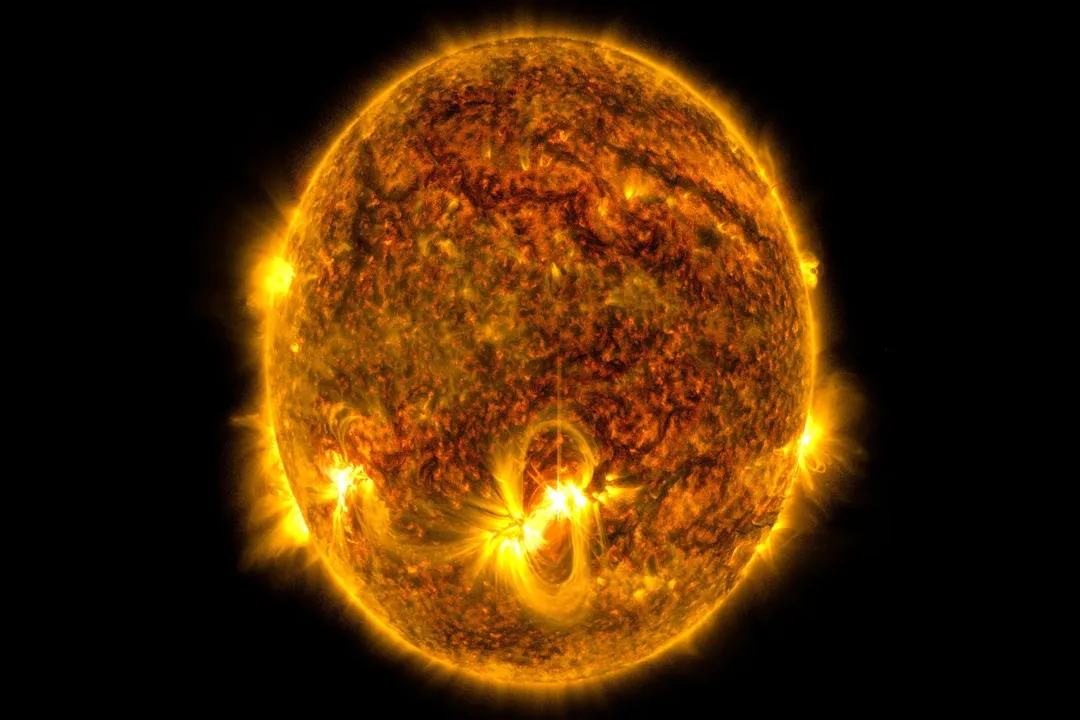
Stars are luminous spheres of plasma held together by their own gravity, shining brightly across vast distances. [1][5] The incredible heat and light they radiate are not the result of a conventional fire, which relies on chemical combustion, but something far more powerful and sustained: nuclear reactions deep within their cores. [3][6] Understanding how this heat is generated requires looking at the star's birth and the extreme physics that govern its interior structure.
# Gravitational Birth
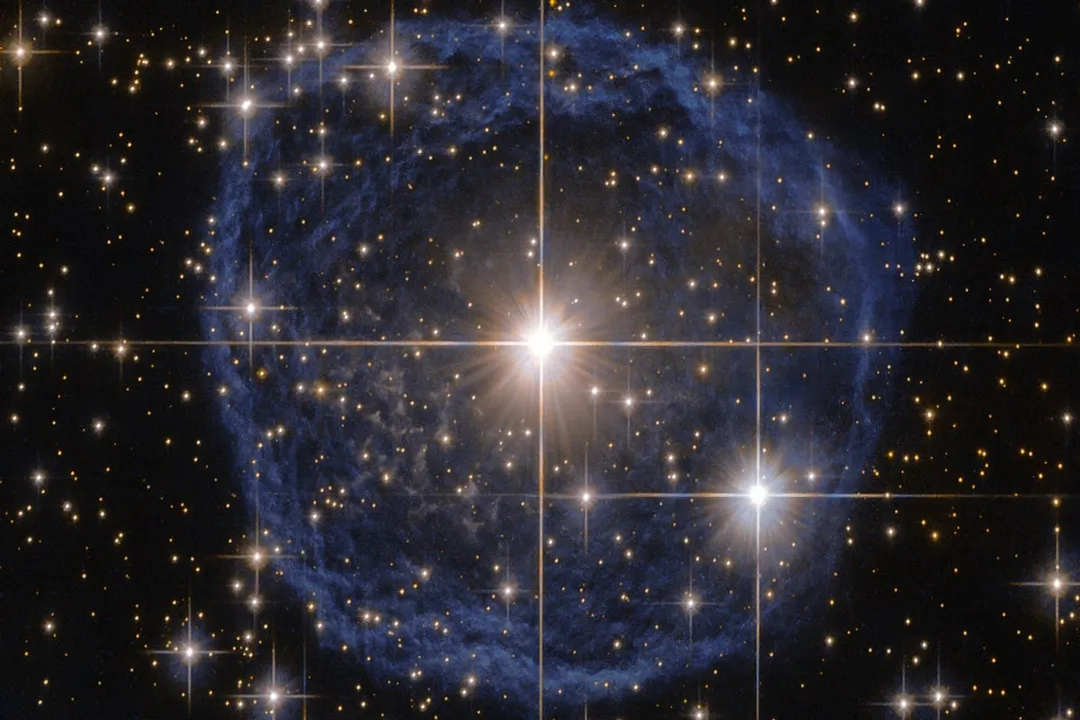
A star begins its existence as a vast, cold cloud of gas and dust, primarily hydrogen, floating in space. [5][10] When a region within this cloud becomes dense enough, gravity begins to take over, pulling the scattered material inward towards a central point. [1] As this immense cloud collapses under its own weight, the gravitational potential energy of the falling material is converted into thermal energy, causing the temperature at the center to rise dramatically. [4][7] This inward crush of matter continues unabated, forcing the gas into an increasingly compact state. [5]
The key to becoming a true star, rather than just a collapsing cloud, lies in reaching a critical threshold of temperature and pressure at this central point. [4] For the mechanism of heat generation to switch on, the core must become hot enough to initiate thermonuclear reactions. This ignition point is crucial; without it, the object remains a pre-main-sequence object or, if too small, a brown dwarf that never achieves sustained energy production. [10] The pressure exerted by the inward pull of gravity is what creates the necessary environment for this stellar furnace to fire up. [7]
# Core Conditions
The conditions inside a star's core are unlike anything found on Earth. [4] Consider the density: while the Sun’s overall density is only slightly greater than water, the pressure at its very center is astonishingly high, requiring matter to be compressed to extreme levels. [7] This extreme compression, driven by the mass of all the outer layers pushing inward, translates directly into incredible heat. [4]
To put this extreme compression into perspective, imagine taking something as light as a large park balloon and squeezing it down until it's denser than the material used to make a brick—and then applying millions of times more force. The initial temperature rise from simple gravitational compression is significant, often reaching millions of degrees Celsius, but it is only the precursor to the main event. [7] This heat generated from the collapse sets the stage, but it is not the perpetual source of a star's luminosity; that requires a reaction that can sustain itself over billions of years. [4]
# Fusion Reactions
The sustained heat and light that define a star come from nuclear fusion occurring in its core. [2][3] Fusion is the process where atomic nuclei collide with enough energy to overcome their natural electrical repulsion and merge, forming a heavier nucleus. [2][7] This process is called stellar nucleosynthesis. [2]
For stars similar in mass to our Sun, the dominant reaction sequence is the fusion of four hydrogen nuclei (protons) to form one helium nucleus. [2][7] This is often achieved through the proton-proton chain reaction, though in more massive, hotter stars, the CNO cycle (Carbon-Nitrogen-Oxygen acting as catalysts) can dominate. [2]
The essential point of this conversion is that the final helium nucleus has slightly less mass than the four original hydrogen nuclei that formed it. [8] That seemingly minuscule difference in mass is not lost; instead, it is converted directly into an enormous amount of energy, as described by Einstein’s famous mass-energy equivalence equation, . [8] This energy is released primarily as kinetic energy of the resulting particles and high-energy photons, which manifest as the heat and light we observe. [3]
When you consider the scale of a star, the energy output becomes staggering. If we momentarily step away from the physics and think about efficiency, a typical chemical reaction, like burning coal, releases energy by rearranging electrons. Stellar fusion, however, rearranges the nucleus itself, which is held together by the strongest forces in nature. It is this fundamental difference that allows a star to generate power for eons rather than mere days or years. [4] The sun, for instance, converts about 600 million tons of hydrogen into helium every second, resulting in a continuous energy release equivalent to billions of megatons of TNT every second. [3]
# Energy Transport
The energy generated in the core as gamma-ray photons must travel outward to the star’s surface before it can escape as visible light and heat. [3] This journey is not quick or direct. The path the energy takes depends heavily on the star's size and internal structure, which dictates how efficiently the plasma allows photons to pass through. [7]
In stars like the Sun, the region immediately surrounding the core is the radiative zone. [7] Here, the plasma is so dense that a photon travels only a minuscule distance before being absorbed by an atom, only to be re-emitted moments later in a completely random direction. [3] This "random walk" means that while the energy generation is instantaneous, it can take hundreds of thousands of years for a single photon produced in the core to finally reach the next layer. [7]
Beyond the radiative zone lies the convective zone. [7] In this outer layer, the plasma is cooler and less dense, allowing for the physical movement of material. Hot pockets of gas rise toward the surface, much like boiling water, release their heat, cool down, and then sink back down to be reheated by the layers below. [3] This convection current efficiently ferries the energy outward to the visible surface, the photosphere. [7]
# Equilibrium Maintenance
A star remains stable throughout the longest phase of its life—the main sequence—because of a delicate, constant negotiation between two opposing forces: gravity pulling everything inward, and the thermal and radiation pressure generated by the core fusion pushing everything outward. [4][7] This state is known as hydrostatic equilibrium. [4][7]
If the core temperature were to suddenly drop—perhaps due to a slight dip in the rate of fusion—the outward pressure would momentarily decrease. Gravity would win this brief struggle, causing the core to contract slightly. [4] This contraction would compress the core material further, raising the density and, consequently, the temperature back up, which in turn reignites the fusion rate until the outward pressure balances gravity again. [7]
Conversely, if the core temperature spiked too high, the increased outward pressure would cause the star to expand slightly. [4] This expansion would lower the density and temperature of the core material, naturally slowing the fusion rate until equilibrium is restored. [7] This self-regulating mechanism is why stars can maintain a steady output of heat and light for billions of years. [4] The star is constantly sensing and correcting its own temperature, maintaining a steady state that is entirely dependent on the ongoing fusion process. [7]
# Fuel Shift
This equilibrium can only last as long as the primary fuel—hydrogen—remains abundant in the core. [2][10] Once the hydrogen atoms in the center have been largely converted into helium, the fusion reaction slows because the necessary fuel concentration drops. [2] With the reduced outward pressure, gravity again becomes dominant, causing the core to contract and heat up significantly. [10]
This renewed heating triggers the next stage of nucleosynthesis in heavier, more massive stars, or it may start a shell of hydrogen fusion burning around the inert helium core in Sun-like stars. [2][10] For stars with masses around that of the Sun, the core temperature eventually climbs high enough—to about 100 million Kelvin—to ignite the fusion of the accumulated helium into carbon and oxygen. [2][10]
This shift in fuel source dramatically changes the star's internal structure and its external appearance, often causing it to swell into a red giant. [10] The energy generation is now coming from a different set of fusion reactions, which are generally shorter-lived and produce less stable energy output than the long hydrogen-burning phase. [2] These later stages of element creation continue to generate heat, but they operate under increasingly stressful conditions until the star eventually runs out of viable fusion fuel or reaches a mass limit that dictates its final demise. [10] The process of creating elements heavier than iron, for instance, actually consumes energy rather than releasing it, marking the end of sustained heat generation through fusion. [8]
#Videos
Nuclear Fusion - How Stars Generate Energy - YouTube
Related Questions
#Citations
Star Basics - NASA Science
Stellar nucleosynthesis - Wikipedia
How do stars create and release their energy? - Astronomy Magazine
What causes stars to continuously burn? Where does their energy ...
What is a star? - Cool Cosmos - Caltech
How do stars produce the heat and light energy they give off? - Quora
STARS - NMSU Astronomy
Ask Ethan: When do stars turn the most mass into energy? - Medium
Nuclear Fusion - How Stars Generate Energy - YouTube
Stars and their life-cycle (article) | Khan Academy