What material is the spacecraft heat shield made of?
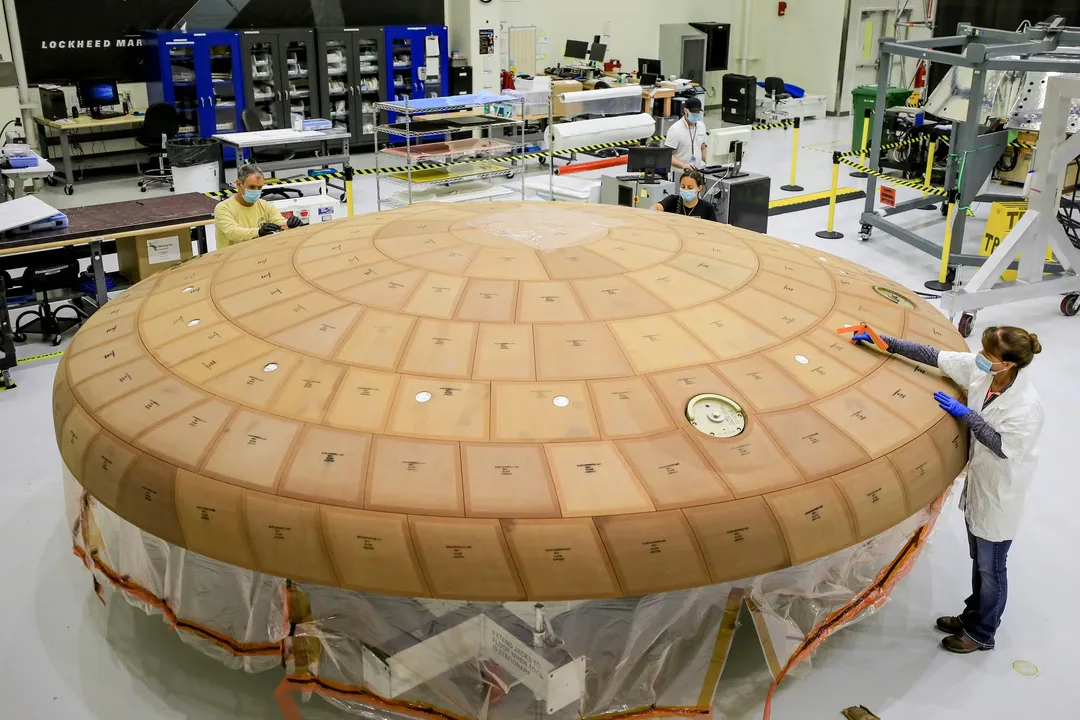
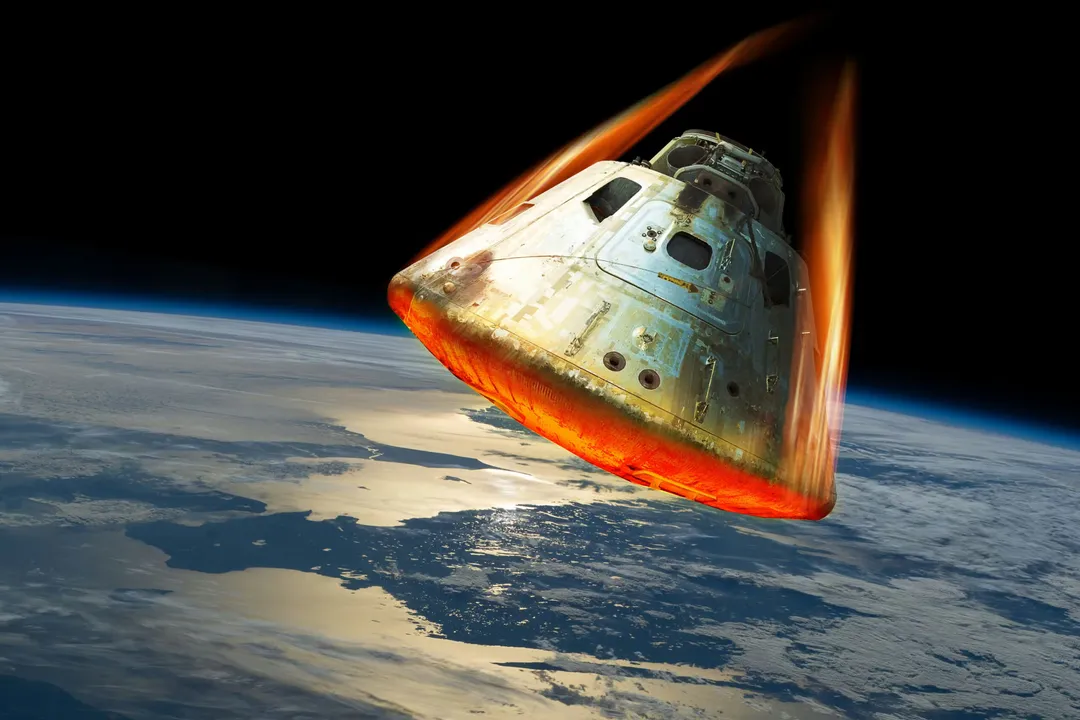
The fiery descent through a planet's atmosphere is arguably the most violent phase of any space mission, demanding materials science pushed to its absolute limit. The spacecraft heat shield is not a single product but a family of incredibly sophisticated systems designed to manage energy fluxes that can reach thousands of degrees Celsius. What material is this shield made of? The answer changes drastically depending on the mission profile, the return velocity, and whether the craft is designed to be thrown away or reused many times.[1]
# Sacrificial Layers

For early crewed missions returning from the Moon, where velocities are lower than a direct Earth return from Mars orbit, the primary defense mechanism relied on ablation—the controlled destruction of the material itself. This approach is elegant in its simplicity: the shield material is engineered to vaporize, sublime, or char, carrying the immense heat away from the spacecraft structure through the phase change process.[3]
The material used for the Apollo Command Module heat shield, for instance, was a high-density phenolic epoxy resin impregnated onto a honeycomb structure. As the superheated shock layer compressed the air around the capsule, the surface temperature would rise dramatically, causing the resin matrix to slowly burn away layer by layer. This process effectively "sheds" the heat load. The sheer mass of the ablative material was a major design constraint, as every kilogram of shield material is weight that could not be used for science or crew life support.[3]
A fragment of an Apollo heat shield offers tangible evidence of this process. What remains is a charred, porous, and incredibly lightweight husk, testament to the intense thermal environment it successfully endured. The material essentially sacrifices itself to protect the crew inside, meaning this type of shield is generally expendable; it cannot survive multiple high-energy entries.[3]
# Reusable Surfaces
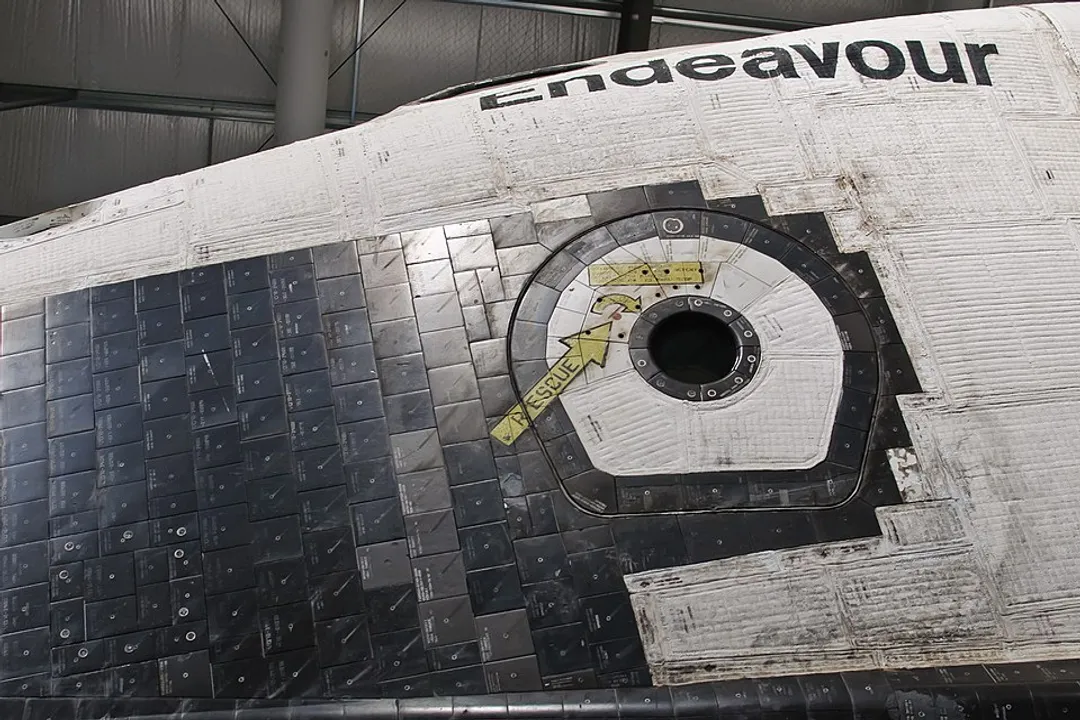
When looking at reusable spacecraft, the challenge shifts from managing heat dissipation through destruction to managing it through insulation and reflection, allowing the material to survive intact for repeated use. The most famous example of this approach is NASA's Space Shuttle Orbiter. Its Thermal Protection System (TPS) was a patchwork quilt of different materials, each specialized for a specific thermal load.[8]
# Tile Varieties
The majority of the Shuttle's underside, where temperatures peaked around (), was covered in the Low-Temperature Reusable Surface Insulation (LRSI), commonly known as the white tiles, and the High-Temperature Reusable Surface Insulation (HRSI), the black tiles. [8]
The black HRSI tiles were the true workhorses of insulation. They were composed primarily of nearly pure silica fiber, weighing about as much as water. These tiles were phenomenally effective insulators; one could reportedly hold a tile by its edges shortly after heating the opposite face to over in a furnace.[2] Their structure was about 90% air, giving them incredible insulating capability relative to their mass.[8] The coating on these tiles was crucial, providing the necessary emissivity to radiate heat away from the surface.[2] The white LRSI tiles covered areas that experienced lower heating loads, needing less protection.[8]
A key operational difference between these silica tiles and ablative shields lies in maintenance. While they were reusable, they were also extremely fragile. They could be damaged by ground crews, weather, or micro-meteoroid impacts, often requiring painstaking replacement and inspection between missions—a factor that significantly contributed to the operational cost and complexity of the Shuttle program. The failure to properly inspect leading edges, tragically illustrated by the Columbia loss, underscores that even in reusable systems, material integrity is paramount and unforgiving of minor flaws.[8]
# Extreme Edge Protection
The absolute hottest zones on the Space Shuttle were the wing leading edges and the nose cap. These areas faced the direct brunt of the atmospheric friction, reaching temperatures that could melt conventional metal alloys, sometimes exceeding (). [8] For these extreme hotspots, a material was needed that was not only heat-resistant but also incredibly strong at high temperatures: Carbon-Carbon (CC) composite.[8]
This material, also known as reinforced carbon-carbon (RCC), is an aircraft-grade carbon fabric permeated with a phenolic resin and then carbonized. It is essentially graphite reinforced with carbon fibers. CC is lightweight, maintains structural integrity at extreme heat, and resists thermal shock well.[8] The fact that this material could withstand reentry heating while maintaining enough structural rigidity to manage aerodynamic loads is a testament to its advanced engineering.[4]
When comparing the Shuttle system to an Apollo capsule, the trade-off becomes clear: the Shuttle trades the simple, one-time effectiveness of a heavy ablative shield for a lighter, multi-use system composed of dozens of unique materials, each optimized for a specific thermal zone but demanding intensive post-flight care. The design philosophy favored reusability and structural lightness over monolithic simplicity.

# Modern Ablative Evolution
Today's capsules, such as those designed for Mars missions or sample return vehicles, often combine the efficiency of ablation with modern material science. These systems aim to be lighter than the heavy Apollo legacy shields while offering better performance than early ablators.[1]
One major advancement is Phenolic Impregnated Carbon Ablator (PICA). Developed by NASA's Ames Research Center, PICA represents a significant step up from traditional ablators.[1] It consists of a carbon fiber structure (similar to the CC material but used differently) that is impregnated with a phenolic resin.[9] The key advantage of PICA is that it is significantly lighter than the older Avcoat material used on Apollo, yet it can handle even higher peak temperatures.[1]
The Stardust sample return capsule, which returned interstellar dust collected in space, used a thinner layer of PICA. More recently, the Mars Science Laboratory (Curiosity rover) entry vehicle utilized a variant of PICA for its searing entry into the Martian atmosphere.[9] While it still abates (charring and sacrificing material), the structure is optimized for a lower bulk density, meaning more of the heat is carried away by the gases produced during ablation, resulting in less heat being conducted into the vehicle structure. For missions involving very high entry speeds, such as returning from Mars or an asteroid, an ablative system like PICA remains the material of choice due to its unmatched ability to handle tremendous thermal loads in a single, one-way trip.[1]
# Material Selection Logic
The choice between a low-density ablative shield (like PICA), a high-temperature composite (like CC), or a reusable low-temperature insulation system (like silica tiles) is entirely dictated by the mission's energy budget. A spacecraft returning from a low-Earth orbit (LEO) re-entry, like the Soyuz or SpaceX Dragon, faces relatively low speeds (). These missions can often employ simpler ablative systems or even reusable metallic surfaces protected by advanced coatings because the peak heating environment is less severe than a deep-space return.[1][6]
However, returning from the Moon () or Mars ( for a direct entry) produces an exponentially higher heat flux due to the relationship in kinetic energy management. This higher energy demands materials that can either absorb or dissipate vast amounts of energy quickly. For these high-energy returns, the material science must allow for either a thick, reliable ablator or a highly specialized, thermally resistant structure.
It is interesting to note the divergence in design philosophy following the Shuttle retirement. While the Shuttle used the complex, maintenance-heavy tile system for reusability, modern crew capsules aiming for routine access to LEO—like the Crew Dragon—have largely returned to an advanced ablative approach. This suggests that for routine LEO access, the significantly lower turnaround time and inspection costs associated with an expendable ablative heat shield (even if the capsule itself is reused) might outweigh the material cost and complexity of maintaining thousands of fragile silica tiles and their attachment systems. The cost equation involves not just the material's price, but the labor required to verify its safety after every flight.

# Future Materials
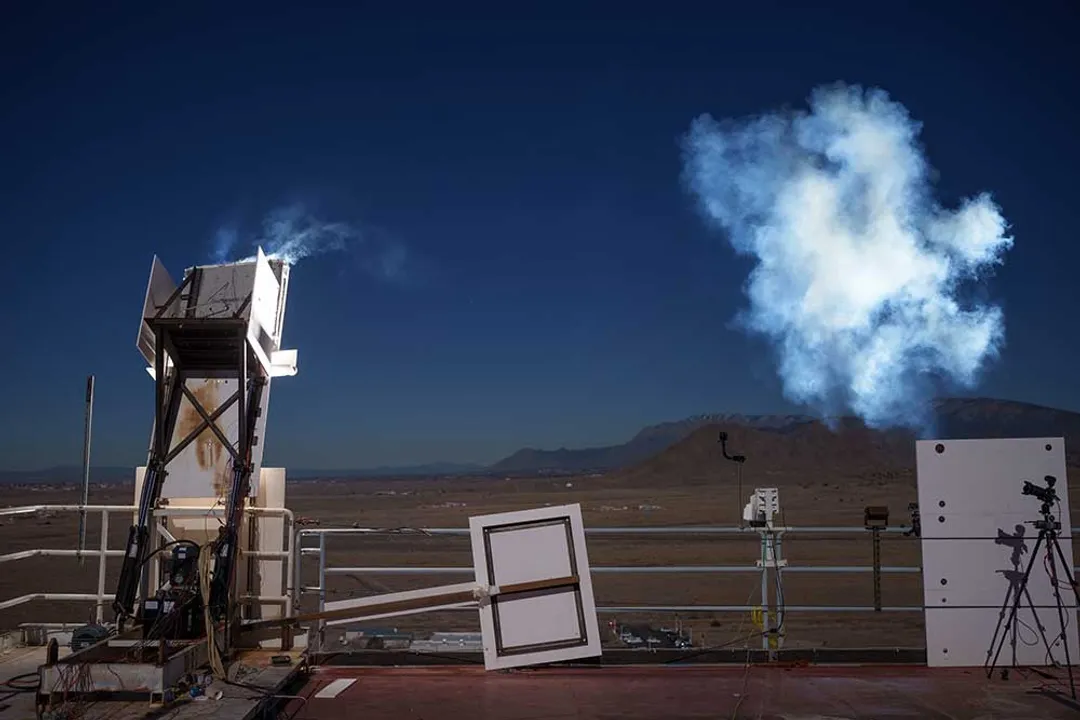
Research continues into materials that could bridge the gap, perhaps offering reusable performance without the fragility of the silica tiles or the single-use nature of PICA. One area of focus involves Ultra-High Temperature Ceramics (UHTCs), which promise even higher temperature resistance than Carbon-Carbon, potentially opening doors for even faster, more direct atmospheric entries in the future. Furthermore, active cooling systems, though complex, are sometimes theorized for future long-duration missions to minimize reliance on purely passive thermal management.[9] The continuous testing of new shield concepts, often using ground-based plasma arc facilities that simulate reentry conditions, ensures that the next generation of shields will be lighter and more durable than anything flown before.[5]
In summary, the material of a spacecraft heat shield is a carefully chosen compromise. It is either the phenolic resin of Apollo, which vaporizes to carry heat away; the complex, multi-material silica tile and CC composite system of the Space Shuttle, designed for insulation and high-temperature rigidity; or the modern PICA ablator, offering high-performance, lightweight sacrifice for single, high-speed entries. Each material choice reflects a precise calculation balancing mission velocity, expected lifespan, and the economic realities of spaceflight operations.[1][8]
Related Questions
#Citations
How spaceship heat shields work - Intergalactic
[PDF] Structures and Materials: Space Shuttle Tiles Grades 9-12 - NASA
Heat Shield, Fragment, Ablated, Apollo
space shuttle - Heat Shielding Material for Reusable Craft
Spacecraft Heat Shield Technical Documents Needed - Facebook
Spacecraft heat shields : r/rocketry - Reddit
What is the space shuttle heat shield made of? - Quora
Space Shuttle thermal protection system - Wikipedia
Sandia tests heat shields for space – LabNews