What exactly is a hypernova?
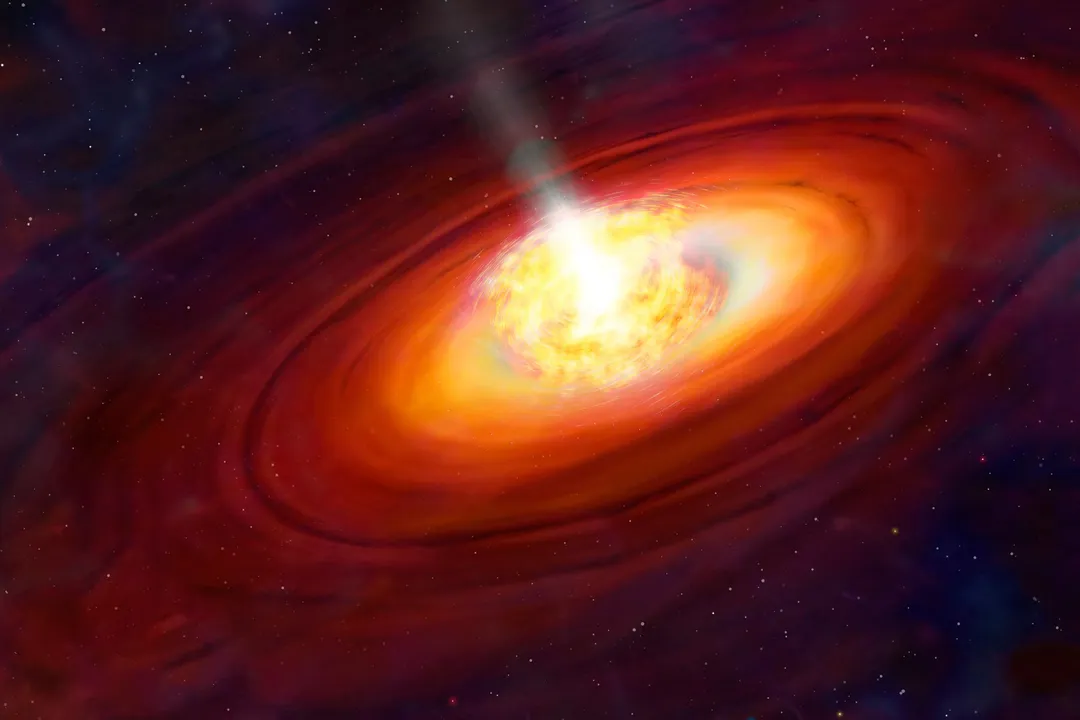
The most dramatic stellar explosions known to science are frequently categorized based on their immense power, with the term "hypernova" marking the extreme end of this cosmic violence. While the general public is familiar with a supernova—the sudden, brilliant death of a star—a hypernova represents an event that transcends even that already colossal scale, delivering an output of energy that is orders of magnitude greater. Essentially, a hypernova is an exceptionally luminous and energetic type of supernova. It is not just a brighter bang; it signifies a fundamentally different, more catastrophic physical process occurring at the heart of a dying star.
# Extreme Brightness
The defining characteristic separating a hypernova from its standard supernova cousin is its sheer luminosity. When astronomers observe these cataclysms across vast cosmic distances, the term used often reflects this observational difference. A hypernova is generally recognized as an exceedingly luminous supernova that is significantly brighter than typical core-collapse events.
To put this into perspective, a standard supernova releases about joules of energy. A hypernova, however, often releases ten to one hundred times that amount, sometimes exceeding joules. This immense energy budget means that for a brief period, a single hypernova explosion can outshine its entire host galaxy. While the term itself describes the visual spectacle—a "super-supernova"—the underlying physics is what truly sets it apart from other stellar death events.
# Stellar Collapse Mechanism
The process that fuels this tremendous outburst is believed to involve the complete gravitational collapse of an extremely massive star, a scenario often referred to as the collapsar model. This process requires a progenitor star far more massive than those that produce a standard supernova. When the star exhausts its nuclear fuel, its iron core can no longer support itself against gravity. In a standard core-collapse event, this results in a neutron star or, for slightly more massive progenitors, a black hole, with the outer layers rebounding in the explosion.
In the hypernova scenario, the core collapses so completely that it forms a black hole almost instantaneously. Crucially, this collapse is accompanied by two other factors: extreme mass and rapid rotation. The progenitor must be a very massive, quickly spinning star that has already shed its outer hydrogen and helium layers—classifying the resulting explosion spectroscopically as a Type Ic supernova.
As the core implodes, the surrounding material forms an accretion disk around the nascent black hole. The immense gravitational and magnetic forces channel some of the infalling matter away from the poles, launching highly collimated, relativistic jets outward at speeds approaching the speed of light. These jets bore through the star's outer envelope, carrying away a tremendous amount of kinetic energy. It is the energy deposited by these jets, rather than the typical explosion shockwave, that powers the hypernova's extreme brightness and kinetic output.
# The Gamma-Ray Connection
The most compelling observational evidence linking these events stems from their connection to long-duration Gamma-Ray Bursts (GRBs). GRBs are the most energetic explosions in the universe since the Big Bang. The jets produced by the central engine of a hypernova—the newly formed black hole and its disk—are the mechanism thought to produce these intense, brief flashes of gamma rays detectable across the cosmos. When the relativistic jets break out through the star's stellar envelope, they emit a concentrated beam of high-energy photons, which we observe as a long-duration GRB.
This association provides a crucial observational fingerprint. While we can detect a hypernova by its optical light signature (the bright, Type Ic spectrum), detecting its GRB companion solidifies the identification as a hypernova event, confirming the jet mechanism was at play. The early detection of GRBs helped astronomers begin to pinpoint the stellar origins of these powerful explosions.
# Contrasting Stellar Explosions
Understanding the hypernova requires distinguishing it from other significant stellar death events. Astronomers have several classifications for these violent endings, often distinguished by the progenitor mass and the resulting chemical signatures observed in the light curve.
Here is a brief comparison based on energy and the mechanism responsible:
| Event Type | Primary Energy Source/Mechanism | Typical Energy () | Key Spectral Feature |
|---|---|---|---|
| Nova | Thermonuclear runaway on a white dwarf surface | Small (no star destroyed) | Re-brightening/fading |
| Supernova (Type II) | Core bounce/shockwave from massive star death | Joules | Shows Hydrogen lines |
| Hypernova | Black hole formation and jet launching (Collapsar) | Joules | Type Ic (no H or He) + GRB |
| Kilonova | Neutron star merger | Much lower than SN/HN | Associated with Heavy Element creation |
Observing a very bright, broad-lined Type Ic supernova in a distant galaxy often leads astronomers to classify it as a hypernova candidate, precisely because it exhibits the photometric characteristics associated with an extremely energetic collapse.

# Progenitor Requirements
The rarity of hypernovae suggests that their progenitor stars must meet very specific, stringent criteria. Not every massive star becomes a hypernova; the vast majority end their lives as less energetic supernovae. The star must start with an immense initial mass, often estimated to be in excess of solar masses, perhaps even $40$ or $50$ solar masses, depending on initial metallicity.
Even more critical than the sheer mass is the angular momentum or rotation rate. The star must be spinning incredibly fast when it reaches the end of its life. This rapid spin prevents the collapsing core from developing a significant amount of fall-back material that would otherwise choke the jet formation process. If the star spins too slowly, the jets may not form effectively, or they may be too weak to punch through the envelope, leading instead to a standard supernova or perhaps even direct collapse into a black hole without a significant visible explosion. Therefore, the existence of a hypernova is a direct testament to the fact that a massive star was born with enough spin to launch those powerful jets before its demise.
# Observational Ambiguity
While the model connecting hypernovae to long GRBs is scientifically sound, it introduces an element of practical difficulty in astronomical observation. When observing a distant stellar explosion, astronomers typically rely on the spectrum—the chemical fingerprint—and the total energy released. A hypernova is defined by its extreme kinetic energy, yet it presents spectrally as a Type Ic supernova.
This leads to a situation where a very bright Type Ic supernova might be called a hypernova, but without the concurrent detection of a powerful GRB, the classification remains based purely on the light curve's extreme brightness relative to other Type Ic events. The mechanism is inferred rather than directly proven from the optical data alone. If a Type Ic supernova is luminous enough, astronomers classify it as a hypernova candidate, accepting that the sheer energy output implies a black hole and jet formation, even if the GRB signature was beamed away from our line of sight.
Consider an interesting scenario: imagine two stars die at the same distance from Earth, both truly massive and rapidly rotating. Star A explodes, and its powerful GRB jet happens to be pointed directly at us, giving us a clear, unambiguous long-duration GRB followed by a Type Ic supernova signature—a textbook hypernova. Star B dies a moment later, under almost identical conditions, but its jet is pointed 30 degrees away from Earth. We would only observe the standard, bright Type Ic supernova light curve. Based purely on the photometric data we receive, Star B might be logged as merely a very bright supernova, even though the underlying physics—the black hole formation—was identical to Star A's collapse. This highlights that our label for a "hypernova" is inherently tied to whether we catch the jet event, making the true population rate possibly higher than what is officially cataloged.
# Legacy of the Explosion
The final state of a hypernova event is the formation of a stellar-mass black hole. The sheer amount of mass that falls directly into the singularity, circumventing the typical bounce that forms a neutron star, defines this outcome. The resulting gravitational remnant anchors the environment from which the GRB emanates.
The remnants of these events seed the galaxy with heavy elements produced during the star's life and subsequent collapse, although the primary mechanism for producing the very heaviest elements, like gold and platinum, is now more strongly attributed to neutron star mergers (kilonovae). Nevertheless, the hypernova is a key player in the chemical enrichment of the early universe, specifically in synthesizing large amounts of intermediate-mass elements through the explosive shockwave. These are the factories that change the composition of the interstellar medium, setting the stage for the next generation of stars and planetary systems. Understanding hypernovae, therefore, is essential to charting how matter evolves from the very first massive stars to the complex chemistry found in our solar system today.
# Terminology Context
It is worth noting that "hypernova" is sometimes used interchangeably with the term collapsar, which technically refers to the progenitor star that collapses. However, in modern usage, the term hypernova almost always refers to the resulting explosion itself. Definitions for these high-energy transients have evolved over time, but the consensus rests on the extreme energy output driven by the jet mechanism. These explosions are distinctly more energetic than a standard supernova and fundamentally different from the lower-energy, though still powerful, kilonova events caused by merging neutron stars. The primary focus remains on the collapse of a single, overly massive, rapidly spinning star.
#Videos
Hypernova: The Bigger, Badder Supernova. - YouTube
Related Questions
#Citations
Hypernova - Wikipedia
Hypernova | COSMOS - Centre for Astrophysics and Supercomputing
Hypernova: The Bigger, Badder Supernova. - YouTube
What is the difference between a supernova and a hypernova?
Hypernova - Space Wiki | Fandom
HYPERNOVA Definition & Meaning - Dictionary.com
Brighter than an Exploding Star, It's a Hypernova!
HYPERNOVA definition in American English - Collins Dictionary
Nova, Supernova, Hypernova, Kilonova – What's The Difference?
What is a Hypernova? - The Big Bang Kilonova Hypothesis