What term technically refers to the progenitor star that collapses into a hypernova event?
Answer
Collapsar.
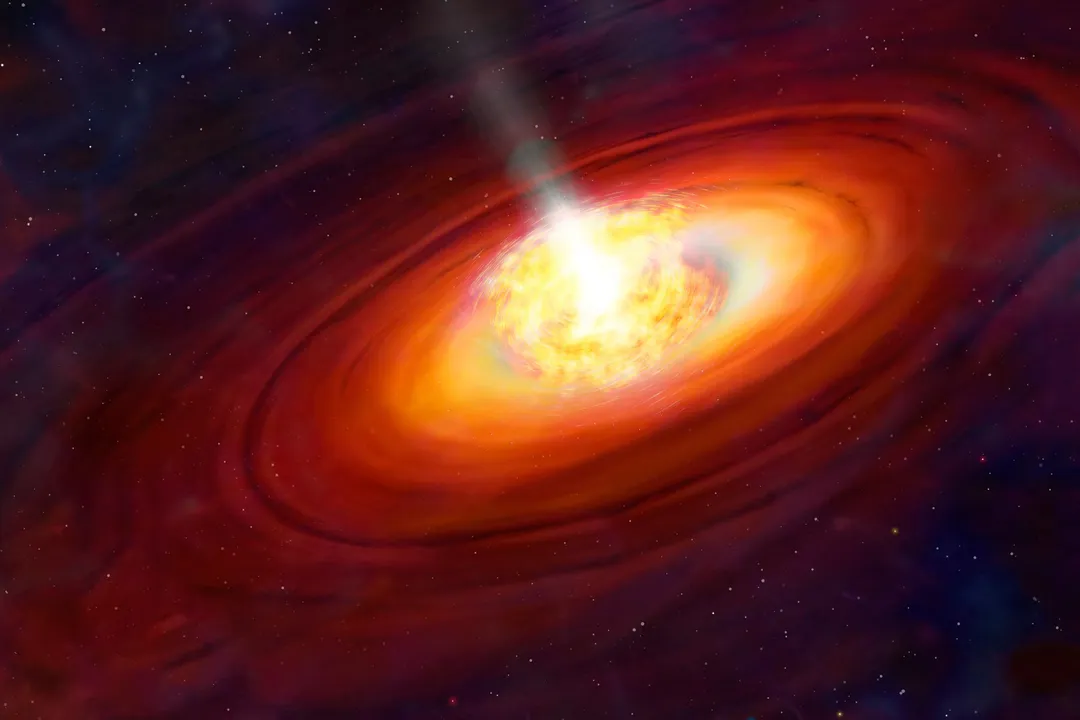
The term collapsar is used technically to describe the specific progenitor star that undergoes the complete gravitational collapse resulting in a hypernova. While the term hypernova refers to the explosion itself, collapsar designates the massive, rapidly spinning star whose core collapses. Although the terms are sometimes used interchangeably in historical context, the modern consensus reserves hypernova for the explosion product driven by the jet mechanism originating from the collapsar.
#Videos
Hypernova: The Bigger, Badder Supernova. - YouTube
Related Questions
How much greater is the energy output of a hypernova compared to a standard supernova's $10^{44}$ joules?What model describes the complete gravitational collapse required to fuel a hypernova explosion?What spectral classification describes a hypernova explosion lacking hydrogen and helium layers?What high-speed phenomena are launched outward to power the hypernova's extreme kinetic output?What extremely energetic event provides the most compelling observational link to hypernovae?Beyond immense initial mass, what critical progenitor requirement must a star meet to form a hypernova?In the provided table, what is the typical energy released by a Supernova (Type II)?What is the designated final remnant left behind after a hypernova's core undergoes complete gravitational collapse?What term technically refers to the progenitor star that collapses into a hypernova event?How does the primary energy mechanism of a hypernova fundamentally differ from a standard Type II Supernova?What specific element synthesis process is more strongly attributed to Kilonovae than to hypernovae?