Are the zodiac constellations on the ecliptic?

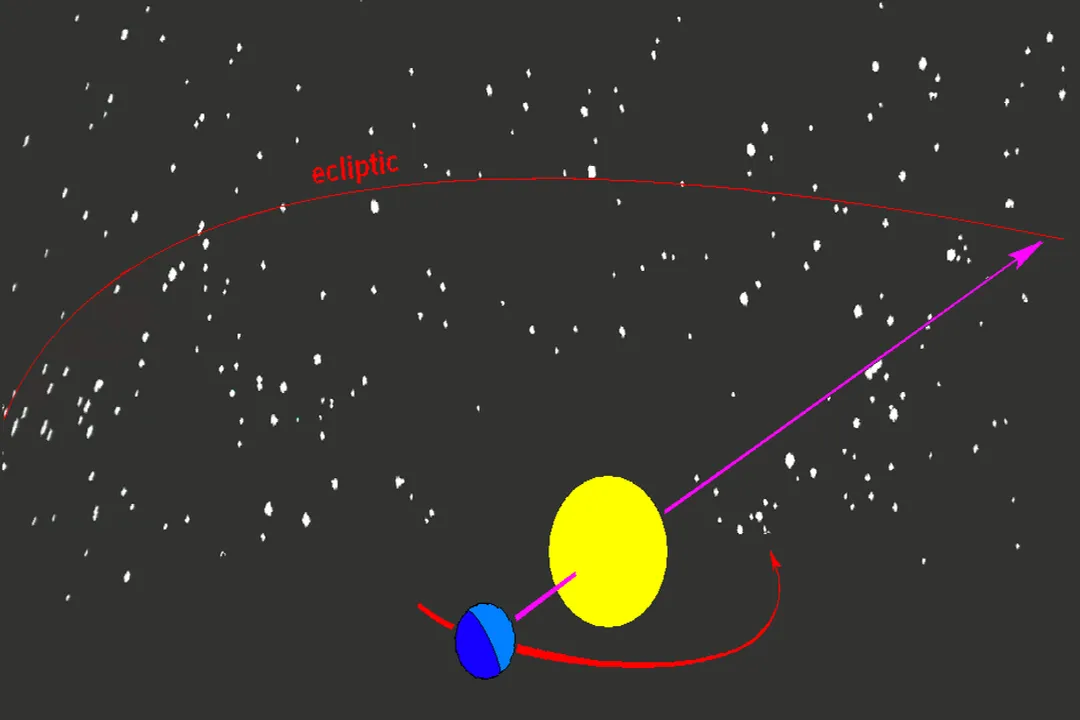
The path the Sun appears to trace across the celestial sphere over the course of a year is fundamental to understanding both ancient astronomy and modern astrology. This specific track, known to astronomers as the ecliptic, is the imaginary great circle that forms the projection of the Earth's orbital plane onto the sky. [1][6] It is an essential reference line, as the plane of the solar system—the plane in which the planets orbit the Sun—is nearly identical to the plane of the Earth's orbit, which defines this path. [6]
# Ecliptic Defined
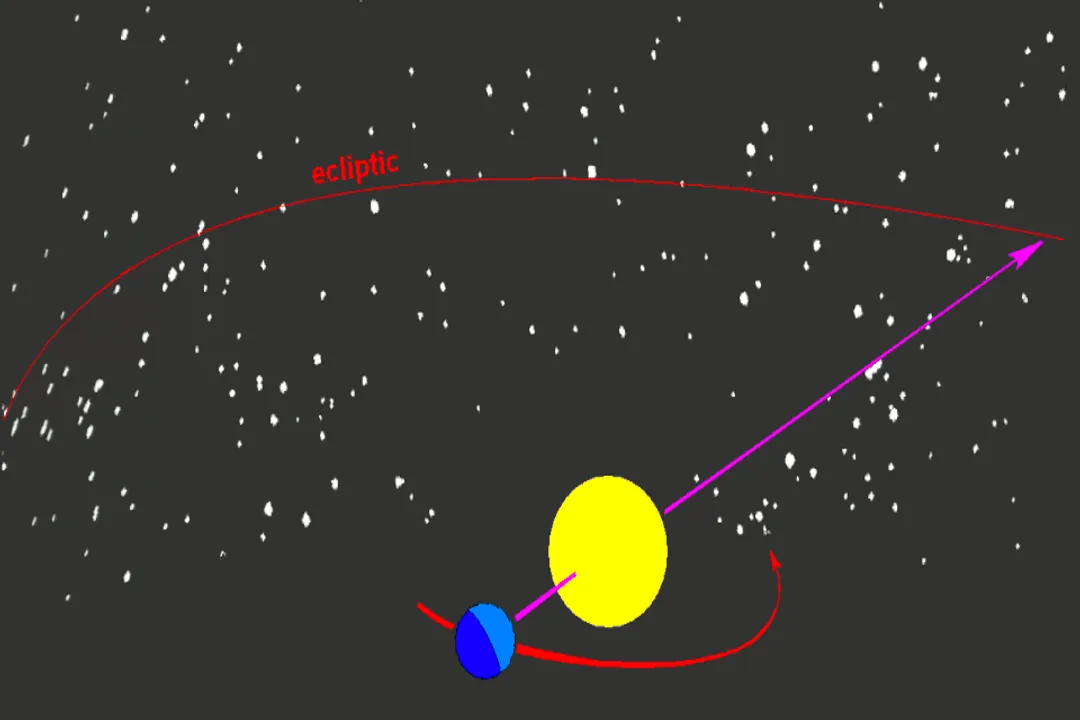
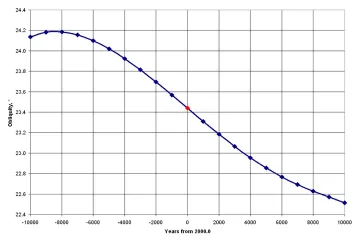
To visualize this, imagine a giant hoop placed around the Earth, perfectly aligned with the Sun's annual journey overhead, passing through the celestial sphere; that hoop is the ecliptic. [3] Because the Earth orbits the Sun, and our calendar year is based on this orbital period, the Sun appears to move against the background stars day by day, completing one circuit annually. [1] The ecliptic is a great circle, meaning it is the largest possible circle that can be drawn on the surface of a sphere, and it intersects the celestial equator at two points known as the equinoxes. [1][6] These intersections mark the beginning of spring and autumn in the Northern Hemisphere. [1] Furthermore, the maximum angular distance the Sun reaches north or south of the celestial equator is known as the obliquity of the ecliptic, which is currently about $23.4$ degrees, a measurement that dictates the severity of our seasons. [1] Understanding the ecliptic is crucial because it is the celestial highway for the Sun, Moon, and all the major planets in our solar system. [2]
# Constellations Lined Up
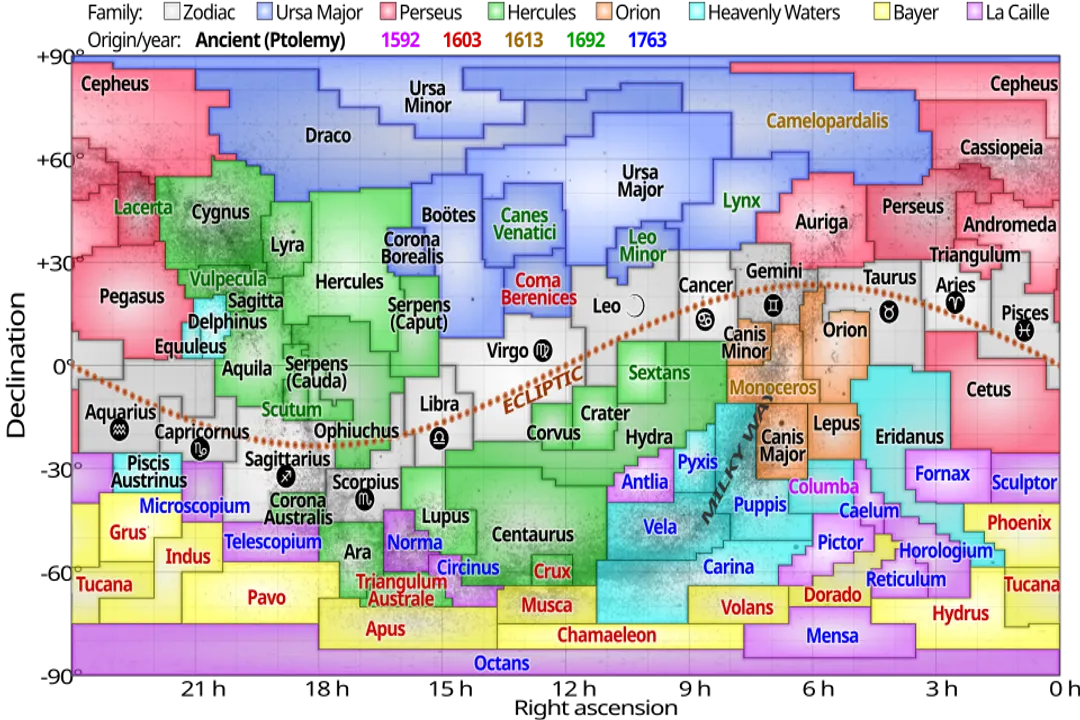
The primary connection between the ecliptic and the popular zodiac lies in where the constellations are located. The traditional zodiac is a band of sky that stretches approximately $8$ to $9$ degrees on either side of the ecliptic. [2] The term zodiac itself derives from the Greek word zōdiakos kyklos, meaning "circle of animals," because most of the constellations along this path are represented by animals. [7] When we look at the sky, the Sun, Moon, and planets always appear to travel along or very near the ecliptic, meaning they pass through the regions defined by the zodiac constellations. [2][4] Therefore, the statement that the zodiac constellations lie on the ecliptic is astronomically accurate; they form the backdrop through which the Sun and planets appear to move. [2][7]
However, this common alignment isn't perfectly neat. While the constellations are indeed centered around this path, there is a slight complication involving one extra constellation not usually included in the astrological framework: Ophiuchus, the Serpent Bearer. [2][5] Astronomically, the Sun passes through twelve traditional zodiac constellations and crosses through Ophiuchus during its annual transit along the ecliptic. [2] This is a point where astronomical observation diverges from established astrological tradition, which strictly adheres to twelve signs, often ignoring the portion of the ecliptic that crosses Ophiuchus. [5]
# Sizes Vary
A significant difference between the astronomical reality and the traditional astrological system arises when we examine the actual angular size occupied by each constellation along the ecliptic. If you check an up-to-date map of the sky boundaries established by the International Astronomical Union (IAU), you will find that the twelve traditional zodiac constellations do not occupy equal segments of the sky. [4][9] Astrologically, the ecliptic is divided into twelve equal $30$-degree arcs, with each sign starting at a fixed point relative to the vernal equinox. [4] This division ensures that each of the twelve signs covers exactly th of the sky circle (). [8]
The astronomical reality, however, is quite different. The constellations were designated by ancient observers based on the prominent star patterns they saw, not on precise, equal divisions of the sky plane. [7] Consequently, the actual angular length of the constellations along the ecliptic varies considerably. [8][9]
To illustrate this major discrepancy, consider the difference in the space they actually command:
| Constellation | Approx. Angular Length Along Ecliptic (Degrees) | Traditional Astrological Segment (Degrees) |
|---|---|---|
| Aries | ||
| Virgo | ||
| Leo | ||
| Scorpio |
Note: The figures above are illustrative based on general astronomical data showing significant variation, demonstrating the point that actual size differs from the model [8].
As the table suggests, some constellations, like Virgo, span much more sky along the ecliptic than the standardized allotted to them in astrology, sometimes covering nearly . [8] Conversely, others, like Scorpio, take up significantly less angular space, sometimes as little as . [8] This highlights that when an astrologer discusses the "sign of Leo," they are referencing a fixed $30$-degree block of sky, which contains the actual constellation Leo, but also parts of the adjacent constellations depending on the specific system used. [4][9]
# Precession Shift
Another crucial point where astronomical fact separates from historical tradition involves the slow, ongoing wobble of the Earth's axis, a phenomenon known as precession. [5] This wobble causes the position of the equinoxes—the zero points for measuring celestial longitude—to shift slowly westward along the ecliptic over centuries. [1] This effect is subtle but profound over long periods, causing the entire celestial coordinate system to drift relative to the fixed background stars. [5]
When the zodiac system was formalized by Babylonian astronomers roughly two millennia ago, the beginning of the spring equinox (the starting point for Aries) did indeed coincide with the Sun entering the constellation Aries. [5] However, due to precession, this alignment no longer holds true in modern times. [5] The vernal equinox has drifted backward through the constellation Aries, past Pisces, and now occurs when the Sun is physically located within the constellation Pisces or approaching Aquarius, depending on the exact starting date used. [1][5] This shift is one of the main reasons why the traditional dates for zodiac signs in popular horoscopes no longer align with the astronomical location of the Sun against the constellations. [2] The astrological signs remain fixed relative to the seasons (e.g., the sign of Aries still begins at the spring equinox), whereas the constellations drift relative to those same seasonal markers. [5]

# Signs vs Stars
It is essential to clearly distinguish between the zodiac signs used in astrology and the zodiac constellations recognized by astronomy. [9]
Zodiac Constellations (Astronomy): These are officially defined regions of the entire celestial sphere mapped out by the IAU. The boundaries are irregular, defined by specific coordinates, and they have a variable size, as discussed previously. [4][9] The Sun travels through all the constellations that happen to lie in its path along the ecliptic, including the $13$th, Ophiuchus. [2]
Zodiac Signs (Astrology): These are a system of measurement based on dividing the ecliptic into twelve equal sectors, starting from the vernal equinox point. [4] They are fixed divisions of the circle, independent of the actual, irregularly sized constellations behind them. [9]
This distinction is why a person born on a certain date might be said to be a "Taurus" in their horoscope (based on the sign), but astronomically, the Sun might have been physically transiting the region of the "constellation" Aries at the moment of their birth. [5] The astrological system relies on the seasonal starting point ( longitude at the spring equinox) to anchor the signs, not the stellar starting point of the constellation itself, which has changed over two millennia. [1][5]
# Navigating the Sky View
For anyone interested in observing the sky and connecting what they see with these concepts, it helps to remember a few practical points about the ecliptic plane. [2] If you are looking for a planet or the Moon, your best bet is to scan the sky along that imaginary line where the Sun traveled that day. [2] The stars of the zodiac constellations will be clustered along this line, making them the celestial landmarks for viewing solar system objects. [7] Unlike the planets, which are confined to the ecliptic's narrow band, the Moon's orbit is slightly tilted relative to the ecliptic—by about $5$ degrees—meaning the Moon can stray slightly north or south of the main zodiac path, though it remains close. [1][6]
When you look up, remember that the difference between the constellation boundaries and the sign divisions is a historical accumulation of two different systems evolving independently: one based on precise geometric division ( signs) and the other based on pattern recognition and subsequent official mapping of irregular stellar groupings (constellations). [4][9] The fact that the zodiac constellations do lie along the ecliptic confirms their importance, but the mechanics of Earth's wobble and the variable size of the patterns explain why modern astronomy and traditional astrology often disagree on which sign "rules" which time of year. [5] The ecliptic itself remains the unmoving, fundamental geographical feature of our solar system as projected onto the sphere of the night sky. [1][6]
#Videos
The Ecliptic: Crash Course Kids #37.2 - YouTube
Related Questions
#Citations
Ecliptic - Wikipedia
How the Ecliptic and the Zodiac Work - Space
The Ecliptic: Crash Course Kids #37.2 - YouTube
AstroPages | Zodiac | Western Washington University
Question about Ecliptic, Zodiac Constellations, and Visibility - Reddit
Ecliptic | Definition, Facts, Obliquity, & Zodiac - Britannica
Sky Tellers - Constellations - Lunar and Planetary Institute
Do all of the zodiac constellations occupy equal lengths along the ...
The 13 Constellations of the Zodiac