What constellation is known as the Three Kings?
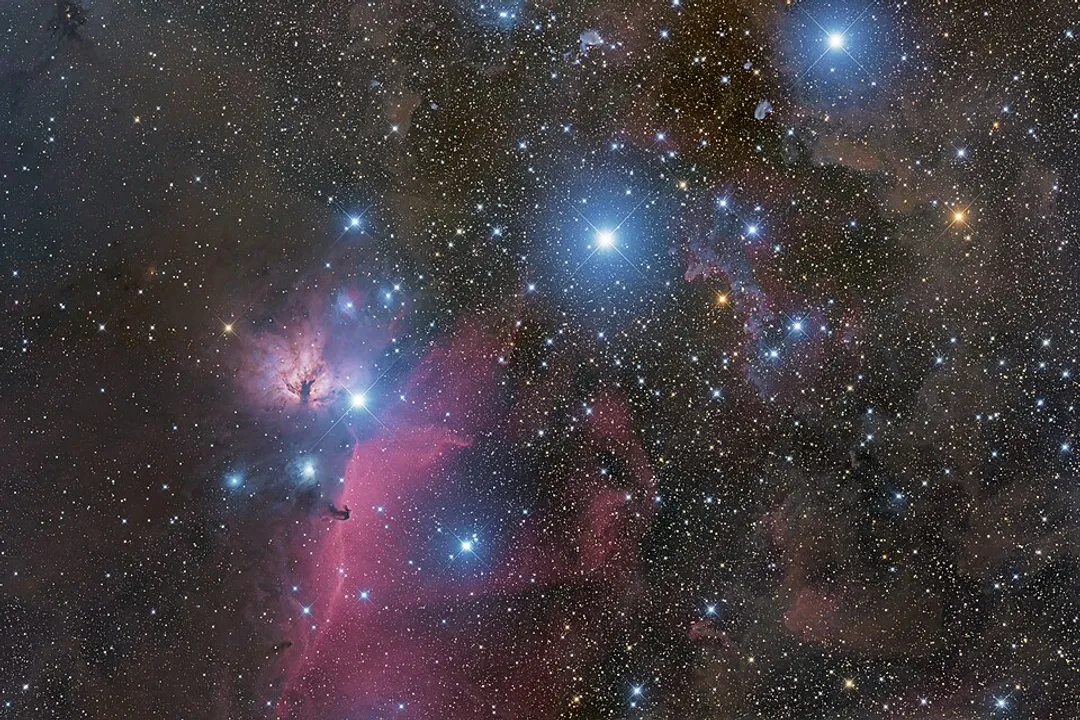
The celestial arrangement commonly referred to as the Three Kings is one of the most recognizable patterns visible in the night sky, instantly drawing the eye towards the magnificent constellation of Orion. [3][8] This familiar trio of bright stars serves as the central feature of the Hunter, an easily spotted giant that dominates the winter heavens for observers in the Northern Hemisphere. [3][2] While the entire constellation carries cultural weight across ages and geographies, the specific moniker "Three Kings" or "Three Wise Men" is exclusively reserved for the three stars that form its distinct belt. [5][4]
# The Celestial Trio

Orion’s Belt is composed of three stars situated in a nearly straight, conspicuous line across the constellation’s middle. [1][5] These three brilliant objects are named Alnitak, Alnilam, and Mintaka, listed here from east to west. [1] They form a tight knot that is often the first thing a novice stargazer learns to locate, acting as a perfect anchor point for finding other bright objects nearby. [2]
The alignment appears perfect to the naked eye, creating a clear visual marker. [1] However, this alignment is purely a matter of perspective from our vantage point on Earth. [1] These stars are not physically close to one another in three-dimensional space; they are distant suns lying in wildly different parts of the galaxy that just happen to cross our line of sight in a similar direction. [1] Alnitak, for example, is significantly farther away than Mintaka, yet their combined brilliance makes the belt stand out powerfully against the deep space background. [1] This juxtaposition of apparent closeness against actual cosmic separation offers a subtle reminder of the vast, misleading scale of the universe we observe every night.
Beyond the belt, the rest of Orion provides context for this famous trio. The constellation itself is framed by several other prominent stars, most notably the blazing red supergiant Betelgeuse marking the shoulder and the dazzling blue supergiant Rigel marking the foot. [3][8] When you spot the belt, you are looking at the waistline of the great celestial hunter, flanked by these two massive stellar beacons. [3]
# Naming Traditions
The name "Three Kings" directly connects this stellar pattern to the Biblical story of the Magi, the Wise Men who traveled to Bethlehem to honor the birth of Jesus. [6] This association has rooted the pattern deeply within Western Christian traditions, making it a fixture in holiday stargazing for many cultures. [6][9] In many regions, especially where winter skies are clear, these stars become a symbol of guidance and wisdom, mirroring the traditional role of the Magi. [4]
However, the names used for these stars are far from universal. In Māori culture, for instance, the belt is known as Tautoru. [2] Furthermore, the general concept of a trio is echoed in other historical nicknames, such as "The Three Marys" or simply "The Celestial Trio". [5] This variety demonstrates how effectively a simple, striking alignment can capture the human imagination, regardless of the cultural narrative attached to it. [5] It is a testament to how humanity consistently maps familiar terrestrial concepts onto the unchanging canvas of the heavens. [4]

# The Bethlehem Mystery
The connection between the Three Kings and the constellation Orion often leads to discussions regarding the Star of Bethlehem. [6][9] For centuries, people have speculated that a brilliant celestial event guided the Magi. [6] While the idea that Orion’s Belt was the guiding star is popular in folklore, historical and astronomical analyses suggest a different event was more likely the inspiration for the biblical narrative. [6][9]
Astronomers examining the timing of Jesus's birth often point toward a series of rare planetary conjunctions that occurred in the years before 1 AD. [9] Specifically, the meeting of Jupiter and Saturn in the constellation Pisces in 7 BC is a leading candidate for the astronomical phenomenon that inspired the Star of Bethlehem story. [6] This highlights an important distinction: Orion’s Belt is a permanent, easily recognizable feature of the sky, while the true Star of Bethlehem, if based on a real event, would have been a transient, spectacular light show. [6][9] The lasting fame of the belt comes from its reliability, not from being a single, unique signpost.
# Visibility and Observation
Orion is perhaps the easiest constellation to spot once you know what to look for because of the belt's unmistakable signature. [2] During winter months in the Northern Hemisphere, Orion rises in the east after sunset and travels high across the southern sky. [3] For those in the Southern Hemisphere, Orion is best viewed when it is positioned higher overhead during their summer months, which is an interesting seasonal inversion compared to northern observers. [8]
The visibility changes throughout the night and the year, affecting when the "Three Kings" are most prominent. For instance, if you were tracking the rising of the constellation from a mid-latitude location, the entire figure would appear closer to the eastern horizon early in the evening during its peak viewing season, shifting toward the west as the night progresses. [7] To make the most of viewing the belt, understanding these cyclical shifts in its position relative to your local time and latitude is key to planning a successful stargazing session. [7]
When you are out observing, try this simple navigation technique that amateur astronomers often use: if you draw an imaginary straight line extending from the belt stars toward the bright star Betelgeuse, you are heading toward one end of the constellation. If you extend the line in the opposite direction, through the belt and away from Betelgeuse, you will eventually encounter Sirius, the brightest star in the entire night sky, located in the neighboring Canis Major constellation. [3][8] This means the belt acts as an excellent celestial arrow, pointing toward other significant landmarks.

# Spatial Realities of the Belt
Considering the immense distances involved in astronomy puts the visual alignment into sharp perspective. Alnitak, the easternmost star of the belt, sits roughly 1,260 light-years away from Earth. [1] Alnilam, the central star, is estimated to be around 2,000 light-years distant, making it the farthest of the three primary belt stars. [1] Mintaka, the westernmost star, is the closest of the trio, situated about 915 light-years away. [1]
When we observe these stars, the light we see from Mintaka left its surface about nine centuries ago, while the light from Alnilam began its voyage two millennia ago. [1] This means that the visual "present" of the Three Kings is actually a look into very different moments of cosmic history. It is a powerful demonstration that our night sky is not a flat map but a deep, layered panorama of time and space compressed into a two-dimensional view. [1] Though they look like companions marching in formation, they are traveling in vastly different directions and at profoundly different rates across the galaxy.
To better appreciate the difference in distance, one could imagine a scaled model: if Mintaka were a person standing 100 yards away, Alnitak would be standing about 138 yards away, and Alnilam would be nearly 220 yards away—all standing on a line that looks straight from the observer’s position but is actually quite spread out. [1] This difference in actual separation, masked by distance, is one of the most compelling aspects of studying any star pattern.
# Orion’s Broader Features
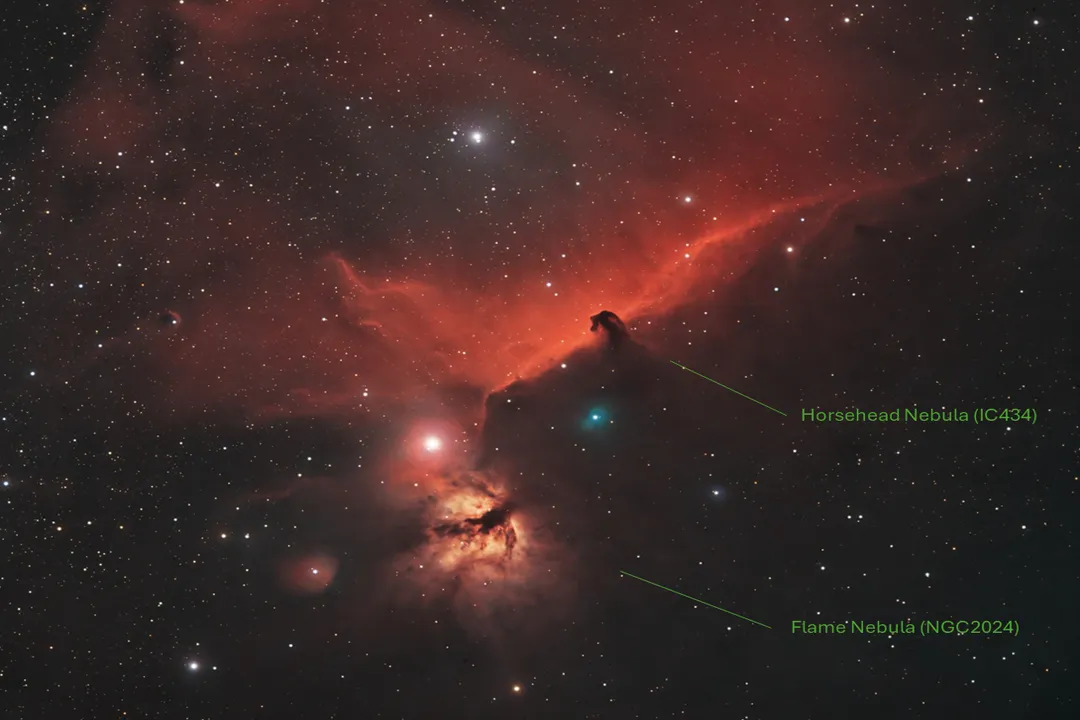
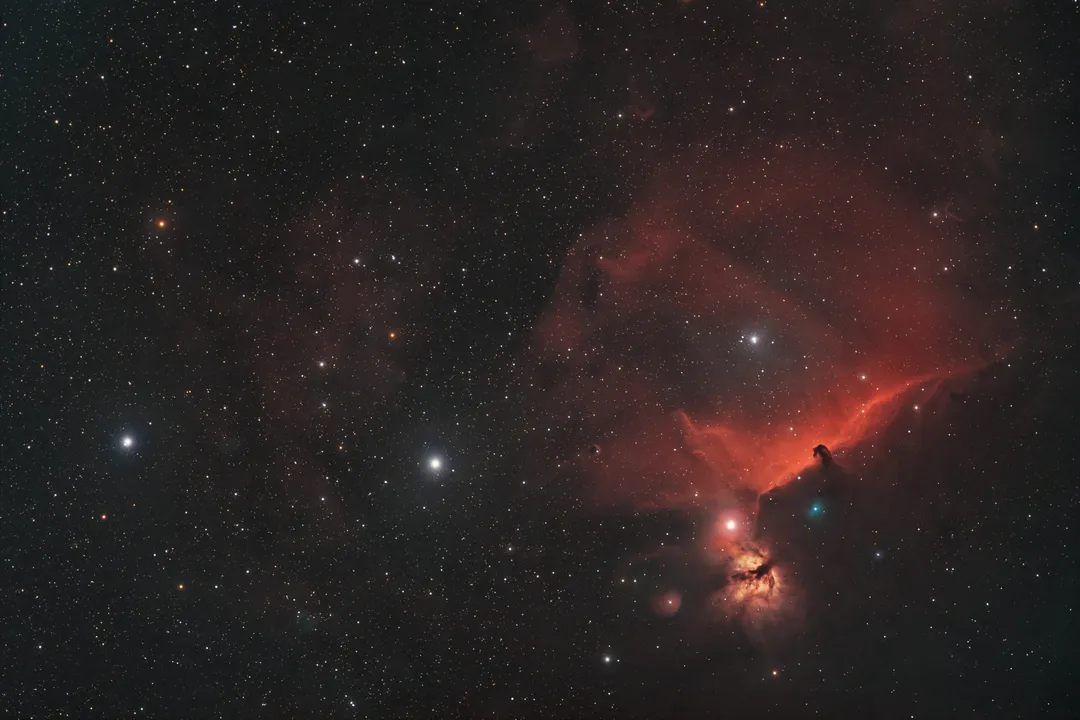
While the Three Kings define the center, the overall structure of Orion contributes to its fame. The constellation is rich with nebulae and star-forming regions, making it a favorite target for astrophotography. [8] Below the belt hangs the Orion Nebula (M42), a famous stellar nursery visible even through small telescopes as a fuzzy patch of light. [8] This region is actively creating new stars, contrasting sharply with the ancient, established light radiating from the belt stars themselves.
The bright framing stars, Rigel and Betelgeuse, anchor the constellation's identity as the Hunter. [3][8] Rigel burns fiercely blue-white, indicating a young, extremely hot star, whereas Betelgeuse glows deep orange-red, a signature of an aging star nearing the end of its life cycle. [3] Observing these two vastly different stellar types—one young and one old—on opposite sides of the familiar, tightly grouped "Three Kings" adds significant depth to the appreciation of this single constellation. The constellation is not just a pattern; it is a cosmic timeline laid out in light. [3]
Related Questions
#Citations
Orion's Belt - Wikipedia
The three bright stars or Tautoru, commonly known as Orion's Belt ...
Orion Constellation: Facts, location and stars of the hunter - Space
Orion's Belt - The Three Kings - Expand your horizons through ...
A Christmas story: the three kings and the star of Bethlehem
Rising of Orion : r/Astronomy - Reddit
The true name of the Three Wise Men and the Star of Bethlehem